Porcelain Veneers in Turkey: Method, Cost and Who It Suits

Key Takeaways
- Most international patients complete porcelain veneer treatment in one visit of about five to seven days, after a remote assessment based on photographs, X-rays or intraoral scans.
- Veneers are an elective cosmetic procedure that requires healthy teeth and gums first; untreated decay, gum disease or heavy grinding usually need to be addressed before any veneer plan is finalized.
- Cost is normally quoted per tooth and multiplied by the number of units, then influenced by material, laboratory work, preparatory treatment and any package inclusions.
- Written treatment plans should list the number of veneers, the material, the number of appointments and what happens if an adjustment is needed later.
- Accreditation such as JCI, verifiable dentist credentials and clear written communication are more useful selection criteria than promotional imagery.
- Aftercare continues at home: a local dentist for check-ups and cleanings, plus a night guard if grinding is a factor.
Porcelain veneers in Turkey are commonly arranged as a single coordinated trip of roughly five to seven days, preceded by a remote consultation and photograph or scan review. This guide explains how the journey is planned, what packages usually include, how cost bands are built, and what aftercare looks like once a patient flies home.
What Porcelain Veneers in Turkey Typically Involve
For many international patients, porcelain veneers in Turkey are organized as a single coordinated treatment trip rather than a series of separate appointments spread over months. The process usually begins remotely: a patient sends recent photographs of the teeth and smile, along with any existing X-rays or intraoral scans, and a dental team reviews whether veneers are a reasonable option. If they are, a provisional plan is drafted covering the likely number of veneers, the material and the number of clinic days required. The patient then travels, completes the preparation and fitting appointments over roughly five to seven days, and returns home with instructions for ongoing care.
Porcelain veneers are thin, custom-made ceramic shells bonded to the front surfaces of teeth to change their shape, shade, alignment or proportions. They are an elective cosmetic treatment, not a repair for underlying disease, so a dentist must first confirm that the teeth and gums are healthy enough to support them. The remote review is a screening step, not a diagnosis — the definitive plan is only confirmed after an in-person examination in the clinic, and it can change once the dentist sees the teeth directly.
Because this is a planned, non-urgent procedure, patients generally have time to ask questions, compare written plans and think carefully before booking flights. A reputable coordination team will encourage that pace rather than pressing for a quick decision, and will make clear that no cosmetic result can be guaranteed in advance.
Who Veneers May Suit — and Who May Need a Different Plan
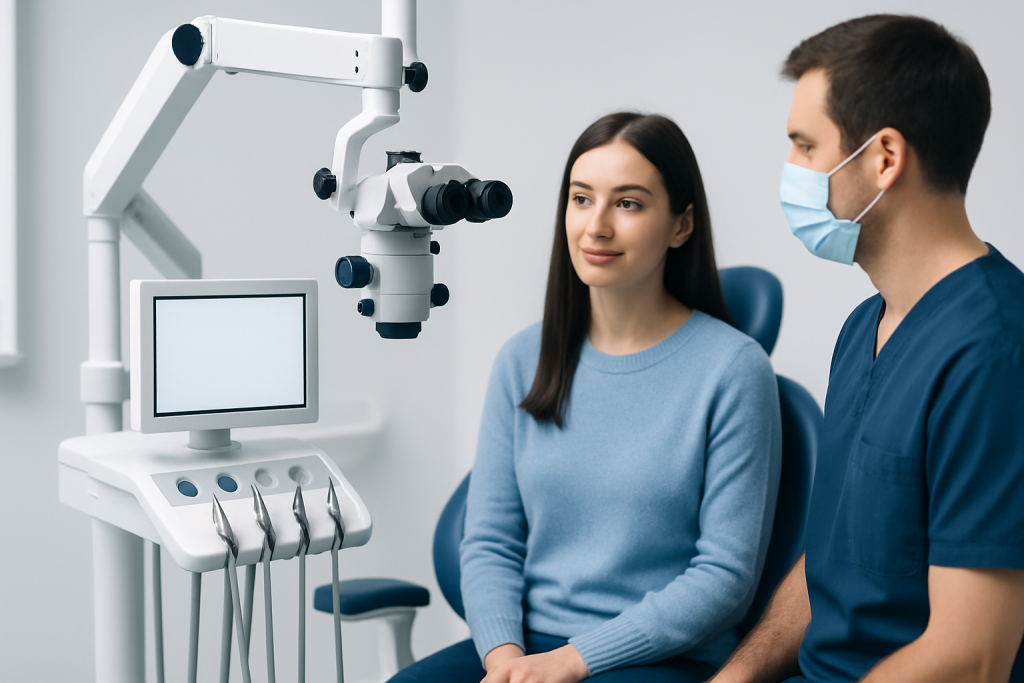
Veneers are most often discussed for adults who are unhappy with the color, shape, small gaps, minor chips or slight irregularity of the front teeth, and who have otherwise sound dental health. Candidacy depends on how much healthy enamel is present, the position of the bite, gum condition and realistic expectations about what a ceramic shell can and cannot change.
Several situations usually call for something other than an immediate veneer plan:
- Active tooth decay or untreated gum inflammation, which normally must be resolved first.
- Significant crowding or bite problems, where orthodontic treatment may achieve a more stable result than covering teeth.
- Heavy nighttime grinding or clenching, which increases the risk of chipping and often means a protective night guard is part of any plan.
- Very thin or worn enamel, where a different type of restoration may be recommended.
- Pregnancy, uncontrolled medical conditions or recent oral surgery, where elective treatment is generally postponed.
It is also worth understanding that preparing teeth for traditional porcelain veneers usually involves removing a small amount of enamel, which is not reversible. Patients should ask specifically how much tooth structure their plan involves, whether a more conservative option is possible in their case, and what the long-term maintenance commitment looks like. A second opinion — including a video consultation with an independent dentist — is entirely reasonable before committing to a large number of units.
Planning the Trip: Consultation, Records and Timing

The planning phase usually starts weeks before travel. Patients are asked for clear photographs (front smile, relaxed lips, upper and lower arches), any panoramic X-ray taken in the last year, and a short medical history including medications, allergies and conditions such as diabetes or bleeding disorders. Some clinics also request a digital scan if the patient’s home dentist can provide one. A video consultation then allows the patient to describe what they want to change and to hear what is realistically achievable.
Trip length is driven by the laboratory work. Custom porcelain veneers are fabricated after the teeth are prepared and impressions or scans are taken, so a gap of several days between the preparation appointment and the bonding appointment is normal. Most plans are built around a stay of about five to seven days, sometimes longer if preparatory treatment such as a cleaning, filling or extraction is needed first. Patients who require gum treatment or root canal work may be advised to split care into two visits.
Coordination teams typically help with the practical layer: visa guidance and invitation letters where applicable, airport transfers, hotel options near the clinic, interpreter support during appointments, and a day-by-day appointment schedule. Booking flexible or changeable flights is sensible, since a single extra appointment day is not unusual. Flying immediately after the final bonding session is generally possible, but many patients prefer to keep one buffer day in case a small adjustment is needed.
Step by Step: What Happens During the Treatment Visit
The first clinic day is normally an in-person examination: photographs, X-rays, a digital scan, shade selection and a discussion of the smile design. Some clinics produce a digital preview or a temporary mock-up placed over the teeth so the patient can see an approximation of the proposed shape and length before anything is prepared. This is the point to raise concerns about tooth size, gum line or how natural the shade looks — changes are far easier before preparation than after bonding.
Preparation follows, usually under local anesthetic. A thin layer of enamel is shaped, final impressions or scans are taken, and temporary veneers are placed to protect the teeth and let the patient test the look while the laboratory works. Temporaries are more fragile than the final restorations, so patients are advised to avoid hard or sticky foods during this interval.
At the fitting appointment, the temporaries are removed and the finished porcelain veneers are tried in before bonding. Fit, contact points, bite and appearance are checked, and small adjustments can be made. Once the patient and dentist agree, the veneers are bonded and the bite is refined. Mild gum tenderness and short-lived temperature sensitivity after bonding are common and usually settle over the following days. Written aftercare instructions, along with copies of scans, the treatment record and the material details, should be provided before departure.
What Treatment Packages Typically Include
Packages vary widely, which is exactly why the written plan matters more than the headline figure. Many dental travel packages bundle the clinical work with basic logistics, but the boundaries differ from clinic to clinic. A clear package description usually specifies the following:
- The number of veneers, the tooth positions and the ceramic material or system used.
- Consultation, X-rays, digital scanning and smile design.
- Temporary veneers between appointments.
- The number of clinic appointments and expected treatment days.
- Local anesthesia and routine follow-up during the stay.
- Airport and hotel transfers, interpreter support, and sometimes a set number of hotel nights.
Items commonly excluded include international flights, preparatory treatment such as fillings, root canal therapy, extractions or gum treatment, orthodontics, a night guard, professional whitening of the remaining teeth, and any additional nights if the schedule extends. Patients should ask in writing what happens if a veneer needs replacing later, whether the clinic offers any warranty on the ceramic work, and what that warranty would require — for example, returning to Turkey or documented regular check-ups at home.
It is also useful to confirm who provides continuity if the treating dentist is unavailable, and how the clinic handles remote follow-up after departure, such as photo review or video check-ins.
Understanding Cost Bands and Planning a Budget
Veneer pricing is almost always quoted per tooth and then multiplied by the number of units, so totals are built around common configurations such as six, eight, ten, sixteen or twenty veneers. Because of this structure, two patients at the same clinic can receive very different totals purely based on how many teeth are treated. Any figure seen in advertising should be read as a starting band, not a final quotation.
Several factors move a plan within its cost band: the ceramic material and laboratory used, whether the design is fully digital, the experience of the treating dentist, the number of appointments required, and whether preparatory treatment is needed before veneers can be placed. Turkey is widely chosen by American patients because per-tooth fees are typically lower than private cosmetic dentistry fees in many US markets, though the practical difference narrows once flights, accommodation, meals, time off work and any future maintenance are counted. A realistic budget accounts for the full journey, not just the clinical line item.
Sensible budget planning includes a contingency for an extra hotel night or an unplanned preparatory procedure, and an allowance for long-term upkeep at home: routine check-ups, hygiene visits, a night guard if grinding is present, and the possibility that a veneer may need repair or replacement over the years. Because veneers are cosmetic, US dental insurance rarely contributes, so patients should verify their own coverage rather than assume it. Reputable providers give an indicative cost range in writing before travel and confirm the final figure only after the in-person examination.
Choosing a Clinic: Accreditation, Credentials and Warning Signs
Accreditation is a practical filter. Joint Commission International (JCI) accreditation indicates that a healthcare organization has been assessed against international standards for patient safety, infection control, record-keeping and staff qualifications. It does not predict a cosmetic outcome, but it does say something meaningful about how an organization is run. Patients can also ask whether the dental unit operates within a hospital group, how sterilization is documented and what emergency protocols exist.
Dentist credentials deserve the same scrutiny a patient would apply at home. Reasonable questions include where the dentist trained, whether they are registered with the Turkish Dental Association or equivalent authority, how much of their practice is restorative or cosmetic dentistry, and which laboratory fabricates the ceramics. Asking to see unedited before-and-after cases of patients with similar starting conditions is more informative than reviewing a gallery of idealized images.
Certain patterns warrant caution: pressure to pay a deposit before any clinical review, a fixed quotation issued without X-rays or scans, plans that propose treating far more teeth than the concern seems to require, promises of a specific result or lifespan, refusal to provide the plan in writing, or communication only through social media messaging with no named clinician. Patients should also be wary of schedules that compress preparation and bonding into an unrealistically short window. Acıbadem Health Point coordinates dental and cosmetic care for international patients across the group’s JCI-accredited hospitals and clinics, with multidisciplinary specialists, interpreter support and written treatment planning arranged before travel.
Aftercare at Home and When to Contact a Patient Coordinator
Veneers require lifelong maintenance, and most of it happens after the flight home. Patients are generally advised to brush twice daily with a non-abrasive toothpaste, clean between the teeth daily, avoid using the front teeth to bite hard objects such as ice, nuts or packaging, and limit staining habits that can discolor the natural teeth and bonding margins over time. Anyone who grinds or clenches at night is usually advised to wear a protective guard. Regular check-ups and professional cleanings with a local US dentist remain essential; the home dentist should receive copies of the treatment records, scans and material details so future care is straightforward.
Short-lived sensitivity to hot and cold, mild gum tenderness and a period of adjusting to the feel of the new teeth are commonly reported in the first days or weeks. Patients should contact the treating clinic promptly, and see a local dentist if needed, for symptoms such as persistent or worsening pain, a bite that feels consistently uneven, a veneer that loosens or chips, ongoing gum bleeding or swelling, or signs of infection such as fever or facial swelling. Urgent symptoms should always be assessed in person rather than by message.
A patient coordinator is the right first point of contact well before travel — when comparing written plans, clarifying what a package includes, arranging a video consultation or second opinion, checking visa and accommodation logistics, or asking whether a stay needs to be longer. Coordinators are equally useful afterward for arranging remote follow-up, sharing photographs with the treating dentist and organizing a return visit if an adjustment becomes necessary. Coordination support complements, but does not replace, the judgment of a qualified dentist who has examined the patient directly.
Frequently asked questions
01How long does a veneer trip to Turkey usually take?
Most treatment plans are built around a stay of roughly five to seven days, because the porcelain is custom-made in a laboratory after the teeth are prepared. Patients typically attend an examination and preparation appointment early in the stay, then return for try-in and bonding later in the week. If preparatory treatment such as gum therapy or a root canal is needed, the dentist may recommend splitting care into two visits.
02Are porcelain veneers permanent?
Traditional veneers are considered a long-term but not permanent restoration, and preparing the teeth usually involves removing a thin layer of enamel that does not grow back. Veneers can chip, stain at the margins or need replacement over the years, and lifespan varies widely depending on bite forces, oral hygiene and habits such as grinding. No dentist can promise a specific number of years for any individual patient.
03What determines the cost of porcelain veneers in Turkey?
Fees are normally quoted per tooth, so the number of veneers is the biggest single factor in the total. Material and laboratory quality, digital smile design, the treating dentist's experience, and any preparatory treatment also influence where a plan sits within its cost band. A realistic budget should also include flights, accommodation, time off work and long-term maintenance at home.
04Can veneers be planned entirely online before traveling?
A provisional plan can be drafted from photographs, X-rays and scans, and a video consultation helps clarify goals and expectations. However, the plan is only confirmed after an in-person examination, because the dentist needs to assess enamel thickness, gum health and bite in person. Patients should treat any pre-travel figure as indicative rather than final.
05Is it safe to fly right after veneers are bonded?
Flying home shortly after the final bonding appointment is generally possible for routine cases, since the procedure is not surgical. Many patients still keep one buffer day in the schedule in case a small bite adjustment is needed. Anyone who has had extractions, gum surgery or sedation should follow the specific timing advice given by their treating clinician.
06What happens if a veneer chips after returning to the United States?
Patients should contact the treating clinic and their local dentist promptly, as a chipped or loose veneer may expose the underlying tooth. Some clinics offer remote photo review and may arrange repair or replacement, sometimes requiring a return visit; a local dentist can provide interim care. Asking about the clinic's repair and warranty policy in writing before treatment avoids uncertainty later.
07When should someone speak to a patient coordinator?
A coordinator is most useful early — when comparing written treatment plans, checking what a package includes and excludes, arranging a video consultation or second opinion, and organizing visa guidance, transfers and accommodation. Coordinators also help after treatment with remote follow-up and scheduling a return visit if needed. Their role is logistical support alongside, not instead of, clinical advice from a qualified dentist.
This article is for general information only and is not a substitute for professional medical advice. Please consult a qualified doctor about your individual situation.
Explore treatments in Turkey — costs, top hospitals & a free quote
JCI-accredited · board-certified surgeons · reply within 24h
Add us as a Preferred Source to see more of our trusted health content across Google Search, AI Overviews and Discover.