Polymorphic Eruption of Pregnancy: What You Need to Know

Key Takeaways
- Polymorphic eruption of pregnancy is a common, itchy rash that usually starts in the third trimester or shortly after delivery.
- It often begins in stretch marks on the abdomen and may spread to the thighs, buttocks, or arms.
- The condition is uncomfortable but generally harmless to both parent and baby.
- Diagnosis is usually based on the rash pattern and timing, while other pregnancy-related skin conditions may need to be ruled out.
- Treatment focuses on itch relief, skin care, and monitoring for warning signs that need medical review.
Polymorphic eruption of pregnancy is a benign but often very itchy skin rash that usually appears in the later months of pregnancy. It is not dangerous to the baby, and symptoms can often be relieved with simple treatments and medical guidance.
Overview
Polymorphic eruption of pregnancy is a pregnancy-related skin condition that causes an itchy rash, most often in the final weeks of pregnancy. It is also commonly called PUPPP, short for pruritic urticarial papules and plaques of pregnancy. The rash can look worrying at first, but it is usually harmless and does not affect the developing baby.
The condition most often begins on the abdomen, especially within stretch marks, and may then spread to the thighs, buttocks, or arms. It tends to be uncomfortable rather than dangerous, which is why the main goal of care is relief of itching and making sleep and daily life easier while the pregnancy continues.
For many patients, the hardest part is not the rash itself but the uncertainty it creates. Because pregnancy can bring several different skin changes, it is important for a clinician to confirm that the eruption fits the typical pattern of polymorphic eruption of pregnancy and not another condition that needs different treatment.
Symptoms
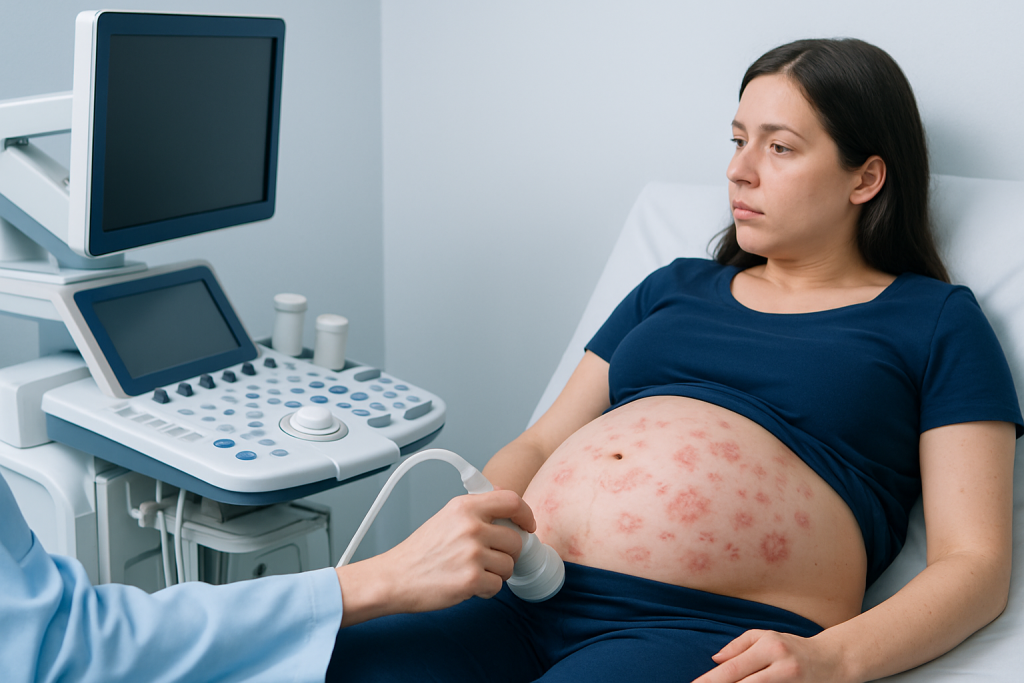
The first sign is usually intense itching, followed by small red bumps or raised patches that may merge into larger plaques. The rash often starts on the abdomen, particularly around stretch marks, while sparing the area around the belly button in many cases. From there, it may extend to the legs, buttocks, back, or arms.
The skin may look inflamed and feel very irritated, especially at night. Some people notice that scratching worsens the rash, which can create a cycle of more itching and more irritation. Even so, the condition does not typically cause blisters, fever, or illness-like symptoms.
Symptoms are generally limited to the skin, but the discomfort can affect sleep, mood, and routine activities. If the rash appears unusual, is widespread in a way that does not fit the typical pattern, or comes with other symptoms such as yellowing of the skin, headache, or reduced fetal movements, medical review is important.
Causes & Risk Factors
The exact cause of polymorphic eruption of pregnancy is not fully understood. It is thought to be related to the stretching of the skin and the body’s inflammatory response during pregnancy, particularly in areas where the abdomen expands rapidly.
Several factors may make it more likely. It is seen more often in first pregnancies, in pregnancies with rapid abdominal stretching, and sometimes in multiple pregnancies such as twins. The condition may also be more common when stretch marks are prominent, although not everyone with stretch marks develops the rash.
Importantly, polymorphic eruption of pregnancy is not caused by poor hygiene, and it is not a sign that the person has done something wrong. It is also not contagious. In international-patient settings, this reassurance matters because pregnancy rashes are sometimes first noticed while traveling or preparing for delivery away from home, when even a common skin change can feel unfamiliar.
Diagnosis
Diagnosis is usually clinical, meaning a doctor identifies the condition by listening to the history and examining the skin. The timing during pregnancy, the location of the rash, and the appearance of itchy raised spots within stretch marks are often enough to point strongly toward polymorphic eruption of pregnancy.
Because pregnancy can also be affected by other itchy skin disorders, a clinician may ask questions to rule out conditions such as atopic eruption of pregnancy, pemphigoid gestationis, contact dermatitis, cholestasis-related itching, or viral rashes. This distinction matters because some of these conditions need closer monitoring or different treatment.
In some cases, blood tests or a skin sample may be recommended if the rash is atypical or the diagnosis is unclear. For patients receiving care across borders, photographs, medical records, and a clear timeline of when the rash began can help specialist teams make a faster, more confident assessment.
Treatment Options
Treatment is aimed at easing itching and calming the skin. Mild cases may improve with simple measures such as fragrance-free moisturizers, cool compresses, and avoiding hot showers or harsh soaps. Loose, breathable clothing can also reduce irritation.
Doctors may recommend topical corticosteroid creams for inflamed areas and, if needed, an oral antihistamine that is considered appropriate in pregnancy. These options should always be discussed with a clinician, since treatment choices depend on the stage of pregnancy, symptom severity, and the person’s overall health.
When itching is severe, medical teams may consider stronger symptom control and closer follow-up. The goal is not only to reduce the rash, but also to protect sleep, comfort, and wellbeing during the remainder of pregnancy. In most cases, the rash settles after delivery, though improvement may begin before then.
Prevention & Self-care
There is no guaranteed way to prevent polymorphic eruption of pregnancy, but some habits can make the skin less reactive and more comfortable. Keeping the skin well moisturized, avoiding overheating, and using gentle, unscented cleansing products may help reduce irritation.
Scratching can make symptoms worse, so short nails, cool compresses, and distraction strategies can be useful when itching is intense. Some people find relief by applying a bland emollient immediately after bathing while the skin is still slightly damp.
- Wear soft, loose clothing that does not rub the abdomen.
- Use lukewarm water instead of hot water for bathing.
- Choose fragrance-free detergents and skin products.
- Track when the rash worsens to identify personal triggers, such as heat or sweating.
- Keep prenatal appointments so new symptoms are reviewed promptly.
For someone planning treatment or follow-up abroad, it is helpful to bring a list of products already tried and to note whether any medication has been used during pregnancy. This allows a specialist to recommend care that fits both the pregnancy and the travel schedule.
When to See a Doctor
Medical assessment is recommended when a new rash appears during pregnancy, especially if it is very itchy, spreading, or interfering with sleep. Even when polymorphic eruption of pregnancy is suspected, a doctor should confirm the diagnosis because pregnancy-related rashes can sometimes look similar at first glance.
Prompt review is especially important if the rash starts early in pregnancy, involves blisters, affects the face or palms in an unusual way, or is accompanied by jaundice, fever, severe pain, headache, swelling, or reduced fetal movement. Those features may suggest another condition that needs different care.
If symptoms are severe or the person is away from home, specialist obstetric and dermatology input can be reassuring. Acibadem Health Point’s multidisciplinary specialists and JCI-accredited hospitals diagnose and treat this condition for Myomectomy Recovery: Healing Time, Activity Limits, and Fertility Planning" class="ahp-ilk">Myomectomy Recovery for International Patients: The Usual Travel Timeline" class="ahp-ilk">international patients, with care plans that can be coordinated around pregnancy needs and follow-up arrangements.
Living With the Condition During Pregnancy
Most people with polymorphic eruption of pregnancy continue their pregnancy normally while managing the rash. The condition is temporary, and symptoms usually improve after delivery. Knowing that the rash is generally benign can help patients focus on comfort rather than fear.
Support from an obstetrician, dermatologist, or maternal-fetal medicine specialist can make a noticeable difference when itching is persistent. For patients traveling for care, clear instructions about safe skin care, warning signs, and when to return for review are especially valuable because the next appointment may not be in the same city or country.
With the right diagnosis and symptom-focused treatment, the rash is usually manageable. The best outcomes come from timely assessment, simple skin care, and follow-up if the symptoms change or do not match the expected pattern.
Frequently asked questions
01Is polymorphic eruption of pregnancy dangerous to the baby?
It is usually not dangerous to the baby. The main issue is the mother’s discomfort, especially itching and sleep disturbance. A clinician should still confirm the diagnosis because other pregnancy rashes can require different care.
02Where does the rash usually start?
It often starts on the abdomen, especially in stretch marks. It may then spread to the thighs, buttocks, back, or arms. Many people notice that the area around the belly button is less affected.
03Does polymorphic eruption of pregnancy go away after delivery?
Yes, it usually improves after birth and eventually clears. In some cases, symptoms begin to settle before delivery, but the rash is temporary. If it persists or changes significantly, a doctor should reassess it.
04Can it be mistaken for other pregnancy skin conditions?
Yes. Several pregnancy-related rashes can look similar, including pemphigoid gestationis, atopic eruption of pregnancy, and skin irritation from contact allergens. That is why medical examination is important if a new rash appears in pregnancy.
05What helps with the itching?
Cool compresses, gentle moisturizers, avoiding hot showers, and loose clothing may help. Doctors may also recommend pregnancy-appropriate topical treatments or antihistamines depending on the situation.
06Should a person seek care right away for every pregnancy rash?
Not every rash is an emergency, but it should still be discussed with a clinician. Urgent review is wise if the rash is severe, starts early, looks blistered, or comes with other symptoms such as jaundice, fever, or reduced fetal movements.
This article is for general information only and is not a substitute for professional medical advice. Please consult a qualified doctor about your individual situation.
Explore treatments in Turkey — costs, top hospitals & a free quote
JCI-accredited · board-certified surgeons · reply within 24h
Add us as a Preferred Source to see more of our trusted health content across Google Search, AI Overviews and Discover.