Plank and Side Plank Exercises: Safe Techniques That Actually Help

Key Takeaways
- Plank and side plank exercises train core endurance, not just abdominal strength.
- Good alignment matters more than how long the position is held.
- People with neck, shoulder, wrist, or low-back pain may need modified versions.
- Breathing steadily is part of safe form and helps prevent unnecessary strain.
- Progress should be gradual, especially after injury, pregnancy, or long periods of inactivity.
Plank and side plank exercises can be an effective way to build core endurance when they are done with careful technique and realistic expectations. This guide explains how to perform them safely, who should be cautious, and when professional advice is helpful.
Overview
Plank and side plank exercises are simple-looking holds that ask a great deal from the body: the abdomen, back, hips, shoulders, and even the muscles around the ribs must work together to keep the trunk steady. For many people, that makes them a practical core-training option because they can be done without equipment and adapted to different fitness levels.
What makes these exercises useful is not how dramatic they look, but how well they teach control. A well-executed plank helps the body resist sagging, arching, or twisting, while a side plank challenges the muscles that stabilize the waist and pelvis from the side. In rehabilitation and everyday fitness, that kind of control can support better movement during walking, lifting, reaching, and returning to exercise after a pause.
They are not a shortcut to pain relief or posture correction on their own. The best results usually come when they are part of a balanced routine that includes mobility work, lower-body strength, and gradual conditioning. For people recovering from injury or deciding whether to train while traveling for care, a clinician can help confirm whether these holds are appropriate and how they should be modified.
What Planks and Side Planks Actually Train

Despite their name, planks do not isolate a single “core” muscle. They recruit a chain of muscles that help the trunk stay stable under load. These include the deep abdominal muscles, the obliques, the muscles along the spine, the glutes, the shoulder stabilizers, and, in side plank positions, the muscles that help control side-bending and pelvic alignment.
This is why the exercises often feel harder than people expect. The goal is not to squeeze hard or brace to the point of holding breath. Instead, the body should create a steady, controlled line from head to heels or from head to feet in a side support position, with enough tension to maintain form and enough relaxation to keep breathing.
In practical terms, these exercises can help build endurance for tasks that require holding the trunk still while the arms or legs move. That includes carrying groceries, pushing a stroller, reaching overhead, or returning to sports that involve turning, running, or changing direction. They are most helpful when the person can keep the spine neutral and avoid compensation through the neck or lower back.
How to Do a Standard Plank Safely
A safe plank begins with a setup that supports the whole body. On the floor, the forearms or hands are placed under the shoulders, the legs extend back, and the body forms a straight line without the hips dropping or lifting too high. The ribs should feel gently contained rather than flared outward, and the neck should stay long with the gaze directed toward the floor.
Breathing should remain smooth. Many people unintentionally hold their breath because the effort feels intense, but that can increase pressure and make the hold less useful. A better approach is to keep the jaw soft, breathe in a controlled pattern, and stop the set before the body begins to shake into poor alignment.
Quality matters more than duration. A shorter hold done with stable form is usually preferable to a long hold that creates low-back strain or shoulder discomfort. For beginners, elevating the forearms on a bench, wall, or sturdy table can make the position more manageable while still training the trunk.
- Keep shoulders stacked over elbows or hands.
- Draw the abdomen gently inward without hollowing the back.
- Press through the floor to keep the upper body active.
- Stop if the hips sag, the lower back pinches, or the neck strains.
How to Do a Side Plank Safely
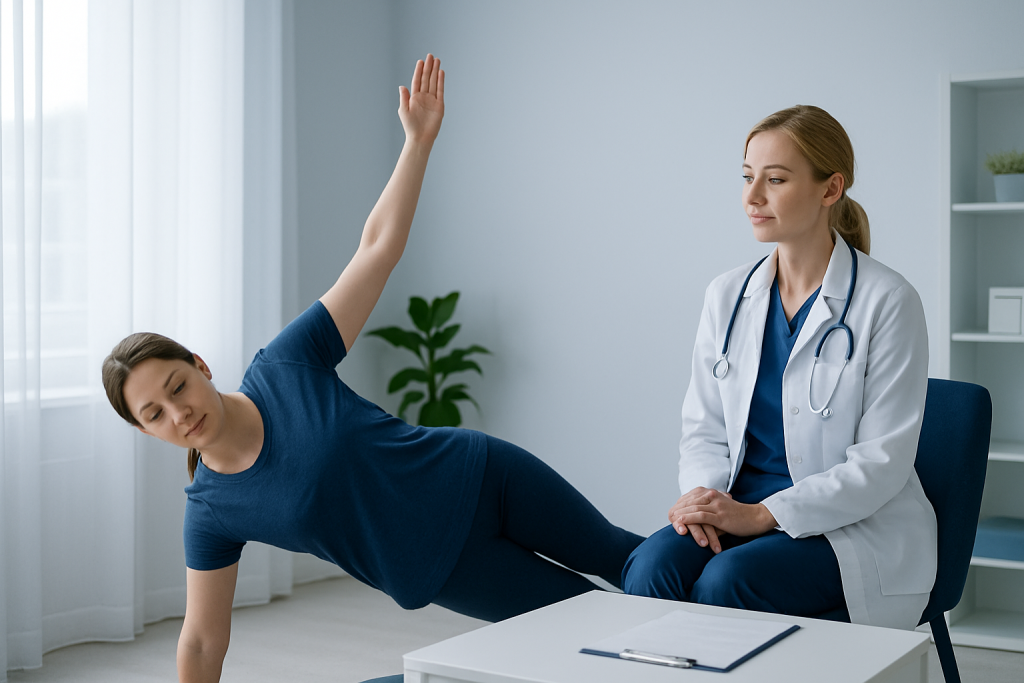
The side plank asks the body to support itself on one forearm or hand while the feet stack or step apart for balance. The shoulders, obliques, gluteal muscles, and muscles around the hip must work together to prevent the torso from collapsing toward the floor. For many people, this position reveals side-to-side differences in strength or control more clearly than a standard plank.
To keep it safe, the supporting shoulder should feel active but not pinched. The torso should rise in one line rather than twisting forward. If the full version is too demanding, the lower knee can stay on the ground for support, or the top foot can step slightly in front for better balance. These changes still train the side body while reducing load.
Side planks should not create sharp shoulder pain or a pulling sensation in the neck. If the body can only maintain the position by leaning forward, the setup is likely too advanced. It is better to shorten the hold, widen the base, or use a modified variation than to force a position that is not yet controlled.
Common Technique Mistakes
Several errors make planks and side planks feel harder than they need to be. The most common is losing alignment, usually by letting the hips sag, hiking them too high, or rotating the torso. Another frequent issue is pushing the head forward, which can strain the neck and shift work away from the trunk.
Some people also brace too aggressively. While some abdominal tension is necessary, over-tightening often leads to breath-holding and early fatigue. Others focus on the clock rather than the body, staying in the position long after form has declined. In most cases, that adds strain without adding benefit.
Using a mirror, filming a short set, or asking a physical therapist or trainer to check form can be helpful. For people returning from back pain, abdominal surgery, pregnancy, or a sports injury, technique review is especially valuable because small changes in position can make a large difference in comfort and safety.
- Sagging hips or a dipped lower back
- Raised hips that turn the plank into a resting position
- Holding the breath
- Shoulders creeping toward the ears
- Twisting through the waist in side plank
Who Should Be Cautious
Planks and side planks are not automatically appropriate for everyone. People with current neck pain, shoulder impingement, wrist problems, uncontrolled high blood pressure, or certain spine conditions may need a different starting point. If the position increases pain rather than working the muscles, it is a sign that the exercise should be modified or paused.
Pregnancy, recent abdominal surgery, pelvic floor symptoms, and recovery from childbirth may also call for tailored guidance. In those situations, the main question is not whether core work is allowed, but which version supports recovery without adding pressure or strain. A clinician can help choose a safer progression.
Anyone with numbness, radiating pain, dizziness, chest discomfort, or a sense of instability during the exercise should stop and seek medical evaluation. Those symptoms suggest the issue is not simply a lack of core strength. In some cases, a rehabilitation specialist can identify a better exercise strategy and help the person return to activity more confidently.
How to Progress Without Rushing
Progress in plank and side plank exercises usually comes from improving control before increasing time. That may mean starting with a wall plank, a bench plank, or a knee-supported side plank and then moving gradually toward the floor. Even small changes in leverage can make the exercise far more demanding, so progression should be measured carefully.
Instead of chasing very long holds, many people do better with several short sets separated by rest. This approach allows more attention to technique and gives the trunk muscles repeated chances to work with good form. It also makes it easier to notice whether a variation is helping or simply making the body compensate.
When the basic version feels stable, progression can come from a longer lever, a narrower base of support, or a more challenging surface. But each step should preserve alignment. If the body starts to twist, the shoulders become painful, or the lower back arches, the level is probably too advanced for now.
- Begin with modified positions if needed.
- Increase hold time only if form remains steady.
- Change one variable at a time.
- Use recovery days to avoid overloading the same muscles repeatedly.
When to See a Doctor
Medical advice is useful when a plank or side plank causes pain that is sharp, persistent, or different from ordinary muscle effort. It is also wise to seek assessment if the exercise repeatedly triggers low-back pain, shoulder pain, neck symptoms, or numbness, especially if these signs appear during daily activities as well.
A doctor or physiotherapist can help determine whether the problem is technique, muscle imbalance, joint irritation, or an underlying condition that needs treatment. For international patients arranging evaluation abroad, that guidance can make it easier to avoid trying to “push through” a movement that is not suitable at the moment.
Acibadem Health Point’s multidisciplinary specialists and JCI-accredited hospitals diagnose and treat many musculoskeletal concerns for international patients, including cases where exercise needs to be adapted during recovery. A personalized assessment can clarify which core exercises are appropriate and how to reintroduce them safely.
Prevention & Self-care
For most people, safe self-care starts with moderation. A few well-performed plank and side plank holds, done with rest and attention to posture, are usually more productive than frequent long sessions that leave the body sore and stiff. Core training should support everyday movement, not replace it.
It also helps to pair these exercises with basic habits that protect the back and shoulders: regular walking, hip mobility work, balanced strengthening of the glutes and upper back, and attention to workstation setup. If the body spends long hours seated, a brief warm-up before floor exercises can reduce the feeling of stiffness and improve control.
People recovering from pain or injury may benefit from a written plan that shows when to progress, when to hold steady, and when to step back. That plan is often most successful when it is simple enough to follow consistently at home, in a hotel room, or after returning from a clinic visit abroad.
- Warm up with gentle movement before holding planks.
- Stop sets before form breaks down.
- Use supportive surfaces when wrists, shoulders, or elbows are sensitive.
- Build overall strength, not just core endurance.
Frequently asked questions
01Are planks and side planks enough to strengthen the core on their own?
They can be a useful part of core training, but they are usually not enough by themselves. A balanced program often includes exercises for the hips, back, glutes, and rotational control as well. That combination tends to support function better than doing only one type of hold.
02How long should someone hold a plank?
There is no single correct time for everyone. A better target is a hold that can be maintained with steady breathing and good alignment, even if it is brief. If form breaks down, the set has gone on too long for that level of strength or control.
03Is it normal to feel the neck or lower back during planks?
Mild muscle effort in the abdomen, shoulders, or glutes is expected, but neck strain or low-back pain is not the goal. Those sensations often mean the position needs to be adjusted. A clinician or physiotherapist can help identify the cause and suggest a safer variation.
04Can side planks be modified for beginners?
Yes. A knee-supported side plank, a shorter hold, or a wider base of support can make the exercise more manageable. Modifications still train the side muscles while reducing the load on the shoulder and trunk.
05Should someone do planks if they have back pain?
It depends on the cause of the pain and how the exercise affects symptoms. Some people tolerate a modified plank well, while others do better with different core exercises first. If pain increases, evaluation is the safer next step.
06When is it better to stop exercising and get checked?
If the movement causes sharp pain, numbness, dizziness, chest discomfort, or symptoms that linger after the exercise, it should be stopped. Those signs deserve medical review rather than a workout progression. A qualified doctor can determine whether the exercise is suitable and what to do next.
This article is for general information only and is not a substitute for professional medical advice. Please consult a qualified doctor about your individual situation.
Joint and spine care in Turkey — expert assessment & treatment
JCI-accredited · board-certified surgeons · reply within 24h
Add us as a Preferred Source to see more of our trusted health content across Google Search, AI Overviews and Discover.