Pics of a Cyst: What You Need to Know

Key Takeaways
- Pictures can help spot common features of a cyst, but they are not a diagnosis.
- Cysts may look smooth, round, movable, or under the skin, but appearances vary by type and location.
- Pain, redness, drainage, rapid growth, or fever can mean the lump needs medical review.
- A clinician may use exam, ultrasound, or other imaging to tell a cyst from another lump.
- Do not squeeze or pop a cyst, since this can worsen irritation or infection.
Pics of a cyst can give a useful first impression, but they cannot confirm the exact type of lump or whether it is harmless. A doctor may use the look, location, symptoms, and sometimes tests or imaging to decide what it is and how it should be managed.
Overview
When people search for pics of a cyst, they are usually trying to answer a practical question: “Is this lump something common and harmless, or does it need to be checked?” Pictures can be a helpful starting point because many cysts have recognizable visual features. They often appear as a round, smooth bump beneath the skin, sometimes with a visible opening or a pale center.
Still, pictures have limits. Two very different conditions can look similar in photos, and the same type of cyst can look different depending on where it is on the body, whether it is inflamed, and how long it has been present. For that reason, images are best used as a guide, not a final answer.
In medical practice, a cyst is a sac-like pocket that can contain fluid, air, or other material. Cysts can form in the skin, breasts, ovaries, kidneys, jaw, and many other places. Some remain quiet for years, while others become painful or infected. The right next step depends on the location, symptoms, and the person’s overall health.
What a cyst can look like in photos
In pictures, many skin cysts look like a firm, dome-shaped bump just under the surface. The skin over it may look normal, slightly white, yellowish, or skin-colored. Some cysts have a tiny central opening, sometimes called a punctum, which can look like a small dot.
Inflamed cysts can look very different from calm ones. They may appear red, swollen, tender, and larger than before. If the cyst has broken open or become infected, the surrounding skin can look irritated, warm, or even bruised-looking.
Because the word “cyst” covers many conditions, photos may also show lumps in places such as the wrist, scalp, breasts, or jawline. A person looking at images should keep in mind that a photo cannot show how deeply the lump extends, what it contains, or whether it is truly a cyst rather than a different kind of mass.
- Common visual clues: round or oval shape, smooth edges, slow growth, and a movable feel under the skin.
- Signs that can suggest inflammation: redness, tenderness, swelling, or drainage.
- Features that require more caution: a rapidly changing lump, hard fixation, or skin changes that do not settle.
Why pictures can be misleading
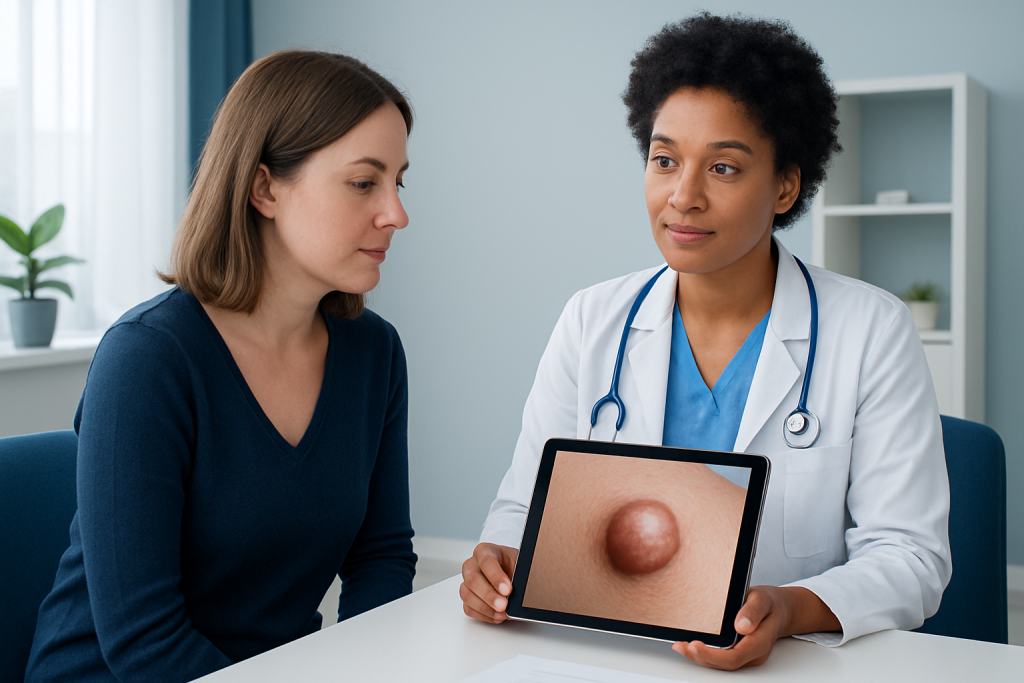
A photo captures only part of the story. Lighting, camera angle, skin tone, and size comparison can all make a lump appear bigger, smaller, darker, or more raised than it really is. A cyst that looks “typical” in a picture may in fact be a lipoma, abscess, enlarged lymph node, or another type of growth.
Even among true cysts, appearance varies widely. An epidermoid cyst on the skin does not look like a ganglion cyst near a joint, and a cyst inside an organ cannot be judged from external photos at all. Some cysts remain soft and quiet, while others become inflamed and resemble an infection.
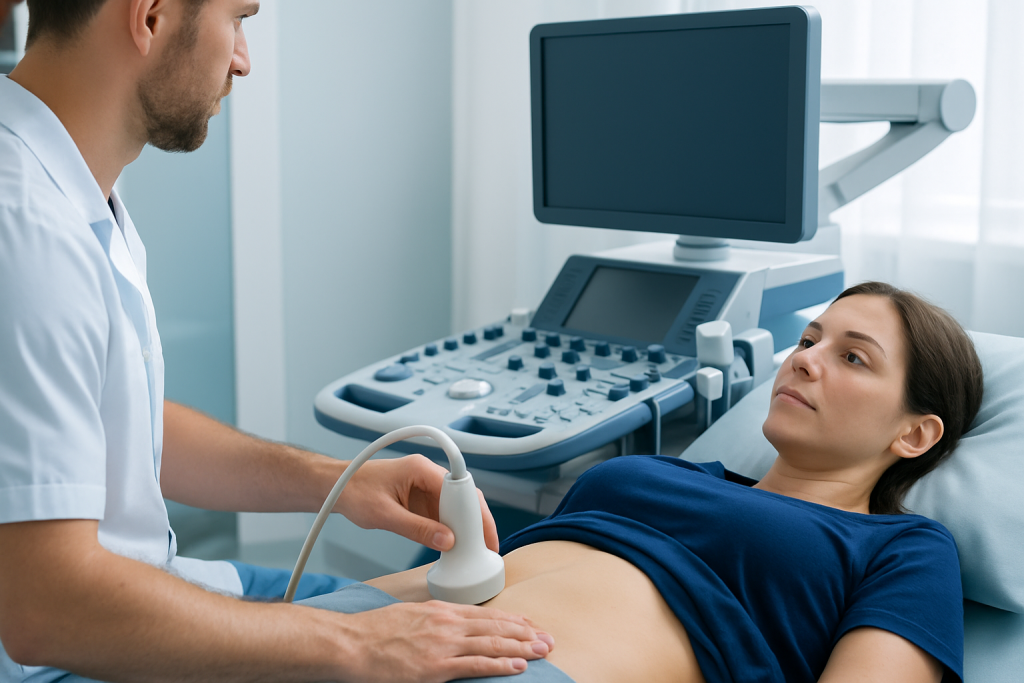
That is why medical professionals usually combine visual inspection with a conversation about timing, discomfort, change over time, and any associated symptoms. When needed, they may recommend ultrasound or other imaging to clarify what the lump is made of and whether it is connected to deeper structures.
Causes & risk factors
Cysts can develop for different reasons depending on their type and location. In the skin, a cyst may form when a pore, hair follicle, or duct becomes blocked. Elsewhere in the body, cysts can develop because of hormonal changes, inherited conditions, tissue injury, inflammation, or congenital development.
Risk factors also vary. For example, people who have a family history of certain cystic conditions may be more likely to develop them. Repeated friction, acne-prone skin, prior injury, or a history of blocked glands can also contribute in some cases. However, many cysts appear without a clear trigger.
It is important not to assume that a lump is “just a cyst” based only on a family story or an internet image. A careful evaluation matters more than guessing, especially when the lump is painful, changing, or located in an area where several different conditions can overlap in appearance.
Diagnosis
Diagnosis usually starts with a physical examination and a discussion of the lump’s history. A clinician may ask when it was first noticed, whether it has grown, whether it hurts, and whether there has been any drainage, fever, or skin change. These details often narrow the possibilities more than a picture alone can.
For a skin lump, the doctor may be able to identify a likely cyst by touch and appearance. If the lump is deep, unusual, or not clearly a cyst, imaging may be recommended. Ultrasound is commonly used because it can show whether the mass is fluid-filled, solid, or mixed.
In some situations, additional tests are needed. A sample of fluid or tissue may be examined if the diagnosis is uncertain, the lump keeps returning, or there are features that do not fit a simple cyst. The aim is not to overtest, but to make sure the person receives the most appropriate care.
Treatment options
Not every cyst needs treatment. Some are simply observed if they are small, stable, and not causing symptoms. When a cyst becomes painful, infected, cosmetically bothersome, or functionally limiting, treatment may be considered.
Management depends on the cyst type and location. Options may include monitoring, drainage in selected cases, removal of the cyst wall or sac, or treatment of any infection. If the cyst is related to an underlying condition, that condition also needs attention to reduce the chance of recurrence.
Patients traveling for care should expect the treatment plan to include follow-up, especially after drainage or surgery. International patients may need coordination before departure and after returning home, since healing checks, wound care, and pathology review are sometimes part of the process. Acibadem Health Point’s multidisciplinary specialists and JCI-accredited hospitals diagnose and treat cysts for international patients in this coordinated way.
Prevention & self-care
Not all cysts can be prevented, but some practical habits can reduce irritation and help with comfort. The most important step is to avoid squeezing, popping, or repeatedly picking at a lump. That can push material deeper, inflame the area, or introduce infection.
Warm compresses may ease discomfort for some superficial skin cysts, but they do not replace medical evaluation if the lump is enlarging or tender. Keeping the area clean and watching for change in size, color, drainage, or pain can be helpful. Taking a clear photo at intervals can also help a doctor understand how quickly the lump is changing.
If the cyst has already been assessed and is being observed, it is useful to follow the clinician’s advice about skin care, activity limits, and when to return. A stable cyst often stays stable, but any new symptoms should prompt a reassessment rather than self-treatment.
When to see a doctor
A lump should be checked by a doctor if it is painful, growing, red, warm, draining, or interfering with movement or daily life. Medical review is also sensible if the lump is hard, fixed in place, irregular in shape, or present for a long time without a clear explanation.
Prompt evaluation is especially important if there is fever, spreading redness, or a sudden change in the way the lump looks or feels. These findings can point to infection or another condition that deserves timely care. People should not wait for a photo comparison online when symptoms are changing.
Even when the lump seems minor, a clinician can help determine whether observation is enough or whether imaging, drainage, or removal is the better option. For someone planning care from another country, a pre-travel consultation can make the path smoother by clarifying which tests are needed before arrival and what follow-up will be required afterward.
Frequently asked questions
01Can pics of a cyst tell if it is cancer?
No, pictures cannot confirm whether a lump is benign or cancerous. Some harmless conditions and more serious ones can look alike in photos, so a doctor needs to examine the lump and may order tests if needed.
02What does a typical cyst look like?
A typical skin cyst often appears as a round or oval bump under the skin that may feel smooth and movable. It can be skin-colored, white, yellowish, or red if inflamed, but appearance varies by type and location.
03Should a cyst be popped at home?
No, it is generally not a good idea to squeeze or pop a cyst at home. This can cause irritation, infection, or scarring, and it may not remove the cyst wall, so the lump can return.
04When should a cyst be examined by a doctor?
A cyst should be checked if it grows, becomes painful, turns red or warm, drains, or starts to affect movement or daily activities. A doctor should also review any lump that feels hard, fixed, or unusual compared with common cyst pictures.
05Can ultrasound show whether a lump is a cyst?
Yes, ultrasound is often used to see whether a lump is fluid-filled, solid, or mixed. It can be especially helpful when the physical exam and photos do not give a clear answer.
06Do all cysts need surgery?
No, many cysts only need observation if they are small and not causing symptoms. Surgery or drainage is usually considered when a cyst is painful, infected, recurrent, or causing practical problems.
This article is for general information only and is not a substitute for professional medical advice. Please consult a qualified doctor about your individual situation.
Hair transplant in Turkey — costs, graft counts & a free assessment
JCI-accredited · board-certified surgeons · reply within 24h
Add us as a Preferred Source to see more of our trusted health content across Google Search, AI Overviews and Discover.