Penile Cancer: Early Signs, Risk Factors, and How It Is Treated

You notice a sore on your penis that just will not heal. Or a lump, a patch of thickened skin, a change in color. Weeks pass, and it is still there. That is worth having checked.
Penile cancer is uncommon, and it usually begins in the skin or tissues of the penis. It is often treatable, especially when found early, and care focuses on removing the cancer while preserving function whenever possible.
Overview
Penile cancer is a rare type of cancer that develops in the tissues of the penis. In many cases, it starts in the skin cells on the surface of the penis, especially on the glans (head) or foreskin. The most common type is squamous cell carcinoma, although other, less common forms can also occur.
The earliest signs are often visible rather than painful. A sore that does not heal, a new lump, thickened skin, bleeding, a wart-like growth, or a change in color can all be possible warning signs. These changes can look minor, so people often wait. That wait costs something: finding the disease early usually makes treatment more effective and may allow doctors to use less extensive procedures.
Penile cancer is not the same as a common infection, irritation, or a harmless skin condition, but they can look alike. So have any change that sticks around checked by a qualified doctor, usually a urologist or cancer specialist. A careful examination and, when needed, a biopsy confirm the diagnosis.
Early signs and symptoms
Penile cancer symptoms can vary depending on where the cancer starts and how advanced it is. In the early stages, symptoms may affect only a small area of skin. Some people notice a red patch, a velvety rash, a small ulcer, a crusted lesion, or a lump that slowly grows over time.
Other possible signs include bleeding from the lesion, foul-smelling discharge under the foreskin, persistent irritation, thickening of the skin, or changes in the color of the penis. Swelling at the tip of the penis can also occur, especially in people who have a tight foreskin. Pain is not always there at the start, so do not brush off a sore just because it does not hurt.
If the disease becomes more advanced, the cancer may spread deeper into nearby tissues or to lymph nodes in the groin. This can lead to swelling or lumps in the groin, more obvious bleeding, and discomfort. These same symptoms can come from non-cancerous problems such as infection or inflammation, so get them properly assessed rather than guessing.
- A sore or ulcer that does not heal
- A lump or growth on the penis
- Redness, thickening, or skin discoloration
- Bleeding or discharge, especially under the foreskin
- Swollen lymph nodes in the groin
Causes and risk factors

Penile cancer develops when cells in the tissues of the penis begin to grow abnormally and uncontrollably. We cannot always say why it happens to one person and not another, but several established risk factors raise the chance of developing the disease.
One of the most important risk factors is infection with certain types of human papillomavirus (HPV), especially high-risk strains linked to cancers of the genital area. Smoking is another major risk factor because it exposes tissues to cancer-causing chemicals and weakens local immune defenses. Chronic inflammation, poor genital hygiene, and phimosis, a condition in which the foreskin cannot be fully retracted, are also associated with a higher risk.
Risk generally increases with age, although penile cancer can occur earlier. People with weakened immune systems may also be at greater risk. Some longstanding skin conditions of the penis can resemble or occasionally evolve into precancerous changes, so persistent lesions deserve medical attention. In this context, a doctor may also assess for related concerns such as other urologic cancers when symptoms or age make that appropriate, although penile cancer itself is distinct.
- HPV infection
- Smoking
- Phimosis
- Poor genital hygiene
- Chronic inflammation or irritation
- Older age
- Weakened immune system
How penile cancer is diagnosed
Diagnosis begins with a medical history and a physical examination. The doctor will look closely at the lesion, ask how long it has been present, and check for enlarged lymph nodes in the groin. Since many non-cancerous conditions look similar, looking at the lesion alone is not enough to confirm penile cancer.
The most important test is a biopsy. In a biopsy, a small sample of tissue is removed and examined under a microscope to determine whether cancer is present and, if so, what type it is. Everything about your treatment plan hinges on that exact diagnosis.
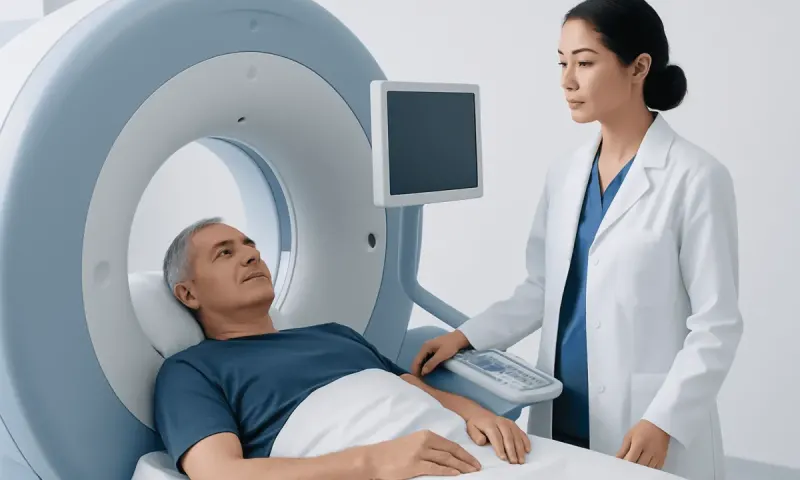
If cancer is confirmed, additional tests may be used to stage the disease and see whether it has spread. These may include ultrasound, CT, MRI, or other imaging studies. Doctors may also evaluate the lymph nodes in the groin because these are common early sites of spread. For patients undergoing a broader cancer workup, advanced PET-CT imaging may sometimes be considered when clinically appropriate to help assess the extent of disease.
Treatment options
Penile cancer treatment depends on the size, depth, and location of the tumor, as well as whether lymph nodes or other organs are involved. Doctors also consider the goal of preserving urinary and sexual function whenever this can be done safely. Treatment planning is often multidisciplinary, involving urology, oncology, pathology, and radiology specialists.
For very early or superficial disease, treatment may include medicated creams, laser therapy, or limited surgery that removes only the abnormal tissue. In some cases, these methods can control the cancer while preserving most of the penis. If the lesion is more invasive, surgery may involve a wider excision, glans surgery, or partial removal of the penis. More advanced disease may require more extensive surgery and treatment of groin lymph nodes.
Radiation therapy may be used in selected cases, either as a main treatment or after surgery. Chemotherapy can be recommended when the cancer is advanced, has spread to lymph nodes, or has spread farther in the body. Broadly, this approach falls within medical oncology care, while certain patients may also benefit from radiation oncology as part of their treatment plan. Treatment is individualized, and the best option depends on the stage and overall health of the patient.
Follow-up is an important part of care because penile cancer can recur. Regular examinations help doctors monitor healing, detect any return of the disease early, and address physical or emotional concerns after treatment. At experienced centers, including Acıbadem Health Point, multidisciplinary specialists in JCI-accredited hospitals evaluate and treat penile cancer for international patients.
Prevention and self-care
There is no guaranteed way to prevent penile cancer, but several practical steps can reduce risk. Good genital hygiene is important, especially for uncircumcised men, because it helps prevent chronic irritation and inflammation. Avoiding tobacco is also one of the most effective ways to lower cancer risk and support overall health.
Reducing the risk of HPV infection may also help. Safer sex practices and HPV vaccination, when appropriate according to age and local guidance, can play a preventive role. People with phimosis or recurrent infections should speak with a doctor, since treating these problems may reduce long-term irritation.
Self-care also includes paying attention to changes in the skin of the penis. If a lesion persists, grows, bleeds, or keeps coming back, stop treating it at home without a diagnosis. Getting medical advice early is usually the most useful thing you can do: most conditions are treatable, and cancer, if it is there, is easier to manage when found sooner.
When to seek medical care
Medical care should be sought if there is a sore, lump, rash, or skin change on the penis that does not improve within a few weeks or returns repeatedly. It is also important to arrange an evaluation for unexplained bleeding, discharge, foul odor under the foreskin, or new swelling in the groin. None of these symptoms automatically mean cancer, but a doctor should look at them.
Prompt care is especially important for people with known risk factors such as smoking, HPV exposure, phimosis, or a history of chronic penile inflammation. Early assessment can help distinguish cancer from infection, dermatologic conditions, or benign growths. If cancer is diagnosed, timely treatment may improve the chance of preserving function and limiting the extent of surgery.
Anyone with severe pain, difficulty urinating, rapidly increasing swelling, or signs of infection such as fever should seek urgent medical attention. A urologist is often the most appropriate first specialist for evaluation, although a primary care doctor can also begin the assessment and referral process.
Frequently asked questions
01Is penile cancer common?
Penile cancer is considered rare, especially compared with other cancers in men. Even so, it is important to recognize it early because treatment is often more effective and less extensive when the disease is found at an earlier stage.
02What does penile cancer look like at first?
Early penile cancer may appear as a sore that does not heal, a red patch, a wart-like growth, thickened skin, or a small lump. It may or may not be painful, which is why a persistent visible change should be assessed even if it seems minor.
03Can penile cancer be mistaken for an infection or skin condition?
Yes. Infections, inflammatory conditions, and some benign skin disorders can look similar to penile cancer. A biopsy is often needed to make a clear diagnosis when a lesion does not improve or has suspicious features.
04Is penile cancer linked to HPV?
Yes, certain high-risk types of HPV are linked to penile cancer. However, not everyone with HPV develops cancer, and penile cancer can also occur in people without known HPV infection.
05How is penile cancer usually treated?
Treatment depends on the stage and location of the cancer. Early disease may be treated with topical therapy, laser treatment, or limited surgery, while more advanced cases may require wider surgery, radiation therapy, chemotherapy, or lymph node treatment.
06Can doctors treat penile cancer without removing the entire penis?
In many early or localized cases, doctors can use organ-preserving approaches that remove only the diseased tissue. The exact option depends on how deep and widespread the tumor is, and the main goal is to treat the cancer safely while preserving function whenever possible.
07When should someone see a doctor about possible penile cancer?
A doctor should be consulted if a sore, lump, rash, bleeding area, or discharge on the penis persists, worsens, or keeps returning. It is also important to seek evaluation for swollen groin nodes or any unexplained change in the appearance of the penis.
This article is for general information only and is not a substitute for professional medical advice. Please consult a qualified doctor about your individual situation.
Persistent digestive symptoms? Get evaluated in Turkey
JCI-accredited · board-certified surgeons · reply within 24h
Add us as a Preferred Source to see more of our trusted health content across Google Search, AI Overviews and Discover.