Patent Foramen Ovale (PFO)

Key Takeaways
- A PFO is a common flap-like opening in the heart that can remain after birth.
- Most people with a PFO never know they have it because it often causes no symptoms.
- A PFO may be considered clinically important when it is linked to a stroke, transient ischemic attack, or certain oxygen-related problems.
- Diagnosis usually involves an echocardiogram, sometimes with a bubble study.
- Treatment ranges from observation and medication to catheter-based closure in selected patients.
- People should discuss the best option with a cardiologist, especially after a neurologic event.
A patent foramen ovale, or PFO, is a small opening between the heart’s upper chambers that usually causes no symptoms. In some people, it is found during evaluation for stroke-like events, migraines, or unexplained low oxygen levels, and it may or may not need treatment.
Overview
A patent foramen ovale, often shortened to PFO, is a small opening between the right and left upper chambers of the heart. Before birth, this opening is normal and helps blood bypass the lungs, which are not yet in use. After birth, the opening usually closes as the heart and circulation adapt to life outside the womb.
In many adults, the flap remains slightly open. This does not automatically mean there is a disease. For most people, a PFO is simply an incidental finding that never causes trouble and is discovered only because an echocardiogram or another heart test was done for a different reason.
The question becomes more important when a PFO is found in someone who has had a stroke without a clear cause, a transient ischemic attack, or unexplained symptoms related to oxygen levels. In those situations, doctors look carefully at whether the PFO is likely to be related to the event or just present in the background.
Symptoms
Most PFOs do not cause noticeable symptoms. Many people live their entire lives without any hint that the opening is there. That is one reason a PFO can feel surprising when it is first mentioned during a consultation or after a test.
When symptoms do occur, they are often indirect rather than specific to the opening itself. A person may first come to medical attention after a stroke-like episode, sudden weakness, speech difficulty, visual changes, or a brief neurologic event. Some people are evaluated for shortness of breath, low oxygen readings, or symptoms that worsen in certain body positions, although these are less common.
It is also worth noting that a PFO is not a typical cause of chest pain, palpitations, or fainting. If those symptoms are present, doctors usually consider other heart or non-heart causes as well, rather than assuming the PFO is responsible.
Causes & Risk Factors

A PFO is not caused by lifestyle choices, diet, stress, or exercise. It is a remnant of normal fetal circulation, which means it develops before birth and simply does not close completely after birth in some people.
Because it is a structural variation rather than an acquired condition, it is not something a person can prevent from forming. The main reason it matters medically is that, under certain conditions, a small clot from the veins can pass through the opening and enter the arterial circulation. This is one pathway that may contribute to a cryptogenic stroke, meaning a stroke with no clear cause found after standard evaluation.
Certain features may make a PFO more likely to be clinically relevant, such as a larger opening, a long tunnel-like flap, or the presence of an associated atrial septal aneurysm. Doctors also consider the person’s age, stroke history, other vascular risk factors, and whether alternative explanations are more convincing.
Diagnosis
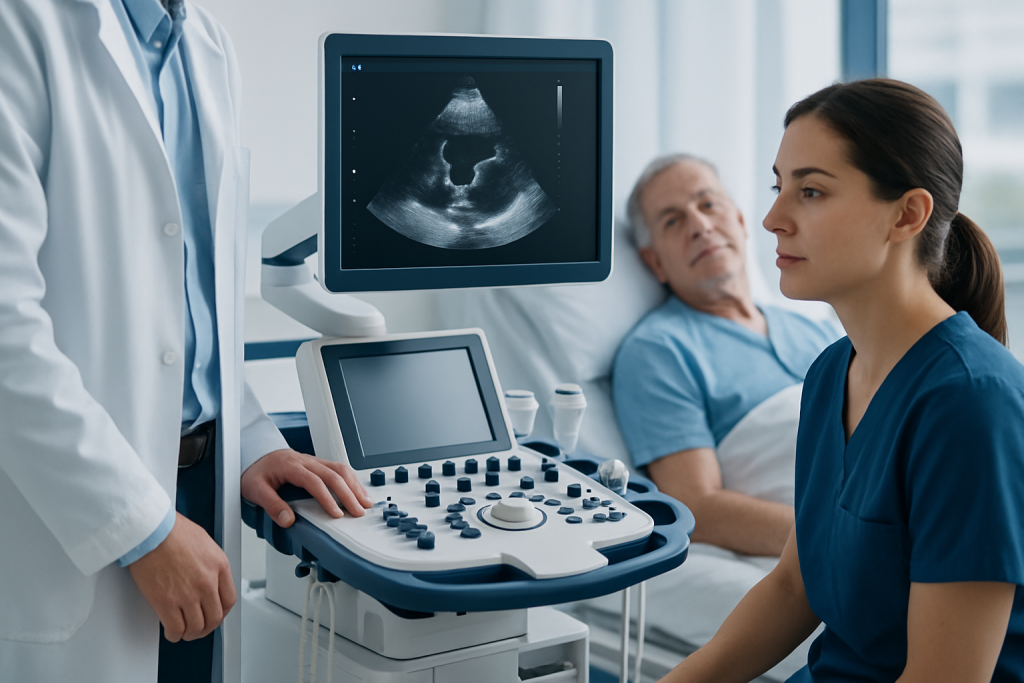
Diagnosis often begins after a clinician suspects a PFO because of a stroke workup or another unexplained finding. A standard transthoracic echocardiogram, which uses ultrasound to look at the heart, may show the opening, but some PFOs are easier to detect with a more targeted study.
A common next step is a bubble study. During this test, tiny air bubbles are injected into a vein while the heart is watched with ultrasound. If the bubbles cross from the right side of the heart to the left, it suggests there is an opening such as a PFO. In some cases, a transesophageal echocardiogram, where the probe is placed in the esophagus for clearer images, may be recommended.
Doctors may also order brain imaging, blood tests, rhythm monitoring, and vascular studies to look for other reasons a stroke or neurologic event happened. This broader evaluation is important because the presence of a PFO alone does not prove it caused the problem.
Treatment Options
Not every PFO needs treatment. If the opening is found incidentally and the person has no related symptoms or events, observation is often appropriate. In this setting, reassurance and routine follow-up may be all that is required.
When treatment is considered, it is usually because the PFO may have played a role in a stroke or another embolic event. In some patients, doctors may recommend medication such as antiplatelet therapy or, in selected situations, anticoagulation if there is another reason to reduce clot risk. The exact choice depends on the full medical picture, not on the PFO alone.
In carefully selected patients, catheter-based closure may be an option. During this minimally invasive procedure, a cardiologist places a device through a vein, usually from the groin, to seal the opening. Recovery is often relatively quick, but patients still need follow-up to confirm the device is in place and that the treatment plan is working as intended.
Patients who are considering treatment from another country often benefit from a coordinated review of imaging, neurologic records, and prior test results before traveling. In that way, the trip can be planned around the right level of care rather than around uncertainty.
Prevention & Self-care
A PFO itself cannot usually be prevented because it is present from birth. However, people can reduce the chance that a clot forms in the first place by paying attention to overall cardiovascular and circulatory health.
General self-care includes staying active as advised by a clinician, maintaining hydration during long travel, avoiding smoking, and discussing clot risk if there is a history of deep vein thrombosis, recent surgery, hormonal therapy, or prolonged immobility. These practical steps matter because the concern with a PFO is often not the opening alone, but the possibility of a clot crossing through it.
For patients who have already been diagnosed, it helps to keep a clear record of prior test results, medications, and any neurologic symptoms. This is especially useful for international patients who may receive part of their care at home and part abroad, since continuity of information makes follow-up smoother and safer.
When to See a Doctor
Medical review is important if a person develops sudden weakness, numbness, speech difficulty, vision loss, severe dizziness, or a sudden severe headache, even if the symptoms improve quickly. These can be warning signs of a stroke or transient ischemic attack and deserve urgent attention.
It is also sensible to speak with a doctor if a PFO is found and there is a history of unexplained stroke, recurrent neurologic symptoms, or unexplained low oxygen levels. A cardiologist can help determine whether the opening is likely to be incidental or whether further evaluation and treatment are worthwhile.
When the situation is more complex, a second opinion can be helpful, particularly if prior testing was done in different places. At Acibadem Health Point, multidisciplinary specialists and JCI-accredited hospitals diagnose and treat this condition for international patients in a coordinated setting, which can make the evaluation and follow-up easier to organize.
Frequently asked questions
01What exactly is a PFO?
A PFO is a small flap-like opening between the heart’s upper chambers that did not fully close after birth. It is a common finding and often causes no symptoms at all.
02Does a PFO mean someone has heart disease?
Not necessarily. Many people have a PFO and never need treatment because it does not affect daily health. It becomes more important when it may be linked to a stroke or another circulation problem.
03How is a PFO usually found?
It is often found during an echocardiogram, sometimes with a bubble study that checks whether blood can pass from one side of the heart to the other. Some patients learn about it during an evaluation for stroke-like symptoms.
04Can a PFO cause a stroke?
In some people, it may contribute to a stroke if a blood clot crosses through the opening and travels to the brain. Doctors usually investigate other possible causes as well before concluding that the PFO is relevant.
05Is PFO closure always necessary?
No. Many PFOs are simply observed, especially when they are found by chance and are not linked to symptoms. Closure is considered mainly in selected patients after a careful specialist review.
06What should a patient bring to a specialist visit?
It helps to bring prior heart tests, brain imaging reports, discharge summaries, and a list of medications. This is especially useful when care is being coordinated across countries or between different hospitals.
This article is for general information only and is not a substitute for professional medical advice. Please consult a qualified doctor about your individual situation.
Explore treatments in Turkey — costs, top hospitals & a free quote
JCI-accredited · board-certified surgeons · reply within 24h
Add us as a Preferred Source to see more of our trusted health content across Google Search, AI Overviews and Discover.