Osteotomy Realigns Bone to Take Pressure Off a Joint
Does your knee hurt on just one side — the inner edge, say — every time you walk up stairs or stand too long? Sometimes the problem isn’t the joint itself. It’s the way your bone is shaped, and how your weight travels through it.
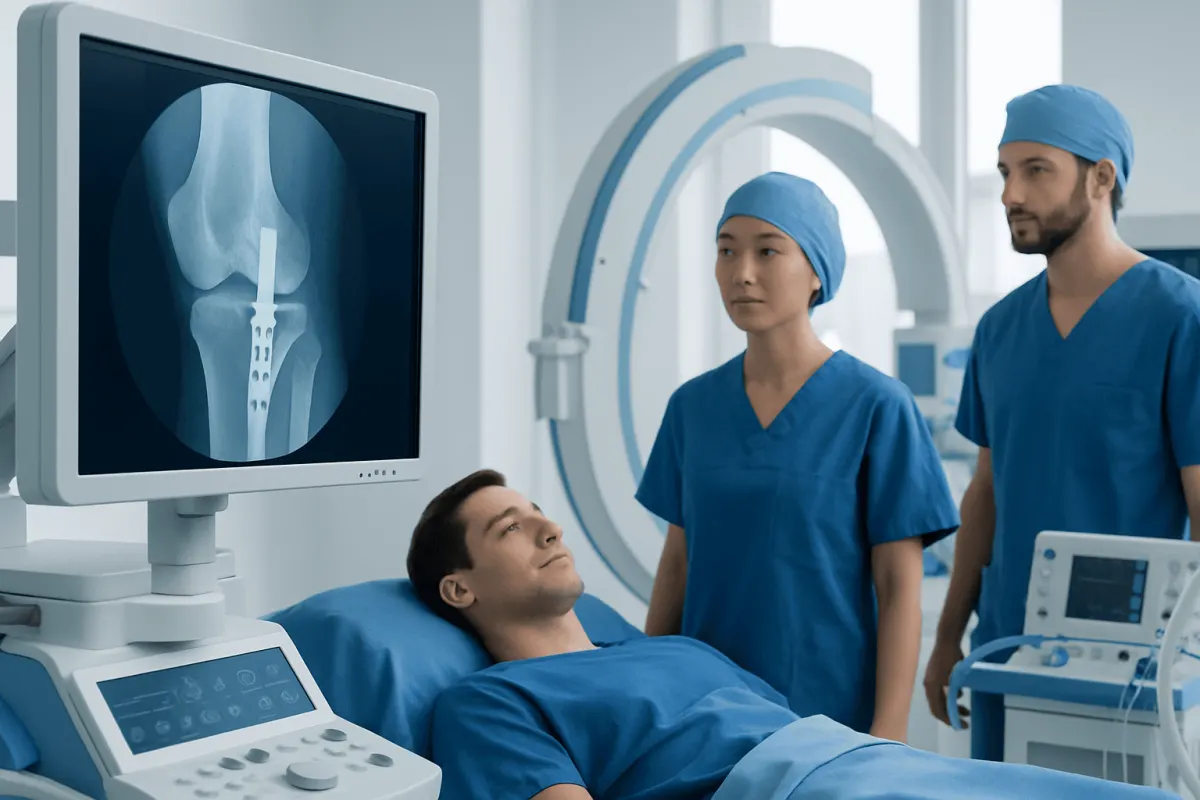
Osteotomy is surgery that cuts and repositions a bone to improve alignment, take pressure off a joint, or correct a deformity. It’s used in carefully selected patients: when symptoms are linked to bone shape or load distribution, and when keeping your own natural joint may be the better path.
Overview: what osteotomy is and why it is done
In an osteotomy, the surgeon cuts a bone and moves it into a better position, then holds it there with plates, screws, staples, or similar devices while it heals. What that does, in practical terms, is change how body weight or movement forces travel through a joint or limb.
Doctors may recommend osteotomy when symptoms are caused by malalignment, deformity, or uneven joint loading. Common examples include bow-legged or knock-kneed alignment affecting the knee, certain hip shape problems, and jaw alignment issues. In some patients, correcting the mechanical problem can reduce pain, improve walking or movement, and protect cartilage that is being overloaded.
Unlike procedures that replace a joint, osteotomy aims to preserve the person’s own bone and joint. For that reason, it is often considered in younger or more active patients, or in people with damage affecting only one part of a joint. It may also be used in children or adolescents for some growth-related bone or hip conditions, depending on the diagnosis.
Where osteotomy is used and who may benefit
Osteotomy can be performed in different parts of the body. Around the knee, it is often used to shift weight away from a worn or painful compartment, especially when one side of the joint has more arthritis than the other. Around the hip, it may help improve the way the ball and socket fit together in selected structural problems. In the face and jaw, it can correct bite problems or skeletal asymmetry.
People who may benefit are those whose symptoms match a correctable alignment problem. A person with pain on one side of the knee, a visible leg alignment issue, and imaging showing damage concentrated in one compartment may be a possible candidate. Similarly, a patient with hip pain caused by bone shape abnormalities may be considered for specialist evaluation, sometimes alongside treatment for related conditions such as hip impingement.
Not everyone with joint pain needs this operation, or would gain from it. If the damage is spread throughout the joint, if bone quality is poor, or if something about your health makes healing less reliable, another treatment is likely the better fit. An orthopedic surgeon weighs symptoms, exam findings, imaging, lifestyle needs, and long-term goals before recommending this procedure.
Symptoms and conditions that may lead to osteotomy
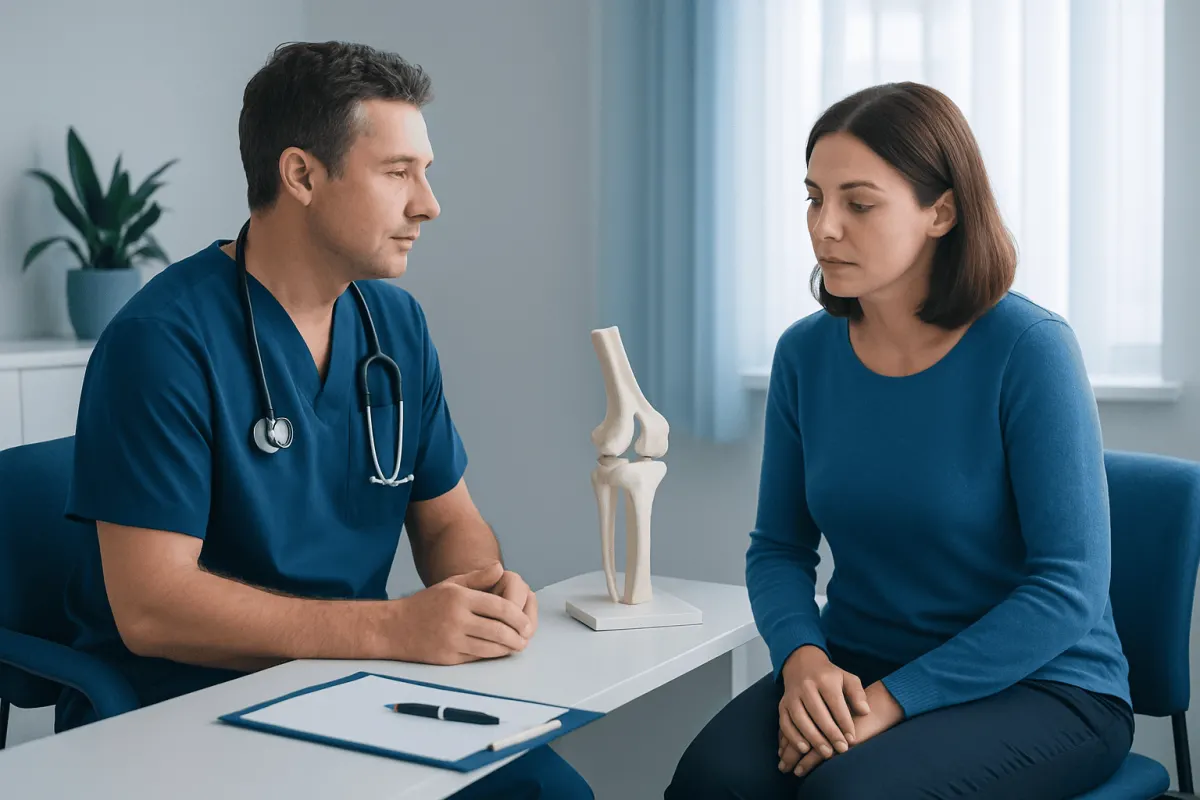
The symptoms that lead to osteotomy depend on the area involved, but they often include pain with activity, reduced function, and visible or measurable malalignment. Around the knee, a person may notice pain when walking, climbing stairs, or standing for long periods, especially if discomfort is focused on the inner or outer side of the joint. Over time, the abnormal load pattern can worsen cartilage wear.
In the hip, symptoms may include groin pain, stiffness, clicking, or limited movement during sports or daily activities. In jaw osteotomy, patients may have difficulty chewing, speech concerns, jaw strain, or a bite that does not line up properly. In children or adolescents, certain developmental bone conditions may be found because of limping, pain, or a difference in leg alignment.
Osteotomy may be considered as part of the management of conditions such as early one-sided <a href="https://acibademhealthpoint.com/diseases/knee-osteoarthritis/”>knee osteoarthritis, deformity after an old fracture, congenital limb alignment problems, and selected hip disorders. It can also be used together with other orthopedic procedures when a single operation is unlikely to solve the mechanical problem completely.
- Knee pain linked to varus or valgus alignment
- Hip pain caused by structural mismatch or instability
- Bone deformity after injury or abnormal healing
- Jaw alignment problems affecting bite and function
- Selected pediatric or adolescent bone and joint conditions
How doctors evaluate osteotomy candidates
Assessment begins with a detailed history and physical examination. The doctor asks where pain is felt, what activities trigger it, whether there has been prior injury, and what treatments have already been tried. Gait, limb alignment, range of motion, ligament stability, and areas of tenderness are also checked carefully.
Imaging is central to planning. Standard X-rays, often taken while standing, help show alignment and where joint wear is concentrated. Depending on the joint and the question being asked, doctors may also use CT or MRI to assess bone shape, cartilage, meniscus, labrum, or surrounding soft tissues. Measurements from imaging help the surgeon calculate how much correction is needed and where the bone cut should be made.
Doctors also consider overall health, smoking status, bone quality, body weight, activity goals, and the ability to participate in rehabilitation. This matters because successful osteotomy depends not only on the technical surgery but also on bone healing and a structured recovery period. In some cases, patients are first advised to try physical therapy, bracing, activity modification, injections, or other non-surgical care before surgery is discussed.
Treatment options: osteotomy and alternatives
When osteotomy is recommended, the exact technique depends on the bone and the correction needed. For example, a knee osteotomy may either open a wedge on one side of the bone or close a wedge on the other side to shift the weight-bearing line. Some hip and pelvic osteotomies reshape the relationship between the socket and the femoral head, while other procedures address rotational deformity or abnormal angulation.
The surgery is usually performed under anesthesia, and the bone is stabilized with internal fixation. Sometimes bone graft material is used to support healing, particularly in procedures where a gap is created. In selected orthopedic cases, osteotomy may be performed alongside related procedures such as knee replacement planning in complex deformity cases, or to support joint-preserving strategies before more extensive surgery becomes necessary.
Alternatives depend on the diagnosis. Non-surgical options can include physiotherapy, weight management, activity modification, anti-inflammatory medicines when appropriate, shoe inserts, braces, or injections. In some people with advanced joint degeneration, hip replacement or other reconstructive surgery may be a more suitable option than osteotomy. The right choice depends on symptom severity, imaging findings, age, and patient priorities.
Recovery, rehabilitation, and possible risks
Recovery takes time, simply because the bone has to knit in its new position. Many patients use crutches or a walker for a period, and weight-bearing may be limited depending on the location and type of procedure. Follow-up appointments and repeat X-rays help the surgical team confirm that healing is progressing as expected.
Rehabilitation is an important part of the outcome. Physical therapy often focuses on controlling swelling, restoring range of motion, rebuilding strength, and helping the patient return to daily activities safely. The timeline varies widely. Some people resume light activities within weeks, while return to sport or high-impact activity may take several months and should follow the surgeon’s guidance.
As with any operation, osteotomy has risks. These may include infection, bleeding, blood clots, stiffness, nerve or blood vessel injury, failure of the bone to heal properly, hardware irritation, under-correction or over-correction, and ongoing pain. Good surgical planning, careful aftercare, and following rehabilitation instructions can help reduce these risks, but no surgery is risk-free.
One thing to be clear about: osteotomy does not stop all future joint change. In some cases it can delay progression and improve quality of life for years, but some people may still need further procedures later. For patients being evaluated for chronic joint symptoms such as knee osteoarthritis, this long-term perspective is part of shared decision-making.
Self-care before and after surgery
What you do beforehand makes recovery smoother. Get any chronic conditions under good control, stop smoking if you can, go through your medications with the surgical team, and set up your home for a period of reduced mobility. Strengthening exercises recommended by a clinician may also help the body cope better with the postoperative period.
After surgery, self-care usually includes taking medications exactly as directed, protecting the operated limb, caring for the wound, attending follow-up visits, and doing rehabilitation exercises consistently. Good nutrition, adequate protein intake, hydration, and sleep support general healing. If the surgeon recommends compression, a brace, or movement precautions, these instructions should be followed closely.
Don’t rush back to driving, work duties, or sport. The safest timeline depends on pain control, mobility, bone healing, and the demands of the activity. A personalized plan from the treating team is more reliable than comparing recovery with someone else’s experience.
When to seek medical care
Medical review is important when joint or limb pain is persistent, when a leg or arm appears noticeably misaligned, or when walking and daily activity become limited. Early assessment may help identify whether symptoms are due to an alignment problem, arthritis, a prior injury, or another bone or joint condition. Seeking care before damage progresses can widen the range of treatment options.
Urgent medical advice is needed after surgery if there is fever, worsening redness or drainage from the wound, severe calf pain, chest pain, shortness of breath, sudden numbness, or pain that becomes markedly worse rather than gradually improving. None of these automatically means something is seriously wrong, but none of them should be brushed off either.
For people considering specialized orthopedic care, multidisciplinary specialists can assess whether osteotomy, rehabilitation, or another approach is most appropriate. Acıbadem Health Point’s JCI-accredited hospitals provide diagnosis and treatment for international patients, including advanced imaging, orthopedic evaluation, and procedures such as knee arthroscopy when indicated as part of broader joint care.
Frequently asked questions
01Is osteotomy the same as joint replacement?
No. Osteotomy preserves the natural joint by cutting and realigning bone, while joint replacement removes damaged joint surfaces and replaces them with implants. Osteotomy is often considered when the problem is strongly related to alignment and joint preservation is still realistic.
02How long does it take to recover from osteotomy?
Recovery varies by the bone involved, the amount of correction, and the person’s general health. Many patients need a period of protected weight-bearing and structured rehabilitation, and full recovery may take several months. The surgeon’s follow-up imaging helps guide when activity can safely increase.
03Is osteotomy painful?
Some pain and swelling are expected after surgery, but the medical team provides a plan to manage them. Discomfort usually improves gradually as healing progresses. Patients should report pain that is suddenly worsening or not responding to the recommended plan.
04Who is a good candidate for knee osteotomy?
A good candidate often has pain mainly on one side of the knee, a clear alignment problem, and damage that is limited rather than spread throughout the entire joint. Age, activity level, ligament stability, body weight, and willingness to complete rehabilitation are also important factors. Final suitability can only be decided after specialist assessment and imaging.
05Can osteotomy prevent arthritis?
Osteotomy cannot guarantee that arthritis will be prevented. However, by improving alignment and reducing abnormal pressure on part of a joint, it may help slow further damage in selected patients. The benefit depends on the stage of joint change and how well the correction matches the underlying problem.
06What are the main risks of osteotomy?
The main risks include infection, blood clots, stiffness, hardware-related problems, nerve or vessel injury, and delayed or incomplete bone healing. There is also a possibility that pain may persist or that the correction may not fully meet the intended goal. A clear discussion with the surgeon helps patients weigh these risks against expected benefits.
This article is for general information only and is not a substitute for professional medical advice. Please consult a qualified doctor about your individual situation.
Joint and spine care in Turkey — expert assessment & treatment
JCI-accredited · board-certified surgeons · reply within 24h
Add us as a Preferred Source to see more of our trusted health content across Google Search, AI Overviews and Discover.