Yoga After Knee Replacement: When to Start Safely

Yoga after knee replacement may be possible for many people once the incision has healed and movement has progressed under the guidance of the surgical and rehabilitation team. The safest approach is gradual, modified and focused on comfortable range of motion, strength, balance and confidence rather than deep poses or rapid progress.
Overview: can someone do yoga after knee replacement?
Yoga after knee replacement can be a useful part of recovery for some people, but timing and pose selection matter. After the operation, the knee and surrounding tissues need time to heal, while the muscles that support walking and balance need structured rehabilitation. A surgeon and physiotherapist can help determine when yoga is appropriate and which movements should be modified.
In the early weeks, prescribed rehabilitation exercises are more important than returning to a regular yoga class. Later, gentle yoga after knee replacement surgery may support flexibility, posture, breathing, balance and general wellbeing. It should complement, not replace, the individual rehabilitation plan.
People recover at different rates. The type of knee replacement, the condition of the other knee and hips, general health, pre-operative mobility and any complications can all influence the return to yoga. The aim is comfortable, functional movement rather than achieving a particular pose depth.
How knee replacement works and who may benefit
Knee replacement surgery, also called knee arthroplasty, is performed to relieve severe pain and loss of function caused most often by advanced osteoarthritis. During the procedure, damaged joint surfaces are removed and replaced with carefully fitted metal and plastic components. A total knee replacement replaces surfaces on both the thigh bone and shin bone, while a partial replacement may be suitable when arthritis affects only one part of the joint.
Candidates are generally people whose knee pain, stiffness and reduced mobility continue despite appropriate non-surgical care, such as exercise therapy, weight management where relevant, pain management and activity adjustment. The decision is based on symptoms and quality of life, examination findings and imaging, rather than age alone.
Before surgery, the orthopedic team reviews medical history, medications, mobility, infection risk and expectations for recovery. Understanding the procedure and rehabilitation process can help people prepare for knee replacement surgery and make realistic plans for returning to daily activities, including yoga.
Knee replacement procedure: step by step
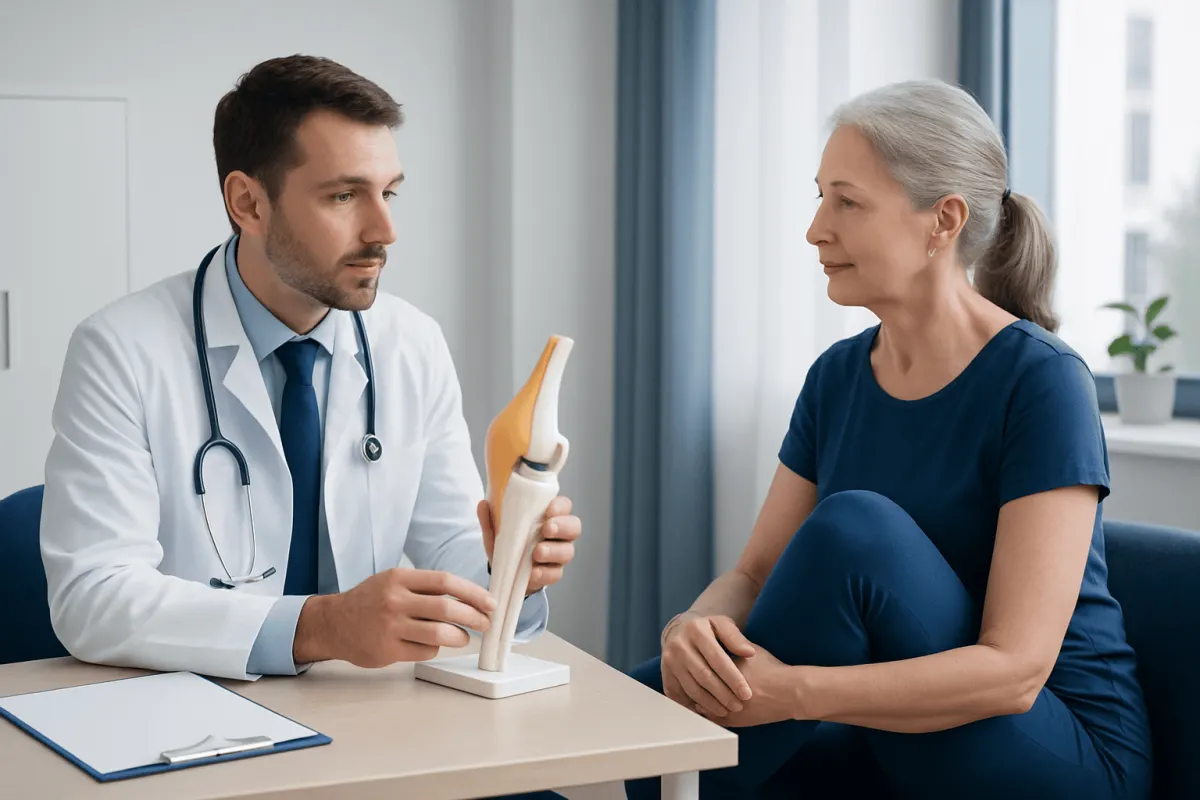
Before the operation, the patient meets the anesthesia and surgical teams, and the knee is prepared according to hospital infection-prevention protocols. Knee replacement is performed under anesthesia. The surgeon makes an incision at the front of the knee, carefully moves tissues aside and removes the damaged bone and cartilage surfaces.
The replacement components are positioned to restore joint alignment and stability. The surgeon checks the knee’s movement, soft-tissue balance and fit before closing the incision. The exact surgical technique, implant design and length of hospital stay vary according to the individual clinical situation.
Early mobilization is usually encouraged when medically appropriate. Physiotherapists teach safe transfers, walking with an aid if needed, circulation exercises and initial knee movements. These early steps help build the foundation for later yoga after knee replacements and other preferred forms of physical activity.
Recovery timeline and the role of yoga
Recovery is gradual. In the first days and weeks, the central goals are protecting the healing incision, managing pain and swelling, walking safely, regaining knee straightening and bending, and reactivating the thigh muscles. The rehabilitation team may prescribe ankle pumps, quadriceps tightening, supported knee bends, straight-leg exercises and short, frequent walks.
As healing progresses, exercise usually becomes more active and functional. Many people can begin carefully selected, low-impact yoga-based movements only after their clinician agrees that the wound is healed and they have adequate balance and knee control. Seated breathing practice, gentle upper-body movements, supported standing poses and simple balance work may be introduced before more demanding practice.
There is no universal date for returning to yoga. Some people may be ready for modified instruction within several weeks, while others need longer. A written yoga after knee replacement PDF from a hospital, physiotherapist or qualified instructor can be helpful only if it has been individualized to the person’s current recovery stage. Online yoga after knee replacement videos may offer ideas, but they cannot assess swelling, gait, alignment or surgical precautions.
During longer-term rehabilitation, ongoing strength training, walking, cycling, water exercise or other low-impact activity may be recommended alongside yoga. A physiotherapist can tailor physical therapy and rehabilitation to restore daily function and support a confident, sustainable return to movement.
What are the five mistakes people make after knee replacement?
Recovery is not identical for everyone, but several patterns can slow progress or increase discomfort. First, doing too much too soon can lead to increased pain and swelling; activity should progress in small steps. Second, avoiding movement because of understandable fear of pain can contribute to stiffness, weakness and reduced confidence.
Third, people may focus only on bending the knee and neglect full knee straightening, which is important for efficient standing and walking. Fourth, skipping prescribed exercises or physiotherapy appointments can make it harder to regain strength, gait control and joint range. Fifth, comparing recovery too closely with another person’s timeline can lead to unsafe overexertion or discouragement.
Other practical mistakes include ignoring a change in wound appearance, using a yoga class that is not adapted for a replacement joint, and returning to high-impact exercise without medical clearance. Rest, ice or other swelling strategies recommended by the care team, regular movement and honest communication with clinicians support a more balanced recovery.
What is the most important exercise after knee replacement surgery?
There is not one single exercise that is best for every person after knee replacement surgery. In early recovery, the most important work is usually the set of exercises prescribed by the physiotherapist, particularly those that restore knee straightening, gradually improve bending, activate the quadriceps muscles and support safe walking.
For many people, regular short walks combined with knee range-of-motion and thigh-strengthening exercises form the core of rehabilitation. The exact exercise selection changes over time. An exercise that is appropriate immediately after surgery may not be the most useful several weeks later, when balance, endurance and functional strength become greater priorities.
Yoga after knee replacement exercises should be viewed as an addition to this foundation. A gentle chair-based practice, supported weight shifting or controlled standing balance may be useful when approved, but these movements should not displace the rehabilitation exercises specifically chosen for the patient’s knee.
Will I ever be able to squat after knee replacement?
Some people can return to a partial or modified squat after knee replacement, especially as strength, balance and comfortable knee bending improve. However, the depth that feels safe and achievable varies substantially. A deep squat may be uncomfortable or not advisable for some people because of knee motion limits, strength deficits, balance concerns or the demands placed on the joint.
A physiotherapist can assess squat mechanics and teach a gradual progression, often beginning with sit-to-stand practice from a higher chair and supported mini-squats. Keeping the movement controlled, maintaining alignment through the hip, knee and foot, and avoiding painful depth are important. Holding onto a stable support may be useful during early practice.
Squatting should not be forced to meet a yoga goal. Functional tasks, such as sitting down, rising from a chair and safely picking up light items, are more meaningful markers of progress. Anyone who experiences sharp pain, catching, giving way or persistent swelling during squatting should stop and consult the surgical or rehabilitation team.
What yoga poses to avoid with knee replacement?
After knee replacement, people should generally avoid poses that cause sharp pain, force the knee into a deep bend or twist, place pressure directly on the kneecap, or challenge balance beyond their current ability. Deep kneeling, prolonged kneeling, full lotus or half-lotus positions, deep squats, intense lunges and fast transitions may be unsuitable, particularly during the first stages of return to practice.
Floor-based poses can also be difficult if the person cannot safely lower themselves down and stand back up. Positions requiring the knee to rotate while bearing weight should be approached cautiously. A qualified instructor should know that the participant has had knee replacement surgery and should offer props, a chair, blocks, a wall or other supports as needed.
Gentle alternatives may include chair yoga, supported mountain pose, adapted warrior poses with a shorter stance, slow weight shifts and mindful breathing. The replacement knee should never be pushed through pain. If a pose produces increased swelling later that day or the next day, it may have been too demanding and should be reviewed with a clinician.
Benefits, risks and when to seek medical care
When introduced at the right time, modified yoga may offer benefits such as improved body awareness, flexibility in surrounding muscles, balance, relaxation and confidence with movement. It can also be a pleasant way to remain active. These potential benefits depend on using safe modifications and maintaining the strengthening and walking program advised by the rehabilitation team.
Risks can include falls, overloading the healing knee, irritating soft tissues or delaying recovery by doing activities that are too advanced. A replacement knee may also have long-term movement limits. Low-impact exercise is usually preferred, while high-impact jumping, running or sudden pivoting may not be suitable for everyone.
Medical advice should be sought promptly for increasing redness, warmth or drainage from the wound; fever or feeling unwell; worsening calf pain or swelling; chest pain or shortness of breath; a sudden inability to bear weight; new knee instability; or pain and swelling that are worsening rather than gradually improving. These symptoms do not always indicate a serious problem, but they require timely assessment.
For international patients, Acıbadem Health Point’s multidisciplinary specialists and JCI-accredited hospitals can assess knee conditions, provide surgical care and coordinate rehabilitation planning. Ongoing follow-up with the operating surgeon and local rehabilitation professionals remains important after travel.
Frequently asked questions
01When can yoga begin after knee replacement?
Yoga can begin only after the surgeon or physiotherapist confirms that recovery is progressing appropriately. Gentle, adapted movements may be considered before a return to regular classes, but the timing varies according to wound healing, swelling, strength, balance and knee motion. The initial focus should remain on the prescribed rehabilitation program.
02Is chair yoga safe after knee replacement surgery?
Chair yoga can be a practical lower-risk option because it reduces the need to kneel, get down to the floor or balance on one leg. It still needs modification to avoid painful bending, twisting or unsupported transitions. A clinician or instructor familiar with joint replacement rehabilitation can help adapt movements.
03Can a person kneel after a knee replacement?
Some people can kneel after healing, while others find it uncomfortable or prefer to avoid it. Kneeling ability does not necessarily indicate whether the replacement is functioning well. It should be discussed with the surgical team, and padding or gradual desensitization may be suggested when appropriate.
04Should pain be expected during yoga after knee replacement?
Mild muscle effort or temporary stiffness may occur as activity increases, but sharp, escalating or lingering pain is not a signal to push harder. The activity should be stopped if it causes pain, instability or increased swelling. Persistent symptoms should be discussed with a healthcare professional.
05Can yoga replace physiotherapy after knee replacement?
No. Yoga can complement rehabilitation, but it does not replace the individualized exercises and clinical assessment provided by physiotherapy. Rehabilitation specifically addresses knee range of motion, muscle strength, walking pattern, balance and safe functional movement.
06Which activities are usually preferred after knee replacement?
Many people are encouraged to choose low-impact activities such as walking, cycling, swimming or water exercise, golf and modified yoga, depending on their recovery and medical advice. The best activity is one that is comfortable, sustainable and appropriate for the individual's strength and balance. The surgeon can advise on any sport-specific precautions.
This article is for general information only and is not a substitute for professional medical advice. Please consult a qualified doctor about your individual situation.
Joint and spine care in Turkey — expert assessment & treatment
JCI-accredited · board-certified surgeons · reply within 24h
Add us as a Preferred Source to see more of our trusted health content across Google Search, AI Overviews and Discover.