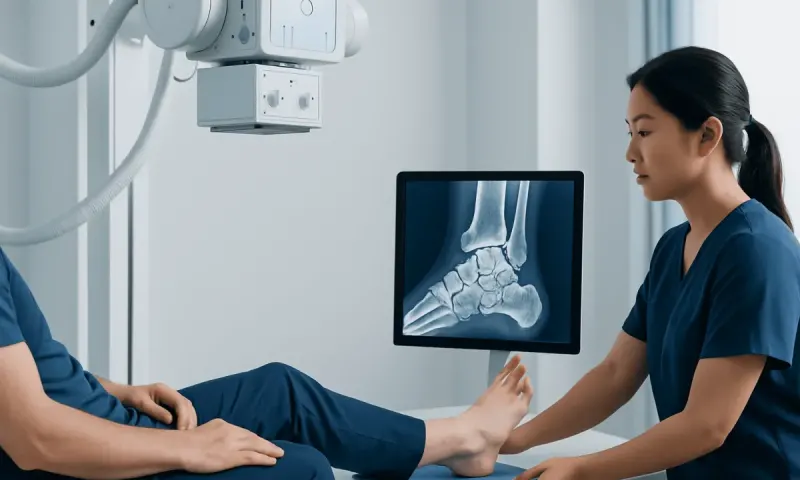
An Oblique Fracture Is a Bone Break at an Angle

You slipped, twisted your ankle, or took a hard hit on the field — and now the pain won’t settle. When the X-ray comes back, your doctor may point to a crack that runs diagonally across the bone rather than straight across. That is an oblique fracture.
It can happen after a fall, a twist, a sports injury, or a direct impact. What happens next depends on which bone is involved, how far the broken ends have shifted, and whether the skin or nearby tissues have been affected.
Overview: what an oblique fracture means
An oblique fracture is a break that crosses the bone at a slanted or diagonal angle. In simple terms, the crack does not run straight across or straight along the bone. This pattern matters because the angle of the break can affect how stable the bone is and whether the broken ends may shift out of place.
Oblique fractures can occur in many parts of the body, including the arm, leg, hand, foot, and larger bones such as the tibia or femur. Some are closed fractures, meaning the skin remains intact. Others are open fractures, where the bone or wound breaks through the skin, which needs urgent medical care because of the risk of infection.
Here is the key point: an oblique fracture is defined by the direction of the break seen on imaging, not by how much it hurts. A small diagonal fracture in a finger may be treated very differently from a displaced oblique fracture in the lower leg. The treatment plan depends on the exact bone, alignment, surrounding soft-tissue injury, and the person’s general health.
Symptoms and how it may feel
The symptoms of an oblique fracture are often similar to those of other broken bones. Pain is usually immediate and tends to worsen with movement, pressure, or attempts to bear weight. Swelling and bruising commonly follow, sometimes within minutes and sometimes more gradually over several hours.
The injured area may look visibly different. A person may notice deformity, tenderness at one specific point, reduced range of motion, or a feeling that the limb is unstable. If the fracture affects the leg or foot, walking may become difficult or impossible. If it affects the arm or hand, gripping, lifting, or rotating the limb may be limited.
Symptoms can vary depending on whether the fracture is displaced. In a displaced fracture, the broken bone ends have moved out of normal alignment, which may make the shape of the limb appear unusual. In a nondisplaced fracture, the bone remains more closely aligned, so the injury can sometimes be mistaken for a severe sprain. So if pain lingers after a fall or a twist, do not shrug it off.
- Pain that increases with movement or pressure
- Swelling, bruising, or warmth around the injury
- Tenderness over the bone
- Difficulty using the arm, hand, leg, or foot
- Visible deformity or abnormal positioning
- Numbness, tingling, or color change if nerves or blood flow are affected
How oblique fractures happen: causes and risk factors
Oblique fractures usually happen when force is applied at an angle. This may occur during a fall, a sports collision, a twisting injury, or a direct blow such as in a traffic accident. Because the force is diagonal or combined with rotation, the crack line forms at a slant rather than straight across the bone.
Some fractures result from high-energy trauma, while others happen after relatively minor injury if the bone is already weakened. Older adults, people with low bone density, and those with certain long-term medical conditions may be more likely to break a bone after a simple fall. Conditions that reduce bone strength, such as osteoporosis, can raise fracture risk.
Risk factors also include contact sports, overuse, poor balance, previous fractures, and medications that affect bone health. In children, the growth plate may also be involved in some injuries, which needs careful evaluation. In any age group, the mechanism of injury gives doctors useful clues about whether the fracture may be stable, displaced, or associated with other injuries.
How doctors diagnose an oblique fracture
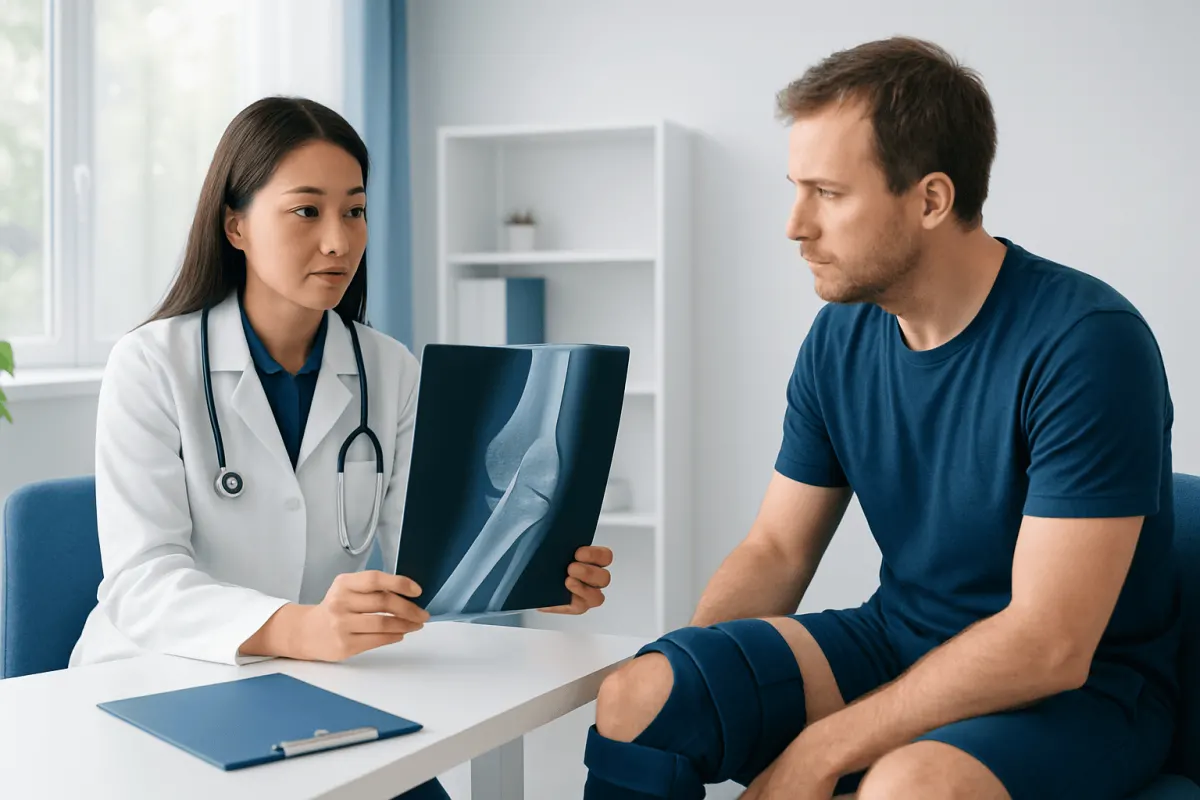
Diagnosis begins with a medical history and physical examination. A doctor will ask how the injury happened, where the pain is strongest, and whether the person can move or bear weight on the area. The exam also checks for swelling, deformity, open wounds, and signs that nerves or blood vessels may be affected.
X-rays are the main test used to confirm an oblique fracture and show the direction of the break. Images are often taken from more than one angle so the fracture pattern and alignment can be assessed clearly. Follow-up X-rays may also be needed later to make sure the bone is healing in the correct position.
In some cases, additional imaging helps with treatment planning. A CT scan may be used when a fracture extends into a joint or when the exact pattern is difficult to define on plain X-ray. MRI is less commonly needed for a straightforward fracture, but it may help if there is concern about soft tissues, occult injury, or associated ligament damage. For complex injuries, patients may be referred for specialist assessment through orthopedic care and, if needed, advanced imaging evaluation.
Treatment options and what recovery may involve
Treatment for an oblique fracture depends on several factors: which bone is broken, whether the fracture is displaced, whether the joint is involved, and whether the skin or surrounding tissues have been injured. The main goals are to restore alignment, keep the bone stable while it heals, control pain, and help the person return to safe movement and function.
Many stable or well-aligned fractures can be treated without surgery. Initial care may include a splint, followed by a cast or brace once swelling improves. Patients are usually advised to rest the area, keep it elevated when possible, and follow guidance on safe movement or weight-bearing. Pain relief and ice may be recommended as part of early care, but medication choice should be discussed with a clinician.
If the broken ends have shifted, the doctor may need to realign them, a process called reduction. Some fractures can be reduced without surgery, while others need an operation to hold the bone in place using devices such as plates, screws, pins, or rods. This is more likely when the fracture is unstable, open, significantly displaced, or involves a joint surface. In these situations, orthopedic surgery may be considered.
Your recovery is not over the moment the X-ray looks better. Stiffness, weakness, and reduced confidence with movement are common after immobilization. A supervised exercise plan or physical therapy and rehabilitation may help restore strength, flexibility, balance, and function. Healing time varies widely. Follow your own clinician’s schedule for review, and try not to measure your progress against someone else’s injury.
Self-care, healing support, and prevention
Self-care after an oblique fracture should support healing without putting extra stress on the bone. Patients are usually advised to protect the injured area, avoid activities that could displace the fracture, and follow instructions about splints, casts, boots, or crutches carefully. If swelling is present, elevation and rest are often helpful, especially in the first days after injury.
What you do for your general health helps your bone heal too. Eating a balanced diet with enough protein, calcium, and vitamin D is important, and smoking cessation is strongly encouraged because smoking can slow healing. People should also ask their doctor whether any medicines or health conditions could affect bone recovery.
Prevention focuses on reducing injury risk and protecting bone strength. Helpful steps may include improving home safety to prevent falls, wearing appropriate sports equipment, using proper training techniques, and maintaining muscle strength and balance. For adults at risk of fragile bones, evaluation for underlying bone loss may be appropriate, especially after a low-impact fracture.
When to seek medical care
Medical evaluation is important whenever a fracture is possible. A person should seek prompt care after a fall, blow, or twisting injury if there is significant pain, swelling, bruising, or trouble using the limb. Even if the limb does not look deformed, a nondisplaced fracture can still be present.
Urgent care is needed if the bone may have broken through the skin, if bleeding does not stop, or if the injured area becomes pale, cold, numb, or blue. These signs may suggest damage to blood vessels, nerves, or surrounding tissues. Severe deformity, inability to bear weight, or pain that is intense and worsening should also be assessed quickly.
Patients should also contact a clinician if symptoms are not improving as expected during recovery, if a cast or splint feels too tight, or if fever, drainage, or increasing redness develops around a wound. Some patients prefer to be treated in a center where orthopedics, imaging, and rehabilitation work together under one roof. Acıbadem Health Point’s multidisciplinary specialists in JCI-accredited hospitals diagnose and treat bone injuries for international patients.
Frequently asked questions
01Is an oblique fracture the same as a simple fracture?
Not exactly. An oblique fracture describes the angle of the break, while the word simple often refers to a closed fracture where the skin is not broken. An oblique fracture can be simple or more complex depending on displacement and associated injury.
02Can an oblique fracture heal without surgery?
Yes, many oblique fractures heal without surgery if the bone remains well aligned and stable. Treatment may involve a splint, cast, brace, or boot, along with follow-up imaging. Surgery is more likely if the fracture is displaced, unstable, open, or extends into a joint.
03How long does an oblique fracture take to heal?
Healing time varies depending on the bone involved, the person’s age, general health, and whether surgery was needed. Some smaller fractures heal in weeks, while larger or more complex injuries can take much longer. Full recovery of strength and movement may continue after the bone itself has healed.
04What is the difference between an oblique fracture and a spiral fracture?
Both can be linked to twisting forces, but they are not identical. An oblique fracture runs diagonally across the bone in a relatively straight slant, while a spiral fracture wraps around the bone in a corkscrew-like pattern. Imaging helps distinguish the exact fracture type.
05Should a person walk on an oblique fracture?
A person should not assume it is safe to walk on a suspected oblique fracture. Weight-bearing can worsen pain, shift the bone, or delay healing. The safest approach is to seek medical advice and follow instructions on whether walking or using the limb is allowed.
06What complications can happen if an oblique fracture is not treated properly?
Potential complications include poor alignment, delayed healing, nonunion, chronic pain, stiffness, and reduced function. In some cases, nearby nerves, blood vessels, or joint surfaces may also be affected. Early diagnosis and proper follow-up help lower these risks.
This article is for general information only and is not a substitute for professional medical advice. Please consult a qualified doctor about your individual situation.
Joint and spine care in Turkey — expert assessment & treatment
JCI-accredited · board-certified surgeons · reply within 24h
Add us as a Preferred Source to see more of our trusted health content across Google Search, AI Overviews and Discover.