Nose Job Before and After: A Realistic Patient Guide

A nose job, or rhinoplasty, can reshape the nose and sometimes improve breathing, but results are gradual rather than immediate. Understanding what “before and after” really means can help patients set realistic expectations and make informed decisions.
Overview: What “Nose Job Before and After” Really Means
The phrase “nose job before and after” often suggests a dramatic instant transformation. In real life, rhinoplasty is a highly individualized operation that aims to improve the nose in a way that fits the patient’s facial features, skin thickness, anatomy, and goals. Some people want a smaller hump, a more refined tip, better symmetry, or correction after injury, while others also need help with breathing.
Rhinoplasty may be cosmetic, functional, or both. Cosmetic rhinoplasty focuses on appearance. Functional rhinoplasty addresses structural problems that affect airflow, such as a deviated septum or collapse of nasal support. In many cases, surgeons evaluate both appearance and function together because the nose plays a central role in facial balance and breathing.
“Before” includes more than photographs. It also includes the patient’s starting anatomy, skin quality, healing patterns, expectations, and reasons for wanting surgery. “After” is not just the result seen one week after the operation. It refers to the long-term outcome after swelling settles and the tissues mature.
Many patients considering facial harmony procedures ask how rhinoplasty compares with other profile-balancing operations such as chin aesthetic surgery. In selected cases, the surgeon may discuss overall facial proportions rather than focusing on the nose alone, because small changes in one feature can influence how the entire face looks.
What Changes Can Be Seen Before and After Rhinoplasty?
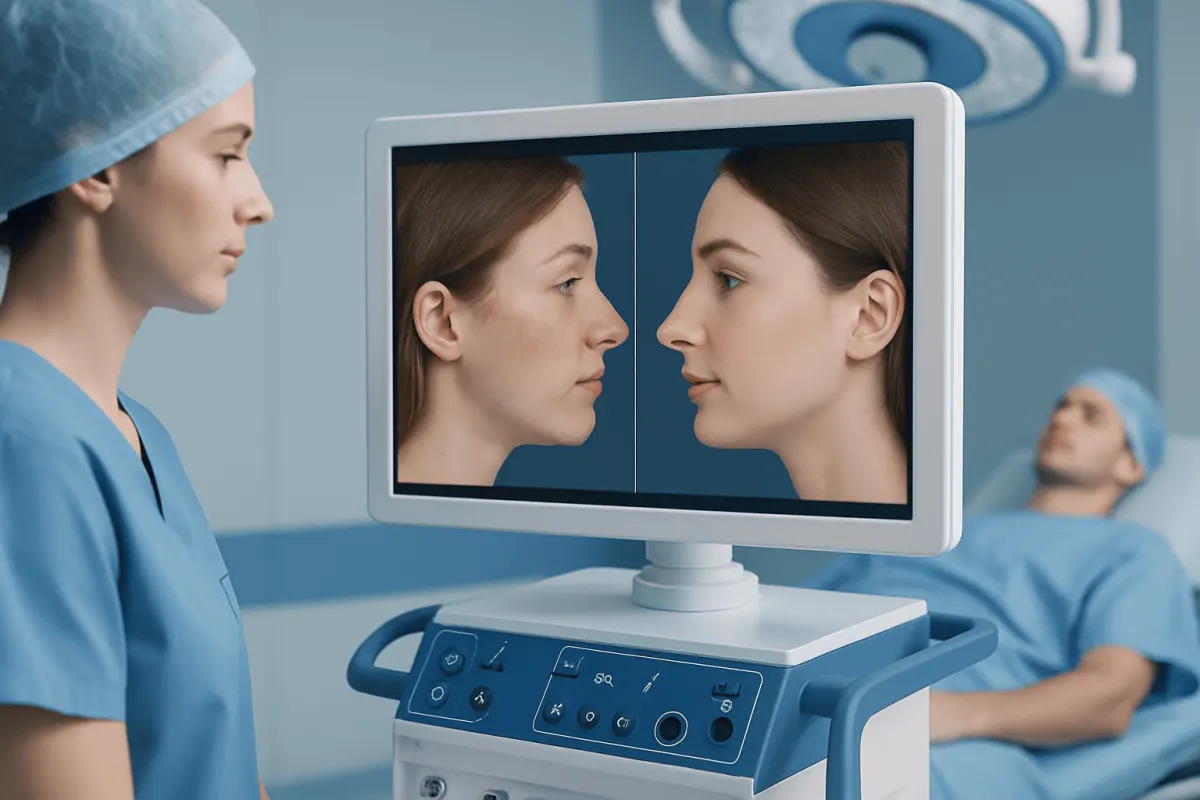
Rhinoplasty can change several visible features of the nose. Common goals include reducing a dorsal hump, narrowing the bridge, refining a wide or bulbous tip, adjusting nostril shape, lifting or lowering the tip, straightening a crooked nose, or improving the angle between the nose and upper lip. The exact change depends on the patient’s anatomy and the amount of safe surgical adjustment possible.
Results are usually best judged in the context of the whole face. A successful outcome does not always mean a nose that draws attention. Often, it means the nose appears more balanced, less distracting, and more natural in relation to the eyes, cheeks, lips, and chin. For this reason, surgeons often speak about harmony rather than perfection.
Before-and-after differences may be subtle or significant. A small refinement can make a noticeable change in profile and self-confidence, while extensive reshaping may be needed after congenital differences or trauma. If the nose has been altered by injury, the evaluation may overlap with care for facial trauma, where both structure and appearance matter.
Patients should remember that edited social media images and idealized comparison photos can be misleading. Lighting, head position, makeup, and facial expression all affect how a nose looks in pictures. Reliable surgical assessment uses standardized photographs, clinical examination, and a discussion of what changes are actually achievable.
Who May Consider a Nose Job and What Are Realistic Expectations?

People consider rhinoplasty for many reasons. Some have disliked the appearance of their nose for years. Others seek correction after injury, want revision of a previous nose surgery, or have breathing problems linked to the internal nasal structures. The best candidates are generally healthy, understand the recovery process, and want improvement rather than perfection.
Realistic expectations are one of the most important parts of a good outcome. Rhinoplasty can improve proportion, smooth certain contours, and support better airflow in selected cases. However, it cannot guarantee complete facial symmetry, a specific celebrity nose, or identical “before and after” results from one patient to another. The underlying bone, cartilage, and skin place real limits on what surgery can do.
Age and maturity also matter. Nasal growth should be sufficiently developed before elective cosmetic surgery is considered. Emotional readiness is equally important. Patients should feel that the decision is their own, not driven by pressure from others or by the hope that surgery will solve unrelated personal concerns.
During consultation, the surgeon may explore whether the patient is mainly concerned about one feature or whether facial balance as a whole is the issue. In some cases, complementary procedures such as cheek augmentation or other facial treatments may be discussed, but only if they are genuinely relevant to the patient’s goals and anatomy.
How Surgeons Evaluate the Nose Before Surgery
Preoperative evaluation usually includes a detailed medical history, physical examination, and standardized photographs from different angles. The surgeon examines the nasal bones, cartilage, skin thickness, tip support, septum, airflow, and facial proportions. Previous surgery, allergies, sinus symptoms, smoking, medications, and any history of easy bleeding or poor scarring are also important to discuss.
Some clinics use computer imaging to help explain possible changes. This can be a helpful communication tool, but it is not a promise of the final result. Digital simulations show a potential direction, not a guaranteed outcome. Every patient heals differently, and tissues may settle in ways that vary from an image on a screen.
The surgeon also considers whether the patient has factors that may affect healing or scar quality. For example, a personal tendency toward thicker or raised scarring may be relevant, especially in procedures that use an external incision. Patients with a history of keloid scars should mention this early, although visible scarring after standard rhinoplasty is often minimal when surgery is carefully planned.
At this stage, the consultation should cover the planned technique, anesthesia, expected downtime, follow-up visits, possible risks, and whether the operation is primary or revision rhinoplasty. A clear conversation before surgery is one of the best ways to reduce misunderstandings about the eventual “after.”
Recovery Timeline: Why the “After” Takes Time
One of the most common misunderstandings about rhinoplasty is that the final result appears quickly. In fact, swelling is a normal part of healing and can make the nose look puffy, uneven, or firmer than expected in the early weeks. Bruising around the eyes may also occur for a short time. An initial improvement may be visible once a splint is removed, but this is not the final shape.
Most people can expect the nose to keep refining over many months. The bridge may settle sooner, while the tip often takes longer, especially in people with thicker skin. Small asymmetries can appear during healing and then improve as swelling changes. Because of this, before-and-after comparison photos are most meaningful when they are taken at consistent intervals and under similar conditions.
Early recovery usually focuses on rest, head elevation, avoiding pressure on the nose, and following the surgeon’s instructions. Patients are often advised to avoid strenuous exercise for a period, protect the nose from accidental bumps, and be careful with glasses if the surgeon recommends it. Sun protection matters too, because healing skin can be more sensitive to discoloration.
Patience is essential in revision cases or in noses that have been injured before surgery. Scar tissue, previous cartilage removal, or changes from trauma can make healing less predictable. For some patients, surgeons also discuss reconstructive principles used in other facial procedures, including approaches seen in auricular reconstruction or related structural surgery, where shape and support must be rebuilt carefully over time.
Risks, Limitations, and When Revision May Be Needed
Like any operation, rhinoplasty has possible risks. These may include bleeding, infection, anesthesia-related complications, prolonged swelling, asymmetry, visible contour irregularities, numbness, scarring, or dissatisfaction with appearance. Functional concerns can also occur, such as persistent blockage or changes in airflow if healing does not go as expected.
It is important to understand that even technically well-performed surgery has limitations. Thick skin may hide fine tip definition, thin skin may reveal tiny irregularities more easily, and previously injured or operated noses may be harder to correct. Sometimes the safest plan is a conservative improvement rather than a dramatic change.
Revision rhinoplasty may be considered if the patient has ongoing breathing difficulty, structural collapse, or an aesthetic concern that remains after healing is complete. Surgeons usually recommend waiting until the nose has healed adequately before deciding on further surgery, unless there is an urgent functional reason. This waiting period allows swelling and scar tissue to mature so the true result can be assessed.
Patients who have had facial injuries, burns, or complex reconstructive histories may need a more tailored plan. In such situations, care can overlap with principles used for conditions such as burn-related reconstruction, where protecting blood supply, tissue quality, and long-term contour is essential.
How to Prepare and How to Support the Best Outcome
Preparation begins with choosing an appropriately trained surgeon and having an honest consultation. Patients should ask about the surgeon’s experience with rhinoplasty, whether both cosmetic and breathing concerns will be assessed, and what kind of results are realistic for their own face. Bringing reference photos can help communication, but they should be used to show preferences rather than to request an exact copy.
General health habits can also support recovery. Patients are commonly advised to avoid smoking and nicotine, discuss all medicines and supplements, and follow preoperative instructions carefully. Stopping or adjusting certain products may be necessary if they increase the risk of bleeding, but this should always be done under medical guidance.
After surgery, practical steps matter. A calm recovery space, help with daily tasks for the first days, and attendance at follow-up visits can all make healing smoother. It is helpful to focus on gradual progress rather than checking the nose constantly in the mirror, since day-to-day swelling changes are common and can be misleading.
For patients seeking care abroad or comparing surgical centers, it is reasonable to ask about accreditation, surgical planning, and postoperative support. Near the end of the treatment journey, some international patients choose centers such as Acıbadem Health Point, where multidisciplinary specialists in JCI-accredited hospitals evaluate and treat aesthetic and reconstructive concerns with coordinated follow-up. In broader facial planning, some patients also explore related contouring options like aesthetic neck contouring when recommended by their surgeon.
When to See a Doctor
Anyone considering a nose job should see a qualified surgeon for a personalized assessment rather than relying only on online before-and-after galleries. Professional evaluation is especially important if the person has nasal obstruction, snoring related to nasal blockage, a history of trauma, prior nasal surgery, or concerns about a major cosmetic change.
After surgery, patients should keep all follow-up appointments and contact their medical team if they have symptoms that seem unusual or worrying. Increasing pain, heavy bleeding, fever, a sudden change in breathing, signs of infection, or injury to the healing nose should be assessed promptly. Even if a symptom turns out to be minor, asking early is better than guessing.
People who feel distressed by their appearance despite reassurance, or who become preoccupied with small details, may also benefit from a careful conversation with their surgeon before deciding on additional procedures. Emotional well-being is an important part of satisfaction after aesthetic surgery.
Ultimately, the most realistic “before and after” outcome is one based on safe surgery, healthy healing, and goals that match the patient’s anatomy. A consultation with a qualified doctor can help clarify what is possible, what is not, and what timeline to expect.
Frequently asked questions
01How long does it take to see final nose job before and after results?
Initial changes are often visible within the first few weeks after splint removal, but swelling can still mask the final shape. Many noses continue to refine for months, and the tip may take the longest to settle. Final results are usually judged after long-term healing rather than early photos.
02Will a nose job make the nose look completely perfect?
Rhinoplasty can improve shape, proportion, and sometimes breathing, but it cannot guarantee perfection. Every nose has natural anatomical limits, and slight asymmetry can still exist after surgery. The aim is usually balance and harmony, not an artificial or flawless appearance.
03Are before and after rhinoplasty photos always reliable?
Photos can be helpful, but they do not tell the whole story. Lighting, camera angle, swelling, makeup, and image editing can affect appearance. Standardized photos taken by a clinic are generally more useful than casual or social media images.
04Can rhinoplasty improve breathing as well as appearance?
Yes, in some patients rhinoplasty is combined with functional nasal surgery to improve airflow. This depends on whether there is an internal structural problem, such as septal deviation or weak support. A medical examination is needed to determine whether breathing issues can be addressed during the same operation.
05Is revision rhinoplasty common?
Some patients do need revision surgery, but it is not appropriate in every case. Minor irregularities may improve as swelling resolves, so surgeons often recommend waiting until healing is complete before making decisions. Revision surgery is usually more complex than a first operation because of scar tissue and altered anatomy.
06Will there be visible scars after a nose job?
Many rhinoplasty techniques leave scars mostly inside the nose, where they are not visible. If an open approach is used, there is a small incision across the columella, the strip of tissue between the nostrils. In most patients, that scar heals well and becomes less noticeable over time.
This article is for general information only and is not a substitute for professional medical advice. Please consult a qualified doctor about your individual situation.
Explore treatments in Turkey — costs, top hospitals & a free quote
JCI-accredited · board-certified surgeons · reply within 24h
Add us as a Preferred Source to see more of our trusted health content across Google Search, AI Overviews and Discover.