Norwood 6 Hair Loss: Can a Transplant Restore Coverage?
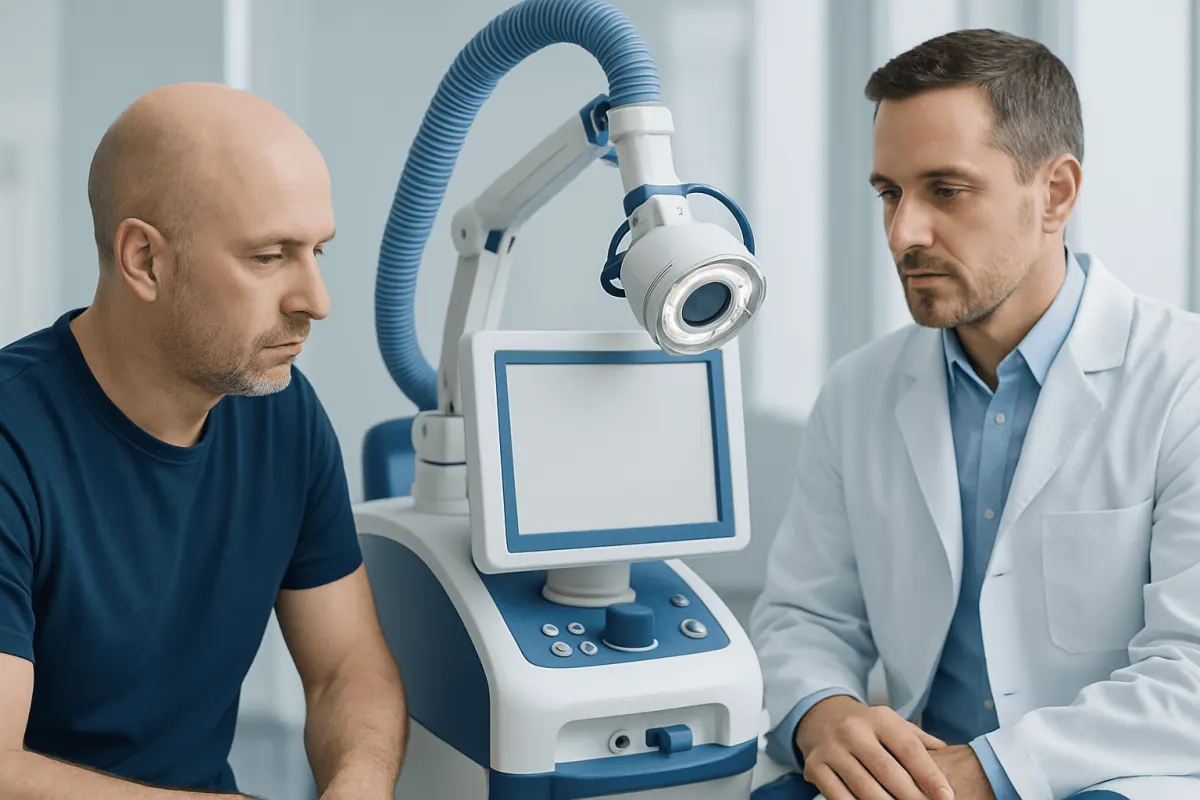
Norwood 6 is an advanced stage of the Hamilton-Norwood scale, with broad hair loss across the frontal scalp, mid-scalp, and crown. Surgical restoration may create a more balanced hair pattern when donor reserves are suitable, but careful planning and realistic long-term expectations are important.
What Norwood 6 Means
Norwood 6 describes advanced male-pattern hair loss, in which frontal and crown hair loss have joined across much of the top of the scalp while a horseshoe-shaped band of hair usually remains at the sides and back. A hair transplant may improve facial framing and scalp coverage when stable donor hair is available, but it cannot usually recreate the density of a full youthful head of hair. Recovery is gradual, with early shedding followed by new growth over several months and more mature results often assessed after 12 to 18 months.
The Hamilton-Norwood scale is a visual classification system, not a diagnosis or a measure of a person’s general health. It is most often used for androgenetic alopecia, a hereditary and hormone-sensitive form of hair loss. A Norwood 6 pattern can progress at different rates, and the appearance of the donor area, hair characteristics, scalp health, and future hair-loss risk are all important when considering treatment.
Planning a Norwood 6 Hair Restoration Procedure
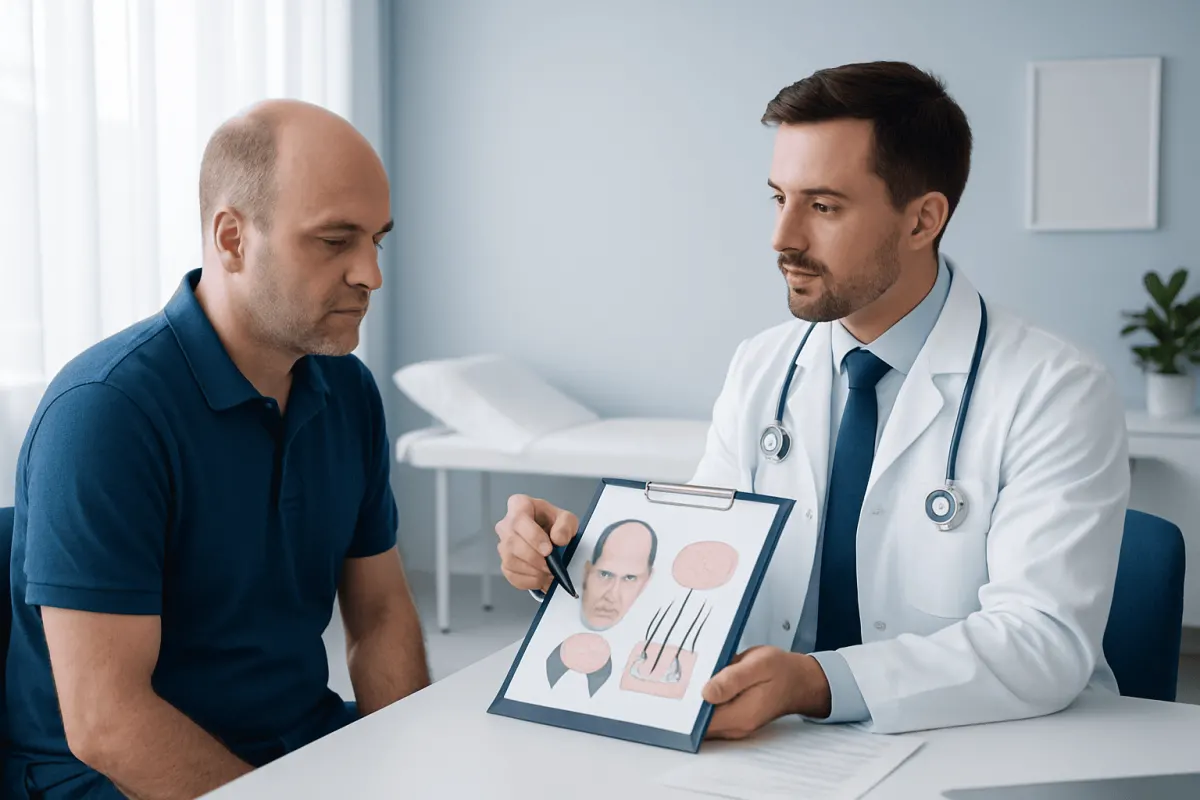
A safe treatment plan starts with confirming the cause of hair loss. A dermatologist or hair-restoration surgeon reviews the pattern and pace of thinning, family history, medicines, medical conditions, and previous procedures. The examination also assesses the donor area at the back and sides of the scalp for hair density, shaft thickness, miniaturization, scarring, and the likelihood that this hair will remain stable over time.
For Norwood 6, the area needing coverage is broad while the donor supply is limited. Rather than distributing grafts thinly across the entire scalp, a plan often focuses on a conservative hairline, the frontal scalp, and the mid-scalp, where hair can have the greatest effect on facial balance. The crown may be treated selectively, later, or not at all if doing so would use too much donor hair.
Suitability depends on more than age or the Norwood grade. Active scalp inflammation, untreated skin conditions, certain scarring hair-loss disorders, unstable donor hair, or expectations of complete density may change the approach. Some people are better served by medical treatment, cosmetic camouflage, or a combination of options rather than surgery alone.
How the Procedure Is Performed
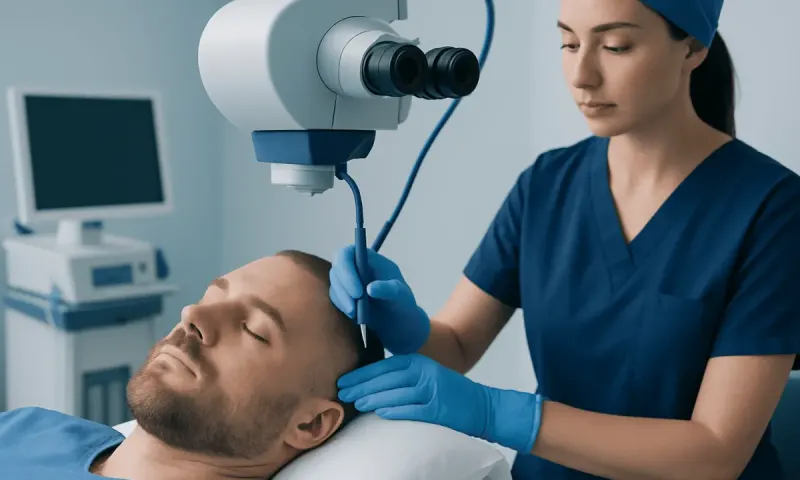
Hair transplantation redistributes healthy follicular units from a donor area to thinning or bare areas of the scalp. Most procedures are performed as outpatient treatment using local anesthesia. The team harvests donor follicles, prepares the grafts, and places them into very small recipient sites designed to guide the angle, direction, and distribution of the growing hair.
Follicular unit extraction, or FUE, removes individual follicular units and leaves small, scattered dot scars in the donor area. Follicular unit transplantation, or FUT, removes a narrow strip of donor-bearing scalp and closes the area with a linear scar. FUE and FUT have different benefits, recovery considerations, and scar patterns; the appropriate method depends on donor characteristics, hairstyle preferences, scalp laxity, and the amount of hair needed.
Recipient-site design is especially important in Norwood 6 because each graft must be used thoughtfully. Fine single-hair grafts may be placed at the hairline, while naturally occurring multi-hair units can add coverage behind it. No technique can create new donor follicles or safely provide unlimited grafts, so an experienced surgeon should discuss coverage priorities before treatment begins.
Recovery and Early Aftercare
In the first few days after surgery, the recipient area may look red and dotted with tiny crusts. Mild swelling, tenderness, tightness, itching, or temporary numbness can occur in either the donor or recipient area. These effects are usually temporary, but each person should follow the operating team’s individual instructions for cleansing, sleeping position, medicines, and wound care.
Crusting often clears within one to two weeks when the scalp is washed as advised. The newly transplanted hair shafts commonly shed during the first several weeks, which can be concerning but is often part of the normal growth cycle. New hairs may begin to emerge around three to four months after surgery, with clearer improvement over six to nine months and continued maturation thereafter.
During early healing, patients should avoid picking at grafts, rubbing the scalp, and activities that could cause injury or heavy sweating until their clinician says it is safe. Sun exposure, smoking, alcohol use, and restarting exercise should also be discussed with the surgical team because advice varies according to the procedure and individual healing. Follow-up visits help the clinician monitor wound healing and answer questions about normal shedding or changes in appearance.
What Results Can Realistically Look Like
For a Norwood 6 pattern, the usual goal is improved coverage and a hair pattern that looks balanced in everyday settings, not full restoration of the original density. A conservative hairline that suits the person’s age, facial proportions, and likely future hair loss is generally more sustainable than a low, densely packed hairline. The final appearance depends on the available donor supply and the area that needs treatment.
Hair caliber, curl, color contrast between the hair and scalp, and styling can all affect the visual impression of density. Coarser or curlier hair and lower scalp-to-hair contrast may provide more apparent coverage than fine, straight hair with high contrast. Crown restoration requires many grafts because the area is broad and hair grows in a circular pattern, so it must be weighed against the need to frame the face.
Transplanted follicles from a stable donor zone are generally more resistant to the hormonal process that causes male-pattern hair loss. However, non-transplanted native hair may continue to thin, and a second procedure may be considered only if enough donor hair remains and the long-term plan remains safe. Comparing standardized photographs over time is more useful than judging results from day to day.
Medical Treatment and Non-surgical Options
Androgenetic alopecia can continue to affect hairs that were not transplanted. In appropriately selected adults, topical minoxidil and prescription medicines that reduce the effect of dihydrotestosterone, such as finasteride, may help maintain existing hair or slow further thinning. A clinician should review the expected benefits, possible side effects, medical history, and reproductive considerations before any medication is started.
Medicines do not usually repopulate a large, long-standing bald area to high density, and they do not increase the donor supply available for transplantation. Platelet-rich plasma and light-based devices are sometimes offered as adjuncts, but their evidence and likely benefit can vary. These approaches should be discussed realistically and should not replace assessment of the underlying cause of hair loss.
Non-surgical cosmetic options may be useful alone or alongside medical care. Scalp micropigmentation can reduce contrast between hair and scalp, while hair fibers, a suitable haircut, and well-fitted hair systems can provide immediate visual coverage. A balanced diet and correction of confirmed nutritional deficiencies support general hair health, but supplements do not reverse inherited male-pattern hair loss when no deficiency is present.
When to Seek Medical Care
Hair loss from androgenetic alopecia is not usually an emergency, but a medical assessment is advisable before committing to a transplant. Promptly seek evaluation for sudden or patchy hair loss, scalp pain, scaling, redness, itching, pustules, or hair loss involving the eyebrows or body hair. These features can point to conditions other than typical male-pattern hair loss and may need different treatment.
After a hair transplant, patients should contact their surgical team if they develop worsening pain, spreading redness, persistent bleeding, drainage, fever, or swelling that does not improve as expected. Urgent medical care is needed for symptoms of a severe allergic reaction, such as breathing difficulty or facial swelling. Regular follow-up can help protect remaining hair and guide future treatment decisions.
For international patients considering assessment or treatment, Acıbadem Health Point’s multidisciplinary specialists and JCI-accredited hospitals can evaluate hair-loss concerns and discuss medical and surgical options. A responsible consultation should include donor-area examination, a clear explanation of scars and recovery, and realistic discussion of the coverage that may be achievable.
Frequently asked questions
01Is Norwood 6 the same as complete baldness?
No. A person with Norwood 6 usually retains a band of hair at the sides and back of the scalp that may serve as a donor area. Hair over the top of the scalp is extensively reduced, but this differs from more advanced patterns with very limited remaining donor-zone hair.
02Can someone with Norwood 6 have an FUE hair transplant?
Possibly. FUE can be suitable when the donor area has adequate stable density and a surgeon considers the extraction plan safe. It may not provide enough grafts for full top-scalp coverage, so FUT, a staged approach, medical treatment, or cosmetic options may also be discussed.
03How long does Norwood 6 hair transplant recovery take?
Initial healing and crust clearance often take about one to two weeks, although recovery varies. Transplanted hairs commonly shed before new growth begins. Visible growth may start around three to four months, while more mature results are often evaluated after 12 to 18 months.
04How many grafts are needed for Norwood 6?
There is no single graft number that is right for every person with Norwood 6. The plan is based on safe donor harvesting, hair thickness, scalp-to-hair contrast, the desired hairline, and whether the crown will be treated. A clinician should avoid promising a fixed level of density before examining the donor area.
05Are transplanted hairs permanent?
Hair transplanted from a stable donor zone is generally more resistant to the hormonal effects involved in male-pattern hair loss. However, individual outcomes and long-term hair changes vary, and existing non-transplanted hair can continue to thin. Ongoing medical management may help preserve that remaining hair when appropriate.
06Can medicine reverse Norwood 6 hair loss?
Minoxidil and clinician-prescribed medicines may help slow progression and support hairs that are still thinning. They do not usually restore dense hair across a large, long-standing bald area. A dermatologist can help determine whether medication is appropriate and safe for the individual.
This article is for general information only and is not a substitute for professional medical advice. Please consult a qualified doctor about your individual situation.
Hair transplant in Turkey — costs, graft counts & a free assessment
JCI-accredited · board-certified surgeons · reply within 24h
Add us as a Preferred Source to see more of our trusted health content across Google Search, AI Overviews and Discover.