New Moles on Skin: When to See a Dermatologist
New moles on skin are common and are usually benign, especially in younger people and during periods of hormonal change. However, any spot that looks different from other moles, changes over time, or causes symptoms deserves medical assessment.
Overview: Are New Moles on Skin Normal?
New moles on skin can be normal. Many people develop moles throughout childhood, adolescence, and early adulthood, and some may notice additional spots during pregnancy or other times of hormonal change. A mole, medically called a nevus, is a cluster of pigment-producing cells that may appear tan, brown, black, pink, or skin-colored.
Still, a new or changing spot should not be ignored. While most moles are benign, melanoma, a less common but important type of skin cancer, can develop in an existing mole or appear as a new mark on previously normal skin. Early evaluation is helpful because suspicious lesions can often be assessed and treated before they cause more serious problems.
It is not always possible to tell whether a mole is harmless by looking at it without proper examination. People should be especially attentive to a spot that differs from their usual moles, changes noticeably, bleeds without clear injury, or does not heal. A dermatologist can evaluate the lesion using magnification and, if appropriate, recommend further testing.
What a Typical Mole May Look Like
Common moles are usually small, round or oval, and evenly colored. Their borders are generally smooth and well defined. They may be flat or raised, and some may have hair growing from them. A stable mole that has looked the same for years is less likely to be concerning, although any new symptoms or changes should still be discussed with a clinician.
Not every dark or raised skin mark is a mole. Freckles, sunspots, skin tags, seborrheic keratoses, vascular spots, and other benign growths can also appear over time. Some can look similar to a mole but have different causes and management needs.
People may notice new marks more easily after sun exposure, weight changes, pregnancy, or simply because they are looking at their skin more closely. Taking a clear photograph for personal comparison can be useful, but it does not replace a professional skin examination when a lesion appears unusual or is evolving.
Warning Signs to Watch for in a New Mole
The ABCDE guide is a practical way to identify features that may need medical review. It is not a diagnostic test, but it can help people decide when to arrange an appointment. A concerning mole may show one or more of the following changes:
- A – Asymmetry: one half does not resemble the other half.
- B – Border: edges are irregular, blurred, scalloped, or poorly defined.
- C – Color: the spot contains several colors or has new black, blue, white, gray, or red areas.
- D – Diameter: it is increasing in size, particularly if it is larger than about 6 millimeters.
- E – Evolving: there is any change in appearance, texture, elevation, or symptoms.
The “ugly duckling” sign is also useful. This describes a mole that looks noticeably different from a person’s other spots. For example, someone may have many similarly shaped brown moles but one new, very dark, irregular, or rapidly changing lesion. That difference is worth discussing with a doctor.
Symptoms can matter as much as appearance. Persistent itching, tenderness, crusting, oozing, bleeding, or a sore that does not heal should be assessed. These signs do not always indicate cancer, but a clinician should identify the cause rather than relying on self-diagnosis.
Why New Moles Appear and Who May Be at Higher Risk
Genetics, skin type, cumulative ultraviolet (UV) exposure, and hormonal influences all affect how many moles a person has. People with lighter skin, light eyes or hair, freckles, or a family tendency to develop many moles may have a higher number of pigmented spots. Having many moles does not mean a person will develop skin cancer, but it can make regular skin awareness more important.
UV radiation from sunlight and tanning devices can damage skin cells and increase the risk of several skin cancers, including melanoma. Sunburns, especially severe or repeated sunburns, are a recognized risk factor. Tanning beds are not a safe alternative to natural sunlight because they also emit harmful UV radiation.
Risk may also be higher for people with a personal or family history of melanoma, a weakened immune system, previous radiation treatment, or certain inherited conditions. A doctor may recommend periodic professional skin examinations for people with increased risk. More information about melanoma can help patients understand why new or changing pigmented lesions should be assessed carefully.
How a Doctor Evaluates a Suspicious Mole
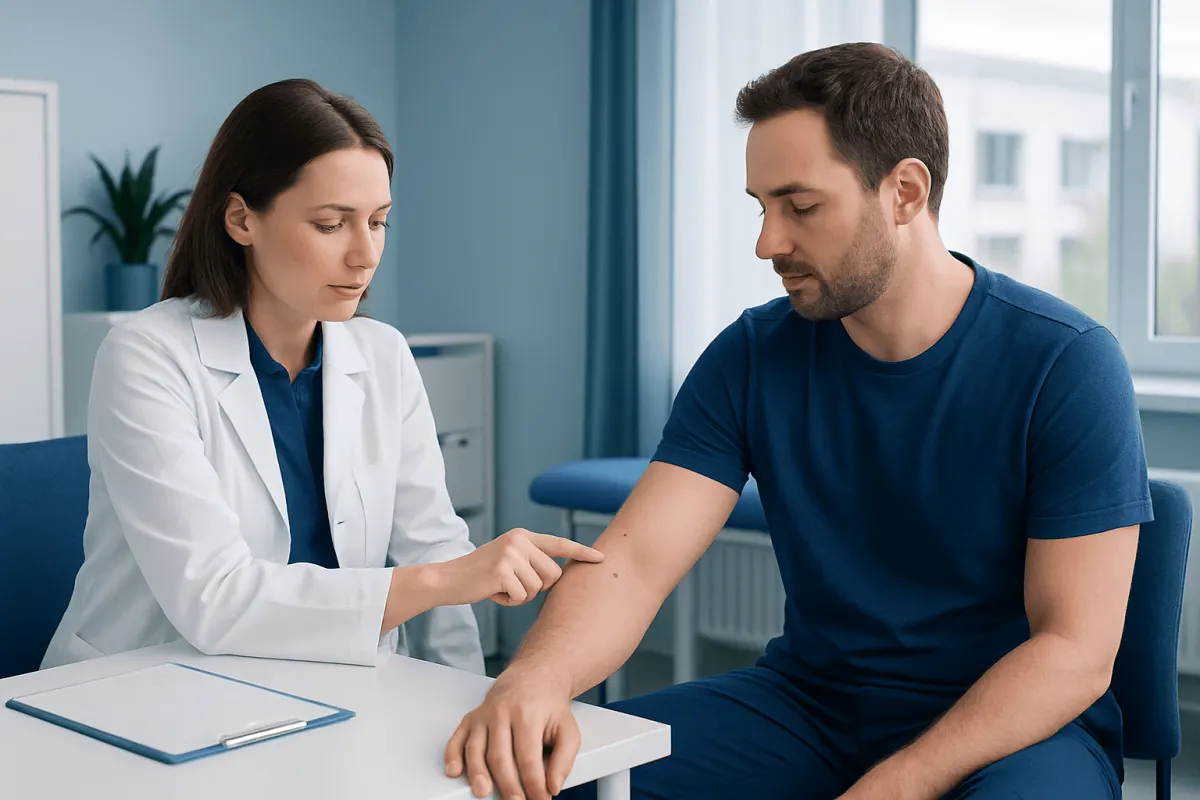
A dermatologist or qualified doctor will usually begin by asking when the spot appeared, whether it has changed, and whether there are symptoms such as itching or bleeding. They may also ask about sun exposure, sunburn history, family history of skin cancer, medications, immune health, and previous skin lesions.
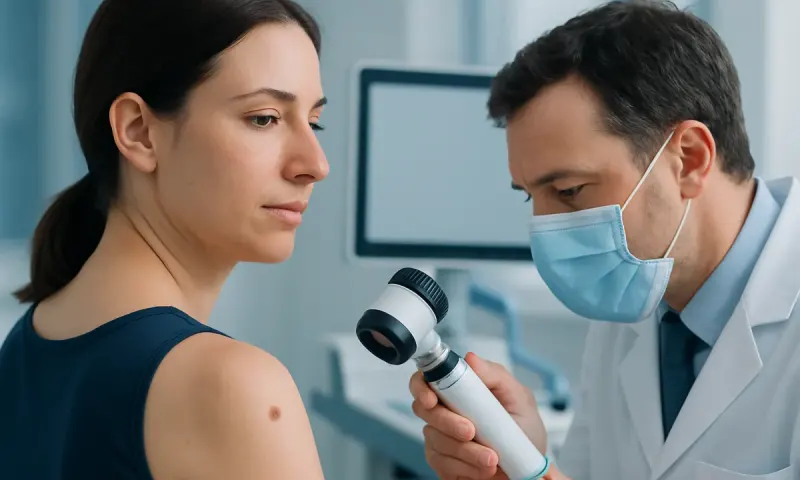
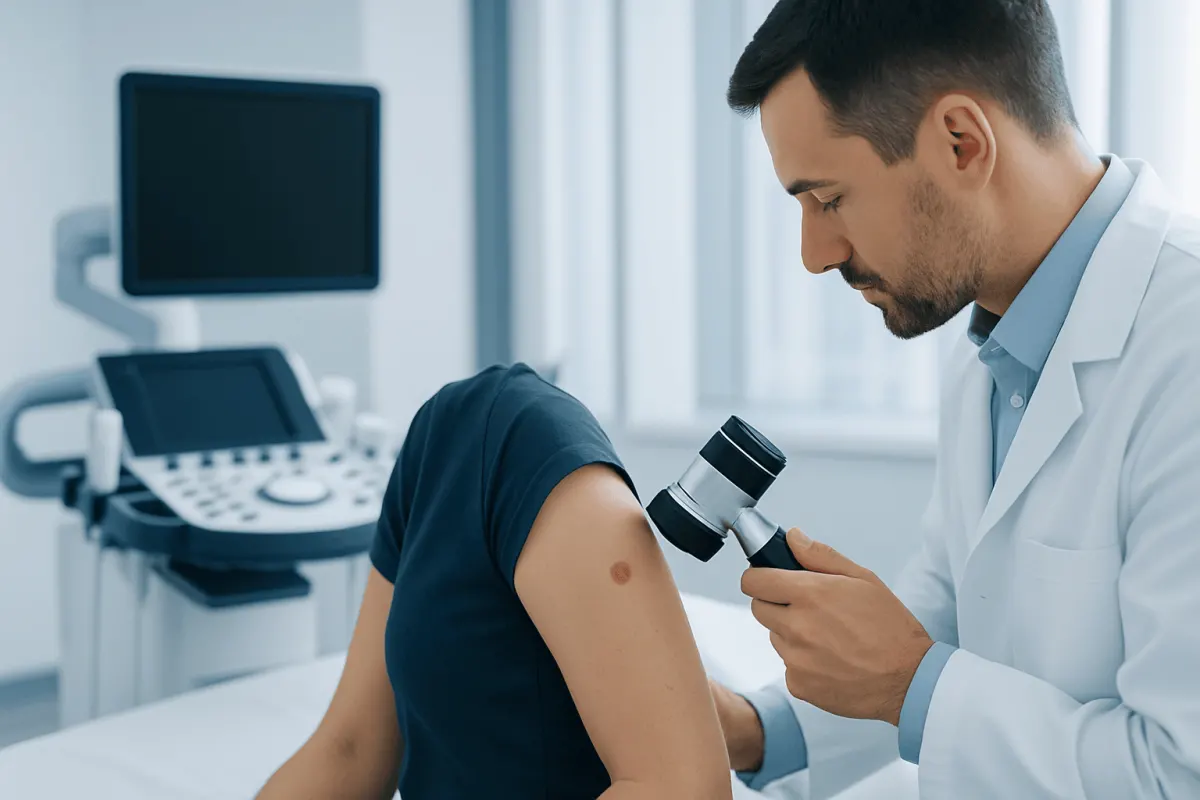
The skin examination may include dermoscopy, a noninvasive technique that uses a handheld magnifying device and light to view patterns below the skin surface. The clinician may inspect the entire skin surface rather than only the mole of concern, because people can have lesions in areas that are difficult to see, including the scalp, back, soles, and between the toes.
If the mole cannot be confidently identified as benign, the doctor may suggest short-term monitoring with clinical photographs or removal of a small sample for laboratory analysis. A biopsy is the only way to confirm whether a suspicious lesion is cancerous. When indicated, skin biopsy is generally a straightforward procedure performed with local anesthetic.
Patients should avoid trying to cut off, burn, freeze, or use over-the-counter removal products on a mole. This can cause scarring or infection and may delay an accurate diagnosis if the lesion needs laboratory assessment.
Treatment Options and What Happens After Diagnosis
Most harmless moles do not require treatment. A doctor may recommend observation if the lesion has reassuring features, especially when it is stable and does not cause symptoms. A benign mole may be removed if it is repeatedly irritated by clothing, shaving, or jewelry, or if removal is preferred after a clinical discussion.
If a biopsy identifies melanoma or another skin cancer, treatment depends on the type of cancer, its depth, location, and whether there is any evidence of spread. Surgery to remove the lesion and a margin of surrounding normal-looking skin is commonly used. Some patients may need additional tests or treatment, which can include further surgery, medication-based treatment, or radiation in selected situations.
Care plans should be individualized and explained clearly before treatment begins. For patients who require it, skin cancer treatment may involve a team that includes dermatologists, surgeons, pathologists, medical oncologists, and other specialists. Follow-up is important after a skin cancer diagnosis because it supports early detection of new lesions and helps address treatment-related concerns.
Prevention and Practical Skin Self-Care
Not all moles or skin cancers can be prevented, but reducing UV exposure is an important protective step. People can seek shade during periods of intense sunlight, wear protective clothing and a wide-brimmed hat, and use broad-spectrum sunscreen with an SPF of 30 or higher on exposed skin. Sunscreen should be applied generously and reapplied according to the product instructions, especially after swimming or sweating.
Avoiding tanning beds is also advisable. Artificial UV exposure can damage the skin and is associated with increased skin cancer risk. Sun protection is useful year-round, including on cloudy days, because UV radiation can still reach the skin.
Regular self-checks can help people become familiar with their normal pattern of moles. A monthly check using a full-length mirror and a hand mirror may include the face, scalp, neck, chest, back, arms, hands, buttocks, legs, feet, soles, and nails. Asking a partner or family member to inspect hard-to-see areas can be helpful.
Photographs may make it easier to notice meaningful changes over time, particularly for people with many moles. However, a photograph should not be used to reassure oneself about a spot that is evolving or symptomatic. A clinical assessment remains the safest next step when there is doubt.
When to Seek Medical Care
People should arrange a prompt medical appointment for a new mole that grows quickly, has an irregular outline, contains several colors, looks different from other moles, or continues to change over weeks or months. It is also appropriate to seek care for a spot that bleeds, crusts, becomes painful, itches persistently, or fails to heal.
Those with a personal or family history of melanoma, many atypical moles, previous skin cancer, or immune suppression may benefit from asking a doctor how often professional skin checks are recommended. A new pigmented lesion in adulthood is not automatically dangerous, but it is sensible to have it assessed if there is uncertainty.
Acıbadem Health Point’s multidisciplinary specialists and JCI-accredited hospitals can assess suspicious skin lesions and coordinate diagnosis and treatment for international patients. A consultation with a qualified dermatologist can provide clarity, appropriate testing when needed, and a personalized follow-up plan.
Frequently asked questions
01Is it normal to get new moles as an adult?
New moles can occur in adulthood and are often harmless. However, a genuinely new mole, especially one that is changing or looks unlike a person’s other moles, should be assessed by a dermatologist. This is particularly important for people with higher skin cancer risk.
02Can a new mole be melanoma?
Melanoma can sometimes first appear as a new pigmented spot rather than as a change in an older mole. Most new spots are not melanoma, but changes in color, shape, size, or symptoms should be checked. Early assessment allows a clinician to determine whether testing is needed.
03What does the ABCDE rule mean for moles?
The ABCDE rule refers to asymmetry, irregular border, varied color, increasing diameter, and evolving appearance. It helps people recognize lesions that may need medical evaluation. A mole does not need to have every ABCDE feature to deserve attention.
04Should an itchy mole be checked?
An itchy mole is often caused by irritation, dry skin, or friction and is not always serious. Persistent itch, especially with bleeding, crusting, color changes, or growth, should be evaluated by a doctor. Avoid scratching or attempting to remove the lesion at home.
05How often should people check their moles?
Many clinicians suggest becoming familiar with the skin through regular monthly self-checks. People at increased risk of melanoma may need professional examinations at intervals recommended by their dermatologist. The right schedule depends on personal and family history.
06Can sunscreen stop new moles from forming?
Sunscreen cannot prevent every mole, because genetics and other factors also affect mole development. However, consistent sun protection reduces UV damage and helps lower the risk of skin cancer. It should be combined with shade, protective clothing, and avoiding tanning beds.
This article is for general information only and is not a substitute for professional medical advice. Please consult a qualified doctor about your individual situation.
Hair transplant in Turkey — costs, graft counts & a free assessment
JCI-accredited · board-certified surgeons · reply within 24h
Add us as a Preferred Source to see more of our trusted health content across Google Search, AI Overviews and Discover.