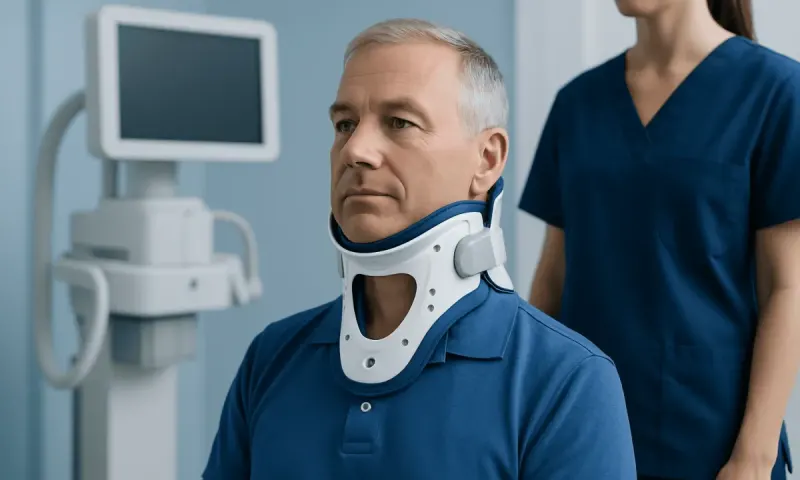
Neck Injury: Symptoms, Causes and Treatment

Key Takeaways
- Neck injury can affect muscles, joints, ligaments, discs, nerves, or the spinal cord.
- Pain, stiffness, reduced movement, tingling, and headache are common symptoms, but severe injuries can be less obvious at first.
- A doctor may use a physical exam, imaging tests, and neurological checks to assess the extent of injury.
- Most stable neck injuries improve with rest, pain relief, guided activity, and rehabilitation.
- Emergency care is needed after major trauma or if numbness, weakness, balance problems, or breathing difficulty appear.
A neck injury can range from a mild muscle strain to a more serious problem involving the cervical spine, nerves, or spinal cord. Understanding warning signs, common causes, and the usual steps in diagnosis and treatment can help patients seek the right care at the right time.
Overview
A neck injury is not a single condition. It is a broad term for damage affecting the structures that support and protect the cervical spine, including muscles, ligaments, vertebrae, discs, nerves, and, in some cases, the spinal cord. Some injuries are mild and settle with time, while others need prompt medical attention to prevent complications.
Neck injuries may follow a fall, car accident, sports collision, sudden twisting movement, or even an everyday strain such as lifting awkwardly. The exact pattern matters, because pain in the neck can come from soft tissue strain, but it can also be the first sign of a fracture, disc injury, or nerve compression.
For people traveling for care, neck injuries often raise practical questions as well as medical ones: whether it is safe to fly, whether imaging is needed before continuing travel, and how to manage symptoms away from home. A careful evaluation helps separate injuries that can be managed conservatively from those that require stabilization or specialist treatment.
Because the neck connects the head to the rest of the body and houses important nerves, the safest approach is to avoid assuming that all neck pain is minor. Even when symptoms seem manageable, a structured assessment can provide reassurance and a clearer recovery plan.
Symptoms
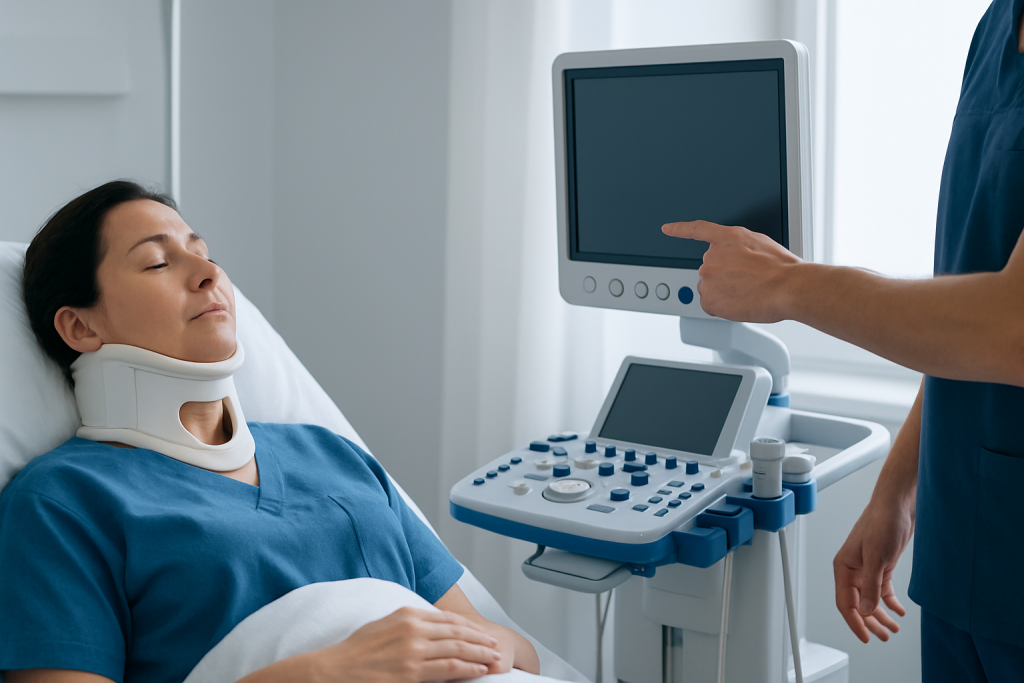
Symptoms depend on which part of the neck has been injured. Muscle strain often causes local pain, tightness, and reduced range of motion. Whiplash may add headache, shoulder pain, and stiffness that becomes more noticeable over the first day or two. Some people notice that turning the head, looking up, or holding one position for too long makes the pain worse.
When nerves are irritated, symptoms can extend beyond the neck. Tingling, numbness, burning pain, or weakness may spread into the shoulder, arm, or hand. If the spinal cord is affected, the picture can be more serious and may include difficulty walking, loss of coordination, or changes in bowel or bladder control.
Common signs of neck injury may include:
- Pain or tenderness in the neck
- Stiffness or reduced ability to move the head
- Headache, especially at the base of the skull
- Muscle spasm in the shoulders or upper back
- Numbness, tingling, or weakness in an arm or hand
- Dizziness, balance problems, or unusual fatigue after trauma
Some symptoms are easy to dismiss at first, especially after a minor collision or strain. However, if pain is paired with neurological symptoms or follows a significant impact, it deserves a medical review rather than watchful waiting alone.
Causes & Risk Factors

Neck injuries commonly result from sudden force, overextension, twisting, or direct impact. Car accidents are a frequent cause, particularly when the head snaps forward and backward quickly in a whiplash pattern. Sports such as football, rugby, gymnastics, diving, and skiing can also place the cervical spine under sudden stress.
Everyday activities can contribute too. Lifting heavy objects with poor posture, sleeping in an awkward position, repetitive desk work, or a sudden awkward turn can strain the muscles and ligaments around the neck. While these causes are often less dramatic than trauma, they can still be painful and may linger if not addressed.
Factors that can increase risk include previous neck injury, poor muscle conditioning, older age, osteoporosis, and participation in contact or high-speed sports. Occupations involving repetitive posture, prolonged screen time, or heavy physical work may also make the neck more vulnerable to overuse and strain.
The severity of the injury is not always visible from the outside. A person can look well after an accident yet still have a fracture, disc problem, or ligament injury. That is why the mechanism of injury is often just as important as the symptoms when a clinician is deciding what to investigate.
Diagnosis
Diagnosis begins with a careful history and physical examination. A clinician will ask how the injury happened, whether there was a fall or collision, what symptoms developed, and whether there is numbness, weakness, or trouble walking. The exam usually includes checking neck movement, tenderness, muscle strength, sensation, and reflexes.
Imaging may be recommended when the injury is significant or when symptoms suggest a bone, disc, or nerve problem. X-rays can help identify alignment issues or fractures, while CT scans give a more detailed view of the bones. MRI is especially useful when doctors need to examine discs, ligaments, nerves, or the spinal cord.
In some situations, additional tests are needed to check for associated injuries or to guide treatment. For example, if a patient has persistent arm symptoms, a neurological evaluation may help localize nerve involvement. If there is concern about instability, the doctor may advise keeping the neck protected until the diagnosis is clear.
For international patients, bringing any available records, imaging reports, and a list of current medicines can make the evaluation smoother. When the injury happened during travel, it is also helpful to describe the exact sequence of events, because that detail can influence which tests are most appropriate.
Treatment Options
Treatment depends on the type and severity of the neck injury. Mild soft tissue injuries are often treated without surgery and may improve with relative rest, pain control, and gradual return to activity. The aim is to protect the neck early on while avoiding unnecessary immobilization or prolonged inactivity.
For more significant injuries, treatment may include a cervical collar, close monitoring, or specialist care. If a fracture, dislocation, or major ligament injury is present, the neck may need stabilization. Surgery is considered when there is spinal instability, nerve compression that does not improve, or spinal cord involvement.
Rehabilitation is a key part of recovery once the acute phase has passed. Physical therapy may focus on restoring movement, improving posture, strengthening the supporting muscles, and reducing fear of movement. Patients recovering abroad often benefit from a clear plan for follow-up after they return home, especially if therapy needs to continue over several weeks.
Depending on the situation, treatment may involve:
- Pain-relieving medicines recommended by a doctor
- Short-term activity modification
- Ice or heat as advised
- Temporary collar use in selected cases
- Physical therapy and guided exercises
- Surgery for unstable or serious structural injuries
Recovery is usually best when treatment is matched to the underlying cause rather than to pain alone. A neck injury that looks minor may still need imaging or specialist input if the symptoms and injury pattern do not fit a simple strain.
Prevention & Self-care
Not every neck injury can be prevented, but many can be reduced through sensible habits. In vehicles, seat belts and proper headrest positioning help lower the risk of whiplash. In sports, using appropriate protective equipment, learning correct technique, and respecting return-to-play guidance are important safeguards.
At home and at work, posture matters. Screens should be positioned to avoid prolonged bending of the neck, and heavy objects should be lifted with the whole body rather than the neck and shoulders. Regular movement breaks can help people who spend long hours at a desk or on digital devices.
After a mild injury, self-care usually focuses on gentle protection rather than complete rest. A doctor may recommend short periods of reduced activity, followed by gradual movement as pain allows. Overdoing exercise too early can slow healing, but so can avoiding motion for too long.
Helpful self-care measures may include:
- Using the neck normally within the limits advised by a clinician
- Sleeping with a supportive pillow that keeps the neck neutral
- Avoiding sudden twisting or heavy lifting early in recovery
- Keeping follow-up appointments if imaging or reassessment is needed
- Seeking advice before resuming sports, driving, or long-haul travel
Patients recovering away from home should ask for written instructions, especially if they may need medication changes, therapy, or repeat scans after returning to their own country. Clear guidance can make the recovery period safer and less stressful.
When to See a Doctor
Medical assessment is recommended after any neck injury that follows a significant fall, collision, sports impact, or accident involving sudden acceleration and deceleration. Even if the pain seems manageable, it is wise to get checked when the force was strong or when the neck feels unstable.
Urgent care is especially important if there is numbness, weakness, trouble walking, severe headache, confusion, fainting, breathing difficulty, or loss of bladder or bowel control. These symptoms can point to nerve or spinal cord involvement and should not be monitored at home.
It is also sensible to seek care if pain is not improving over several days, if stiffness is getting worse, or if arm symptoms appear after the injury. Persistent pain after travel can be difficult to manage without a clear diagnosis, and early evaluation can prevent unnecessary delays in recovery.
In a specialized setting, multidisciplinary teams can coordinate imaging, orthopedic review, neurological assessment, and rehabilitation planning. Acibadem Health Point’s multidisciplinary specialists and JCI-accredited hospitals diagnose and treat neck injury for international patients, with attention to both the injury itself and the practical needs of recovery and follow-up.
Frequently asked questions
01Is every neck injury a whiplash injury?
No. Whiplash is one type of neck injury caused by rapid back-and-forth motion, often in vehicle accidents. Neck injuries can also involve muscle strain, ligament sprain, disc injury, fracture, or nerve compression.
02How do doctors decide whether imaging is needed?
They look at how the injury happened, the physical exam, and whether there are warning signs such as weakness, numbness, or severe pain. More serious trauma or neurological symptoms usually make imaging more likely.
03Can a neck injury improve without surgery?
Yes, many stable neck injuries improve with conservative treatment such as rest, medicine, guided movement, and physical therapy. Surgery is reserved for injuries that cause instability, major nerve compression, or spinal cord problems.
04Should someone keep moving after a neck injury?
Gentle movement is often helpful once a clinician has ruled out serious structural injury. Complete immobilization is not usually helpful for simple strains, but movement should be introduced only as advised.
05When is a neck injury an emergency?
It is an emergency when there is breathing difficulty, loss of consciousness, weakness, numbness, balance trouble, or loss of bladder or bowel control. Severe trauma with neck pain also needs urgent evaluation.
06Can flying make a neck injury worse?
It depends on the injury. Flying may be uncomfortable or unsuitable if the neck is unstable, if pain is severe, or if follow-up care is needed soon, so a doctor should advise on travel safety first.
This article is for general information only and is not a substitute for professional medical advice. Please consult a qualified doctor about your individual situation.
Joint and spine care in Turkey — expert assessment & treatment
JCI-accredited · board-certified surgeons · reply within 24h
Add us as a Preferred Source to see more of our trusted health content across Google Search, AI Overviews and Discover.