Nearsightedness: Meaning, Causes and Treatment

Key Takeaways
- Nearsightedness is another name for myopia, a refractive error that blurs far-away vision.
- It often begins in childhood or the teenage years and can change over time.
- An eye exam can confirm the cause of blurry distance vision and rule out other problems.
- Glasses, contact lenses, and certain treatments can improve vision and help manage progression.
- Regular eye checkups are important, especially for children and people whose vision changes quickly.
Nearsightedness, also called myopia, means that nearby objects look clearer than distant ones. It is common and usually manageable with the right eye examination, vision correction, and follow-up care.
Overview
Nearsighted meaning is simple: a person can usually see close objects more clearly than distant ones. In medical terms, this is called myopia. It happens when the eye focuses light in front of the retina instead of directly on it, which makes far-away objects look blurred.
For many people, nearsightedness is first noticed in school years, when a child starts squinting at the board or moving closer to a screen. For adults, it may feel like road signs, subtitles, or faces across a room have become less sharp. While the change can be frustrating, myopia is common and often easy to correct.
Because this condition can affect daily activities, learning, and confidence, it is worth understanding early. A clear diagnosis also matters if someone is traveling for eye care, since the right treatment plan can reduce interruptions to work, study, and recovery routines after returning home.
Symptoms
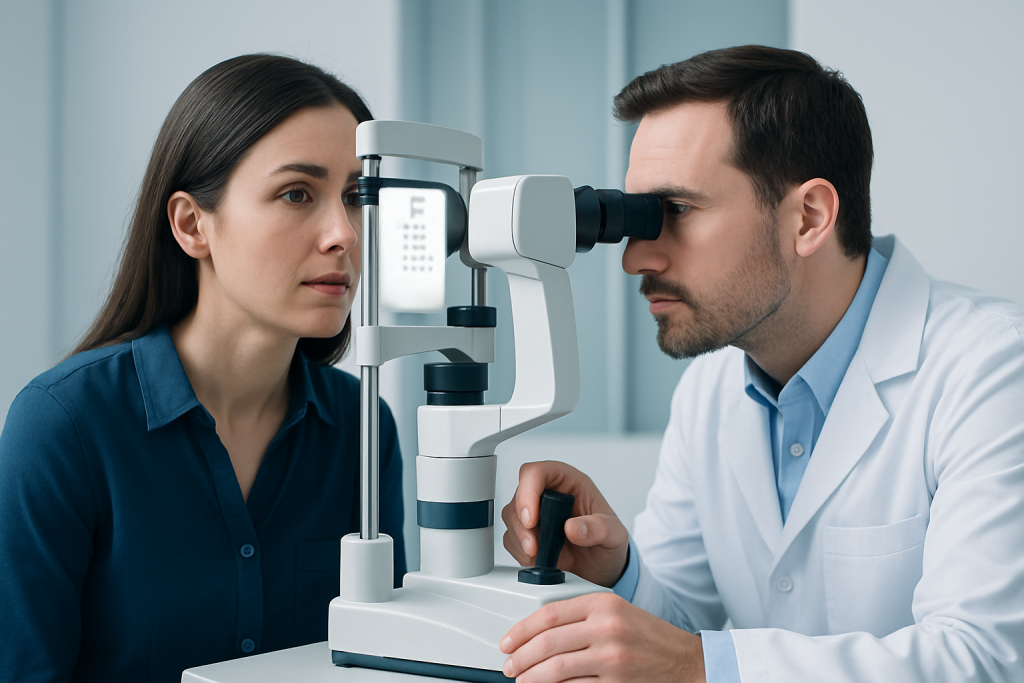
The main sign of nearsightedness is blurred distance vision. A person may still read a book, use a phone, or work on a close task comfortably, but signs farther away begin to lose detail.
Common symptoms may include squinting, sitting very close to televisions or computer screens, difficulty seeing road signs, eye strain, headaches, or needing to move closer to the board in class or to a presentation screen. Children may not always say that vision is blurry, so changes in behavior can be the first clue.
- Blurred vision when looking at distant objects
- Squinting to sharpen vision
- Headaches after visual tasks
- Eye strain, especially during driving or class
- Difficulty seeing at night or in low light
If symptoms appear suddenly or only in one eye, another eye condition may be involved. That is one reason a proper evaluation is better than simply replacing glasses without checking the eyes carefully.
Causes & Risk Factors
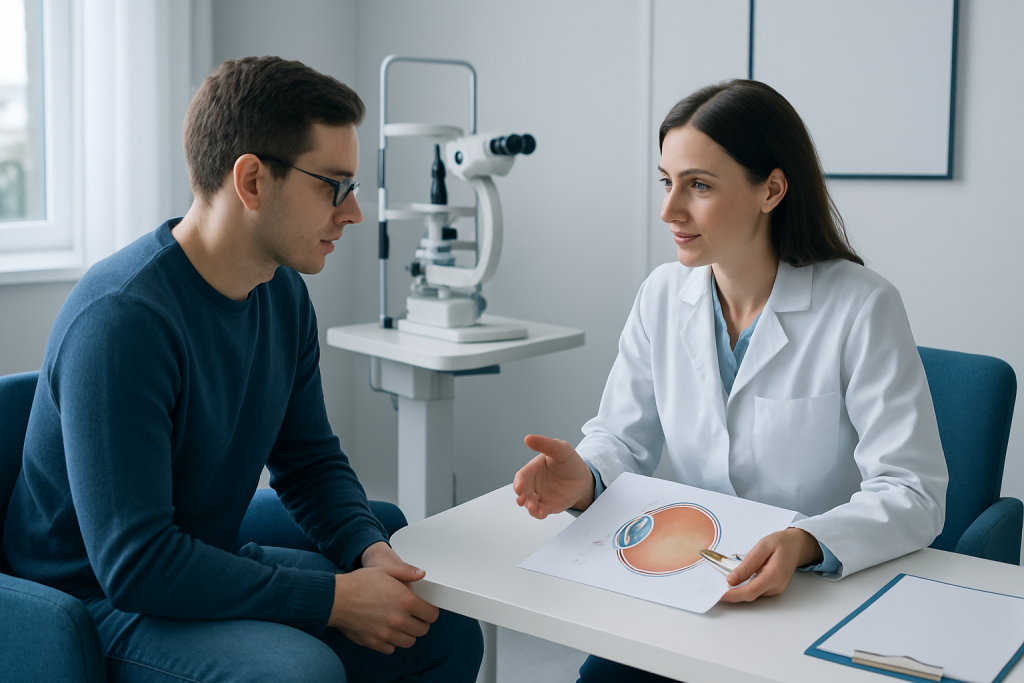
Nearsightedness develops when the shape of the eye causes light to focus incorrectly. In many cases, the eyeball is slightly longer than normal, or the cornea is too curved. This focusing mismatch is called a refractive error, and it is not the same as an infection or inflammation.
Family history is one of the strongest risk factors. Children with one or both parents who are nearsighted are more likely to develop myopia themselves. Time spent on close-up activities, limited outdoor time in childhood, and ongoing eye growth during the school years may also contribute.
Risk can be shaped by lifestyle and environment as well as genetics. In some people, myopia progresses gradually; in others it increases more quickly during growth years. Eye doctors may watch closely for progression, especially when a child’s prescription changes often or vision worsens between annual checks.
Diagnosis
Diagnosis usually starts with a comprehensive eye examination. The doctor or eye care specialist asks about symptoms, family history, school or work demands, and whether vision problems affect driving, reading, or sports. This discussion helps distinguish simple nearsightedness from other causes of blurred vision.
Testing often includes a visual acuity chart, refraction testing to measure the prescription, and an examination of the front and back of the eye. In some cases, especially for children, eye drops may be used to temporarily relax the focusing muscles so the prescription can be measured more accurately.
For international patients, it can help to bring past prescriptions, old glasses, contact lens details, and any recent test results. This makes it easier for the eye team to compare changes over time and decide whether glasses, contact lenses, or another approach is most appropriate.
Treatment Options
Most people manage nearsightedness with glasses or contact lenses. These do not change the shape of the eye, but they move the focus back onto the retina so that distant objects appear clearer. The choice often depends on lifestyle, age, comfort, and how much vision changes from year to year.
Some patients may be candidates for refractive surgery, such as laser vision correction, if their prescription is stable and the eyes are otherwise healthy. A specialist evaluates corneal thickness, eye health, and overall suitability before recommending any procedure. Not everyone is a candidate, and that is normal.
Children and teens with progressing myopia may need closer follow-up and, in some cases, myopia-management strategies recommended by an eye doctor. These may include specific contact lens approaches or other clinically guided methods designed to slow progression. Any treatment plan should be individualized rather than based on self-diagnosis or online assumptions.
- Glasses for simple, reliable correction
- Contact lenses for selected patients
- Refractive surgery for suitable adults
- Regular monitoring when prescriptions change quickly
Prevention & Self-care
Not every case of nearsightedness can be prevented, especially when genetics play a role. Still, healthy visual habits can support eye comfort and may help children lower the risk of rapid progression. The goal is practical eye care, not perfect control.
Balanced routines matter. Spending more time outdoors, taking breaks during prolonged near work, and keeping reading materials at a comfortable distance can reduce eye strain. Good lighting and screen habits also help, particularly for students and people who spend long hours on digital devices.
People who wear glasses or contact lenses should follow the prescribed routine, keep up with clean lens care, and replace eyewear when vision changes. Traveling for treatment or follow-up is easier when patients keep their prescription details, carry spare glasses, and schedule review visits before leaving a destination country.
- Encourage outdoor time for children when possible
- Use regular breaks during reading or screen use
- Keep screens and books at a sensible distance
- Attend eye exams as recommended
- Follow contact lens hygiene instructions carefully
When to See a Doctor
An eye exam is a good idea whenever distance vision becomes blurry, a child starts struggling at school, or glasses no longer seem to work well. New symptoms should never be assumed to be “just myopia,” because other eye conditions can cause similar changes.
Prompt medical attention is especially important if blurred vision appears suddenly, affects only one eye, comes with flashes of light, floaters, pain, redness, or a shadow-like area in vision. Those symptoms deserve evaluation without delay. For routine nearsightedness, regular checkups are still valuable because prescriptions can change over time.
Patients planning care abroad may appreciate having an organized eye assessment before and after travel, especially if they are considering surgery or need ongoing monitoring. Acibadem Health Point’s multidisciplinary specialists and JCI-accredited hospitals diagnose and treat eye conditions for international patients with coordinated care and follow-up planning.
Living Well With Myopia
Nearsightedness is usually manageable, but good outcomes depend on matching the treatment to the person, not just the prescription number on a chart. A child, a university student, and an adult considering surgery may all need different guidance even when the diagnosis is the same.
Staying informed helps people ask better questions at the eye clinic: How stable is the prescription? Are glasses enough for now? Is contact lens use safe for this person? Does the eye doctor recommend monitoring more often because of age or progression? These conversations make care more practical and less overwhelming.
With the right correction and follow-up, most people with myopia continue their usual routines comfortably. The key is not to ignore changes in vision, because timely review keeps the condition predictable and easier to manage.
Frequently asked questions
01What does nearsighted mean in simple terms?
Nearsighted means a person can see nearby objects more clearly than far-away ones. It is also called myopia and is usually corrected with glasses, contact lenses, or in some adults, refractive surgery.
02Is nearsightedness the same as myopia?
Yes. Myopia is the medical term for nearsightedness. Both describe a refractive error that makes distant vision blurry.
03Can nearsightedness get worse over time?
It can, especially during childhood and the teenage years when the eyes are still growing. Regular eye exams help track changes and guide the right correction plan.
04Can children outgrow nearsightedness?
Some children remain stable for long periods, but many do not fully outgrow myopia. The prescription may keep changing as they grow, so follow-up is important.
05Do glasses make nearsightedness worse?
No, glasses do not cause myopia to worsen. They simply help the eyes focus light correctly so that distant vision becomes clear.
06When should someone get an eye exam for blurry distance vision?
Any new or worsening blurry distance vision should be checked by an eye doctor. If the change is sudden, affects one eye, or comes with pain or flashes, prompt evaluation is especially important.
This article is for general information only and is not a substitute for professional medical advice. Please consult a qualified doctor about your individual situation.
Explore treatments in Turkey — costs, top hospitals & a free quote
JCI-accredited · board-certified surgeons · reply within 24h
Add us as a Preferred Source to see more of our trusted health content across Google Search, AI Overviews and Discover.