Myoclonic Fits: Symptoms, Causes and Treatment

Key Takeaways
- Myoclonic fits are short, involuntary jerks rather than sustained spasms.
- They may be triggered by sleep loss, stress, medications, metabolic issues, or neurological disorders.
- A careful history, examination, and sometimes EEG or brain imaging help identify the cause.
- Treatment focuses on the underlying condition and on reducing triggers when possible.
- Any new, frequent, or worsening jerks should be discussed with a doctor.
Myoclonic fits are sudden, brief muscle jerks that can happen once or repeatedly and may affect one muscle, a group of muscles, or the whole body. They can have many causes, from benign triggers such as fatigue to neurological conditions that need medical evaluation.
Overview
Myoclonic fits are sudden, brief, shock-like movements caused by an involuntary muscle contraction or a quick muscle relaxation. They may be subtle, such as a small jerk of the hand, or more noticeable, involving the shoulders, legs, face, or the entire body.
These movements are not a diagnosis by themselves. They are a sign that something in the nervous system, metabolism, sleep pattern, or medication list may be affecting how muscles are controlled. In some people, the jerks are harmless and temporary. In others, they are part of epilepsy or another neurological disorder that deserves a careful workup.
For international patients, this often becomes a practical question: is the jerking a one-time event after poor sleep and travel, or a pattern that needs specialist attention? Because the answer depends on the full context, doctors usually look at the timing, triggers, medications, and any associated symptoms before deciding what tests are useful.
Symptoms
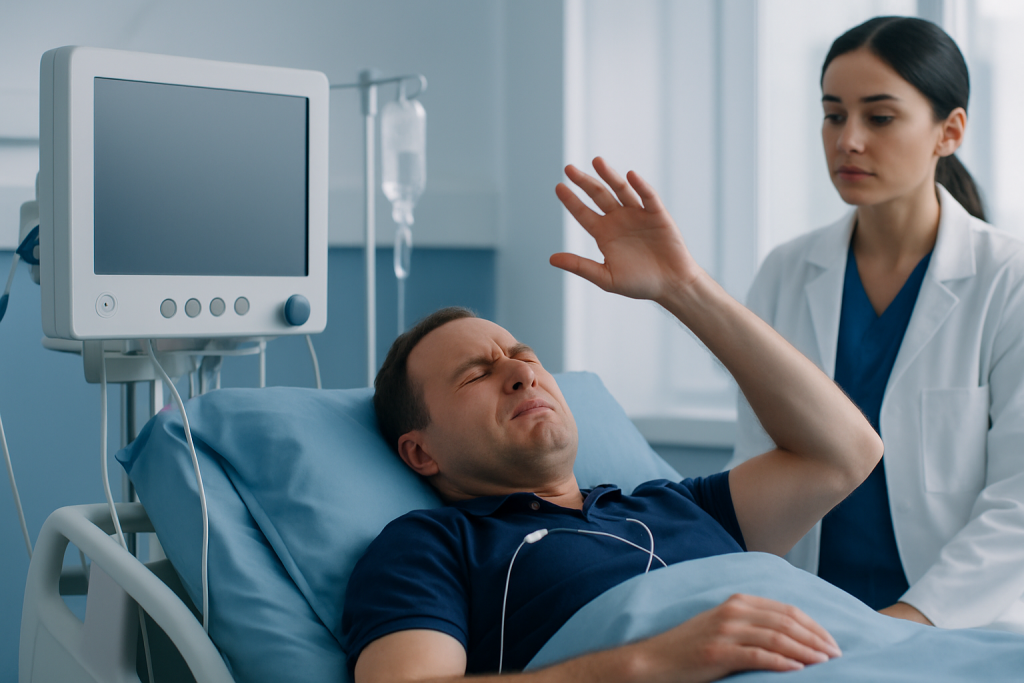
The hallmark of myoclonic fits is speed. The movement starts and ends quickly, often in a fraction of a second, and may be described as a jerk, jolt, twitch, or sudden “jump” of a body part. Some people have a single episode, while others notice repeated clusters over minutes or days.
Myoclonic jerks can appear in different settings. They may happen when falling asleep, on waking, after sudden noise or light, during action such as writing or reaching, or without an obvious trigger. When the jerks are part of a neurological syndrome, they may come with other features such as confusion, loss of awareness, falls, seizures, or changes in coordination.
- Brief, involuntary muscle jerks
- Jerks in one area or across several body parts
- Possible triggers such as fatigue, stress, or flashing lights
- In some cases, associated seizure activity or altered awareness
Not every twitch is myoclonus, and not every myoclonic fit means epilepsy. A doctor will usually try to distinguish these jerks from tremor, tics, cramps, restless legs, and other movement disorders.
Causes & Risk Factors

Myoclonic fits can arise from many different causes, which is why the same symptom may have very different meaning from one person to another. Some are physiological, such as sleep starts or jerks after sleep deprivation. Others are linked to disturbances in brain function, blood chemistry, kidney or liver disease, infection, or medication side effects.
Neurological causes include epilepsy syndromes, especially some that begin in childhood or young adulthood, but myoclonus can also occur after brain injury, in neurodegenerative diseases, or with inflammation affecting the brain and spinal cord. Certain medicines, especially when started, combined, or stopped abruptly, can also contribute to jerking movements.
Common factors that may increase the chance of noticing myoclonic fits include:
- Sleep deprivation or disrupted sleep
- Stress, anxiety, or exhaustion
- Alcohol or substance use and withdrawal
- Recent medication changes
- Metabolic problems such as low blood sugar or electrolyte imbalance
- Underlying neurological disease
Because several causes are reversible, identifying the trigger matters. Even when the issue is not dangerous, the pattern can be a clue that helps doctors narrow the diagnosis efficiently.
Diagnosis
Diagnosis begins with a detailed conversation about what the jerks look like, when they happen, and whether anything seems to bring them on. A clinician may ask the person, and sometimes family members or travel companions, to describe the timing, body part involved, and whether consciousness changes during the episode. Videos taken on a phone can be very helpful.
After the history, a neurological examination helps look for signs of weakness, coordination problems, sensory changes, or abnormal reflexes. Depending on the suspected cause, the doctor may recommend blood tests to check glucose, electrolytes, kidney and liver function, thyroid status, or other markers of systemic illness. If epilepsy is a concern, an EEG may be used to assess brain electrical activity.
In some cases, brain imaging such as MRI is ordered to look for structural causes. The exact testing strategy depends on age, other symptoms, and whether the jerks are isolated or part of a broader pattern. For patients arriving from abroad, doctors often try to organize the evaluation in a practical sequence so that testing, specialist review, and follow-up planning can happen without unnecessary delay.
Treatment Options
Treatment is directed at the underlying cause, so there is no single approach for every person with myoclonic fits. If a medication is responsible, a doctor may adjust the prescription or suggest an alternative. If the problem is metabolic, correcting the imbalance may reduce or stop the jerks. When myoclonus is related to epilepsy, anti-seizure medicines may be considered as part of a tailored plan.
For some people, especially those with infrequent or benign sleep-related jerks, reassurance and trigger management may be enough. When the jerks are frequent, disruptive, or associated with other neurological symptoms, treatment is more likely to involve a specialist in neurology. The goal is not simply to suppress the movement, but to understand what is driving it.
Because treatment choices depend on the specific diagnosis, patients should avoid self-starting medicines or trying to copy a treatment that helped someone else. A medicine that is useful for one form of myoclonus may not help another, and in some settings could worsen symptoms or cause unwanted side effects.
Prevention & Self-care
Self-care cannot prevent every episode, but it can reduce common triggers and make patterns easier to recognize. Many people benefit from steady sleep, balanced meals, hydration, and a consistent routine, especially after travel or time-zone changes that disturb rest. If the jerks seem linked to stress or fatigue, pacing activity and taking breaks may help.
It is also useful to keep a simple symptom log. Notes about time of day, what was happening before the jerk, recent sleep, caffeine or alcohol intake, and any medications taken can give the doctor a clearer picture. If episodes are captured on video, that record can be even more informative than a written description alone.
- Prioritize regular sleep and recovery time
- Limit known personal triggers when possible
- Take medicines only as prescribed
- Seek review before stopping any long-term medication
- Use a symptom diary or video for follow-up visits
For international patients, practical self-care includes planning enough time after arrival for rest, bringing an updated medication list, and keeping copies of previous test results available for the medical team.
When to See a Doctor
A doctor should evaluate new myoclonic fits, especially if they are recurring, increasing, or interfering with daily activities. Medical review is also important if the jerks are accompanied by fainting, confusion, a seizure, weakness, headache, fever, trouble speaking, or a change in walking or balance.
Prompt assessment is sensible when symptoms begin after a new medication, dose change, substance use, or recent illness. Even if the jerks seem mild, an evaluation can help determine whether they are a harmless sleep-related event or a sign of a condition that needs treatment.
If someone is traveling for care, it helps to seek a specialist sooner rather than later when episodes are hard to describe, happen during wakefulness, or have other neurological features. Acibadem Health Point’s multidisciplinary specialists and JCI-accredited hospitals can diagnose and treat myoclonic fits for international patients, with care coordinated around testing, specialist review, and follow-up.
Living With Myoclonic Fits
When myoclonic fits are ongoing, the day-to-day impact often depends on frequency, predictability, and the cause behind them. Some people only need reassurance and trigger management, while others need long-term neurological follow-up. Understanding the pattern usually makes the condition feel less mysterious and more manageable.
Support from family members or travel companions can be useful, especially if episodes are more noticeable at night or during moments of fatigue. They can help observe the movements, note possible triggers, and share any changes that the person may not recognize in the moment. This becomes especially valuable when follow-up visits happen after returning home.
With the right evaluation, many people can identify what is benign, what is reversible, and what needs continued attention. The most useful next step is often not to guess at the cause, but to bring the symptoms to a clinician who can place them in context.
Frequently asked questions
01Are myoclonic fits the same as seizures?
Not always. Myoclonic fits are a type of involuntary movement, and they can occur with or without epilepsy. A doctor looks for other signs, such as loss of awareness, abnormal EEG findings, or repeated seizure patterns, before deciding whether they are epileptic.
02Can stress or lack of sleep cause myoclonic jerks?
Yes, both can make jerks more noticeable or more frequent in some people. Sleep loss, fatigue, and stress are common triggers, but they do not explain every case. If the jerks keep happening, medical review is still important.
03Do myoclonic fits always need treatment?
Not always. Mild sleep-related jerks or brief episodes linked to a temporary trigger may not need medication. Treatment is usually considered when symptoms are frequent, disruptive, or part of an underlying disorder.
04What tests might be needed?
Doctors may use blood tests, EEG, and sometimes brain imaging such as MRI, depending on the story and examination. The goal is to identify the cause rather than test everything automatically. A careful history often guides the most useful next steps.
05Can medications cause myoclonic fits?
Yes, some medicines can trigger jerking movements, especially after a new start, dose change, or interaction with another drug. Never stop a prescribed medicine suddenly without medical advice. A clinician can help decide whether an adjustment is needed.
06When should emergency help be sought?
Emergency care is appropriate if the jerks come with confusion, fainting, trouble breathing, weakness, a severe headache, or a seizure that does not stop. It is also important to seek urgent attention after a head injury or if symptoms are rapidly worsening.
This article is for general information only and is not a substitute for professional medical advice. Please consult a qualified doctor about your individual situation.
Medical weight-loss options in Turkey — costs & eligibility
JCI-accredited · board-certified surgeons · reply within 24h
Add us as a Preferred Source to see more of our trusted health content across Google Search, AI Overviews and Discover.