MRI Scan Price: What Influences Your Final Cost
An MRI scan price is not a single fixed amount. The final bill may depend on where the scan is performed, which body part is examined, whether contrast is needed, insurance arrangements and any separate professional fees.
MRI scan price: the answer in brief
The MRI scan price varies substantially because an MRI is not one standard test. The final cost can be affected by the part of the body being scanned, the need for contrast material, the type of facility, the radiologist’s interpretation, local healthcare rules and the patient’s insurance benefits.
Before an MRI is booked, patients can ask the imaging provider for a written estimate that identifies the scan, contrast if planned, facility charge, radiology reporting fee and any expected out-of-pocket amount. It is also sensible to confirm whether prior authorization, a referral or use of a particular imaging centre is required by an insurance plan.
An MRI is ordered when its detailed images are likely to help answer a specific medical question. It may be used to assess the brain, spine, joints, soft tissues, blood vessels or organs, and it is often considered alongside examination findings, symptoms and other tests.
How an MRI works and what the price may include
Magnetic resonance imaging, or MRI, uses a powerful magnet, radio waves and computer processing to create detailed pictures of internal structures. Unlike X-rays and CT scans, MRI does not use ionizing radiation. Different MRI sequences can show soft tissue, fluid, inflammation, nerves, joints and other structures in useful detail.
The quoted price may cover more than time in the scanner. It can include safety screening, staff support, use of the MRI equipment, image processing, contrast material when required, and a specialist radiologist’s report. In some healthcare systems, these parts may be billed together; in others, they may appear as separate charges.
The study itself is selected for a clinical reason. For example, an MRI of one joint differs from a scan of the brain or abdomen, and an examination with contrast may require additional preparation and monitoring. Patients should ask exactly which examination has been requested and whether the estimate includes all anticipated components. For more information about the test itself, see MRI imaging.
Price alone should not determine whether an MRI is appropriate. The most useful scan is one that is clinically indicated, performed with the right protocol and interpreted in the context of the patient’s symptoms and medical history.
Who may need an MRI and how the procedure happens

A doctor may recommend MRI when symptoms, examination findings or prior tests suggest a condition that MRI can clarify. It can be particularly helpful for many neurological, musculoskeletal and soft-tissue concerns. However, it is not necessary for every ache, headache or injury; the decision should be based on whether the result is likely to change diagnosis or treatment.
Before the appointment, the imaging team asks about pacemakers, cochlear implants, clips from prior surgery, metal fragments, medication pumps, joint replacements, pregnancy, kidney disease and previous reactions to contrast. Many modern implants can be scanned under specific conditions, but this must be checked in advance. Patients should never assume that an implant is MRI-safe.
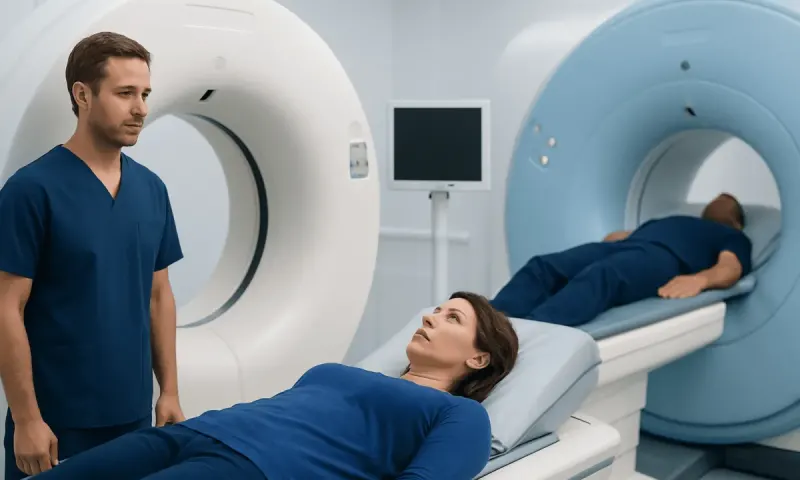
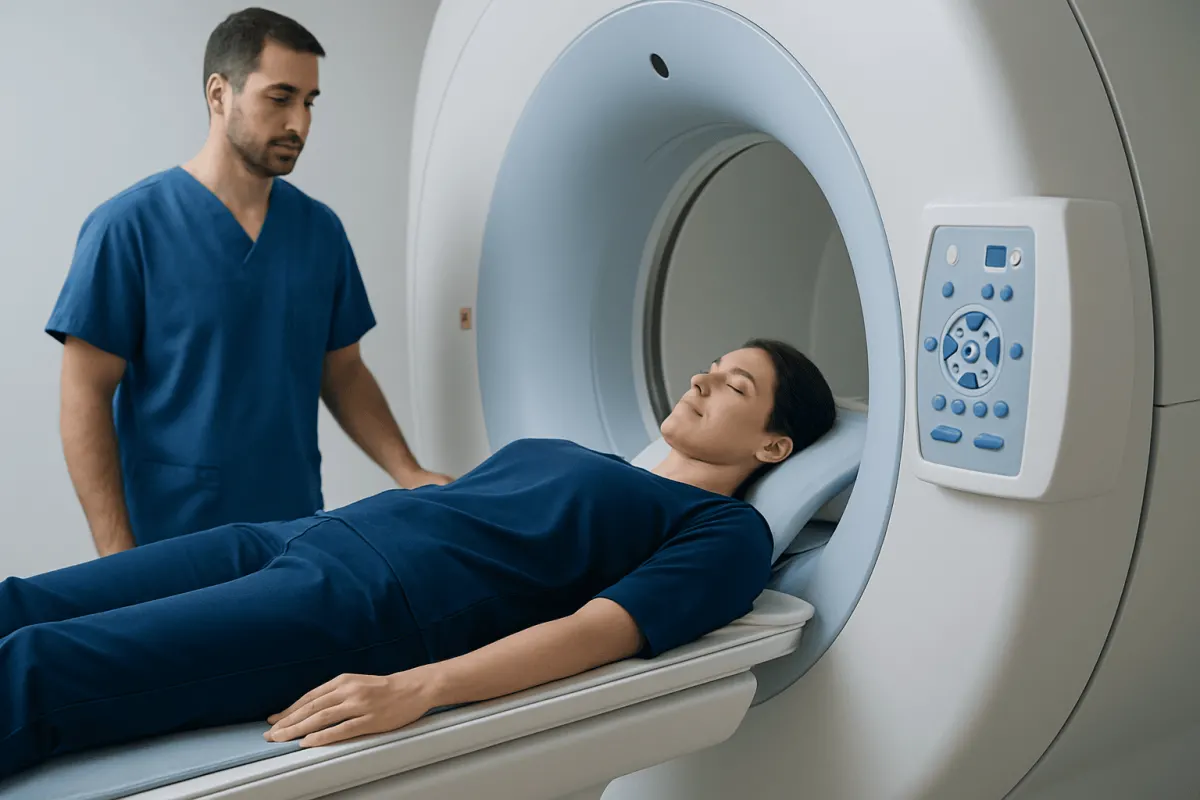
At the appointment, the patient removes metal items and changes into appropriate clothing if needed. They lie on a padded table that moves into the scanner. The machine makes loud tapping or knocking sounds, so ear protection is provided. The person must remain as still as possible while images are acquired, and they can communicate with staff throughout the examination.
Some scans use a gadolinium-based contrast agent through a small intravenous line to improve visibility of certain tissues or blood vessels. After the scan, a radiologist reviews the images and sends a report to the referring clinician. The clinician then explains what the findings mean and whether further care is needed.
Why is the MRI copay so high?
An MRI copay can feel unexpectedly high when a health plan treats advanced imaging differently from a routine doctor visit. Depending on the plan, the patient may need to meet a deductible first, pay coinsurance rather than a fixed copay, or contribute toward a facility fee and professional interpretation fee.
Insurance networks also matter. A scan at an out-of-network centre may lead to higher personal costs, and a plan may require prior authorization before it contributes to the examination. Even when an imaging centre is in network, the radiology group interpreting the scan should ideally be confirmed as participating as well.
Patients can contact their insurer with the requested examination details and ask about coverage, authorization, deductible status, coinsurance and network requirements. They can also ask the imaging centre whether its estimate includes contrast, reporting and other expected charges. Getting this information before the appointment can reduce billing surprises.
A high copay does not necessarily mean the test has been ordered inappropriately. It reflects the design of the insurance plan and the way services are billed, rather than the medical value of MRI for an individual situation.
Do doctors get paid for MRI referrals?
Doctors generally make MRI referrals because they believe imaging may help evaluate a patient’s condition or guide care. In many settings, the clinician who refers a patient does not receive a payment simply for sending that patient for an MRI. Referral and financial disclosure rules vary by country and healthcare system.
Some practices or hospitals may have imaging services within the same healthcare organization. When this occurs, patients can appropriately ask whether the clinician or organization has a financial relationship with the imaging provider and whether another suitable imaging option is available. Clear communication supports informed decisions.
The key question is whether the MRI is medically justified and likely to influence management. Patients may ask what diagnosis is being considered, what the scan could show, whether a different test may be suitable, and how the results would affect next steps.
Can I negotiate the price of an MRI?
In some settings, patients may be able to discuss the price of an MRI, especially when paying without insurance or when facing a high deductible. Imaging centres may offer a self-pay rate, prompt-payment arrangement or payment plan. Availability and rules differ by provider and location, so no specific reduction should be assumed.
Useful questions include whether there is a cash or self-pay price, whether the estimate is all-inclusive, whether contrast is included, and whether there will be separate radiologist or facility charges. Patients should request the answer in writing where possible and compare like-for-like estimates from suitable accredited imaging providers.
It is important not to delay an urgently needed scan solely to seek a lower price. If a doctor has explained that MRI is needed promptly, the patient can ask the clinical team or insurer about available in-network options and financial support pathways while arranging timely care.
Choosing an imaging centre should also consider image quality, safety processes, availability of the requested protocol and how results will be shared with the treating clinician. A lower quote is most meaningful when it covers the same examination and professional reporting.
Is it worth paying for a private MRI scan?
A private MRI scan may be worth considering for some people when it provides timely access to a clinically appropriate examination, greater scheduling flexibility or coordinated follow-up. It is not automatically the best option for every symptom, and a scan obtained without an appropriate clinical question can sometimes identify minor findings that are unrelated to symptoms and create unnecessary worry or further testing.
Before paying privately, patients should discuss the reason for the scan with a qualified clinician. They should know which body area is being examined, whether contrast is required, who will interpret the images, when the report will be available, and how any abnormal result will be followed up.
A private service should still use robust MRI safety screening and provide a formal radiology report. If the patient has an implanted device, significant kidney disease, possible pregnancy or a prior contrast reaction, this information should be reviewed before booking.
Acıbadem Health Point’s multidisciplinary specialists and JCI-accredited hospitals can assess whether MRI is appropriate and coordinate diagnostic imaging and follow-up care for international patients.
Benefits, risks, recovery and when to seek medical care
The main benefit of MRI is detailed imaging without ionizing radiation. It can help clinicians investigate symptoms, plan treatment, monitor certain conditions or avoid more invasive testing in selected cases. Most people can return to normal activities immediately after a routine MRI. If sedation is used because of severe claustrophobia or another reason, a responsible adult may be needed to accompany the patient home, and driving should be avoided until the care team says it is safe.
MRI is generally well tolerated, but the enclosed space and noise can be uncomfortable for some people. Contrast reactions are uncommon but possible, and kidney function may need review before certain contrast-enhanced studies. The magnetic field can pose a serious hazard if metal objects or incompatible implants are not identified, which is why honest, careful screening is essential.
When to seek medical care: patients should seek urgent medical assessment for sudden weakness or numbness on one side of the body, trouble speaking, new severe headache, loss of consciousness, chest pain, severe shortness of breath, a seizure, or new loss of bladder or bowel control with significant back pain. These symptoms should not wait for a routine private imaging appointment.
After contrast, urgent help is appropriate for signs of a serious allergic reaction, such as difficulty breathing, swelling of the face or throat, widespread hives or faintness. For non-urgent questions about MRI price, preparation or results, patients should contact the ordering clinician, imaging centre or insurer.
Frequently asked questions
01What factors affect MRI scan price?
MRI scan price can depend on the body part examined, the complexity of the protocol, contrast use, facility type, radiologist reporting and the country or local healthcare system. Insurance coverage, deductibles, network status and prior authorization can also affect what a patient pays personally.
02Why is the MRI copay so high?
A high MRI copay may result from a deductible, coinsurance, advanced-imaging benefit rules or use of an out-of-network provider. The bill may also include separate facility and radiology interpretation components. Patients can ask their insurer and imaging centre for an itemized estimate before the scan.
03Do doctors get paid for MRI referrals?
In many systems, doctors are not paid simply for referring a patient for MRI. Financial arrangements vary, however, and patients may ask whether the clinician or organization has a relationship with the imaging provider. The referral should be based on clinical need and how the result may affect care.
04Can I negotiate the price of an MRI?
Some imaging providers offer self-pay prices, payment plans or other arrangements, particularly for uninsured patients or those with high deductibles. Patients should ask whether the quoted amount includes the scan, contrast if needed and the radiologist’s report. Any agreement depends on the provider and local rules.
05Is it worth paying for a private MRI scan?
A private MRI may be helpful when it provides timely access to an examination that a clinician considers medically appropriate. Its value depends on image quality, safe screening, expert reporting and a clear plan for discussing the results. It is best arranged through or in consultation with a qualified clinician.
06How long does MRI recovery take?
Most people need no recovery time after a routine MRI and can return to normal activities straight away. People who receive sedation may need temporary activity restrictions and should arrange transport home. The imaging team will provide specific instructions if contrast or sedation is used.
This article is for general information only and is not a substitute for professional medical advice. Please consult a qualified doctor about your individual situation.
Joint and spine care in Turkey — expert assessment & treatment
JCI-accredited · board-certified surgeons · reply within 24h
Add us as a Preferred Source to see more of our trusted health content across Google Search, AI Overviews and Discover.