Mini Face Lift Price in Turkey: Comparing Care Plans

A mini facelift in Turkey should be compared by the full standard of care rather than a headline price. Patients should request an individualized, itemized treatment plan that explains the surgical approach, hospital and anesthesia arrangements, recovery support, possible additional charges and follow-up plan.
Mini Face Lift Turkey Price: What Patients Really Pay
Mini face lift Turkey price cannot be assessed safely from a single advertised figure. The amount a person ultimately pays depends on their facial anatomy, the extent of surgery, surgeon and hospital standards, anesthesia, recovery services, travel arrangements and the follow-up plan. A personalized written estimate is the most reliable way to understand the likely overall cost.
A mini facelift is an elective facial rejuvenation procedure that usually focuses on early to moderate skin laxity and loss of definition around the jawline, lower cheeks and, in some cases, the upper neck. It generally uses shorter incisions than a traditional facelift, but it remains surgery and should be planned with the same careful attention to safety, realistic expectations and postoperative care.
Patients considering a mini lift Turkey option should prioritize an appropriately qualified plastic surgeon, a properly equipped surgical setting and transparent communication. Price can be one part of the decision, but it should not replace an assessment of whether the proposed procedure is suitable for the individual.
How much does a mini face lift cost in Turkey?
There is no single clinically meaningful answer to “how much is a mini face lift in Turkey?” because the procedure is tailored to the patient. A mini face lift cost in Turkey may vary according to the amount of skin and deeper tissue repositioning required, whether the neck is treated, the type of anesthesia, operating-room needs, overnight observation, medications, garments and scheduled postoperative reviews.
Before committing, patients can ask for a written, itemized plan stating what is included and excluded. It is useful to clarify the surgeon’s fee, hospital or surgical-facility fees, anesthesia, laboratory tests, preoperative consultations, postoperative appointments, medication, dressings, transfers, accommodation, revision policy and the likely costs of any additional treatment that may be recommended after assessment.
A low initial mini facelift price in Turkey may not reflect the complete patient journey. International patients should also budget separately for flights, travel insurance, accommodation for an appropriate recovery period, meals, a companion if needed, and unexpected changes to travel plans. A responsible provider should explain which parts of planning are medical necessities and which are optional travel services.
- Ask whether surgery takes place in an accredited hospital or licensed surgical facility.
- Confirm who provides anesthesia and who is available after surgery.
- Request information about follow-up before departure and communication after returning home.
- Do not make a decision based only on photographs, package language or time-limited offers.
How a mini facelift works and who may be a candidate
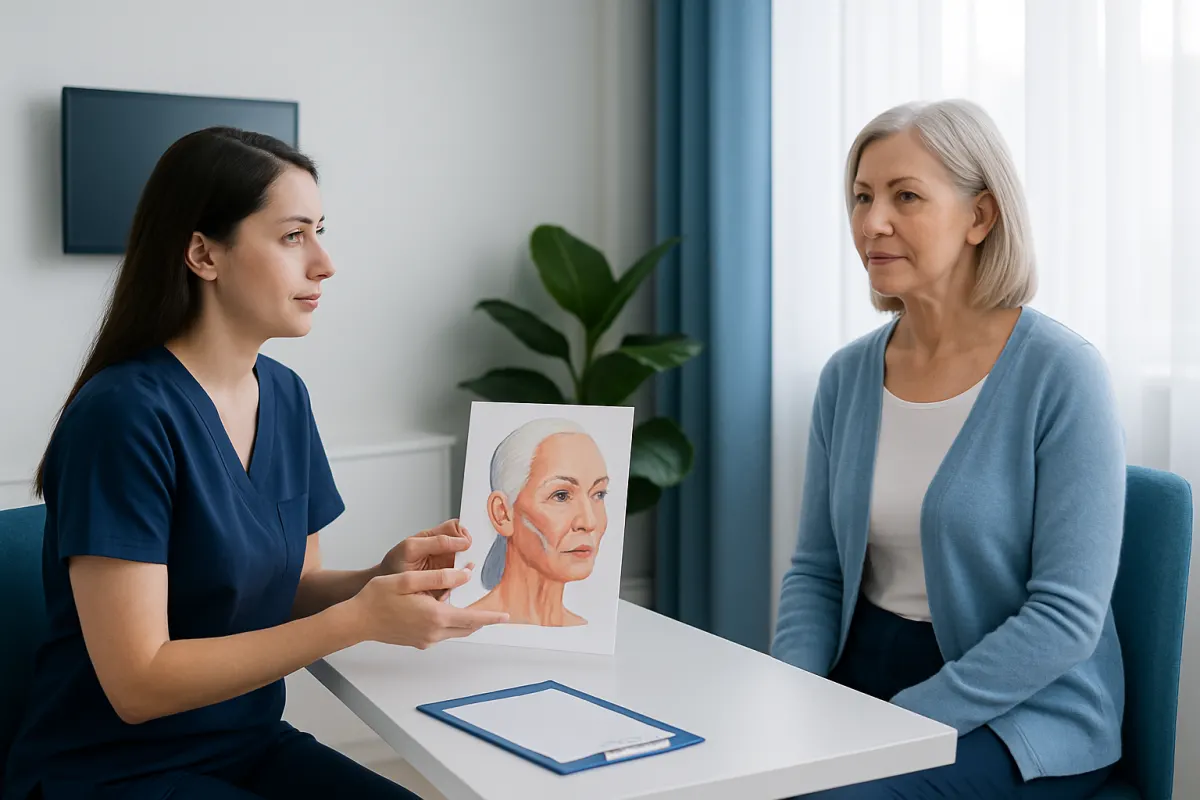
A mini facelift improves lower-face contour by lifting and securing selected deeper facial tissues, often called the superficial musculoaponeurotic system (SMAS), and removing or redraping a limited amount of excess skin. Incisions are commonly placed around the ear, where scars can usually be concealed as they heal. The exact technique varies, and some people may need a more extensive facelift or a different treatment to meet their goals.
Potential candidates are generally healthy adults with mild to moderate jowling, reduced jawline definition, early cheek descent or loose skin in the lower face. Good skin elasticity, stable body weight and realistic expectations can support a satisfactory result. A mini facelift does not stop facial aging, and it may not substantially correct significant neck laxity, deep mid-face volume loss, severe skin damage or concerns around the eyelids.
A consultation should include a review of medical history, medications, allergies, previous facial procedures, smoking or nicotine use and any tendency to poor scarring or bleeding. The surgeon should examine facial proportions and skin quality, discuss goals and determine whether facelift surgery or a nonsurgical option is more appropriate. People with uncontrolled medical conditions, active infection or an inability to pause nicotine use may need to delay treatment.
What happens during a mini facelift procedure?
Planning begins with an in-person or carefully structured clinical consultation. The surgeon discusses desired changes, evaluates the lower face and neck, takes photographs for medical planning, reviews risks and explains the proposed incision pattern. Preoperative testing may be advised according to age, health history and anesthesia requirements.
On the day of surgery, the surgical team confirms the plan, marks the treatment area and provides anesthesia appropriate to the procedure and patient. The surgeon makes carefully positioned incisions, lifts and secures the underlying supporting tissues where needed, redrapes the skin without excessive tension and closes the incisions. A dressing may be applied, and some patients may have a temporary drain depending on the technique used.
After surgery, the patient is monitored while waking from anesthesia and receives instructions for pain control, wound care, activity restrictions and emergency contact. It is important for international patients not to schedule an immediate flight home. The surgeon should assess healing in person before travel and advise when flying is medically reasonable for that individual.
Benefits, risks and mini facelift recovery timeline
The potential benefit of a mini facelift is a more defined and refreshed lower-face appearance while preserving the person’s natural facial character. Compared with a full facelift, it may involve shorter incisions and a more limited treatment area. However, “mini” does not mean risk-free, and the degree or durability of improvement differs between people.
In the first days, swelling, bruising, tightness, numbness and mild discomfort are common. Patients usually need rest, head elevation and help with practical tasks at home. Many can resume light daily activity after an initial recovery period, but strenuous exercise, heavy lifting, smoking, alcohol and activities that raise blood pressure should be avoided until the surgeon approves them.
Bruising and visible swelling often improve over the following weeks, while residual firmness, numbness and subtle swelling can take longer to settle. Incisions continue to mature over months. The surgeon’s individual guidance should determine when a patient can return to work, exercise, social activities and international travel.
Possible complications include bleeding or hematoma, infection, delayed wound healing, fluid collection, unfavorable scarring, asymmetry, changes in sensation, skin injury, hairline changes, anesthesia complications and, rarely, nerve injury affecting facial movement. Prompt assessment is important if symptoms are concerning. Following preparation and aftercare instructions, including stopping nicotine when advised, can reduce avoidable risks.
Is a mini facelift worth the money?
Whether a mini facelift is worth the money is a personal decision based on the person’s concerns, alternatives, recovery tolerance, financial circumstances and expectations. It may offer value for someone whose main concern is early lower-face laxity and who understands that the outcome is an improvement rather than a completely different appearance. It may be less suitable for someone seeking major neck correction, substantial volume restoration or a permanent result.
Patients can make a more informed decision by comparing the expected benefit with the full commitment involved: surgical risks, recovery time, time away from work, travel planning and the possibility that future aging may lead them to consider another procedure. Non-surgical treatments may be useful for some concerns, but they do not reproduce the tissue lifting achieved by surgery.
During consultation, it is reasonable to ask what change the surgeon expects, what the procedure cannot achieve, how long recovery may affect normal activities and what alternatives could be considered. Clear answers and realistic before-and-after discussions are more useful than promises of a particular outcome.
Which country is the best for a mini facelift? Is it worth going to Turkey for a facelift?
No country is universally the best for a mini facelift. The safest choice depends on the individual patient, the surgeon’s qualifications and experience, hospital standards, communication quality, access to anesthesia and emergency care, and the ability to receive appropriate follow-up. Patients should verify professional credentials through relevant national medical and plastic surgery boards rather than relying solely on online marketing.
For some people, going to Turkey for a facelift may be practical if they can choose a qualified team, attend a proper assessment, remain locally long enough for early follow-up and arrange ongoing care at home. Others may prefer surgery nearer to home because it makes preoperative visits, recovery support and in-person follow-up easier. The right option is the one that supports safe, continuous care rather than the one with the lowest advertised price.
Questions to ask a prospective provider include where the operation will occur, who will give anesthesia, what emergency services are available, how complications are managed, how long the patient should stay locally and what records will be provided for a home clinician. Acıbadem Health Point’s multidisciplinary specialists and JCI-accredited hospitals diagnose and treat international patients, with care planning based on individual clinical needs.
When to seek medical care
Anyone considering elective facial surgery should seek medical advice before booking travel or paying a deposit. A consultation with a qualified plastic surgeon is particularly important for people who have heart or lung disease, blood-clotting concerns, diabetes, sleep apnea, prior facial surgery, significant medication use or a history of poor wound healing.
After a mini facelift, urgent medical assessment is needed for rapidly increasing swelling on one side of the face or neck, severe or worsening pain, heavy bleeding, breathing difficulty, chest pain, fainting, fever, spreading redness, pus-like drainage, sudden weakness of facial movement or any symptom that feels significantly different from the instructions provided. Patients should use local emergency services when necessary rather than waiting for a remote response.
Routine follow-up remains important even when healing seems uncomplicated. A patient travelling home should leave with operative and discharge records, medication information and clear instructions on who to contact if questions or concerns arise.
Frequently asked questions
01How much does a mini face lift cost in Turkey?
The cost varies because a mini facelift is tailored to the patient’s anatomy, surgical plan, anesthesia needs, facility arrangements and aftercare. A written estimate should explain what is included, what is excluded and which travel or recovery expenses are separate. Comparing complete care plans is safer than comparing a single advertised amount.
02What is the difference between a mini facelift and a full facelift?
A mini facelift usually focuses on limited lower-face laxity, such as early jowls and loss of jawline definition, using shorter incisions and a more targeted lift. A full facelift can address more extensive lower-face and neck changes. The best option depends on the degree and location of aging changes as well as the patient’s goals.
03Is a mini facelift worth the money?
It can be worthwhile for a person with appropriate lower-face concerns, realistic expectations and comfort with surgery and recovery. It is not the best choice for every facial concern, and it does not prevent future aging. A consultation can help compare expected benefits with alternatives, risks and total costs.
04Which country is the best for a mini facelift?
There is no single best country for every patient. The important factors are surgeon qualifications, hospital or surgical-facility standards, safe anesthesia, clear communication and a reliable follow-up plan. Travel should not prevent timely assessment if a complication or recovery concern develops.
05Is it worth going to Turkey for a facelift?
It may be appropriate for some patients if they can verify the medical team and facility, allow sufficient time for recovery and postoperative review, and plan follow-up at home. It may be less practical for people who cannot stay locally long enough or who have complex medical needs. The decision should be based on safety and continuity of care, not price alone.
06How long does recovery from a mini facelift take?
Initial bruising and swelling commonly improve over the first weeks, but subtle swelling, tightness and numbness can take longer to resolve. The timing for work, exercise, social events and air travel varies by person and surgical technique. The operating surgeon should provide individualized recovery guidance and review healing before travel.
This article is for general information only and is not a substitute for professional medical advice. Please consult a qualified doctor about your individual situation.
Explore treatments in Turkey — costs, top hospitals & a free quote
JCI-accredited · board-certified surgeons · reply within 24h
Add us as a Preferred Source to see more of our trusted health content across Google Search, AI Overviews and Discover.