Meniscus Injury: Symptoms, Recovery and Treatment
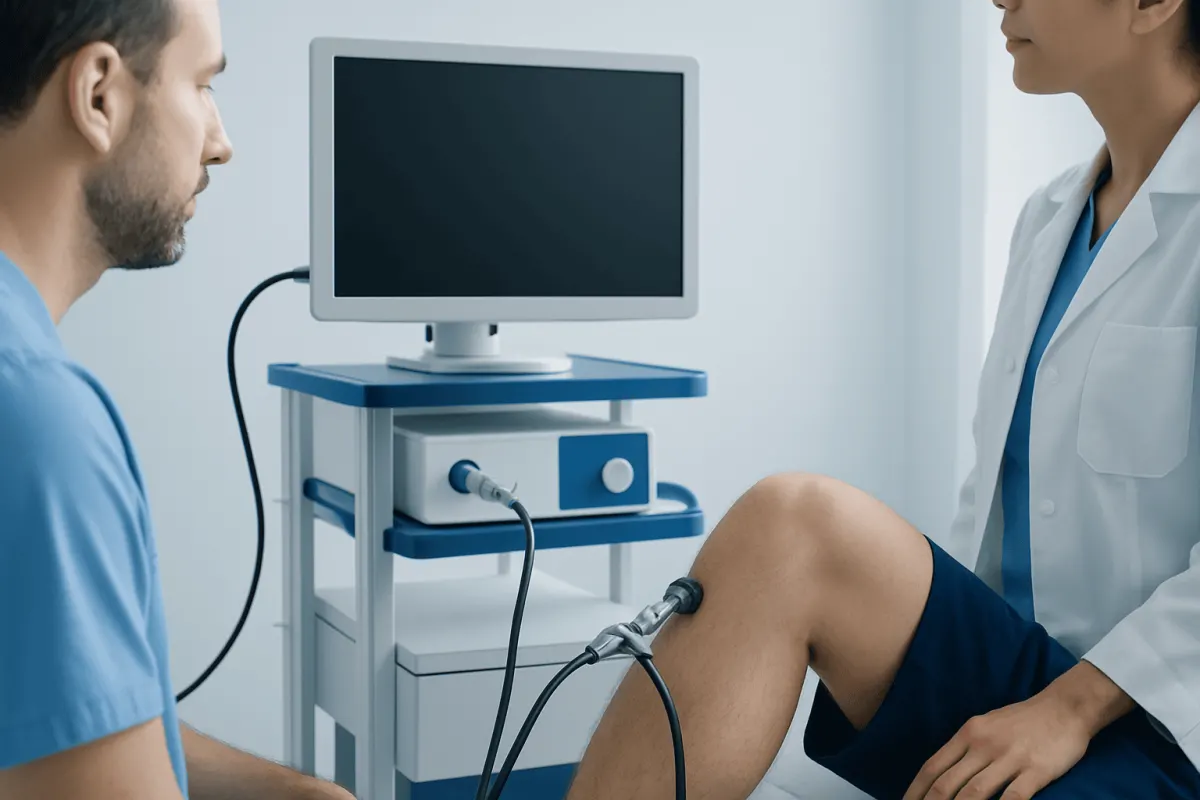
A meniscus injury occurs when one of the two C-shaped cartilage cushions in the knee is torn or irritated. Many tears improve with rest and rehabilitation, while persistent symptoms, a locked knee or certain tear patterns may need specialist assessment and treatment.
Meniscus injury overview
A meniscus injury is damage to the meniscus, a tough but flexible piece of cartilage inside the knee. Each knee has two menisci: the medial meniscus on the inner side and the lateral meniscus on the outer side. They help absorb shock, spread body weight across the joint and contribute to knee stability.
Meniscus tears may happen suddenly during a twist, pivot or sports injury. They can also develop gradually as the cartilage changes with age and repeated loading. Symptoms vary widely: some people have mild discomfort, while others experience swelling, painful clicking, a feeling that the knee gives way or difficulty fully bending or straightening the knee.
A torn meniscus does not always require surgery. The best approach depends on the tear’s location and pattern, the person’s symptoms, associated ligament or cartilage injuries, age, daily activities and treatment goals. Preserving healthy meniscal tissue whenever possible is important for long-term knee health.
What are three signs of a meniscus injury?
Three common signs of a meniscus injury are pain at or near the knee joint line, swelling or stiffness, and mechanical symptoms such as catching, clicking or locking. Pain may be most noticeable when squatting, twisting, getting up from a chair or walking on uneven ground.
Swelling may appear soon after an acute injury, although it can also build over several hours or the next day. With gradual, wear-related tears, swelling may come and go after activity rather than appearing after a single memorable incident.
The knee may also feel unstable or as though it could give way. A true locked knee means it cannot fully straighten because something is physically blocking movement; this should be assessed promptly. Not every click or pop means there is a tear, as painless knee noises are common and may have other causes.
- Localized pain when turning or squatting
- Recurrent swelling after activity
- Catching, locking or reduced range of motion
- A sensation of weakness or giving way
Is a meniscus tear considered a serious injury?
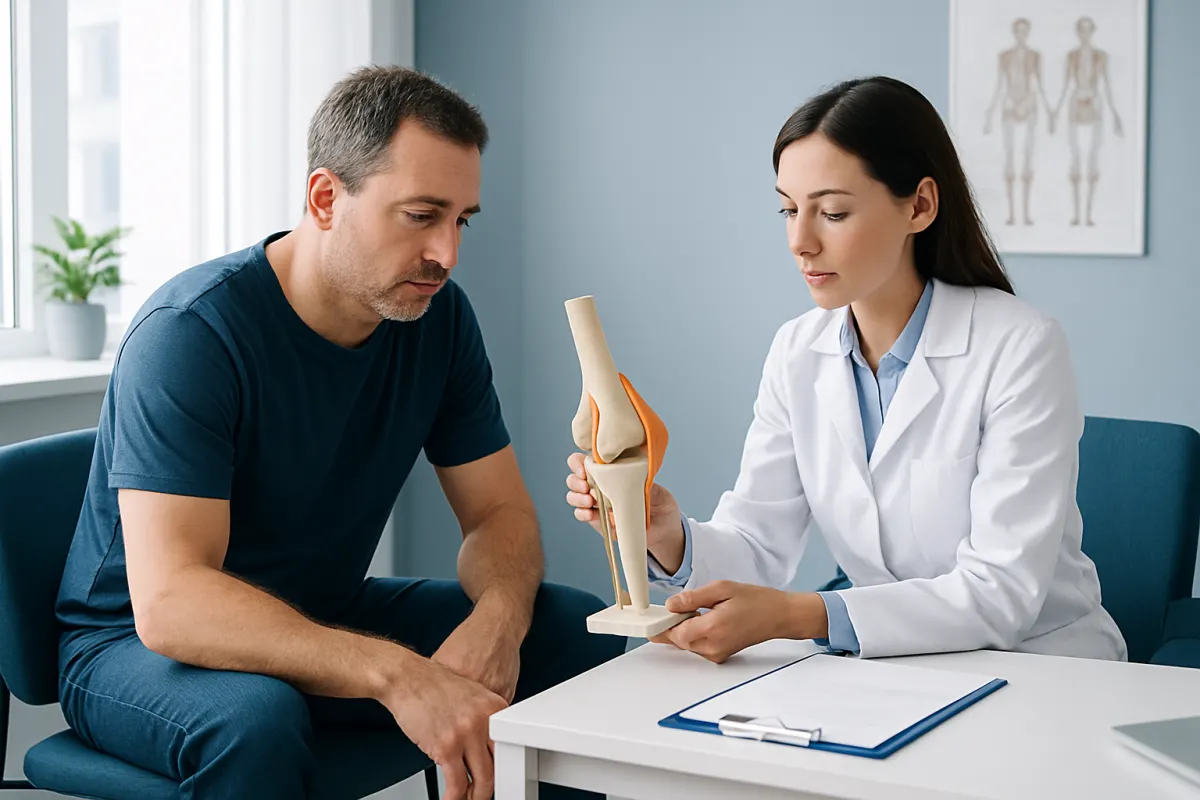
A meniscus tear can be significant, but its seriousness depends on the type of tear and its effect on knee function. Small, stable tears may cause manageable symptoms and can often be treated without an operation. Larger tears, displaced tears or tears occurring with injuries to ligaments, bones or joint cartilage may require more urgent specialist evaluation.
The outer part of the meniscus has a better blood supply than the inner portion. This affects the likelihood that a tear can heal and helps guide treatment decisions. A tear that causes the knee to lock, limits normal movement or continues to cause pain and swelling can interfere with work, exercise and daily activities.
Leaving a symptomatic tear unassessed may lead to ongoing discomfort or reduced activity. However, imaging findings do not always explain a person’s pain: meniscal changes can be present without symptoms, particularly with increasing age. A clinician considers the examination findings, symptoms and imaging together rather than treating a scan result alone.
Causes and risk factors for meniscus tears
An acute meniscus tear often occurs when the foot is planted and the knee rotates, such as during football, basketball, skiing or a sudden change in direction. Deep squatting, kneeling or lifting with a twist can also cause injury. A direct impact to the knee may contribute, especially when it occurs alongside a ligament injury.
Degenerative meniscus tears develop through gradual wear and may occur during ordinary movements, sometimes without a clear injury. Age-related changes, previous knee injury, jobs or activities involving frequent kneeling or squatting, and some sports can increase risk. Reduced strength or control around the hip and knee may also affect how forces move through the joint.
Meniscal tears can occur together with conditions such as knee osteoarthritis, particularly later in life. In these situations, knee symptoms may result from more than one structure. Care should therefore address the whole knee rather than assume that a meniscal tear is the only cause of discomfort.
Can you still walk with a torn meniscus in your knee?
Yes, many people can still walk with a torn meniscus in the knee. A person with a small, stable tear or a gradual degenerative tear may be able to bear weight and continue many daily activities, although walking may cause pain, stiffness or swelling afterward.
Being able to walk does not rule out a meaningful injury. Some tears cause symptoms mainly during twisting, pivoting, stairs, squatting or rising from a low seat. Others can make the knee feel unreliable or lead to repeated episodes of catching.
Until medical advice is available, it is sensible to avoid activities that provoke sharp pain, deep knee bending, running, jumping and pivoting. Continuing to push through substantial pain or a locking sensation may aggravate symptoms. A clinician or physiotherapist can advise when it is appropriate to return gradually to work, sport and exercise.
How a meniscus injury is diagnosed
Diagnosis begins with a discussion of how symptoms started, where the pain is felt, whether there was swelling or a pop, and which movements are difficult. A clinician then examines walking, knee alignment, range of motion, tenderness and stability. Specific movement tests may suggest meniscal irritation, but no single test is completely accurate on its own.
Plain X-rays do not show the meniscus, but they may be used after an injury to check for a fracture or to assess joint changes such as osteoarthritis. Magnetic resonance imaging, or MRI, can show the menisci and other soft tissues in detail. It is usually considered when the diagnosis remains uncertain, symptoms persist or surgery is being considered.
Imaging is not always needed immediately. For many people without red-flag symptoms, an initial period of conservative care and rehabilitation is appropriate. The decision is individualized, especially when symptoms suggest a displaced tear or another important knee injury.
Will a meniscus tear ever go away?
Whether a meniscus tear heals depends largely on its location, size, pattern and blood supply. Tears near the outer edge may have a better chance of healing because that area receives more blood. Tears in the inner region have limited blood supply and are less likely to heal fully on their own.
Even when the tear itself does not completely close, symptoms can improve substantially with rehabilitation, activity adjustment and time. Stronger muscles around the knee and hip can reduce strain on the joint, improve control and help a person return to comfortable daily movement. This is why an MRI report showing a tear does not automatically mean an operation is necessary.
A displaced tear that blocks knee motion, a repairable tear in an active person, or persistent symptoms despite appropriate non-surgical care may lead to discussion of surgery. When surgery is recommended, surgeons generally aim to repair and preserve the meniscus where feasible rather than remove tissue. Arthroscopic knee surgery may be used to repair selected tears or to address unstable damaged tissue.
Treatment, self-care and when to seek medical care
Initial treatment commonly includes reducing activities that increase pain, using cold packs wrapped in a cloth for short periods, and elevating the leg when swelling is present. A supportive brace or temporary use of crutches may be appropriate for some injuries, but these should be guided by a clinician. Over-the-counter pain medicines may help some people when used according to label directions and personal medical advice.
Structured rehabilitation is a central part of care. A physiotherapist may help restore knee motion, improve quadriceps and hip strength, and build balance and movement control before a gradual return to activity. Physical therapy and rehabilitation can be useful whether treatment is non-surgical or follows a procedure.
Medical care should be sought promptly after a major twist or impact if there is severe pain, inability to bear weight, marked swelling, visible deformity, numbness, fever, or a knee that cannot fully straighten. An appointment should also be arranged for pain or swelling that persists, recurrent catching or giving way, or symptoms that limit usual activities. Acıbadem Health Point’s multidisciplinary specialists and JCI-accredited hospitals assess and treat knee conditions for international patients.
Frequently asked questions
01What does meniscus pain feel like?
Meniscus pain is often felt along the inner or outer line of the knee joint. It may be sharp with twisting or squatting, or feel like an ongoing ache with stiffness and swelling after activity. Some people also notice catching or a sense that the knee is not moving smoothly.
02Can a meniscus tear heal without surgery?
Some tears, particularly small stable tears near the outer edge of the meniscus, may heal or become symptom-free without surgery. Other tears may not heal structurally but can still become manageable with rehabilitation and activity changes. A clinician can help determine whether non-surgical treatment is suitable.
03How long does a meniscus injury take to recover?
Recovery time varies according to the tear, the person’s symptoms, activity demands and treatment plan. Symptoms treated without surgery may improve over weeks to months with appropriate rehabilitation. Recovery after a meniscus repair usually takes longer than recovery after removal of damaged tissue because the repair needs time to heal.
04Should you massage a torn meniscus?
Massage cannot repair a torn meniscus. Gentle soft-tissue work around the thigh or calf may feel comfortable for some people, but it should not cause pain or be used in place of assessment and rehabilitation. A physiotherapist can recommend safe approaches for the specific injury.
05Can exercise make a meniscus tear worse?
High-impact exercise, deep squats, twisting and pivoting can aggravate symptoms in some people with a meniscus tear. However, carefully selected strengthening and mobility exercises are often helpful as part of rehabilitation. Exercises should be adjusted if they cause sharp pain, swelling or locking.
06When is surgery needed for a meniscus tear?
Surgery may be considered when the knee is truly locked, a tear is displaced or repairable, another significant knee injury is present, or symptoms continue despite appropriate conservative treatment. The decision is based on symptoms, examination findings, imaging and a person’s individual goals. Not all tears seen on MRI require surgery.
This article is for general information only and is not a substitute for professional medical advice. Please consult a qualified doctor about your individual situation.
Joint and spine care in Turkey — expert assessment & treatment
JCI-accredited · board-certified surgeons · reply within 24h
Add us as a Preferred Source to see more of our trusted health content across Google Search, AI Overviews and Discover.