Laser Teeth Whitening: Procedure, Benefits, Risks and Recovery

Key Takeaways
- Laser teeth whitening is a dentist-supervised cosmetic treatment for stains and discoloration.
- The procedure usually combines a whitening gel with a light or laser source to help activate the gel.
- Temporary tooth sensitivity and mild gum irritation are the most common short-term side effects.
- Results vary depending on the cause of discoloration, enamel condition, and daily habits such as coffee, tea, or tobacco use.
- Good aftercare and routine dental checkups help maintain results longer.
- People with untreated cavities, gum disease, or certain dental restorations may need an alternative plan.
Laser teeth whitening is a professional cosmetic dental procedure used to lighten stains and improve the appearance of the teeth. It is typically done in a dental clinic and may offer faster, more noticeable results than many home whitening methods.
Overview
Laser teeth whitening is a professional cosmetic dental treatment designed to make teeth appear brighter by reducing surface and, in some cases, deeper stains. In simple terms, a dentist applies a whitening gel to the teeth and then uses a laser or similar light source to help activate the whitening process. For many adults, it is a practical option when they want a faster result than over-the-counter products can usually provide.
The treatment is aimed at common discoloration caused by coffee, tea, red wine, tobacco, aging, or certain medications. It is important to understand that whitening changes the color of natural tooth enamel; it does not clean away plaque or repair dental damage. A dental evaluation before treatment helps confirm whether whitening is appropriate or whether another concern should be treated first.
For people planning care while traveling, a clinic may also review timing, follow-up needs, and whether teeth should be stabilized before a whitening appointment. That preparation matters because cosmetic care works best when the mouth is otherwise healthy and the patient knows what result is realistic.
How the Procedure Is Done
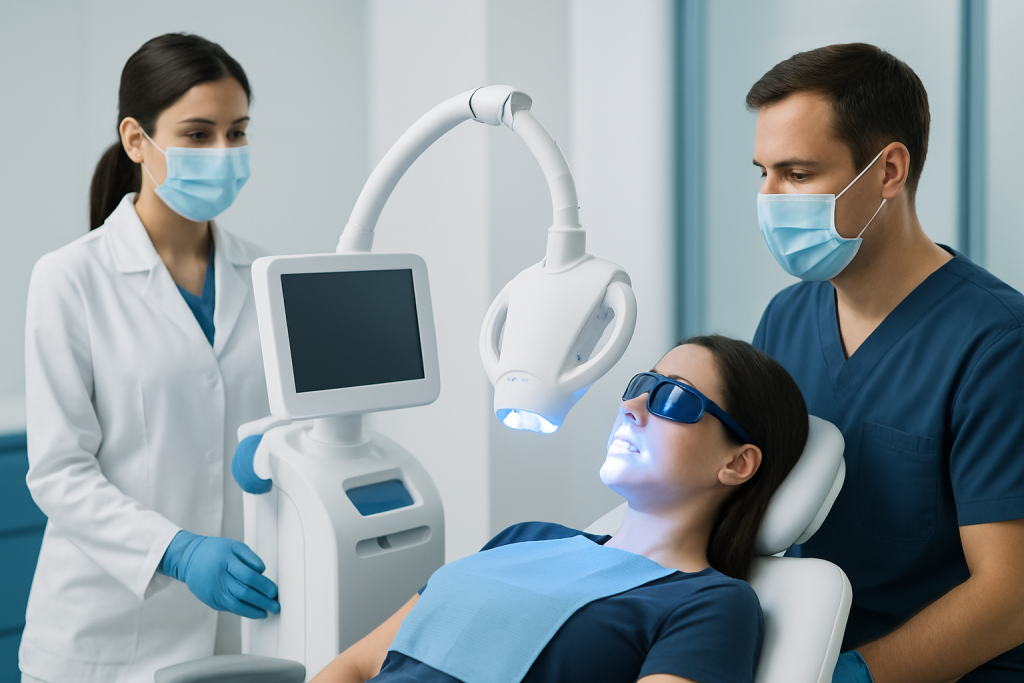
The appointment usually begins with an examination of the teeth and gums, along with a discussion of the patient’s goals and the type of discoloration present. The dental team may clean the teeth first if plaque or tartar is present, since whitening works more evenly on a clean surface. Photos or shade measurements are sometimes taken so the patient and dentist can compare the change afterward.
Before the whitening gel is applied, the lips and gums are protected. The dentist then places the whitening agent on the tooth surfaces and directs the laser or light toward the teeth for a controlled period. The exact steps vary by clinic and system, but the purpose is the same: to help the gel work more efficiently while the treatment is supervised in a clinical setting.
Most patients remain awake and comfortable during the visit. Some people feel warmth, tingling, or a temporary “zinger” sensation in the teeth, but the procedure is generally well tolerated. Because the treatment is done in one appointment or a short series of appointments, it can be appealing for people with limited time, including international patients who may need care scheduled around travel plans.
Benefits and What Results to Expect

The main benefit of laser teeth whitening is a visibly brighter smile in a relatively short time. Compared with many at-home methods, professional whitening can produce a more dramatic change and does so under dental supervision. This can be reassuring for patients who want guidance on safety, stain type, and expected results before committing to treatment.
Another advantage is customization. A dentist can decide whether whitening is appropriate for intrinsic stains, extrinsic stains, or a combination of both. They can also identify teeth that may not respond evenly, such as teeth with internal discoloration, old fillings, crowns, or veneers, which do not whiten in the same way as natural enamel.
Results are not permanent. The longevity of whitening depends on daily habits, oral hygiene, and the original cause of staining. Patients who smoke or frequently drink dark beverages often notice that maintenance is needed sooner. Many dental teams recommend routine checkups and a sensible maintenance plan rather than repeated aggressive whitening.
Possible Risks and Side Effects
Laser teeth whitening is generally considered safe when performed by a qualified dental professional, but it is still a procedure that can cause temporary side effects. The most common is tooth sensitivity, especially to cold air, drinks, or foods for a short period after treatment. Mild gum irritation can also occur if whitening gel contacts soft tissues.
Less commonly, patients may experience uneven whitening, particularly when there are pre-existing variations in enamel, prior dental restorations, or deeper intrinsic stains. Whitening does not change the color of crowns, veneers, bridges, or tooth-colored fillings, so visible differences can remain. This is one reason an examination before treatment is so important.
People with untreated cavities, cracked teeth, active gum disease, or significant enamel wear may be at higher risk of discomfort and may need dental care first. A careful provider will screen for these issues and may suggest an alternative treatment plan if whitening is not the safest first step.
Who May Be a Good Candidate
Laser teeth whitening is often considered for adults with healthy teeth and gums who want to improve yellowing or surface staining. It may be a good fit for patients who have a special event coming up, or for those who prefer a supervised clinic-based approach rather than using strips or trays at home. A dental assessment helps confirm whether the stain type is likely to respond well.
Not everyone is an ideal candidate. Children and pregnant patients are commonly evaluated more cautiously, and people with extensive restorations in the front teeth may not get a uniform cosmetic result. Those with very sensitive teeth, active oral disease, or enamel defects may need a different strategy or a staged approach.
For patients traveling from abroad, a good candidacy discussion also includes whether enough time is available for evaluation, treatment, and any follow-up. Cosmetic dental care works best when scheduling is realistic and the patient can return for review if sensitivity or other concerns appear after the visit.
- Healthy gums and no untreated decay
- Mostly natural front teeth
- Stains that are likely to respond to whitening
- Comfort with temporary sensitivity risk
- Ability to follow aftercare instructions
Recovery and Aftercare
Recovery is usually straightforward. Some patients notice sensitivity for a day or two, while others do not feel much change at all. If the teeth feel tender, dentists may advise avoiding very hot or cold foods temporarily and using toothpaste designed for sensitive teeth, as directed by a clinician.
After whitening, it is sensible to avoid strongly colored foods and drinks for a short period, since freshly treated enamel can be more vulnerable to new staining. Dark sauces, coffee, tea, red wine, berries, and tobacco are common examples. Good brushing habits, flossing, and drinking water after meals all help protect the result.
Because whitening is only one part of oral care, patients are usually encouraged to keep regular dental visits. A dentist can check that the teeth and gums remain healthy and suggest a maintenance schedule if needed. For international patients, a discharge plan that explains when to resume normal foods, when sensitivity should settle, and when to seek follow-up can make recovery much easier after returning home.
Alternatives to Laser Whitening
Laser whitening is only one route to a brighter smile. Some patients do well with dentist-supervised take-home trays, while others may prefer in-office bleaching without laser activation. The right choice depends on stain type, timing, sensitivity history, and whether the patient wants gradual or faster improvement.
When discoloration is caused by an underlying dental problem, whitening alone may not help. In those cases, treatment might focus on fillings, gum care, professional cleaning, or cosmetic options such as bonding or veneers. A dentist can explain which approach is most suitable and whether whitening should be delayed until oral health is stabilized.
Patients sometimes arrive expecting every darkened tooth to respond the same way. In reality, dental color can be affected by age, medications, trauma, or previous treatment, and each factor responds differently. A thoughtful consultation prevents disappointment and helps the patient choose a plan that matches their goals and oral condition.
When to See a Doctor
A dental appointment is the right first step before whitening, especially if there is tooth pain, gum bleeding, visible decay, sensitivity that already exists, or a history of root canal treatment or large restorations. A dentist can determine whether the discoloration is cosmetic or whether it reflects a problem that needs treatment first.
Patients should also seek advice if whitening has not worked as expected, if the teeth look blotchy afterward, or if sensitivity lasts longer than a short recovery period. These issues are not usually emergencies, but they deserve professional assessment so the next step is chosen safely.
For people considering treatment abroad, choosing a clinic with coordinated dental expertise can make planning simpler. At Acibadem Health Point, multidisciplinary specialists and JCI-accredited hospitals diagnose and treat dental concerns for international patients, including cosmetic procedures such as whitening, with attention to safety, follow-up, and continuity of care.
Frequently asked questions
01How does laser teeth whitening work?
A dentist places a whitening gel on the teeth and uses a laser or light source to help activate it. The goal is to break down stain molecules and lighten the appearance of natural enamel. The exact system can vary by clinic, but the process is supervised throughout.
02Is laser teeth whitening painful?
Most people do not describe it as painful, but temporary tooth sensitivity is common. Some patients also notice mild gum irritation. These effects usually settle soon after treatment, especially with proper aftercare.
03How long do results last?
Results vary depending on oral habits, diet, and the original cause of discoloration. Coffee, tea, red wine, and smoking can shorten the time before stains return. Routine dental care and sensible maintenance help preserve the result longer.
04Can crowns, veneers, or fillings be whitened?
No, whitening products do not change the color of restorations such as crowns, veneers, bridges, or fillings. A dentist can explain whether the natural teeth and restorations will match well after whitening. In some cases, cosmetic planning needs to happen before treatment.
05Who should avoid laser teeth whitening?
People with untreated cavities, active gum disease, cracked teeth, or significant enamel wear may need dental treatment first. It is also wise to be cautious if the teeth are already very sensitive or if many front teeth have restorations. A dental exam helps determine whether whitening is appropriate.
06What should patients do after the procedure?
It is usually best to avoid strongly colored foods and drinks for a short time and to follow the dentist’s instructions on sensitivity care. Gentle brushing, good hydration, and regular checkups help maintain the outcome. If sensitivity becomes strong or lasts longer than expected, the dentist should be contacted.
This article is for general information only and is not a substitute for professional medical advice. Please consult a qualified doctor about your individual situation.
Explore treatments in Turkey — costs, top hospitals & a free quote
JCI-accredited · board-certified surgeons · reply within 24h
Add us as a Preferred Source to see more of our trusted health content across Google Search, AI Overviews and Discover.