

Labeled Skeletal System: Bones and Anatomy
- 9 min read
- Published November 29, 2026
Key Takeaways
- The skeleton is more than a frame; it supports movement, protects organs, stores minerals, and helps make blood cells.
- A labeled skeletal system usually includes the skull, spine, ribs, pelvis, arms, legs, hands, feet, joints, and cartilage.
- Bone pain, swelling, deformity, stiffness, or repeated fractures deserve medical assessment, especially after injury.
- Diagnosis may involve physical examination, X-rays, MRI, CT, bone density testing, or blood tests depending on the concern.
- Many skeletal conditions improve with timely care, rehabilitation, posture support, safe exercise, and healthy bone habits.
The skeletal system gives the body shape, protects vital organs, and works with muscles to make movement possible. A labeled view of the skeleton can help patients understand where problems begin, how doctors evaluate them, and what treatment may involve.
Overview
A labeled skeletal system is often used in school diagrams, medical education, and patient consultations because it shows how the body is built from the inside out. It helps people see that the skeleton is not one solid structure, but a living network of bones, cartilage, ligaments, and joints working together.
In everyday life, the skeleton quietly handles several jobs at once. It holds the body upright, gives muscles a stable base for movement, shields organs such as the brain, heart, and lungs, and stores minerals like calcium and phosphorus. It also plays a role in producing blood cells inside the bone marrow.
For patients thinking about orthopedic care, a clear skeletal map can make symptoms easier to explain. Pain in a knee, hip, shoulder, back, or foot often relates to how different parts of the skeletal system connect and share force during standing, walking, lifting, or travel.
What a labeled skeleton includes
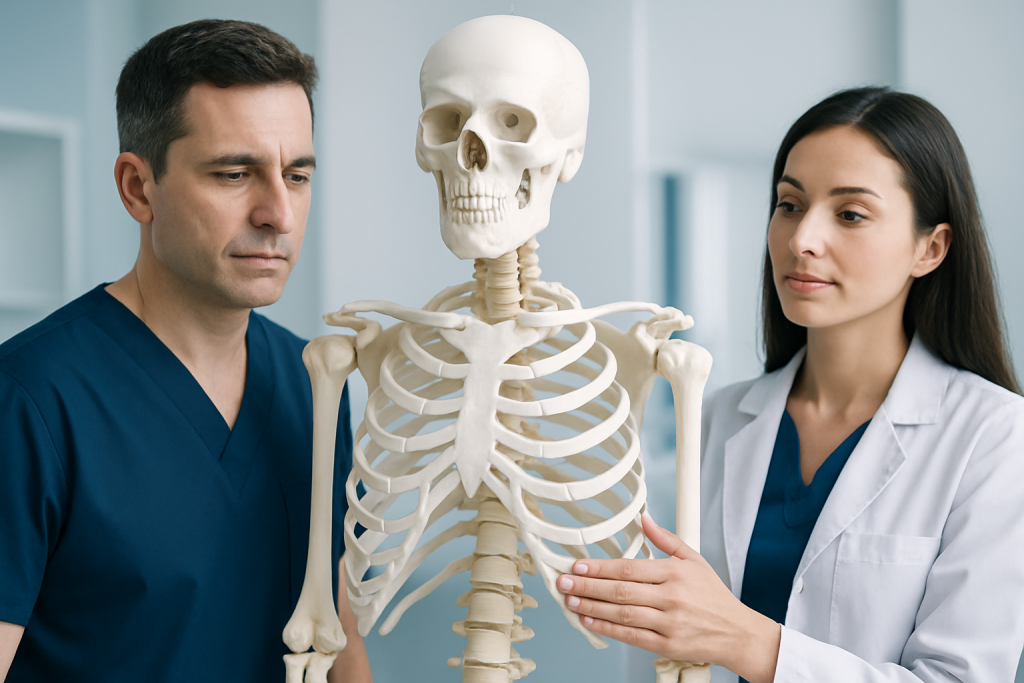
When the skeleton is labeled, the major regions usually appear in a predictable order. The axial skeleton includes the skull, spine, ribs, and sternum, while the appendicular skeleton includes the shoulder girdle, arms, hands, pelvis, legs, and feet. Together, these structures create both stability and mobility.
The skull protects the brain and supports the face. The vertebral column, or spine, helps keep the body balanced while protecting the spinal cord. The rib cage shields the chest organs, and the pelvis carries body weight and supports the lower trunk. Long bones in the arms and legs help create leverage for movement, while smaller bones in the hands and feet allow fine control and balance.
Joints connect bones and let them move in different ways. Cartilage cushions the ends of bones, reducing friction, while ligaments stabilize joints and tendons attach muscles to bones. In a labeled diagram, these details often explain why pain or stiffness may be felt in one area even when the underlying cause involves a neighboring structure.
Symptoms linked to skeletal problems
Skeletal problems do not always announce themselves in the same way. Some begin with a sudden injury, while others develop gradually through wear, inflammation, posture strain, or reduced bone strength. The symptom pattern often gives the first clue to what is happening.
Common signs include localized bone or joint pain, swelling, warmth, stiffness, reduced range of motion, limb deformity, weakness, or difficulty bearing weight. People with spinal conditions may notice back pain, neck pain, numbness, tingling, or changes in posture. Fractures often cause sharp pain, bruising, swelling, and an inability to use the affected area normally.
In older adults, subtle changes can matter as much as dramatic ones. Height loss, a stooped posture, repeated fractures after minor falls, or persistent pain in the back, hips, or wrists may suggest weakened bone and deserve evaluation. In children, limping, refusal to use a limb, or delayed growth can also be important signals.
Causes and risk factors
Skeletal conditions have many causes, and a labeled anatomy view can help narrow them down. Trauma is one of the most obvious: falls, sports injuries, traffic accidents, and overuse can damage bones, joints, and supporting tissues. Repetitive strain may also lead to inflammation or stress injuries even without a single major event.
Other causes develop more quietly. Arthritis can affect the joints, osteoporosis can weaken bones, scoliosis can change spinal alignment, and infections or tumors can alter bone structure. Nutritional issues, hormonal changes, and certain long-term medications may also influence bone health.
Risk factors often include older age, family history, low physical activity, smoking, heavy alcohol use, low calcium or vitamin D intake, previous fractures, menopause, and chronic illnesses that affect movement or metabolism. For international patients, long travel, jet lag, and carrying luggage can sometimes aggravate existing back, knee, or foot problems, especially when a condition is already present.
How doctors diagnose skeletal conditions
Diagnosis usually starts with a conversation and a physical examination. A doctor may ask where the pain is located, when it began, whether it followed an injury, and which movements make it better or worse. They may also check walking pattern, joint stability, posture, swelling, tenderness, and nerve function.
Imaging tests are often the next step when a bone, joint, or spine problem is suspected. X-rays can show fractures, alignment changes, arthritis, and some deformities. CT scans provide more detail of bone structure, while MRI is useful for soft tissues, marrow, ligaments, and spinal nerve involvement. Bone density testing may be recommended when weakened bones are a concern.
Blood tests can help identify inflammation, infection, vitamin deficiencies, or metabolic disorders that affect the skeleton. In some cases, doctors combine imaging and laboratory findings before recommending the safest path forward, especially if surgery, rehabilitation, or bone-strengthening treatment is being considered.
Treatment options
Treatment depends on the exact problem, the bone or joint involved, and how much it affects daily life. Simple injuries may improve with rest, ice, elevation, temporary immobilization, and careful return to activity. More complex fractures may need casting, bracing, or surgery to restore alignment and stability.
For ongoing conditions, treatment often aims to reduce pain, protect function, and prevent worsening. This may include physical therapy, posture training, assistive devices, anti-inflammatory medicines, bone-health treatment, or joint injections in selected cases. When the spine or major joints are involved, doctors may focus on preserving movement while limiting strain on the affected area.
Rehabilitation is often a crucial part of recovery. A thoughtful exercise plan can help restore strength and flexibility after injury or surgery, while also reducing the chance of future problems. Patients traveling from another country may benefit from coordinated follow-up, so that healing plans, imaging reviews, and rehabilitation goals remain consistent after returning home.
Prevention and self-care
Healthy skeletal habits are built through routine, not dramatic changes. Weight-bearing exercise, regular walking, strength training, and balance work can help maintain bone and joint function when appropriate for a person’s age and health status. Good posture and ergonomics also reduce strain on the spine and joints.
Nutrition matters too. A balanced diet with adequate calcium, vitamin D, protein, and other essential nutrients supports bone maintenance and healing. Avoiding tobacco, limiting alcohol, and keeping chronic conditions well managed can further protect skeletal health over time.
- Use supportive footwear when standing or walking for long periods.
- Lift luggage or heavy objects with the knees and hips, not the back.
- Take breaks during long flights or car rides to reduce stiffness.
- Follow return-to-activity guidance after injury or surgery.
- Seek fall-prevention advice if balance is changing.
Self-care should be gentle and realistic. If pain increases with a new exercise, if swelling develops, or if a movement suddenly feels unstable, it is better to pause and ask a clinician than to push through it.
When to see a doctor
Medical evaluation is advisable when pain lasts more than a short period, keeps returning, or interferes with walking, sleep, work, or daily tasks. Swelling, deformity, joint locking, unexplained stiffness, or a clear loss of strength should also be checked.
Urgent care is especially important after a significant injury, inability to bear weight, visible bone deformity, numbness, loss of bladder or bowel control, or severe pain that does not ease with rest. These signs may point to a fracture, spinal nerve problem, or another condition that needs prompt attention.
Patients who are planning care across borders often want clarity before they travel and confidence once they return home. A detailed orthopedic assessment can help define the problem, the treatment plan, and the follow-up steps in a way that is practical for international recovery. At Acibadem Health Point, multidisciplinary specialists and JCI-accredited hospitals diagnose and treat skeletal and orthopedic conditions for international patients with coordinated care.
Why a labeled skeleton helps patients understand care
A labeled skeleton is more than a classroom image. It gives patients a simple way to connect symptoms with anatomy, which can make consultations clearer and treatment decisions easier to follow. When people understand whether the issue involves bone, joint, cartilage, ligament, or spine, they can ask better questions and participate more actively in care.
This matters in orthopedic medicine because the same symptom can have several explanations. Hip pain may reflect the joint itself, the lower back, or nearby muscles and tendons; knee pain may involve cartilage, ligaments, alignment, or inflammation. A clear map of the skeletal system helps sort out those possibilities without guesswork.
For patients who may need imaging, rehabilitation, or surgery, the labeled view also supports planning. It can help explain why one area is treated while another is protected, and why recovery may depend on both medical care and consistent self-care after leaving the clinic.
Frequently asked questions
01What are the main parts of the skeletal system?
The main parts are the skull, spine, ribs, pelvis, arms, legs, hands, and feet, along with the joints, cartilage, ligaments, and tendons that help them work together. In diagrams, these parts are often grouped into the axial and appendicular skeletons.
02Why do doctors use a labeled skeletal system diagram?
A labeled diagram helps show where pain or injury may be coming from and how different structures connect. It is especially useful when discussing fractures, arthritis, spine issues, or recovery after surgery.
03Can bone pain be a sign of something serious?
Sometimes bone pain is due to a minor strain or injury, but it can also signal fracture, infection, arthritis, osteoporosis, or other conditions. Pain that lasts, worsens, or follows a major injury should be assessed by a doctor.
04How can someone keep bones healthy as they age?
Regular exercise, adequate nutrition, fall prevention, and avoiding smoking all support bone health. It is also important to manage conditions such as osteoporosis, thyroid problems, or vitamin deficiencies when present.
05When should back or joint pain be checked by a specialist?
Pain should be checked when it limits movement, keeps coming back, follows an injury, or comes with swelling, weakness, numbness, or deformity. A specialist can help determine whether the issue is in the bone, joint, spine, or surrounding tissues.
06Does travel make skeletal pain worse?
Long periods of sitting, carrying heavy bags, and fatigue from travel can sometimes aggravate existing back, hip, knee, or foot discomfort. Gentle movement, good luggage technique, and planned rest can help, but persistent pain should still be evaluated.
This article is for general information only and is not a substitute for professional medical advice. Please consult a qualified doctor about your individual situation.
Joint and spine care in Turkey — expert assessment & treatment
JCI-accredited · board-certified surgeons · reply within 24h
Add us as a Preferred Source to see more of our trusted health content across Google Search, AI Overviews and Discover.


How can we help you today?
Meet an Acibadem specialist by secure video, before you travel.
Book a video visit