Kidney Stents and Pain: Causes, Relief and When to Worry

Key Takeaways
- A kidney stent can cause discomfort during urination, activity, or rest, especially soon after placement.
- Pain may come from bladder irritation, urine reflux, muscle spasms, or the stent shifting slightly with movement.
- Most stent-related symptoms are temporary and can often be improved with hydration, activity changes, and doctor-recommended medicines.
- Fever, severe flank pain, inability to pass urine, or worsening blood in the urine deserve prompt medical review.
- Follow-up is important because kidney stents are usually meant to be temporary and should not be left in longer than advised.
Kidney stents and pain often go together because the tube can irritate the bladder, ureter, or kidney while it is in place. Most discomfort is manageable, but certain symptoms should be checked promptly to make sure the stent is positioned well and no complication is developing.
Overview
A kidney stent, more precisely a ureteral stent, is a thin flexible tube placed to help urine flow from the kidney to the bladder. It is commonly used after a kidney stone procedure, around a narrowed ureter, or when swelling is blocking drainage. The short answer to the question of kidney stents and pain is that some discomfort is common, but severe or escalating pain is not something to ignore.
Many people feel relieved to know that stent discomfort does not automatically mean something is wrong. The tube can make the bladder feel irritated, create a pulling sensation in the side or back, or trigger aching when the bladder fills and empties. For patients traveling from another country for treatment, it helps to plan in advance for the weeks after placement, because symptom control and follow-up timing matter just as much as the procedure itself.
Most stents are temporary and removed once the kidney has healed or the blockage has been treated. The practical goal is not to eliminate every sensation, but to make the stent period safe and tolerable while protecting kidney function.
Symptoms

Stent-related discomfort can show up in several ways. Some people notice a dull ache in the flank or lower abdomen, while others feel a sharp twinge during urination or movement. It is also common to have urinary urgency, a frequent need to urinate, or a burning feeling that resembles a mild urinary infection.
Typical symptoms may include:
- Pain in the side, back, groin, or bladder area
- Pressure or cramping when the bladder fills
- More frequent urination, including at night
- Blood in the urine, especially after activity
- Discomfort that increases after drinking more fluids or after exercise
The pattern can be surprisingly variable from one person to another. Some feel little more than a mild annoyance, while others find that bending, walking, or even changing position in bed brings on a brief pulling sensation. Pain that is new, severe, or steadily worsening deserves medical attention rather than simple reassurance.
Causes & Risk Factors
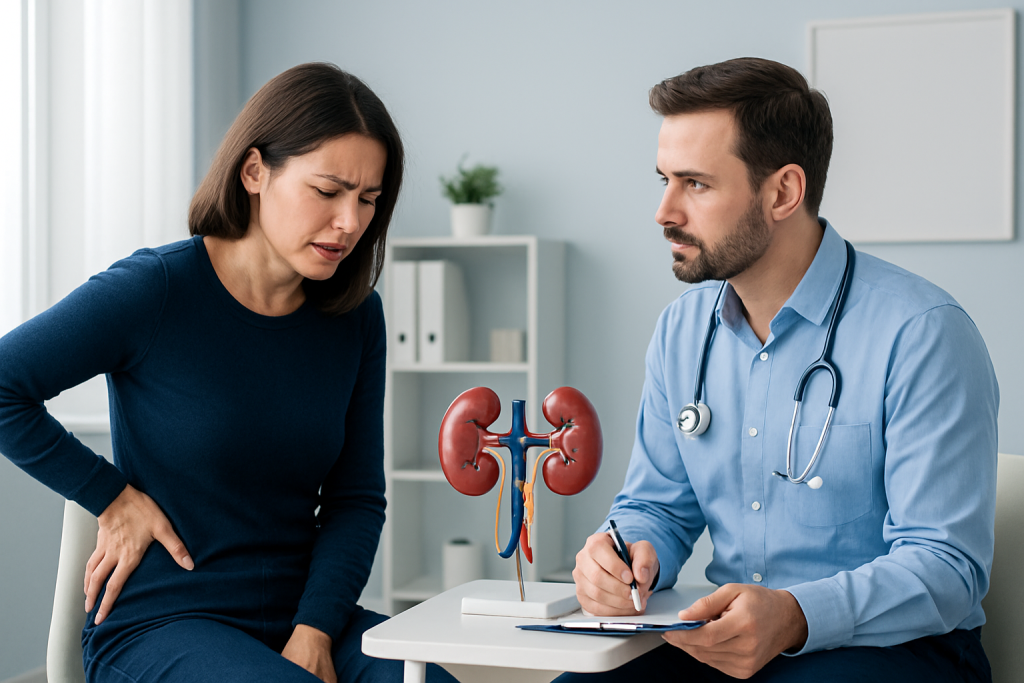
Stents are designed to move urine, but they sit in a sensitive area. The lower end of the stent rests in the bladder and may irritate it, while the upper end sits in the kidney and can create a sense of pressure. When urine flows backward toward the kidney during urination, some people feel a brief ache in the flank or side.
Several factors can make kidney stents and pain more noticeable. A longer stent, a very active lifestyle, dehydration, bladder spasms, or a recent stone procedure may all increase symptoms. People who have a sensitive bladder, urinary infection, or a history of difficult stone passage may also feel more discomfort.
Pain can also reflect a separate issue rather than the stent itself. A stone fragment, infection, swelling, stent migration, or blockage of the stent can all cause symptoms that should be evaluated. This is one reason follow-up matters: the stent is only part of the story, and the underlying kidney problem still needs to heal properly.
Diagnosis
Doctors usually start by asking where the pain is, when it happens, whether it changes with urination, and whether there are associated symptoms such as fever or difficulty passing urine. That history often helps distinguish expected stent discomfort from a possible complication. A physical examination may follow, especially if the pain is significant.
Testing is chosen based on the situation. Urine testing can check for infection or blood, and blood tests may be used if kidney function needs to be reviewed. Imaging, such as ultrasound or X-ray, may be ordered to confirm that the stent is still in the correct position and that urine is draining as expected.
For international patients, it is especially helpful to keep the stent card or procedure note, because it identifies the type of stent and the expected removal date. Clear records make it easier for a local doctor or the original treating team to interpret symptoms quickly if the patient needs care while traveling or after returning home.
Treatment Options
Treatment depends on whether the symptoms are typical irritation or a sign of infection, obstruction, or displacement. When the stent is simply uncomfortable, doctors may recommend supportive measures and medicines that help relax the urinary tract or reduce bladder spasms. Pain relief is usually tailored to the patient’s medical history and kidney function.
Common approaches may include:
- Drinking enough fluids, unless a doctor has advised otherwise
- Using prescribed or recommended pain medicine
- Taking medicines that reduce bladder irritation or spasms
- Limiting activities that trigger side pain, at least temporarily
- Treating any infection if tests suggest one is present
If the stent is blocked, has moved, or is no longer needed, the doctor may remove or replace it. That decision depends on the reason it was placed and on the condition of the kidney and ureter. Most people feel better once the stent is removed, although it is not unusual to notice mild urinary symptoms for a day or two afterward.
Prevention & Self-care
Not every stent symptom can be prevented, but a few habits often make the experience easier. Regular hydration can help dilute urine and reduce irritation, though the right amount depends on the person’s medical condition and the advice given by the treating team. Simple pacing of daily activities also helps, especially in the first days after placement.
Self-care can include planning ahead for restroom access, avoiding strenuous exercise if it clearly worsens pain, and keeping follow-up appointments even if symptoms are mild. A patient who is recovering away from home may want to identify a local clinic or emergency department in advance, just in case fever or severe pain develops.
It is also wise to keep a written note of the planned stent removal date. Forgotten stents can cause serious problems over time, so reminders on a phone or calendar are not just convenient; they are part of safe care.
When to See a Doctor
Medical review is important if the pain is severe, persistent, or clearly getting worse instead of settling. Fever, chills, foul-smelling urine, nausea and vomiting, inability to urinate, or heavy bleeding in the urine are especially important warning signs. These symptoms may point to infection, blockage, or another complication that needs prompt attention.
It is also sensible to call a doctor if the stent symptoms are interfering with sleep, work, walking, or daily eating and drinking. A clinician may be able to adjust medicines, check the stent position, or confirm that the pain is within the expected range. Patients should not try to remove a stent themselves unless they have been specifically instructed and equipped to do so.
Acibadem Health Point’s multidisciplinary specialists and JCI-accredited hospitals diagnose and treat kidney and urinary conditions for international patients who need structured follow-up or procedure review. Even so, the guiding principle remains the same everywhere: when symptoms feel out of proportion, they should be assessed rather than endured.
Living with a Stent: What to Expect Day by Day
The first few days after stent placement are often the most noticeable, especially if the original problem involved a stone or infection. Many patients describe a pattern of better and worse moments rather than a constant pain level. For some, walking and hydration improve symptoms; for others, certain positions or a full bladder make the discomfort more obvious.
It can help to think of the stent period as a temporary bridge. The purpose is to keep urine moving while the kidney heals, not to create a long-term change in lifestyle. Most people are able to continue many normal activities with a few adjustments and with clear instructions from their doctor.
If the patient is returning home before the stent is removed, the discharge plan should be easy to follow in another country: know which symptoms are expected, how to reach the treating team, and when the removal appointment is scheduled. Clear aftercare reduces anxiety and helps the patient focus on recovery rather than guessing whether each twinge matters.
Frequently asked questions
01Is pain normal with a kidney stent?
Yes, some discomfort is common because the stent can irritate the bladder and ureter. Pain may feel like pressure, aching, urgency, or a pulling sensation, especially when the bladder fills. Severe or steadily worsening pain is not something to assume is normal.
02How long does stent pain usually last?
Symptoms are often strongest soon after placement and may fluctuate until the stent is removed. The exact timeline depends on the reason the stent was placed and how sensitive the urinary tract is. Many people improve once the underlying condition heals or the stent comes out.
03What helps kidney stent pain at home?
Hydration, rest, and avoiding activities that clearly trigger symptoms can help. Doctors may also suggest pain medicine or medication for bladder spasms. If symptoms are difficult to manage, the treatment plan should be reviewed rather than guessing at the cause.
04Can a kidney stent cause urinary frequency?
Yes, urinary urgency and frequency are common stent side effects. The bladder end of the stent can make it feel as though urination is needed more often, even when the bladder is not very full. This is usually irritation rather than a sign of danger, unless it comes with fever or severe pain.
05When should someone worry about stent pain?
A doctor should be contacted if there is fever, chills, inability to urinate, heavy bleeding, vomiting, or severe flank pain. These may suggest infection, blockage, or stent displacement. A quick assessment can usually clarify what is happening.
06Can a stent be left in too long?
Yes, ureteral stents are generally intended to be temporary. Leaving one in longer than planned can raise the risk of problems such as encrustation, blockage, or infection. That is why scheduled removal or exchange is an important part of care.
This article is for general information only and is not a substitute for professional medical advice. Please consult a qualified doctor about your individual situation.
Heart care in Turkey — expert evaluation and treatment
JCI-accredited · board-certified surgeons · reply within 24h
Add us as a Preferred Source to see more of our trusted health content across Google Search, AI Overviews and Discover.