Jaundice In Babies: Symptoms, Causes and Treatment

Key Takeaways
- Jaundice often appears in the first days after birth and is common in newborns.
- The yellow color is caused by bilirubin, a substance the baby’s liver is still learning to process.
- Feeding well and monitoring the baby’s color, alertness, and diaper output are important at home.
- Some babies need bilirubin testing or treatment such as phototherapy.
- A baby should be assessed promptly if the yellowing appears early, worsens, or is accompanied by sleepiness, poor feeding, or other concerns.
Jaundice in babies is a common condition that causes yellowing of the skin and eyes because bilirubin builds up in the blood. In many newborns it is temporary and manageable, but careful observation helps families know when a baby needs medical assessment.
Overview
Jaundice in a baby is usually noticed first in the face, then sometimes spreading to the chest, belly, arms, or legs. It happens when bilirubin, a yellow pigment made during the normal breakdown of red blood cells, builds up faster than the newborn body can remove it.
For many families, the sight of a yellow tint is unsettling, especially after leaving the hospital and adjusting to care at home. In most newborns, however, jaundice is expected, temporary, and treatable when it is monitored appropriately.
The key is not to guess from color alone. Doctors look at when the jaundice started, how quickly it is changing, how well the baby is feeding, and whether a bilirubin level needs to be checked. That careful approach helps separate common newborn jaundice from the less common situations that need more urgent attention.
Symptoms
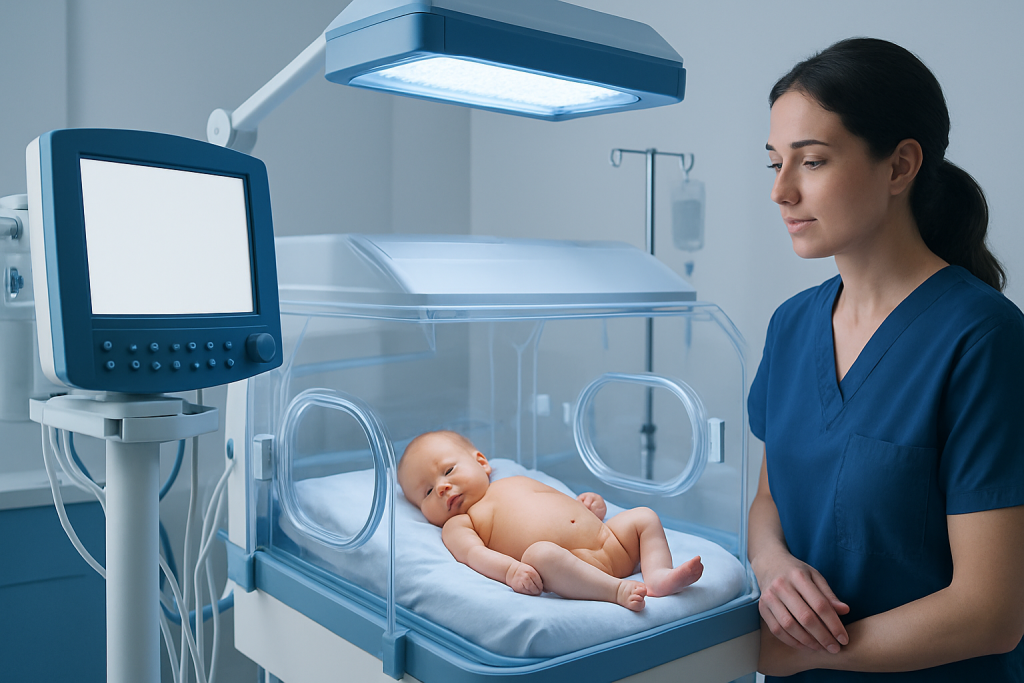
The most familiar sign is yellowing of the skin and the whites of the eyes. It usually begins on the face and can be easier to see in natural light or when gently pressing a finger over the skin and then releasing it.
Not all jaundice looks the same. In lighter skin tones the yellow color may be obvious, while in darker skin tones it may be easier to notice in the eyes, gums, or under the tongue. The baby may also look more tired than usual, but many newborns with mild jaundice behave normally.
- Yellow skin or eyes
- Sleepiness beyond the usual newborn pattern
- Poor feeding or weak sucking
- Fewer wet diapers or stools than expected
- Worsening yellow color over time
Some babies develop jaundice very early, while others become yellow only after going home. When color changes are subtle, a parent’s sense that “something looks off” is worth discussing with a clinician, especially in the first week of life.
Causes & Risk Factors

Most newborn jaundice is related to the normal transition from fetal life to breathing, feeding, and liver function outside the womb. Babies produce bilirubin as they replace fetal red blood cells, and the liver may not yet process it efficiently during the first days after birth.
Several common newborn factors can make jaundice more likely. Prematurity, breastfeeding challenges in the early days, bruising from birth, blood group incompatibility, and a family history of jaundice in newborns can all contribute. In some babies, the cause is simple and short-lived; in others, an underlying condition may be involved.
Less common causes include infections, inherited red blood cell problems, liver or bile flow disorders, and certain medication exposures. Because the list is broad, doctors focus on timing, severity, and the baby’s overall condition rather than assuming every yellow baby has the same cause.
Diagnosis
Diagnosis begins with a clinical exam and questions about feeding, urine and stool output, birth history, and when the yellowing first appeared. Doctors may estimate the depth of jaundice by looking at the skin and eyes, but appearance alone is not enough to decide on treatment.
A bilirubin test, often done with a small blood sample or a noninvasive device that measures through the skin, helps show whether the level is within a safe range for the baby’s age in hours or days. Timing matters because bilirubin levels naturally change after birth.
If the pattern suggests something beyond typical newborn jaundice, additional tests may be recommended, such as checking the baby’s blood type, red blood cell count, or signs of infection. These steps are chosen carefully so the family understands why each test is being done and what it may reveal.
Treatment Options
Treatment depends on how high the bilirubin level is, how old the baby is, and whether there are any warning signs. Mild jaundice may need no treatment beyond close monitoring and good feeding support, because regular intake helps the body clear bilirubin through stool and urine.
When bilirubin is high enough to require treatment, phototherapy is the most common approach. During phototherapy, the baby is exposed to special blue light that helps change bilirubin into forms the body can eliminate more easily. Families are often surprised at how straightforward this can be, whether it is done in hospital or, in some situations, with arranged home follow-up.
If jaundice is caused by a specific medical problem, care is directed at that cause as well. Rarely, more intensive treatment may be needed, especially when bilirubin rises quickly or reaches a concerning level. The doctor’s role is to decide on the safest plan and explain how the baby will be monitored along the way.
Prevention & Self-care
Not every case of jaundice can be prevented, but several practical steps support a smoother newborn period. Early and frequent feeding is one of the most helpful measures, because it encourages bowel movements and helps the baby clear bilirubin naturally.
At home, parents can watch for the yellow color spreading, changes in feeding, and diaper counts. It is also wise to keep follow-up appointments after discharge, because bilirubin can peak after leaving the hospital, when the family is still settling into a new routine.
- Feed the baby as advised by the care team, especially in the first days
- Attend all scheduled newborn checkups and bilirubin follow-ups
- Track wet diapers and stools
- Seek advice if the baby is too sleepy to feed well
- Do not rely on sunlight as a treatment unless a doctor specifically recommends it
For families traveling internationally for newborn care, clear discharge instructions and a written follow-up plan are especially useful. A simple plan for who to call, where bilirubin can be rechecked, and when the baby should be seen again can make care feel much more manageable.
When to See a Doctor
Medical review is important if jaundice appears in the first 24 hours after birth, spreads quickly, or seems to be getting deeper instead of fading. Parents should also contact a doctor if the baby is feeding poorly, has fewer wet diapers, seems unusually hard to wake, or has a weak cry.
Urgent assessment is needed if the baby has a fever, looks ill, has arching of the body, or the yellow color is accompanied by marked sleepiness or difficulty waking for feeds. These signs do not mean a serious problem is certain, but they do mean the baby should be evaluated without delay.
Families who are away from home, including those receiving care after travel, should not wait to “see if it passes” when warning signs appear. A pediatric team can arrange bilirubin testing, examine the baby, and explain whether observation, phototherapy, or another step is best.
At Acibadem Health Point, multidisciplinary specialists and JCI-accredited hospitals diagnose and treat newborn jaundice for international patients with coordinated pediatric care and follow-up support.
Living With Newborn Jaundice at Home
Most parents do very well once they know what to watch for and when to call. The daily routine usually centers on feeding, observing the baby’s color and alertness, and keeping the recommended follow-up appointment even if the baby seems comfortable.
It can help to use the same lighting and the same room each day when checking the baby’s skin and eyes, because small changes are easier to notice that way. If the baby is sleepy, a parent can gently try to wake the infant for feeds and keep track of whether feeding is improving or becoming more difficult.
Newborn jaundice is common, but it still deserves respect. The safest path is calm observation paired with timely medical input, so the baby’s bilirubin level can be managed before it becomes a problem.
Outlook
For most babies, jaundice resolves with feeding support, observation, or a short course of treatment. Once bilirubin levels begin to come down and the baby is feeding well, the yellow color typically fades gradually.
The outlook is especially good when jaundice is recognized early and checked by a clinician, because treatment can be started before levels become high. This is why newborn follow-up matters even when the baby seems to be doing well.
Parents do not need to diagnose the cause themselves. A pediatrician or newborn specialist can determine whether the pattern fits common newborn jaundice or whether additional evaluation is needed for a different reason.
Frequently asked questions
01Is jaundice normal in a newborn baby?
Mild jaundice is common in the first days of life and often reflects the baby’s immature ability to process bilirubin. It is still important to monitor it, because some babies need testing or treatment. A clinician can tell whether the pattern is expected or needs closer follow-up.
02How can parents tell if baby jaundice is getting worse?
The yellow color may spread from the face to the body or become easier to see in the eyes and gums. A baby who is sleeping too much, feeding poorly, or making fewer wet diapers should be assessed. Changes over time matter more than a single glance.
03Does breastfeeding cause jaundice?
Breastfeeding itself does not cause harm, but early feeding difficulties can make jaundice more likely because the baby may not clear bilirubin as well. Frequent, effective feeding usually helps. A lactation consultant or pediatric team can support the feeding plan if needed.
04When is phototherapy used?
Phototherapy is used when bilirubin reaches a level that is high enough to need treatment based on the baby’s age and overall condition. The light helps the body break down bilirubin more easily. The baby’s doctor decides whether it is needed after reviewing the test result and exam findings.
05Can jaundice in a baby go away on its own?
Yes, mild newborn jaundice often improves without specific treatment as the baby’s liver matures and feeding becomes established. Even so, it should not be ignored, because a few babies develop bilirubin levels that rise too high. Follow-up helps ensure the jaundice is safely resolving.
06What should families do after going home from the hospital?
They should follow the discharge plan, keep any bilirubin recheck appointments, and watch feeding, diapers, and the baby’s alertness. If the yellowing is worsening or the baby seems unwell, they should contact a doctor promptly. Clear follow-up is one of the most important parts of newborn jaundice care.
This article is for general information only and is not a substitute for professional medical advice. Please consult a qualified doctor about your individual situation.
Explore treatments in Turkey — costs, top hospitals & a free quote
JCI-accredited · board-certified surgeons · reply within 24h
Add us as a Preferred Source to see more of our trusted health content across Google Search, AI Overviews and Discover.