Itchy Hair Scalp Hair Loss: What You Need to Know

Key Takeaways
- Itchy scalp with hair loss usually points to an underlying scalp or skin condition, not just the hair itself.
- Common causes include dandruff, seborrheic dermatitis, psoriasis, fungal infection, allergy, and hair-care damage.
- Diagnosis may require a scalp exam and sometimes lab tests or a sample from the scalp.
- Treatment focuses on calming inflammation, treating infection if present, and reducing further hair breakage or shedding.
- Prompt medical review is important if hair loss is patchy, scarring, painful, or linked to redness, crusting, or swelling.
Itchy hair scalp hair loss often happens when a scalp problem irritates the skin and disrupts normal hair growth or causes excessive shedding. Most causes are treatable, but the right approach depends on whether the issue is dandruff, inflammation, infection, traction, or a medical condition.
Overview
An itchy scalp and hair loss often travel together because the scalp is where hair follicles grow, and irritation there can disturb normal shedding and regrowth. In many people, the problem starts with a common scalp condition such as dandruff or seborrheic dermatitis. In others, the scalp is reacting to infection, psoriasis, hair products, tight hairstyles, or a broader health issue.
The key question is not only why the scalp itches, but also whether the follicles are being inflamed, scratched, broken, or damaged. Some causes lead to temporary shedding that improves once the scalp settles. Others can scar the skin and affect future hair growth, which is why an early, careful assessment matters.
For international patients planning care away from home, it helps to think in terms of three practical steps: identify the likely trigger, confirm whether hair follicles are still healthy, and choose treatment that fits daily life during travel and recovery. A good scalp evaluation can often separate a simple irritation from a condition that needs targeted medical treatment.
Symptoms
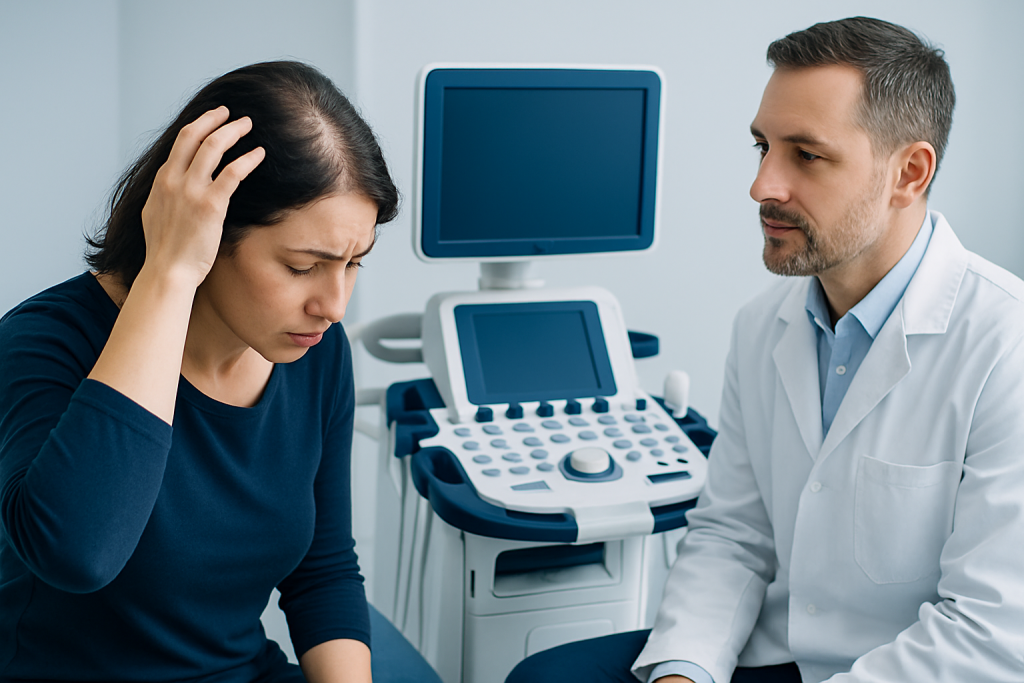
Itching is often the first sign that something is irritating the scalp. People may also notice flaking, redness, tenderness, burning, oily scale, or small bumps. Hair loss can appear as increased shedding in the shower or brush, overall thinning, or patchy areas where hair looks sparse.
The pattern of hair loss gives useful clues. Diffuse thinning may suggest shedding triggered by inflammation, stress, illness, or nutritional issues, while round patches can point to fungal infection or autoimmune hair loss. Broken hairs, crusts, or scalp scratching may indicate that the scalp surface itself is being damaged.
Some symptoms deserve special attention because they can point to scarring or infection. These include pain, pus, swelling, thick crusting, rapidly enlarging bald patches, or shiny areas where follicles seem to have disappeared.
- Persistent itch or burning
- Flaking or greasy scaling
- Patchy or diffuse hair loss
- Redness, soreness, or crusting
- Broken hairs or visible scratching marks
Causes & Risk Factors

There is no single cause of itchy scalp hair loss. Dandruff and seborrheic dermatitis are among the most common reasons and can create itch, scale, and mild shedding from inflammation and scratching. Psoriasis can also affect the scalp, leading to thicker plaques and more pronounced irritation.
Fungal infections such as tinea capitis are another important cause, especially when there are patchy bald spots, broken hairs, or swollen lymph nodes. Allergic or irritant contact dermatitis from hair dyes, styling products, fragrances, or leave-on treatments may also inflame the scalp and trigger shedding.
Hair practices can contribute as well. Tight braids, weaves, extensions, frequent heat styling, or aggressive brushing can cause traction and breakage. In some people, the scalp itch and hair loss reflect an internal issue such as iron deficiency, thyroid disease, autoimmune disease, or stress-related shedding, which is why the broader health picture matters.
Risk is higher in people who have a personal or family history of eczema, psoriasis, allergies, or autoimmune disorders. Children and adults living in close-contact settings may be more likely to develop contagious fungal scalp infections. New hair products, recent chemical treatments, and prolonged scratching also increase the chance that symptoms will persist.
Diagnosis
Diagnosis usually begins with a close look at the scalp and hair pattern. A clinician may ask when the itching started, whether hair loss is patchy or general, what products are used, and whether there has been recent illness, stress, pregnancy, or medication change. These details often narrow the possibilities before any tests are ordered.
An exam may include gentle parting of the hair, checking for scale, broken hairs, inflammation, or signs of scarring. In some cases, dermoscopy is used to view the scalp more closely. If infection is suspected, the clinician may take a small sample of hair or skin for testing.
Blood tests may be helpful when the pattern suggests a body-wide cause of hair shedding, such as thyroid imbalance, iron deficiency, or other nutritional concerns. Rarely, a scalp biopsy is recommended when the diagnosis is unclear or when scarring hair loss is a possibility. The goal is not to test everything at once, but to match the workup to the pattern on the scalp.
Treatment Options
Treatment depends on the cause, so the first goal is to identify what is driving the itch. For dandruff or seborrheic dermatitis, medicated shampoos may help calm inflammation and reduce scale. For psoriasis or eczema, treatment may include prescription scalp medicines that lower inflammation and soothe the skin.
If a fungal infection is present, antifungal treatment is needed, and the exact approach depends on the organism and the extent of scalp involvement. Allergic or irritant reactions improve when the trigger is removed and the skin barrier is supported. When traction or breakage contributes to hair loss, the most important treatment is changing styling habits and giving follicles time to recover.
Because the scalp can be sensitive, the best plan often combines medical treatment with practical changes at home. A dermatologist may also recommend short-term treatment for itching so that scratching does not keep the cycle going. In more complex cases, such as suspected scarring alopecia or autoimmune disease, specialist care helps protect remaining hair follicles as early as possible.
For patients traveling for care, treatment planning should include timing, follow-up access, and simplicity of use. Acibadem Health Point’s multidisciplinary specialists and JCI-accredited hospitals diagnose and treat scalp and hair-loss conditions for international patients, which can be helpful when care needs to be coordinated across visits.
Prevention & Self-care
Not every case of scalp itch and hair loss can be prevented, but many flare-ups can be reduced with gentle habits. Using mild hair products, limiting heat and chemical exposure, and avoiding scratching can make a meaningful difference. If a product seems to sting or worsen flaking, it should be stopped until a clinician reviews it.
Hair should be handled carefully, especially when it is already thinning. Loose styles are kinder to the follicles than tight ponytails, braids, or extensions. Washing the scalp regularly enough to remove buildup, but not so often that it becomes dry and irritated, is usually a sensible balance.
Good scalp care also includes attention to general health. Adequate nutrition, sleep, and treatment of underlying conditions such as thyroid disease or anemia can support recovery when they are part of the cause. People should avoid self-treating with multiple products at once, since that can make it harder to tell what helps and what irritates.
- Choose fragrance-free or gentle hair products when possible
- Avoid scratching, picking, or aggressive brushing
- Limit tight hairstyles and repeated tension on the roots
- Follow medical instructions for medicated shampoos or scalp treatments
- Keep follow-up appointments so progress can be checked
When to See a Doctor
Medical review is wise when itching and hair loss do not improve after simple scalp care, or when symptoms are getting worse. A visit is especially important if the hair loss is patchy, the scalp is painful, or there are signs of infection such as pus, crusting, swelling, or fever.
It is also important to seek care if hair loss appears to be scarring, since follicle damage can become permanent without early treatment. Sudden widespread shedding, hair loss with eyebrow or eyelash changes, or scalp symptoms alongside other health changes should not be ignored.
For people considering treatment abroad, an experienced dermatology team can help confirm the diagnosis, explain options clearly, and organize follow-up after returning home. That is particularly useful when a plan may need lab tests, repeat visits, or a gradual response check rather than a one-time prescription.
Living With Scalp Itch and Shedding
Hair loss can be emotionally frustrating, and scalp itch can make it hard to focus or sleep. It helps to remember that many causes are manageable once the trigger is identified. Progress may be gradual, especially when the scalp has been inflamed for a while, so patience and consistency matter.
Tracking symptoms can make appointments more useful. A simple note of when the itch started, which products were used, whether hair was shedding or breaking, and what seemed to improve or worsen symptoms can guide the clinician toward the right diagnosis. Photos of the scalp over time may also help.
The most reassuring message is that itchy scalp hair loss is a symptom, not a final diagnosis. With the right evaluation, many people can calm the itching, protect the scalp, and support healthier regrowth where the follicles are still active.
FAQs
Can an itchy scalp really cause hair loss?
Yes. Itching itself does not usually remove hair, but the condition causing the itch can inflame the scalp or lead to scratching and breakage. Over time, that can increase shedding or make hair look thinner.
Is dandruff the same as seborrheic dermatitis?
They are closely related. Dandruff is often considered the milder form, while seborrheic dermatitis can cause more redness, scale, and irritation on the scalp.
Will hair grow back after the scalp is treated?
Often it does, especially when the follicles were only temporarily affected. If the hair loss is scarring, regrowth may be limited, which is why early diagnosis matters.
Can stress cause itchy scalp and hair loss?
Stress can contribute to hair shedding and may also make itching feel worse. However, stress is not usually the only explanation, so clinicians still look for scalp conditions, infections, and medical causes.
Should someone use anti-dandruff shampoo for every itchy scalp?
Not necessarily. Anti-dandruff shampoos can help when the cause is flaking or seborrheic dermatitis, but they may not help infections, psoriasis, or allergic reactions. If symptoms persist, a medical evaluation is the better next step.
When is hair loss from itching urgent?
It becomes more urgent if there is pain, pus, thick crusting, rapid patchy loss, fever, or visible scarring. Those features can signal infection or a condition that needs prompt treatment.
This article is for general information only and is not a substitute for professional medical advice. Please consult a qualified doctor about your individual situation.
Hair transplant in Turkey — costs, graft counts & a free assessment
JCI-accredited · board-certified surgeons · reply within 24h
Add us as a Preferred Source to see more of our trusted health content across Google Search, AI Overviews and Discover.