Is It Safe to Have Dental Implants in Turkey? Standards and Red Flags

Key Takeaways
- Safety depends far more on accreditation, clinician credentials and follow-up planning than on the country itself.
- Ask for a written treatment plan based on your own scans and dental records before you book any flights.
- Implant treatment is usually staged over months, so most patients travel twice rather than completing everything in one trip.
- Costs should be presented as transparent bands covering each component, not a single headline figure with hidden extras.
- Aftercare in the UK — including who will see you for reviews or problems — should be agreed before you travel.
- Pressure to decide quickly, promises of guaranteed results or vague answers about who will perform surgery are all reasons to pause.
Dental implant treatment in Turkey can be a safe, well-organised option for UK patients when it is planned through an accredited hospital, delivered by a properly qualified clinician and supported by a realistic aftercare plan back home. This guide explains the standards worth checking, what packages usually cover, how costs are structured and the red flags that suggest a slower, more careful approach.
Is It Safe to Have Dental Implants in Turkey? A Direct Answer
Is it safe to have dental implants in Turkey? For many UK patients, yes — provided the treatment is planned properly, carried out in an accredited facility by a clinician with recognised implant training, and followed by an agreed aftercare pathway once you fly home. Turkey has a long-established international patient sector, hospitals and dental centres that meet international quality standards, and clinicians who routinely treat patients from the UK and Europe. Safety, however, is not a property of a country. It is the result of the specific standards applied to your specific case.
The variability that concerns UK dentists and regulators is real. Turkey hosts everything from JCI-accredited hospital groups with structured governance to small independent clinics marketing heavily on social media. Two patients can travel to the same city in the same week and have entirely different experiences depending on how their care was assessed, who performed the surgery, and whether anyone planned what happens after the flight home.
This article is written from the patient-journey perspective: how treatment abroad is coordinated, what a well-run pathway looks like, and which warning signs suggest you should slow down and ask more questions. It is general information rather than clinical advice — decisions about whether implants are suitable for your mouth, your bone and your general health belong to a qualified dentist or oral surgeon who has examined you and reviewed your imaging.
What Dental Implant Packages Typically Include
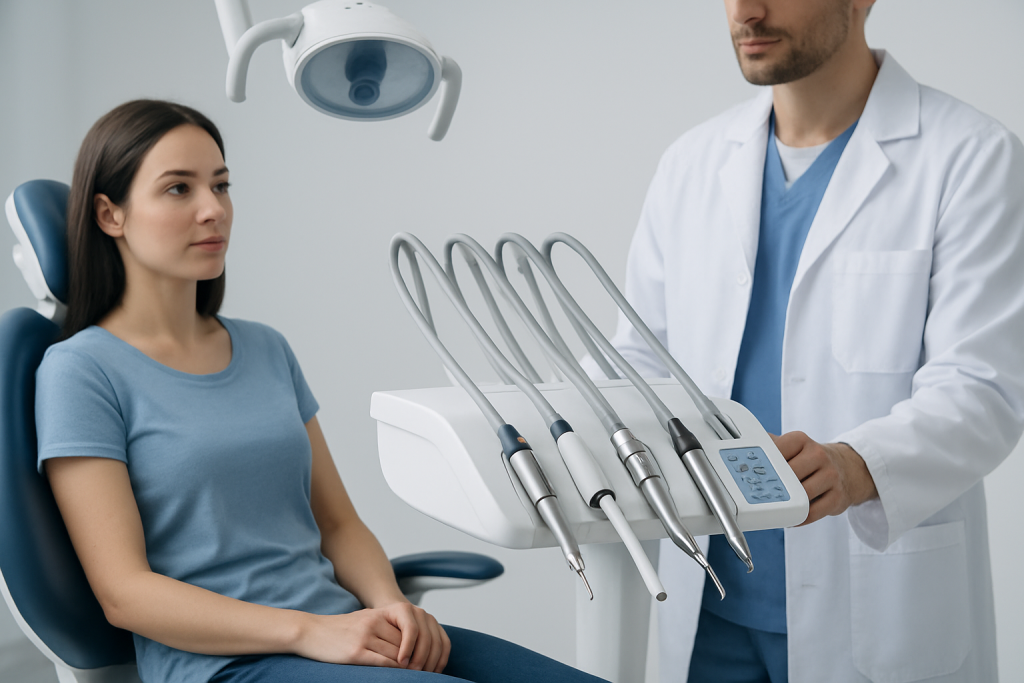
Most international dental packages are built around a defined sequence of appointments rather than an open-ended course of treatment. A typical package covers the initial consultation and examination on arrival, diagnostic imaging (usually a panoramic X-ray and often a 3D cone beam scan), the surgical placement of the implant fixtures, any temporary restoration needed for appearance and function, and a set number of review appointments during that visit. The final crowns, bridges or dentures are commonly fitted on a second trip once healing has progressed.
Non-clinical elements are often bundled in as well, and these matter for a smooth trip. Coordination teams frequently arrange airport transfers, hotel accommodation near the facility, interpreter support during appointments, and a named contact who tracks your itinerary. Some packages include preparatory work such as extractions, bone grafting or sinus procedures; others price these separately because the need for them can only be confirmed after imaging.
- Usually included: consultation, imaging, implant placement, temporary restoration, in-country reviews, transfers, interpreter support.
- Often quoted separately: extractions, bone grafting or sinus lifting, sedation, treatment of gum disease, night guards.
- Rarely included: flights, travel insurance, extended hotel stays if healing takes longer, and any treatment you may need in the UK afterwards.
Before you commit, ask for the package contents in writing, with a clear statement of what happens — clinically and financially — if the plan changes once your scans are reviewed in person. A credible provider will explain that a plan made remotely is provisional until confirmed by an in-person examination.
Understanding Cost Bands Without Chasing a Headline Price

Cost is usually the reason patients start looking abroad, and it is also where the most confusion arises. Rather than fixating on a single figure, it helps to think in bands. The lowest band tends to reflect a single implant with a standard restoration and no preparatory work. A middle band typically applies to several implants, premium implant systems with long-term international availability of components, or cases needing minor grafting. The highest band covers full-arch rehabilitation — multiple implants supporting a fixed bridge in one or both jaws — often with sedation and staged restorations.
Prices in Turkey are generally lower than equivalent private treatment in the UK, largely because of differences in operating costs and currency, but the comparison is only meaningful when you compare like with like. Ask which implant system will be used and whether it is a globally distributed brand that a UK dentist could service, what material the final restoration will be made from, and whether the quoted figure assumes a straightforward case. Also budget for two return flights, accommodation, insurance and any UK-based follow-up.
Reputable coordination teams provide indicative cost planning rather than a binding quotation before assessment, and they explain the variables that could move your case from one band to another. Be cautious of any figure that seems dramatically detached from the market, and of packages that only reveal additional charges after you have arrived.
Accreditation, Credentials and the Standards That Actually Protect You
Accreditation is the most practical proxy for safety that a patient can check from home. Joint Commission International (JCI) accreditation applies to hospitals and healthcare organisations that have been externally audited against standards covering infection control, medication safety, sterilisation, patient identification, consent processes, emergency response and record-keeping. It does not guarantee an outcome for any individual, but it does indicate that systems exist and are inspected. Turkey has one of the larger concentrations of JCI-accredited facilities internationally, which is one reason it became a hub for medical travel.
Clinician credentials matter just as much. Ask directly who will place the implants, what their dental qualification is, where they trained in implantology, and whether they are registered with the Turkish Ministry of Health. Ask whether the same clinician will fit the final restoration, and who covers your care if they are unavailable. A clear, unhesitating answer with a named individual is a good sign; a reply that refers only to “our expert team” is not.
- Facility accreditation and hospital licensing, ideally verifiable independently.
- Named surgeon or implantologist with documented training and registration.
- Written treatment plan based on your own imaging, with alternatives explained.
- Documented consent covering risks, limitations and possible complications.
- Records, scans and implant passport details supplied to you in English.
- A stated policy on what happens if a complication occurs after you return home.
Red Flags Worth Taking Seriously
Most poor experiences share recognisable warning signs. The clearest is time pressure: discounts that expire within days, insistence that you book flights before your scans have been reviewed, or reluctance to let you discuss the plan with your own dentist. Sound clinical planning is rarely urgent, and legitimate providers expect patients to take time and seek a second opinion.
Another red flag is a treatment plan that appears without adequate information. If a full-arch plan is proposed from a few smartphone photographs, or if extractions of healthy teeth are suggested to simplify a case, that warrants careful scrutiny elsewhere. Similarly, be wary of guarantees. No clinician can promise a specific aesthetic result, a fixed healing timeline or a lifetime outcome; implants are a long-term restoration that depends on gum health, bone, bite forces, smoking status and maintenance.
Communication quality is also diagnostic. Vagueness about the implant brand, unwillingness to name the operating clinician, no written costs, no interpreter for consent discussions, or a plan that squeezes surgery and final crowns into a single short holiday should all prompt more questions. Finally, if nobody has asked about your medical history, medications, smoking, bruxism or gum disease, the assessment is incomplete — these factors influence both suitability and long-term success.
Travel Timing, Recovery and Planning Two Trips
Implant treatment is biological, not cosmetic joinery. After the fixtures are placed, the bone needs time to integrate with them before permanent restorations can be loaded. This is why most well-planned pathways involve two visits separated by a healing interval of several months, with the exact timing decided by your clinician based on bone quality, the site involved and whether grafting was needed. Some cases allow an immediate temporary restoration; that is a clinical judgement, not a package feature.
The first trip usually involves a short stay covering assessment, surgery and initial review, with an expectation of swelling, bruising and discomfort for the first few days. Flying too soon after oral surgery is generally discouraged, so allow buffer days rather than booking the tightest possible return. Plan a soft diet, avoid strenuous activity, and follow the specific instructions given about smoking, alcohol and mouth rinsing — smoking in particular is consistently associated with poorer implant outcomes.
The second trip is typically shorter and more predictable: impressions or digital scans, try-in and fitting of the final restoration, and a bite check. Building flexibility into both trips — refundable fares where possible and travel insurance that acknowledges planned treatment abroad — reduces stress if healing does not follow the expected schedule.
Aftercare Once You Are Back in the UK
Aftercare is where medical travel most often falls down, and it is the part patients can control best. Before you fly out, arrange who will see you at home. Speak to your NHS or private dentist in advance, tell them what is planned, and ask whether they are willing to provide routine reviews and hygiene care afterwards. Some UK dentists are cautious about taking on maintenance for implants they did not place, particularly if the system used is not widely distributed here — which is precisely why the implant brand matters.
Collect a complete records pack before you leave Turkey: treatment notes, post-operative X-rays or scans, the implant passport with brand, reference and lot numbers, details of any grafting material, and written aftercare instructions. Ask how to contact the treating team remotely, whether video follow-ups are offered, and what the process is if a screw loosens, a crown chips or you develop pain or swelling weeks later.
Long-term, implants need the same discipline as natural teeth and slightly more: meticulous cleaning around the gum margin, interdental brushes or floss suited to the restoration, regular hygienist visits and prompt attention to any bleeding or looseness. If you notice persistent pain, pus, a mobile implant or spreading swelling with fever at any point, seek in-person dental or medical assessment in the UK without delay rather than waiting for a remote reply.
When to Speak to a Patient Coordinator
A patient coordinator is worth contacting early — not at the point of booking, but while you are still comparing options. Useful conversations at that stage cover whether your case is likely to be straightforward or complex, which specialists would be involved, what documents and imaging to send for review, how a video consultation or second opinion can be arranged, and what a realistic two-trip schedule might look like for someone travelling from the UK.
Good coordination also handles the practical layer that patients underestimate: visa guidance, timing of flights around surgery, accommodation close to the facility, interpreter support during consent discussions, and a single point of contact if plans shift. Ask specifically how communication works after you return home and how records are shared with your UK dentist.
Acibadem Health Point coordinates care for international patients across Acıbadem’s JCI-accredited hospitals, where multidisciplinary dental and maxillofacial specialists assess implant cases, plan treatment and arrange follow-up for patients travelling from abroad. Whichever provider you consider, treat the coordination process itself as evidence: clear answers, written plans and a named clinician are the practical signs of a pathway built around safety rather than speed.
Frequently asked questions
01Are dental implants in Turkey as safe as in the UK?
Safety depends on the specific facility and clinician rather than the country. Accredited hospitals in Turkey apply internationally audited standards for sterilisation, consent and patient safety, and many clinicians have extensive implant experience. The main additional risks of treating abroad relate to shortened assessment time, travel after surgery and gaps in follow-up, all of which can be reduced with careful planning.
02How many trips to Turkey will implant treatment usually need?
Most patients travel twice: once for assessment and implant placement, and again after a healing period for the final crowns or bridge. The interval between visits is decided by your clinician and depends on bone healing, grafting and the site treated. Plans promising complete treatment in a single short trip should be discussed carefully with a dentist.
03What should I ask before booking implant treatment abroad?
Ask who will perform the surgery and what their qualifications are, whether the facility is accredited, which implant system will be used and whether it is available in the UK, and exactly what the quoted cost includes. Also ask what happens if a complication arises after you fly home, and request a written treatment plan based on your own imaging.
04Will my UK dentist look after implants placed in Turkey?
Many will provide routine reviews and hygiene care, but it is best to ask before you travel rather than afterwards. Bring back full records, including post-operative imaging and the implant passport with brand and reference numbers, as this makes future maintenance or repairs far easier. Some dentists are more hesitant if the implant system is not widely distributed in the UK.
05How soon can I fly after dental implant surgery?
Timing is decided by the treating clinician and depends on the extent of surgery, any grafting and how you are healing. Most pathways build in several days in Turkey for initial review before travel, and patients are generally advised not to book the earliest possible return flight. Allow buffer days and choose flexible fares where you can.
06Why do implant costs vary so much between clinics?
Differences usually reflect the number of implants, the implant system chosen, the restoration material, whether grafting or sedation is needed, and what the package includes. A very low headline figure may exclude preparatory procedures or final restorations. Comparing itemised plans rather than single figures gives a much more accurate picture.
07What are the clearest warning signs to walk away from?
Pressure to book quickly, refusal to name the treating clinician, treatment plans based only on photographs, guarantees of a specific result or lifetime outcome, and no written breakdown of costs. Reluctance to explain aftercare arrangements or to let you seek a second opinion is also a reason to pause and look elsewhere.
This article is for general information only and is not a substitute for professional medical advice. Please consult a qualified doctor about your individual situation.
Explore treatments in Turkey — costs, top hospitals & a free quote
JCI-accredited · board-certified surgeons · reply within 24h
Add us as a Preferred Source to see more of our trusted health content across Google Search, AI Overviews and Discover.