Is Cracking Your Neck Bad for You?
Occasional, painless neck cracking is commonly harmless and is often caused by normal changes in pressure within the small joints of the neck. However, forceful or frequent self-manipulation, especially when accompanied by pain or neurological symptoms, should be assessed by a qualified clinician.
Is Cracking Your Neck Bad for You?
For most people, occasional neck cracking that is gentle and painless is not harmful. The sound usually comes from normal movement in the small joints of the neck and does not necessarily mean that bones are rubbing together or that arthritis is developing.
However, cracking the neck should not cause pain, weakness, tingling, dizziness, vision changes, fainting, or a sudden severe headache. Repeatedly forcing the neck to pop or using quick, powerful twisting movements can irritate muscles and joints, and in rare circumstances may be linked with a more serious problem that needs prompt medical attention.
A useful distinction is between an occasional spontaneous pop during normal movement and deliberate, forceful self-manipulation. If a person feels they must crack their neck many times a day to get relief, the underlying stiffness, posture issue, muscle tension, or joint problem is worth discussing with a doctor or physiotherapist.
Why Does the Neck Make Cracking or Popping Sounds?
The neck, also called the cervical spine, contains vertebrae, small facet joints, discs, ligaments, tendons, and muscles. Several harmless mechanisms can produce a cracking, clicking, or popping sound when these structures move. The sound alone cannot diagnose a condition.
A common explanation is a pressure change inside a facet joint. These joints contain fluid and dissolved gases. When the joint surfaces briefly separate during movement, a gas bubble can form or collapse, producing a pop. This is often called cavitation and may occur in other joints, including the fingers.
Other sounds may result from a tendon or ligament moving over a bony structure, or from normal joint surfaces shifting as the head turns. Muscle tightness, prolonged desk work, stress, reduced activity, and awkward sleeping positions can make the neck feel stiff and may make people more aware of these sensations.
Cracking is less reassuring when it occurs after an injury or alongside persistent pain, grinding, swelling, or reduced range of motion. In those situations, a clinician can determine whether the sound is related to muscle strain, joint irritation, age-related changes, or another cause.
Possible Risks of Forceful Neck Cracking

Most people who notice an occasional painless neck pop do not develop complications. Still, deliberately twisting the neck to its limit or using a sudden thrust can overstretch muscles and ligaments. This may lead to soreness, a muscle spasm, headache, or temporary worsening of stiffness.
Frequent self-manipulation can also become a cycle: a person feels tightness, cracks the neck for short-lived relief, and then repeats the movement without addressing the source of tension. Poor workstation setup, stress-related muscle guarding, reduced upper-back mobility, and weak supporting muscles may all contribute to this pattern.
Rarely, sudden forceful neck movement has been associated with injury to an artery in the neck, called a cervical artery dissection. This can affect blood flow to the brain and may lead to stroke. The overall risk is very low, and symptoms may also arise in people who have not manipulated their neck; nevertheless, this possibility is why forceful cracking should be avoided, especially in people with unusual symptoms or known vascular conditions.
People with osteoporosis, inflammatory arthritis, significant neck instability, a recent neck injury, prior neck surgery, certain connective-tissue disorders, or cancer affecting the bones should seek individualized medical advice before any neck manipulation. A qualified professional should assess whether manual treatment is appropriate and which techniques are safest.
Symptoms That May Point to an Underlying Problem
Neck cracking is more likely to need assessment when it is paired with symptoms rather than occurring on its own. Neck pain is common and often improves with conservative care, but the pattern, severity, and associated signs matter. Pain that persists, returns often, or interferes with sleep, work, or daily activity deserves medical review.
Nerve irritation in the cervical spine may cause pain that travels into the shoulder or arm, as well as tingling, numbness, or weakness in the hand or arm. These symptoms can occur when a nerve is compressed or inflamed, although several other conditions can cause similar complaints. A clinician may consider problems such as muscle strain, joint changes, disc-related conditions, or a cervical disc herniation where appropriate.
Headache can also be associated with neck muscle tension or joint irritation, particularly when it begins near the back of the head. But a sudden, severe, unfamiliar headache is not typical neck stiffness and should be treated as urgent, particularly if it starts after trauma or forceful neck movement.
- Persistent or worsening neck pain
- Arm or hand numbness, tingling, clumsiness, or weakness
- New balance problems, difficulty walking, or loss of coordination
- Fever, Weight Loss: Possible Causes and Medical Evaluation" class="ahp-ilk">unexplained weight loss, or severe pain at night
- Symptoms after a fall, collision, sports injury, or other trauma
How a Doctor Evaluates Neck Cracking and Pain
A doctor begins by asking about the sound, when it started, whether it follows an injury, and which movements trigger it. They will also ask about pain, headaches, dizziness, arm symptoms, medical conditions, medications, work habits, exercise, and any history of surgery or trauma. This history helps distinguish common mechanical stiffness from symptoms that need further investigation.
The physical examination may include checking neck movement, posture, muscle tenderness, shoulder function, reflexes, strength, sensation, coordination, and walking. These checks help identify possible nerve involvement and guide a safe management plan. Doctors also assess for warning signs that might require urgent testing or specialist care.
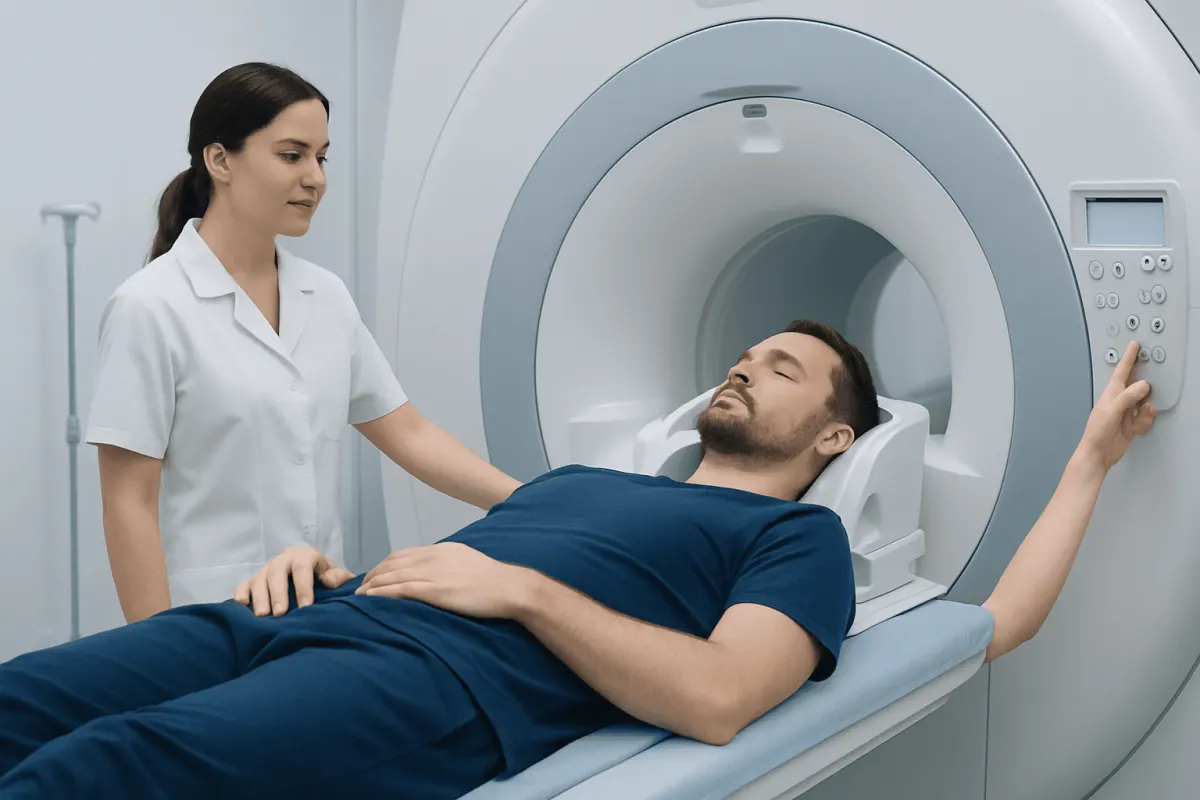
Imaging is not routinely needed for simple, short-term neck cracking without concerning symptoms. X-rays, magnetic resonance imaging (MRI), or computed tomography (CT) may be considered after significant trauma, when neurological signs are present, or when pain is severe, persistent, or unexplained. The choice of test depends on the individual situation.
Many cases can be managed without imaging through education, activity modification, and supervised rehabilitation. Acıbadem Health Point’s multidisciplinary specialists and JCI-accredited hospitals can evaluate neck symptoms and coordinate care for international patients when further assessment is needed.
Safer Ways to Manage Neck Stiffness
When the neck feels tight but there are no warning symptoms, gentle movement is generally more helpful than trying to force a crack. Slowly turning the head within a comfortable range, taking regular movement breaks, and using light shoulder and upper-back exercises can reduce stiffness over time. Any exercise that increases pain, causes tingling, or brings on dizziness should be stopped.
Ergonomic changes may also help. A screen positioned around eye level, a supportive chair, regular posture changes, and avoiding prolonged phone use with the head bent forward can reduce strain on the neck and upper back. Sleep comfort may improve with a pillow that keeps the neck in a neutral, supported position rather than sharply bent.
Heat may ease muscle tension for some people, while a brief period of cold may be useful after a minor strain. A doctor or physiotherapist can recommend an individualized program that may include mobility work, strengthening, posture training, and hands-on techniques performed safely when indicated. For ongoing pain, physical therapy can help address movement patterns and build support around the neck.
It is sensible to avoid having untrained people manipulate the neck and to avoid devices or online techniques that encourage abrupt, high-velocity twisting. Relief from a pop is not proof that the movement is treating the cause of discomfort.
When to Seek Medical Care
Non-urgent medical care is appropriate for neck cracking accompanied by persistent pain, frequent headaches, stiffness lasting more than a few weeks, reduced movement, or repeated need to crack the neck for relief. A clinician can help identify manageable causes and recommend treatment that does not rely on forceful self-manipulation.
Urgent medical assessment is needed after neck cracking or neck injury if a person develops a sudden severe headache, unusual neck pain, dizziness, fainting, double vision, trouble speaking, facial drooping, confusion, weakness, numbness, loss of coordination, or difficulty walking. These symptoms can have several causes, but they should be evaluated promptly because they may indicate a neurological or vascular emergency.
Emergency care is also important after a major injury, such as a vehicle collision or fall, especially if there is severe pain, inability to move the neck normally, or numbness or weakness. Until assessed, the person should avoid further neck manipulation or strenuous activity.
In summary, painless occasional neck cracking is usually not a cause for concern. The safest approach is to listen to the body: persistent symptoms, pain, or neurological changes are reasons to stop forceful cracking and seek advice from a qualified healthcare professional.
Frequently asked questions
01Can cracking your neck cause arthritis?
There is no good evidence that occasional, gentle neck cracking causes arthritis. Arthritis is more commonly related to age, prior injury, genetics, inflammatory disease, and other factors. Painful or persistent grinding sensations should still be assessed by a clinician.
02Why does cracking my neck feel relieving?
A pop may temporarily change joint pressure and can be accompanied by a feeling of reduced stiffness. The movement itself may also stretch tense muscles. If relief is very short-lived and the urge to crack returns often, addressing posture, muscle tension, and mobility may be more useful.
03Is it safe to crack the neck every day?
An occasional painless pop during normal movement is usually not concerning. Intentionally cracking the neck every day, particularly with force or end-range twisting, is best avoided because it may irritate the joints and soft tissues. Persistent stiffness should be discussed with a doctor or physiotherapist.
04Can neck cracking cause a stroke?
Stroke related to neck movement is rare, but forceful neck manipulation has been associated with tears in neck arteries in some cases. This is one reason to avoid sudden, high-force self-manipulation. Sudden severe headache, dizziness, vision changes, weakness, numbness, or speech difficulty requires urgent medical care.
05Should neck cracking hurt?
No, neck cracking should not be painful. Mild temporary soreness can occur after an awkward movement, but sharp pain, worsening pain, or pain with numbness, weakness, or headache should be medically evaluated. It is best not to repeat a movement that causes pain.
06What should someone do instead of cracking their neck?
Gentle neck and upper-back movement, regular breaks from sitting, ergonomic adjustments, and appropriate strengthening exercises can help reduce stiffness. Heat may provide comfort for muscle tension. A physiotherapist can provide a tailored program if symptoms continue or affect daily activities.
This article is for general information only and is not a substitute for professional medical advice. Please consult a qualified doctor about your individual situation.
Persistent digestive symptoms? Get evaluated in Turkey
JCI-accredited · board-certified surgeons · reply within 24h
Add us as a Preferred Source to see more of our trusted health content across Google Search, AI Overviews and Discover.