Iron Enriched Foods for Vegetarians: What to Eat and What to Avoid
Key Takeaways
- Vegetarians can meet iron needs with a thoughtful mix of legumes, soy foods, whole grains, seeds, nuts, and fortified products.
- Plant-based iron is non-heme iron, which is less readily absorbed than heme iron from meat, so food pairing matters.
- Vitamin C-rich foods can improve iron absorption, while tea, coffee, and calcium taken with meals may reduce it.
- Symptoms such as fatigue, weakness, pale skin, or restless legs can suggest low iron and should be discussed with a clinician.
- People who are pregnant, menstruating heavily, growing, or recovering from illness may need closer monitoring of iron status.
Iron enriched foods for vegetarians include beans, lentils, tofu, fortified grains, nuts, seeds, and dark leafy greens. Because plant iron is absorbed differently, pairing these foods with vitamin C and avoiding common inhibitors can help support healthy iron levels.
Overview
For vegetarians, the best answer is not a single superfood but a pattern: choose iron enriched foods for vegetarians consistently, and build meals in ways that help the body use that iron well. Beans, lentils, chickpeas, tofu, tempeh, pumpkin seeds, cashews, fortified cereals, oats, quinoa, and dark leafy greens can all contribute to daily intake.
Iron from plant foods is called non-heme iron. The body absorbs it less efficiently than heme iron from meat, but that does not make vegetarian diets inadequate. It means planning matters: a bowl of lentil soup, a tofu stir-fry, or fortified breakfast cereal with fruit can be more useful than a random list of “iron foods” eaten without context.
People following vegetarian or mostly plant-based diets may also be traveling, working long hours, or eating unfamiliar meals while abroad, which can make regular nutrition harder to maintain. A practical approach to iron is especially helpful during these periods because it supports energy, concentration, and day-to-day recovery.
Symptoms of Low Iron
Low iron can develop gradually, and early symptoms are sometimes easy to overlook. A person may simply feel more tired than usual, have less exercise tolerance, or notice that tasks feel harder than they used to. Some people also describe headaches, dizziness, brittle nails, hair shedding, cold hands and feet, or a reduced ability to focus.
When iron deficiency becomes more pronounced, anemia can develop. That may lead to paleness, shortness of breath with activity, a rapid heartbeat, or restless legs, especially at night. These symptoms are not specific to iron deficiency, so they should be assessed by a clinician rather than assumed to be caused by diet alone.
Vegetarians do not automatically become iron deficient, and many feel well on plant-based diets. Still, persistent symptoms deserve attention because low iron can affect school, work, athletic performance, and overall quality of life if it is not recognized.
Causes & Risk Factors
The most common reason vegetarians need to be intentional about iron is absorption. Non-heme iron is influenced by what else is eaten in the same meal, and some foods make it easier for the body to absorb while others make it harder. This is why food combinations matter as much as the iron content of a menu.
Several situations can increase the chance of low iron. These include heavy menstrual bleeding, pregnancy, adolescence, frequent blood donation, endurance training, gastrointestinal conditions that affect absorption, and diets that are low in overall calories or variety. A vegetarian diet can still be nutritious in all of these settings, but the margin for error is smaller.
People who avoid many food groups, rely heavily on refined grains, or eat most meals on the go may also be at higher risk. International travelers may face an added challenge when familiar fortified foods are not available, making it useful to know portable iron sources and what to look for on labels.
Diagnosis
Iron deficiency is usually evaluated with a medical history, a physical examination, and blood tests. A clinician may order a complete blood count to check for anemia and iron studies such as ferritin, serum iron, transferrin saturation, or related markers. Ferritin is often helpful because it reflects stored iron, though it can be influenced by inflammation and other factors.
Testing is important because symptoms alone cannot confirm iron deficiency. Fatigue, weakness, and hair loss may have other causes, including thyroid disease, vitamin B12 deficiency, sleep problems, or chronic illness. A careful evaluation helps distinguish these possibilities and avoids unnecessary supplements.
For people who are vegetarian and have recurrent low iron, a doctor may also ask about menstrual history, digestive symptoms, medications, recent bleeding, or dietary patterns. If care is being sought from another country, it can help to bring previous lab results, a list of supplements, and details about typical meals to the consultation.
Treatment Options
When low iron is confirmed, treatment usually starts with food review and, if needed, iron supplementation under medical guidance. Dietary changes are helpful, but established deficiency often requires more than food alone, especially if stores are already low or if symptoms are significant.
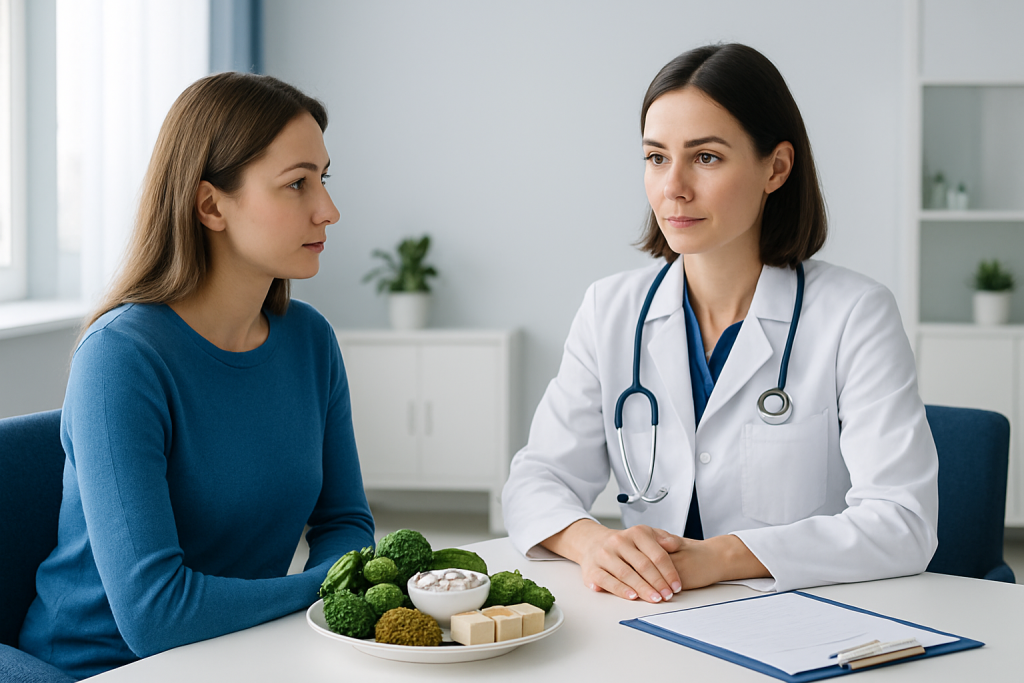
Food-based treatment focuses on repeating iron-rich meals across the week. Good options include lentils, black beans, kidney beans, chickpeas, soybeans, tofu, tempeh, edamame, sesame paste, tahini, pumpkin seeds, hemp seeds, cashews, quinoa, amaranth, oats, fortified breads, and iron-fortified cereals. Pairing these with vitamin C-rich foods such as citrus, kiwi, strawberries, bell peppers, tomatoes, or broccoli can improve absorption.
It also helps to think about meal timing. Tea and coffee can reduce iron absorption when taken with meals, and calcium-rich foods or supplements may interfere when consumed at the same time as iron-rich meals. Rather than avoiding these foods entirely, many people do best by separating them from iron-focused meals when possible. A clinician can advise whether a supplement is appropriate and how follow-up testing should be timed.
Prevention & Self-care
Preventing low iron on a vegetarian diet is usually about building repeatable habits. Breakfast could include fortified cereal with berries, lunch might feature a bean salad with peppers and lemon, and dinner could center on tofu, chickpeas, or lentils with vegetables and whole grains. Small, regular choices often matter more than occasional large servings.
Reading labels can also be useful. Fortified plant milks, cereals, breads, and meat alternatives may contribute meaningful iron, but products vary widely. A person who relies on packaged foods should check the nutrition panel rather than assuming a food is iron-rich simply because it is plant-based.
A few practical tips can make the plan more effective:
- Include a vitamin C source with iron-rich meals.
- Use legumes, tofu, and seeds as routine staples, not occasional extras.
- Separate tea, coffee, and calcium supplements from iron-focused meals when possible.
- Seek advice before starting iron supplements, since too much iron can also be harmful.
Vegetarians who are pregnant, trying to conceive, menstruating heavily, adolescents, or endurance athletes may benefit from more individualized guidance. For people living or traveling abroad, a dietitian or physician can help identify local foods and product labels that fit the same nutritional strategy.
When to See a Doctor
A doctor should be consulted if fatigue, paleness, dizziness, shortness of breath, hair loss, or restless legs persist, especially if symptoms are affecting daily life. Medical review is also important if a person has heavy periods, digestive complaints, unexplained weight loss, or a history of anemia.
It is wise not to self-treat repeatedly with iron supplements without testing. The right approach depends on the cause of low iron, and some symptoms overlap with vitamin B12 deficiency, thyroid disorders, or other conditions that need different treatment.
Vegetarians who are planning pregnancy, recovering after surgery or illness, or adjusting to a new country and food environment may benefit from a proactive check-in even before symptoms become obvious. Acibadem Health Point’s multidisciplinary specialists and JCI-accredited hospitals diagnose and treat iron deficiency for international patients with coordinated, patient-centered care.
Frequently Asked Questions
What are the best iron enriched foods for vegetarians?
Legumes, soy foods, fortified cereals, whole grains, seeds, nuts, and dark leafy greens are among the most useful choices. The best results usually come from combining several of these foods across the week rather than relying on one item.
Do vegetarians need more iron than meat eaters?
They do not necessarily need more total iron from diet, but they may need to pay more attention to absorption because plant iron is non-heme iron. Pairing iron-rich foods with vitamin C and limiting absorption blockers during meals can help.
Can spinach alone fix low iron?
Spinach can contribute iron, but it should not be treated as the only solution. A wider mix of legumes, tofu, seeds, fortified foods, and vitamin C-rich produce is more dependable.
Should tea and coffee be avoided completely?
Not usually. They may reduce iron absorption when consumed with iron-rich meals, so many people simply separate them from those meals when possible.
How can someone tell if iron supplements are needed?
That decision should be based on symptoms, blood tests, and a clinician’s assessment. Supplements can help when deficiency is confirmed, but taking them without guidance may not address the real cause of symptoms.
Are fortified foods enough for vegetarians?
They can help a lot, especially when used regularly, but needs vary by age, sex, and health status. Fortified foods are often most effective as part of a broader meal pattern that also includes legumes, seeds, and vitamin C-rich foods.
Frequently asked questions
01What are the best iron enriched foods for vegetarians?
Beans, lentils, chickpeas, tofu, tempeh, pumpkin seeds, fortified cereals, oats, quinoa, and dark leafy greens are all helpful options. The most effective approach is to include a variety of these foods regularly rather than depending on one “best” item.
02Why is iron harder to absorb from plant foods?
Plant foods contain non-heme iron, which is absorbed differently from the heme iron found in meat. Absorption can improve when iron-rich meals are paired with vitamin C and not taken alongside tea, coffee, or calcium-rich supplements.
03Can a vegetarian diet prevent iron deficiency?
Yes, many vegetarian diets provide enough iron when they are well planned. Regularly including legumes, soy foods, whole grains, seeds, nuts, and fortified products helps support healthy iron stores.
04What foods should be limited around iron-rich meals?
Tea, coffee, and calcium supplements can reduce absorption when taken with iron-rich meals. They do not need to be eliminated, but spacing them away from those meals can be useful.
05What are early signs of low iron?
Common signs include tiredness, weakness, pale skin, headaches, dizziness, and poor concentration. Because these symptoms can have many causes, blood tests are needed to confirm iron deficiency.
06When should a vegetarian see a doctor about iron?
A doctor should be seen if symptoms are persistent, if periods are heavy, if there is a history of anemia, or if a person is pregnant or has digestive problems. Medical testing helps determine whether iron deficiency is present and whether another condition is contributing.
This article is for general information only and is not a substitute for professional medical advice. Please consult a qualified doctor about your individual situation.
Hair transplant in Turkey — costs, graft counts & a free assessment
JCI-accredited · board-certified surgeons · reply within 24h
Add us as a Preferred Source to see more of our trusted health content across Google Search, AI Overviews and Discover.