

Aching Pain in Top of Leg: Causes, Relief and When to Worry

Key Takeaways
- Aching pain in the top of the leg can come from muscles, the hip joint, the lower back, nerves, or blood vessels.
- Pain after exercise or overuse often improves with rest, gentle movement, and short-term home care.
- Pain with swelling, redness, weakness, numbness, or fever needs medical attention.
- A doctor may use an exam and imaging or blood tests to find the exact cause.
- Early evaluation is especially important if the pain is sudden, severe, or affecting walking.
Aching pain in the top of the leg is often linked to a muscle strain, hip or lower-back problem, nerve irritation, or less commonly a circulation issue. Most cases improve with simple care, but persistent pain, swelling, numbness, or sudden severe symptoms should be checked by a doctor.
Overview
Aching pain in the top of the leg is a broad symptom, not a diagnosis. People may feel it in the front of the thigh, the outer thigh, the groin area, or high near the hip. The source can be as simple as a pulled muscle after exercise, or it can reflect a problem in the hip joint, lower back, nerves, or blood flow.
The pattern of pain often gives the first clue. Pain that appears after running, climbing stairs, lifting, or a long walk may point toward muscle overuse. Pain that starts in the back or buttock and travels into the thigh may suggest nerve irritation. If the discomfort is paired with swelling, warmth, or skin color change, a circulation issue deserves attention.
For travelers, this symptom can be especially disruptive because long flights, unfamiliar beds, heavy luggage, and changes in routine may make a minor strain feel more noticeable. The important question is not only where the pain is felt, but what else is happening alongside it and how quickly it is changing.
Symptoms and what they may suggest

Upper leg pain can feel dull, tight, burning, sharp, or cramp-like. Some people notice it only when walking up stairs or getting out of a car. Others feel it at rest, at night, or after sitting for a long time. The location and timing matter because different patterns often point to different causes.
Muscle-related pain is commonly tender to touch and worse with movement. Hip joint pain may be felt in the groin, outer thigh, or deep in the upper leg and can make rotation or weight-bearing uncomfortable. Nerve-related pain may include tingling, numbness, shooting discomfort, or weakness. If pain is accompanied by fever, a rash, unexplained bruising, or significant swelling, a medical assessment is more important.
- Muscle strain: soreness after activity, stretching, or lifting
- Hip-related pain: stiffness, reduced range of motion, groin discomfort
- Nerve irritation: burning, tingling, numbness, pain that travels
- Circulation concerns: swelling, redness, warmth, or calf and thigh tenderness
Common causes and risk factors
One of the most common explanations is a muscle strain in the quadriceps, hip flexors, or inner thigh muscles. These injuries may happen during sports, sudden twisting, climbing, or carrying heavy bags. Overuse can also cause soreness after repetitive activity, especially if someone has increased exercise intensity too quickly.
Hip arthritis, tendon inflammation, bursitis, or a joint injury can cause pain that is felt high in the leg even when the hip itself is the source. Lower-back problems such as a pinched nerve or disc irritation may also send discomfort into the thigh. Less commonly, blood clots, infections, or fractures can cause upper leg pain and should be considered when symptoms are more intense or unusual.
Risk tends to rise with aging, repeated strain, poor conditioning, previous injuries, prolonged sitting, obesity, and jobs or travel plans that involve long periods of standing or lifting. People with a recent surgery, long-haul travel, cancer, pregnancy, or hormone therapy should take swelling and one-sided pain seriously because circulation problems become more relevant in those settings.
How doctors evaluate it
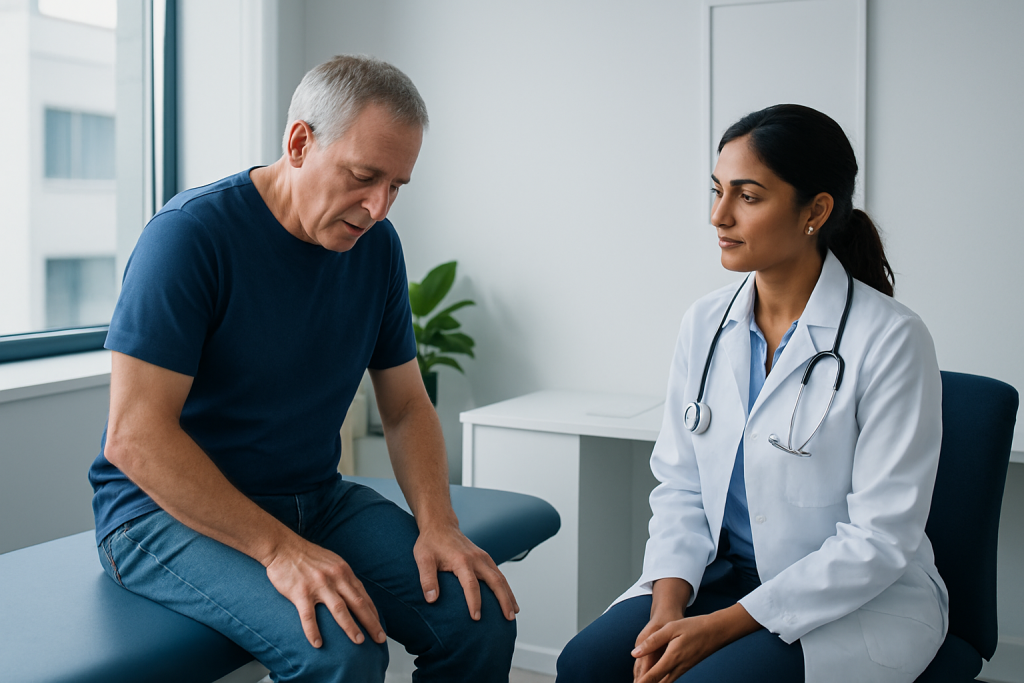
A careful history is usually the starting point. A doctor will want to know where the pain is located, when it began, what makes it better or worse, and whether there was a recent injury, exercise change, or long trip. Questions about numbness, weakness, fever, swelling, and walking ability help narrow the cause.
The physical examination may include checking the hip, knee, back, muscles, gait, pulse quality, and range of motion. Depending on the findings, the next step may be an X-ray, ultrasound, MRI, or blood tests. If a blood clot is a concern, urgent imaging is often used to confirm or rule it out.
In people traveling internationally for care, evaluation may also include comparing outside records, prior scans, and medication lists. Bringing test results, discharge papers, and a clear timeline of symptoms can make diagnosis more efficient and help the care team avoid repeating unnecessary tests.
Treatment options
Treatment depends entirely on the cause. A mild muscle strain may improve with rest from aggravating activity, gentle movement, and short-term symptom relief measures recommended by a clinician. Hip or tendon problems may benefit from targeted physical therapy, improved movement mechanics, and activity modification.
If the pain is coming from the lower back or a nerve, care may focus on reducing inflammation, easing pressure, and restoring function. For some conditions, medicine may be considered, but the choice should be made by a doctor based on the underlying diagnosis and the person’s other health conditions. If a clot, infection, or fracture is found, treatment becomes more urgent and specific.
Recovery plans are often most successful when they are practical. That may include pacing activities, choosing supportive footwear, avoiding sudden bursts of exercise, and following through with rehabilitation exercises. For international patients, coordinated follow-up matters as much as the initial diagnosis, because improvement should be monitored after travel and during return home.
Prevention and self-care
When the pain is mild and there are no warning signs, simple care can help while the body recovers. Resting from the activity that triggered the pain is helpful, but complete inactivity for long periods is usually not ideal. Gentle walking, light stretching, and gradual return to normal movement are often better than staying still for too long.
Other useful steps include maintaining hydration, warming up before exercise, avoiding sudden training increases, and taking breaks during long trips or desk work. If sitting for many hours makes the pain worse, standing up, changing position, and moving the legs regularly can help. Supportive shoes and sensible lifting technique can also reduce strain on the upper leg and hip area.
- Use rest and activity modification rather than pushing through pain
- Apply cold or warmth if a clinician says it is appropriate
- Keep movements gentle and regular
- Seek advice before restarting intense exercise
When to see a doctor
Medical review is important if aching pain in the top of the leg lasts more than a few days, keeps coming back, or interferes with walking, sleep, or daily tasks. It should also be assessed sooner if there is swelling, redness, warmth, numbness, weakness, fever, a recent injury, or pain that is clearly worsening.
Emergency care is appropriate if the pain begins suddenly and severely, if the leg becomes markedly swollen, if there is chest pain or shortness of breath, or if the person cannot bear weight. These symptoms can point to conditions that need immediate treatment.
For people who are planning care away from home, it is reasonable to seek assessment before travel if symptoms are new or unexplained. Acibadem Health Point’s multidisciplinary specialists and JCI-accredited hospitals diagnose and treat this condition for international patients, with coordinated evaluation and follow-up across specialties when needed.
Living with upper leg pain during travel and recovery
Upper leg pain can be especially frustrating when it appears during a business trip, vacation, or medical journey. The practical goal is to stay mobile without aggravating the problem. Short walks, periodic stretching, and avoiding heavy loads can reduce stiffness during transit, while an organized plan for appointments and rehabilitation helps recovery feel more manageable.
If the pain is linked to a diagnosed condition, keeping a simple symptom log may be useful. Notes about where the pain is felt, what activities trigger it, and what helps can make follow-up care more precise. This is particularly helpful when a patient returns to another country and needs to continue care with a local doctor.
Aching pain in the top of the leg is often treatable, but it should not be dismissed if it changes, spreads, or comes with other symptoms. A timely evaluation can help separate a temporary strain from a condition that needs targeted treatment.
Frequently asked questions
01What does aching pain in the top of the leg usually mean?
It often points to a muscle strain, hip irritation, or pain referred from the lower back. In some cases, nerve or circulation problems can feel similar, so the pattern of symptoms matters.
02Can upper leg pain come from the hip?
Yes. Hip joint problems often cause pain that is felt in the groin, outer thigh, or upper leg. People may also notice stiffness or difficulty rotating the leg.
03When is top of leg pain more serious?
It is more concerning if it is sudden, severe, one-sided with swelling, or paired with weakness, numbness, fever, redness, or shortness of breath. Those symptoms should be assessed promptly.
04What can help mild aching pain in the top of the leg at home?
Rest from the activity that triggered it, gentle movement, and avoiding long periods of sitting can help. If symptoms are not improving or the pain is recurring, a doctor should evaluate the cause.
05How do doctors tell whether the pain is muscular or nerve-related?
They use the symptom pattern, physical examination, and sometimes imaging or other tests. Muscle pain is often tender and movement-related, while nerve pain may burn, tingle, or travel down the leg.
06Should someone with leg pain avoid walking?
Not always. For many mild strains, light walking and gradual movement are better than complete rest. The right activity level depends on the cause, so worsening pain or trouble bearing weight should be checked by a doctor.
This article is for general information only and is not a substitute for professional medical advice. Please consult a qualified doctor about your individual situation.
Joint and spine care in Turkey — expert assessment & treatment
JCI-accredited · board-certified surgeons · reply within 24h
Add us as a Preferred Source to see more of our trusted health content across Google Search, AI Overviews and Discover.


