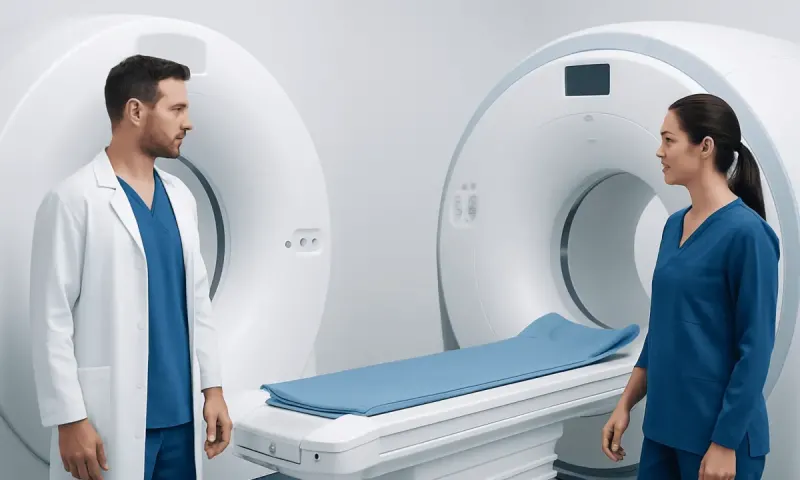
Iodine Injection Usually Means Contrast Dye for a CT Scan
Your doctor mentions a CT scan “with contrast,” and someone hands you a consent form about an iodine injection. It sounds alarming if you’ve never had one. In practice, it means iodinated contrast material given into a vein so that blood vessels, organs and certain abnormalities show up more clearly on the scan.
This is not nutritional iodine. Most people tolerate it well, and before it is used, clinicians screen for kidney disease, previous contrast reactions and relevant thyroid conditions.
Iodine injection: what it is and how it works
An iodine injection is most often an injection of iodinated contrast material, also called CT contrast. It is given through a small intravenous (IV) line to help a CT scan show internal structures more clearly. The iodine atoms in the contrast absorb X-rays, allowing radiologists to distinguish blood vessels, organs, inflammation, bleeding and some tumors from surrounding tissues.
Despite how it sounds, this injection has nothing to do with topping up low dietary iodine or treating iodine deficiency. It is an imaging medicine, given in a controlled dose for one specific scan. The care team selects the type and amount based on the examination, body size, medical history and kidney function when appropriate.
Contrast-enhanced CT may be recommended when a non-contrast scan would not provide enough information. For example, contrast can help assess arteries and veins, abdominal organs, infections, injuries and suspected cancer. The decision balances the expected value of clearer images against individual safety considerations.
Do they inject iodine for a CT scan?
Yes. For many CT examinations, a radiographer or nurse injects iodinated contrast through an IV cannula placed in a vein, commonly in the arm. Not every CT scan needs contrast: scans of some bones, certain lung studies, kidney stones and some follow-up examinations may be performed without it.
The contrast injection is timed so that images are taken while the contrast is moving through the blood vessels or reaching the organ being assessed. Depending on the clinical question, the scan may include one or more imaging phases. The radiology team explains whether contrast is planned and why it may improve the answer to the referring clinician’s question.
People sometimes describe the procedure as an iodine injection solution. In clinical terms, it is an iodinated contrast medium. Modern nonionic, low-osmolar agents are widely used because they are generally better tolerated than older contrast products, although side effects and allergic-like reactions can still occur.
Who may need extra assessment before contrast

Most adults can have iodinated contrast safely, but you will be asked a few questions first. The team will ask about previous reactions to CT contrast, kidney disease, diabetes, dehydration, asthma, severe allergies, current medicines and pregnancy. A prior reaction to contrast is more relevant than a reported allergy to shellfish or to iodine-containing foods; shellfish allergy alone does not mean a person is allergic to CT contrast.
Kidneys remove most IV contrast. For people with known kidney impairment, recent acute illness, severe dehydration or other risk factors, clinicians may check kidney function and consider hydration, an alternative imaging test or a modified plan. Please don’t stop any prescribed medicine on your own. Ask your referring doctor or the radiology team if something needs to be paused.
An iodine injection thyroid discussion may be needed for people with untreated overactive thyroid or particular thyroid conditions. The iodine load can rarely trigger or worsen hyperthyroidism in susceptible individuals. This does not mean contrast is automatically unsuitable, but it may warrant individualized planning with radiology and endocrinology. Related thyroid evaluation may be considered when clinically indicated, including assessment for hyperthyroidism.
- Tell the team about any previous contrast reaction, including what symptoms occurred and how it was treated.
- Report kidney disease, dialysis, recent kidney problems, thyroid disease or pregnancy.
- Follow the facility’s instructions on eating, drinking and arriving for the examination.
What happens during an iodine injection procedure
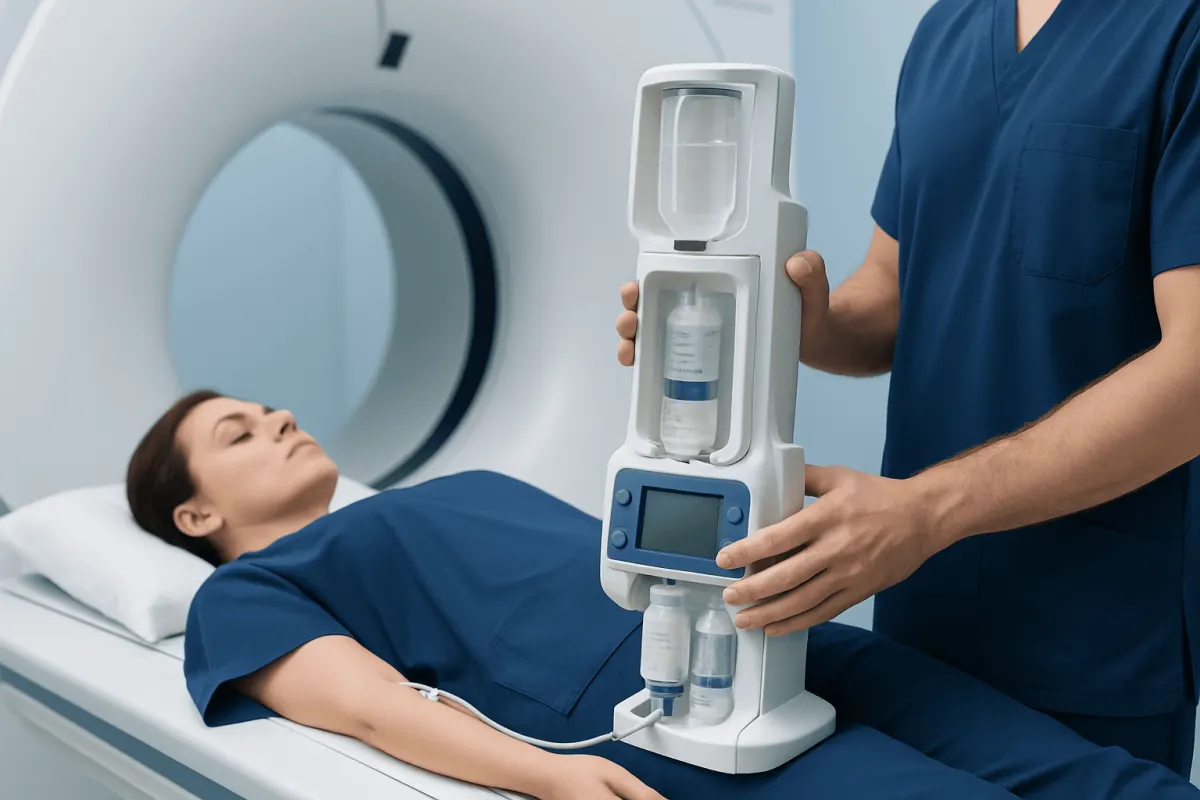
Before the scan, a healthcare professional confirms identity, the planned examination and relevant safety information. An IV cannula is inserted, usually into a vein in the hand or arm. The contrast is then injected with a power injector at a carefully controlled rate, while the patient lies on the CT table.
During the injection, many people notice a warm flush spreading through the body, a metallic taste in the mouth, a sensation of needing to pass urine, or mild nausea. These iodine injection symptoms are usually short-lived and are not, by themselves, signs of an allergy. The scan itself is painless, and the imaging portion commonly takes only minutes.
Staff monitor the person throughout the procedure and can communicate through an intercom. After the images are reviewed for technical quality, the IV is removed unless it is needed for other care. The radiologist interprets the images and sends a report to the clinician who requested the test.
When the picture is unclear, a contrast CT often gives your doctor the detail needed to settle a diagnosis and plan treatment.
How long does a contrast injection last?
The injection itself normally lasts seconds to a few minutes, depending on the type of scan and the amount of contrast required. Sensations such as warmth or a metallic taste usually fade within minutes. The contrast is useful for imaging during a short, precisely timed period as it circulates through the bloodstream.
The visible enhancement on a CT scan does not continue for hours. Different tissues take up and clear contrast at different rates, which is why the scan may be timed in phases. Once imaging is finished, the body begins eliminating the contrast naturally, mainly through the kidneys into urine.
Tell the staff straight away if you notice itching, hives, wheezing, throat tightness, marked dizziness, severe vomiting or pain and swelling where the needle went in. These are not expected brief injection sensations and require prompt assessment.
How long does IV iodine stay in your system?
In people with normal kidney function, most iodinated IV contrast is removed through urine within approximately 24 hours. Small amounts may take longer to clear completely, and the timing can vary with kidney function, hydration, age, the contrast agent used and overall health.
For people with significantly reduced kidney function, elimination may be slower. The care team may recommend individualized precautions before the scan and may provide specific instructions afterward. Drinking fluids as normally advised can support hydration for many people, but anyone with heart failure, kidney disease or a fluid restriction should follow their clinician’s guidance rather than deliberately increasing fluids.
The iodine content can affect certain thyroid-related tests or treatments for a period after contrast exposure. People who are preparing for radioactive iodine testing or treatment should inform their endocrinologist or nuclear medicine team about a recent contrast-enhanced CT, as the timing of care may need adjustment.
How long does contrast stay in your body after a CT scan?
After a CT scan, most contrast leaves the body in urine within about a day when kidney function is normal. It is common to be able to return to usual activities immediately unless the healthcare team gives different instructions. You don’t need detox drinks, supplements or anything else to flush it out.
Occasionally, a person may have a delayed mild reaction, such as an itchy rash, hours to several days after contrast. These reactions are usually manageable but should be reported to a clinician, especially if symptoms are widespread, uncomfortable or worsening. Recording the reaction helps the team plan safely for any future imaging.
Rarely, contrast can be associated with kidney problems in people who already have substantial risk factors. Clinicians use current kidney assessment and imaging guidance to reduce avoidable risk. If follow-up blood tests are recommended, patients should complete them as instructed.
Benefits, risks and when to seek medical care
The primary benefit of an iodine injection is better diagnostic accuracy. Clearer visualization may help a clinician identify the source of symptoms, characterize an abnormal finding, assess the extent of disease or plan treatment. In many situations, the additional information from contrast-enhanced imaging is clinically valuable.
Most iodine injection reactions are mild or moderate, such as nausea, itching, hives or a rash. Severe allergic-like reactions are uncommon but can happen. Contrast may also leak outside the vein, causing local swelling or discomfort; staff can assess and manage this promptly. Serious kidney or thyroid effects are uncommon and are more likely in selected higher-risk groups.
When to seek medical care: emergency assessment is needed for breathing difficulty, swelling of the lips, tongue or face, fainting, chest tightness, severe widespread hives, or rapidly worsening symptoms after contrast. Medical advice should also be sought for a persistent or spreading rash, reduced urine output, marked swelling or pain at the injection site, or symptoms of overactive thyroid such as a persistent racing heartbeat, tremor and unusual heat intolerance after a recent injection.
At Acıbadem Health Point, our specialists work across departments in JCI-accredited hospitals, so imaging needs and contrast safety planning can be arranged together for patients travelling from abroad.
Frequently asked questions
01Is an iodine injection the same as an iodine supplement?
No. An iodine injection for CT imaging is an iodinated contrast medicine used to improve the visibility of internal structures on scans. It is not intended to provide dietary iodine or treat iodine deficiency.
02Can someone with a shellfish allergy have iodinated CT contrast?
Usually, shellfish allergy alone does not predict a reaction to iodinated CT contrast. The most important history is a previous reaction to contrast itself, along with other medical factors that the radiology team will review.
03What does an iodine injection feel like?
Many people feel a brief warmth or flushing sensation, a metallic taste, or an urge to urinate while contrast is injected. These sensations generally resolve within minutes. Itching, hives, breathing difficulty or swelling should be reported immediately.
04Should a person drink extra water after CT contrast?
Many people can continue normal fluid intake after the examination, and staying appropriately hydrated may be helpful. However, people with kidney disease, heart failure or a prescribed fluid limit should follow their usual clinician's advice instead of increasing fluid intake on their own.
05Can iodinated contrast affect the thyroid?
Iodinated contrast can rarely trigger or worsen an overactive thyroid in people who are susceptible, particularly those with untreated thyroid disease. People with thyroid conditions should tell the care team before the scan so that the need for contrast and any precautions can be assessed.
06Can a person have another contrast CT after a previous reaction?
Often, yes, but the decision depends on the type and severity of the earlier reaction and the importance of the new scan. A radiologist and referring clinician may consider a different contrast agent, premedication in selected cases, closer monitoring or an alternative imaging method.
This article is for general information only and is not a substitute for professional medical advice. Please consult a qualified doctor about your individual situation.
Oncology care in Turkey — second opinion and treatment plan
JCI-accredited · board-certified surgeons · reply within 24h
Add us as a Preferred Source to see more of our trusted health content across Google Search, AI Overviews and Discover.