Insect Bite Infection: Causes, Symptoms, Diagnosis and Treatment

Key Takeaways
- An insect bite infection usually starts when bacteria enter irritated or broken skin.
- Worsening redness, warmth, pain, swelling, or drainage are common warning signs.
- Clean the bite early and avoid scratching to lower the chance of infection.
- A doctor may prescribe treatment when the infection is spreading, painful, or not improving.
- Seek medical advice quickly if fever, red streaks, or facial swelling appears.
An insect bite infection happens when bacteria enter broken skin after a bite or scratch, leading to worsening redness, swelling, pain, or pus. Most cases are treatable, but prompt care helps prevent the infection from spreading and reduces the risk of complications.
Overview
An insect bite infection is not caused by the bite itself alone; it usually develops when bacteria get into the skin after scratching, picking, or when the bite blister opens. What begins as a small itchy bump can become a tender, swollen, red area that feels hotter than the surrounding skin.
For most people, the difference between a simple bite and an infection is timing and behavior. Ordinary bite irritation often improves over a few days, while an infected bite tends to worsen, spread, or start draining fluid. Recognizing that change early matters, especially for travelers who may be far from their usual clinic or pharmacy and want to know whether local care is enough or a medical visit is needed.
Most infected bites are mild when treated promptly, but some can become more serious if the infection moves deeper into the skin or into nearby tissues. That is why clear observation of the bite site, even during a busy trip or after returning home, is often the best first step.
Symptoms

The earliest signs of an insect bite infection may look like an ordinary bite that is becoming less predictable. Instead of steadily calming down, the area may become increasingly red, warm, swollen, or painful over one to two days.
Common symptoms include:
- Redness that expands beyond the original bite
- Warmth or tenderness around the area
- Swelling that becomes firmer or more uncomfortable
- Pus, cloudy fluid, or crusting
- Itching that turns into pain or throbbing
- Red streaks extending away from the bite
Some people also notice swollen lymph nodes near the affected area, or a general sense of feeling unwell. Fever is not always present, but when it does appear, it deserves attention because it may suggest the infection is progressing beyond the skin.
It is also helpful to separate infection from allergy. A large itchy swelling soon after a bite can happen from an allergic reaction, while an infected bite usually becomes more painful, more red over time, and may develop drainage.
Causes & Risk Factors
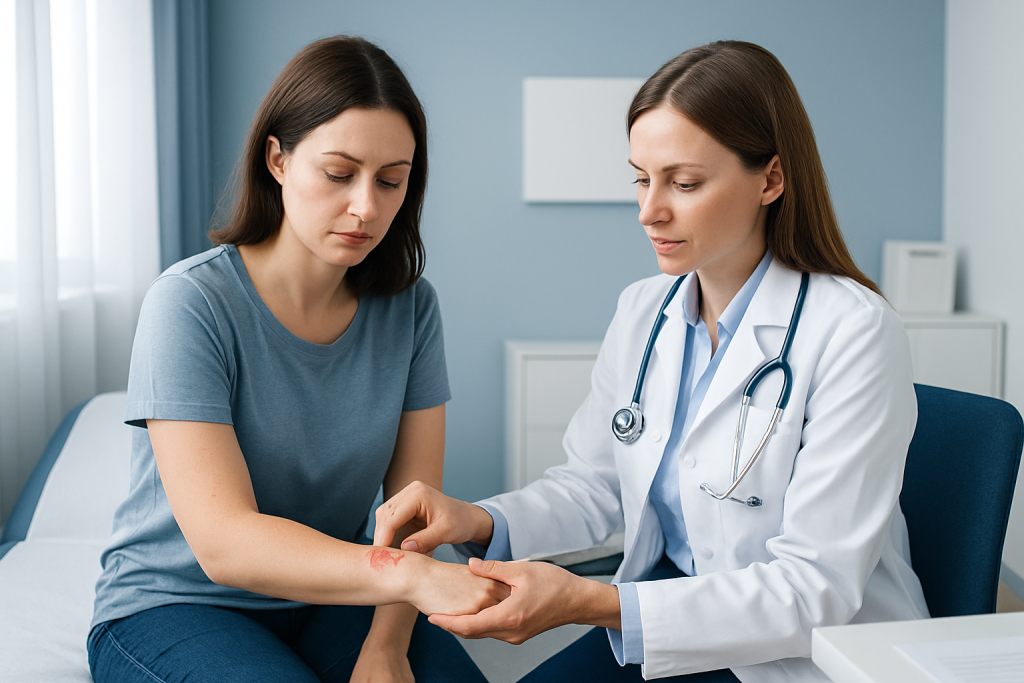
Most insect bite infections happen when the skin barrier is disrupted. Scratching is the most common reason, because fingernails can carry bacteria into the tiny opening created by the bite. In some cases, the skin is already irritated by a strong local reaction, making it easier for bacteria to settle in.
Several factors can raise the chance of infection:
- Repeated scratching or picking at the bite
- Breaking a blister or scab
- Not cleaning the skin after the bite
- Weakened immune defenses
- Diabetes or poor circulation
- Living or traveling in warm, humid settings where bites are frequent
Different insects can leave similar skin reactions, so the specific insect is not always the deciding factor. Mosquitoes, fleas, bedbugs, ants, flies, and ticks can all leave bites that become infected if the skin is damaged afterward.
People who are traveling may be at extra practical risk because they may not notice a bite right away, may continue walking or working with irritated skin, or may delay care while trying to manage symptoms on their own. Infections are not inevitable, but prevention is much easier than treating a spreading skin infection later.
Diagnosis
A doctor usually diagnoses an insect bite infection by examining the skin and asking how the area has changed over time. The pattern of redness, warmth, tenderness, swelling, or drainage often gives the clearest clue.
During the visit, the clinician may ask when the bite first appeared, whether there has been fever, whether anything was applied to the skin, and whether the person has allergies, diabetes, or immune-related conditions. Photos taken over several days can be surprisingly useful, especially if the bite is worsening and the patient is seeking care away from home.
Most cases do not require complex testing. If the infection looks severe, keeps returning, or is not responding as expected, a doctor may consider a swab or culture of drainage, blood tests, or other evaluation to look for deeper infection or another cause of the symptoms.
Because several skin problems can resemble an infected bite, a careful examination matters. For example, an inflammatory reaction, contact dermatitis, or another skin infection can sometimes be mistaken for a bite that has simply become infected.
Treatment Options
Treatment depends on how extensive the infection is. Mild cases may improve with careful cleaning, keeping the area protected, and close observation, but many infected bites need prescription treatment if redness or pain is increasing.
Common treatment approaches include:
- Cleaning the area gently with soap and water
- Keeping the skin dry and covered with a clean bandage when needed
- Using prescription antibiotics when a bacterial infection is suspected
- Relieving itch or discomfort with doctor-advised measures
- Draining an abscess if pus has collected under the skin
Warm compresses may help some people feel more comfortable, but they should not replace medical assessment when the bite is clearly worsening. It is also important not to squeeze, puncture, or aggressively scrub the area, since that can drive bacteria deeper or spread infection.
If the person is traveling, treatment planning should account for follow-up access. A clinician may recommend a medication plan that is practical to continue after leaving the country, along with instructions on what changes would mean the infection is not settling as expected.
Prevention & Self-care
Preventing infection begins with protecting the skin as soon as the bite is noticed. The aim is to reduce itch, avoid scratching, and keep the skin barrier intact while the bite heals.
Helpful self-care steps include:
- Wash the bite gently with soap and water
- Apply a cool compress to reduce swelling and itching
- Avoid scratching, even if the area feels very itchy
- Keep nails short, especially for children
- Cover the bite if clothing or rubbing irritates it
- Watch for change rather than assuming all bites improve at the same pace
For people who are prone to insect exposure, prevention also means reducing future bites: use appropriate insect repellent, wear protective clothing when indicated, and inspect sleeping areas if bedbugs or fleas are suspected. These practical steps are especially useful during travel, where exposure can continue for several days before the problem is recognized.
Self-care is useful, but it has limits. If the bite becomes increasingly painful, forms pus, or starts spreading, it is no longer just a home-care situation. In that setting, professional evaluation is the safer path.
When to See a Doctor
Medical care is advisable when an insect bite infection seems to be getting worse rather than better. A doctor should evaluate the area if redness spreads, pain increases, drainage appears, or the skin becomes noticeably hot and swollen.
Prompt evaluation is especially important if there is fever, red streaking, facial swelling, trouble breathing, a bite near the eye, or a fast-growing lump that may be an abscess. These symptoms do not always mean a dangerous complication, but they do suggest the need for timely assessment.
People with diabetes, weakened immunity, poor circulation, or a history of serious skin infections should seek advice earlier rather than waiting. Children, older adults, and travelers far from follow-up care may also benefit from being checked sooner, because practical barriers can make delayed treatment harder.
Acibadem Health Point’s multidisciplinary specialists and JCI-accredited hospitals diagnose and treat insect bite infections for international patients, with care that can be coordinated around travel and follow-up needs.
Frequently asked questions
01How can someone tell if an insect bite is infected?
An infected bite usually becomes more painful, red, warm, and swollen over time instead of gradually settling down. Pus, crusting, or red streaks are additional warning signs that deserve medical review.
02Can an infected insect bite heal on its own?
Some very mild cases may improve, but infections can also spread if bacteria remain in the skin. If symptoms are worsening or not improving within a short period, a doctor should evaluate the bite.
03Is it okay to squeeze or pop an infected bite?
No, squeezing or puncturing the area can push bacteria deeper into the skin and increase the risk of spreading infection. Gentle cleaning and medical assessment are safer choices if there is pus or a lump under the skin.
04What is the difference between an allergy and an infection?
An allergic reaction often causes itching and swelling soon after the bite, while infection more often brings increasing pain, warmth, redness, and sometimes drainage over time. A doctor can help distinguish the two if the appearance is unclear.
05Do all insect bite infections need antibiotics?
Not always, but many do if a bacterial infection is confirmed or strongly suspected. The choice depends on how severe the infection is and whether there are signs of spreading or deeper tissue involvement.
06When should international travelers seek care for a bite?
Travelers should seek care if the bite is rapidly worsening, painful, draining, or accompanied by fever or red streaking. Getting assessed early can make treatment easier and help avoid problems once they are back home.
This article is for general information only and is not a substitute for professional medical advice. Please consult a qualified doctor about your individual situation.
Explore treatments in Turkey — costs, top hospitals & a free quote
JCI-accredited · board-certified surgeons · reply within 24h
Add us as a Preferred Source to see more of our trusted health content across Google Search, AI Overviews and Discover.