Inguinal Hernia Surgery Recovery Time: What to Expect Week by Week

Key Takeaways
- Inguinal hernia surgery recovery time is commonly one to two weeks for light daily activity and roughly four to six weeks before heavy lifting or contact sport — but only the operating surgeon can set an individual timeline.
- Minimally invasive (laparoscopic or robotic) repairs often allow a somewhat faster return to routine, while open repairs may involve more localized soreness at the groin incision.
- Bruising, swelling, mild groin discomfort and a feeling of tightness or pulling in the first weeks are usually expected parts of healing.
- Fever, spreading redness, wound drainage, severe or worsening pain, inability to pass urine, or a painful firm bulge are reasons to seek prompt medical care.
- Walking early and often, avoiding constipation and straining, and following individualized lifting limits support smoother healing.
- For patients traveling for surgery, recovery time should be built into the itinerary — including a fit-to-fly review, follow-up appointment and a written aftercare plan for home.
Most people resume light daily activities within one to two weeks after inguinal hernia repair and return to heavier lifting or sport around four to six weeks, although healing is individual. This week-by-week guide explains what is typically normal, what is not, and how recovery fits into travel and follow-up planning.
Inguinal Hernia Surgery Recovery Time: The Big Picture
For most adults, inguinal hernia surgery recovery time follows a predictable pattern: light activity such as walking, desk work and self-care within the first one to two weeks, and a gradual return to more demanding physical effort — heavy lifting, gym training, contact sport — over roughly four to six weeks. These are general ranges rather than rules. Age, general health, whether the repair was open or minimally invasive, whether one or both sides were repaired, and the physical demands of a person’s job all shift the timeline in either direction.
Modern inguinal hernia repair is usually performed as a same-day or short-stay procedure. The surgeon closes the weak point in the abdominal wall, most often reinforcing it with a mesh. Because the tissue in the groin moves with every step, cough and twist, healing is felt as a gradual reduction in tightness and soreness rather than a single moment of “being better.” Many people describe feeling noticeably better each week for the first month, then continuing to improve more quietly for several months.
It is also worth knowing what recovery is not. It is not a race, and it is not identical for two people who had the same operation on the same day. Pushing through significant pain to meet a personal deadline is not a sign of good healing. The safest approach is to use published ranges as orientation and the operating surgeon’s specific instructions as the actual plan.
Week 1: The First Days at Home
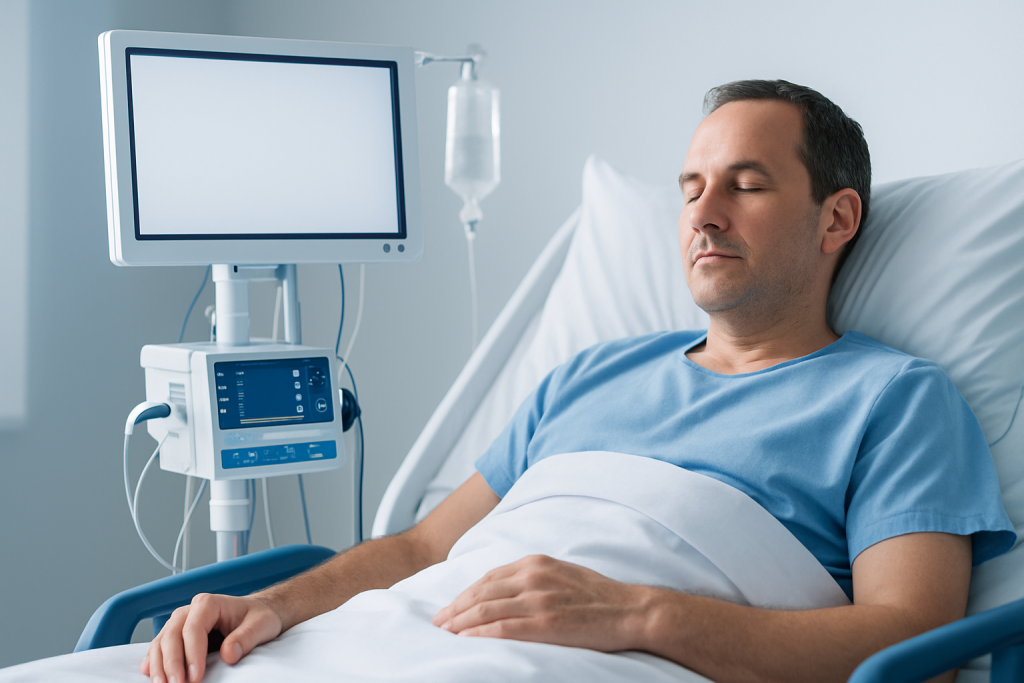
The first week is dominated by soreness, swelling and fatigue — all of which are usually expected. Discomfort is typically strongest in the first 48 to 72 hours and is often described as a pulling, bruised or heavy sensation in the groin rather than sharp pain. Bruising can appear around the incision and may spread downward, including into the scrotum in men, because gravity moves blood under the skin. This discoloration often looks worse than it feels and usually fades over one to three weeks.
Most surgical teams encourage walking on the day of surgery or the day after. Short, frequent walks around the home help circulation, lung function and bowel movement, and they reduce the risk of blood clots. Rest is important too, but lying still for days is generally not advised. Many people also notice that pain medication, anesthesia and reduced movement slow the bowels; constipation and straining put pressure on a fresh repair, so fluids, fiber and — if the care team agrees — a gentle stool softener are commonly recommended.
- Walk a little several times a day rather than one long walk.
- Support the groin with a hand or a small pillow when coughing or sneezing.
- Keep the wound area clean and dry; follow the specific dressing and showering instructions given at discharge.
- Take pain relief as directed by the treating doctor — comfort makes it easier to move, which helps healing.
Driving is usually avoided while taking sedating pain medication and until a person can brake sharply without hesitating because of pain. For many, this is several days to about a week, but it should be confirmed with the surgeon.
Weeks 2 and 3: Back to Daily Life

By the second week, many people find that the constant ache has settled into intermittent twinges, especially after being on their feet or after a longer walk. This pattern — feeling good in the morning and sore by evening — is common and generally reflects normal tissue healing rather than a problem. Swelling around the repair can persist and may even feel like a small firm lump under the incision; this is often scar tissue and post-operative fluid rather than a returned hernia, but it is a reasonable thing to have checked at a follow-up visit.
This is usually when sedentary or office work becomes realistic, sometimes with reduced hours at first. Jobs involving prolonged standing, repeated bending, climbing or lifting typically require longer. Light household tasks, cooking and gentle stretching are commonly resumed. Sexual activity is often possible when comfortable, usually within a couple of weeks, though guidance should come from the surgeon.
Exercise in this window is best kept low-impact: walking, stationary cycling at easy resistance if permitted, and gentle mobility work. Abdominal exercises, running, lifting weights and swimming (until the wound is fully healed) are generally postponed. A useful self-check is the “day after” rule: if an activity leaves noticeably more pain the following day, it was too much too soon.
Weeks 4 to 6: Lifting, Sport and Physical Work
Between weeks four and six, most people feel close to normal in daily life and begin reintroducing more demanding activity. This is also the period in which surgeons most often lift restrictions on heavier lifting, although the specific weight limit and timing are individualized. Some surgeons using minimally invasive techniques allow earlier progression; others prefer a more conservative approach, particularly after open repair, bilateral repair, or repair of a large or recurrent hernia.
Return to strength training and sport is typically gradual rather than all at once: lighter loads and shorter sessions first, then building over several weeks. Runners often restart with walk-run intervals. Manual workers and those in physically demanding roles may need a phased return, and a written note describing restrictions can help with employer arrangements.
Mild discomfort with certain movements — deep twisting, sudden coughing, getting out of a car — can linger into this period and beyond. Nerves in the groin were disturbed during surgery and can take months to settle, sometimes producing patches of numbness, tingling or occasional zings near the incision. Most of these sensations diminish over time.
Beyond Six Weeks: The Longer Tail of Healing
Full internal healing continues well past the point at which a person feels recovered. Scar tissue matures over months, and the mesh becomes integrated into the surrounding tissue during this time. Many people report that occasional groin awareness — a tug, a stiff feeling after a long drive, or sensitivity to a waistband — persists for a few months and then quietly disappears. This slow fade is a normal part of inguinal hernia surgery recovery.
A small minority of people experience discomfort that lasts longer than three months. When groin pain remains persistent or interferes with activity, it should be evaluated rather than endured; there are assessment pathways and management options, including physical therapy, nerve-focused treatments and, in selected cases, further surgical review. Reporting ongoing symptoms early gives more options.
Recurrence — the hernia coming back — is uncommon after a well-performed repair but not impossible. Warning signs include a reappearing bulge at or near the original site, especially one that becomes more obvious when standing, coughing or straining. Any new bulge deserves a medical assessment, even years later.
What Is Normal, What Is Not, and When to See a Doctor
Distinguishing ordinary healing from a complication is one of the most common concerns after hernia repair. Expected findings include bruising, swelling, tenderness at the incision, tightness on stretching, temporary constipation, tiredness and small areas of numbness. These generally improve week by week.
Certain symptoms, however, warrant prompt contact with the surgical team or urgent medical care:
- Fever, chills, or spreading redness and warmth around the wound
- Pus, increasing drainage, or a wound that opens
- Pain that is severe, worsening rather than improving, or unrelieved by prescribed medication
- A firm, very tender bulge that cannot be pushed back, particularly with nausea, vomiting or inability to pass gas or stool
- Inability to urinate, or significant abdominal distension
- Rapidly enlarging swelling or scrotal swelling that becomes hard and intensely painful
- Chest pain, shortness of breath, or new calf pain and swelling
When in doubt, calling the surgical team is always appropriate. Post-operative questions are routine, and early evaluation is far easier than late management. Patients should also attend scheduled follow-up appointments even if they feel well, since wound checks and a physical examination can identify issues that are not obvious from the outside.
Planning Travel, Time Off and Aftercare Around Recovery
Recovery timing matters even more when surgery involves travel. Patients treated away from home generally plan for a period of local stay after the procedure so that the wound can be checked, pain control can be reviewed, and the surgeon can confirm that flying is reasonable. The duration depends on the type of repair and individual progress; long-haul travel too soon can increase discomfort and the risk of blood clots, so an individualized fit-to-fly assessment is part of responsible planning rather than an optional extra.
Practical preparation smooths the first weeks considerably: arranging accommodation with an elevator or ground-floor access, having someone available to help with bags and groceries, requesting an aisle seat with room to stand and stretch, and packing loose clothing that does not press on the groin. Employers and insurers usually want a realistic estimate of time away, so it helps to ask the surgical team for written activity restrictions before discharge, along with a summary of the operation, imaging, medications and a clear plan for suture or dressing care.
Aftercare back home should be organized in advance rather than improvised. That typically means knowing which local clinician will review the wound, how to send questions or photographs to the operating team, when a video follow-up is scheduled, and which symptoms trigger an in-person visit. Acibadem Health Point coordinates this kind of end-to-end pathway for international patients — connecting them with multidisciplinary specialists and JCI-accredited Acıbadem hospitals, arranging interpreters, travel and accommodation support, second opinions and video consultations, and helping with indicative cost planning and structured aftercare communication once the patient is home.
Above all, recovery guidance in an article is orientation, not a personal prescription. The operating surgeon knows the details of the repair, the tissue quality and any complicating factors, and their instructions should always take precedence over general timelines.
Frequently asked questions
01How long does inguinal hernia surgery recovery take overall?
Most people manage light daily activities within one to two weeks and return to heavier lifting or sport around four to six weeks. Internal healing continues quietly for several months afterward. Individual timelines vary with the type of repair, overall health and job demands, so the surgeon's specific advice should guide activity.
02Is recovery faster after laparoscopic or robotic repair than open surgery?
Minimally invasive repairs often involve smaller incisions and may allow a somewhat quicker return to routine activity and less wound-related soreness. Open repair remains an excellent and widely used option, and the best technique depends on the hernia, previous surgery and patient factors. Long-term outcomes are broadly comparable when the operation is performed appropriately.
03When can someone return to work after hernia surgery?
Office or desk-based workers often return within one to two weeks, sometimes on reduced hours at first. Physically demanding jobs involving lifting, climbing or prolonged standing usually require four to six weeks or a phased return. Asking the surgical team for written activity restrictions makes workplace planning easier.
04Is swelling or a lump at the surgical site normal?
Some swelling, firmness and bruising around the incision are common in the first weeks and often reflect fluid collection and healing scar tissue rather than a returned hernia. It typically softens and shrinks over time. Any lump that grows, becomes painful, or is accompanied by fever or redness should be evaluated promptly.
05When is it safe to fly after inguinal hernia repair?
Flying timing depends on the type of repair, flight length and how recovery is progressing, and it should be confirmed by the surgical team before booking. Patients treated abroad usually stay locally for a follow-up wound check first. Moving around the cabin, staying hydrated and following any advice about clot prevention are commonly recommended.
06What activities should be avoided during the first weeks?
Heavy lifting, straining, intense abdominal exercise, running and contact sport are generally postponed until the surgeon clears them. Constipation and forceful coughing also place stress on the repair, so fluids, fiber and supporting the groin when coughing can help. Walking, in contrast, is usually encouraged from the first day.
07What if groin pain lasts longer than expected?
Occasional twinges, numbness or sensitivity around the incision can persist for a few months as nerves settle. Pain that remains persistent beyond about three months, or that limits normal activity, should be assessed rather than tolerated. Options may include physical therapy, targeted treatments or specialist review, and earlier reporting generally allows more options.
This article is for general information only and is not a substitute for professional medical advice. Please consult a qualified doctor about your individual situation.
Explore treatments in Turkey — costs, top hospitals & a free quote
JCI-accredited · board-certified surgeons · reply within 24h
Add us as a Preferred Source to see more of our trusted health content across Google Search, AI Overviews and Discover.