

Images for Oral Cancer: Causes, Symptoms, Diagnosis and Treatment
- 9 min read
- Published November 26, 2026
Key Takeaways
- Images can help people notice concerning changes, but only a medical exam and testing can diagnose oral cancer.
- Common warning signs include persistent sores, red or white patches, lumps, pain, numbness, and trouble swallowing.
- Tobacco use, heavy alcohol use, HPV infection, sun exposure to the lips, and poor oral health can increase risk.
- Diagnosis may involve an oral exam, biopsy, imaging tests, and sometimes endoscopy or lymph node evaluation.
- Treatment depends on the stage and may include surgery, radiotherapy, chemotherapy, targeted therapy, or immunotherapy.
- Early evaluation is important because many mouth changes are easier to treat when found sooner.
Images for oral cancer can be useful for understanding what suspicious lesions may look like, but they cannot confirm a diagnosis on their own. A proper evaluation by a qualified clinician is essential, especially when mouth sores, patches, or lumps do not heal.
Overview
People searching for images for oral cancer are often trying to compare a mouth sore or patch with something they have seen online. That instinct is understandable, but photographs can only show what oral cancer may look like; they cannot tell whether a change is harmless, precancerous, or malignant.
Oral cancer refers to cancers that develop in the mouth, including the lips, tongue, cheeks, floor of the mouth, hard palate, gums, and the area behind the wisdom teeth. Because early signs may resemble a canker sore, irritation from dentures, or a minor infection, many people do not realize a problem needs attention until it persists.
The safest approach is to use images as a reference point, not a decision tool. If a mouth lesion has lasted longer than expected, is growing, bleeds easily, or feels unusual, a dental or medical examination is the right next step.
What oral cancer can look like in photos
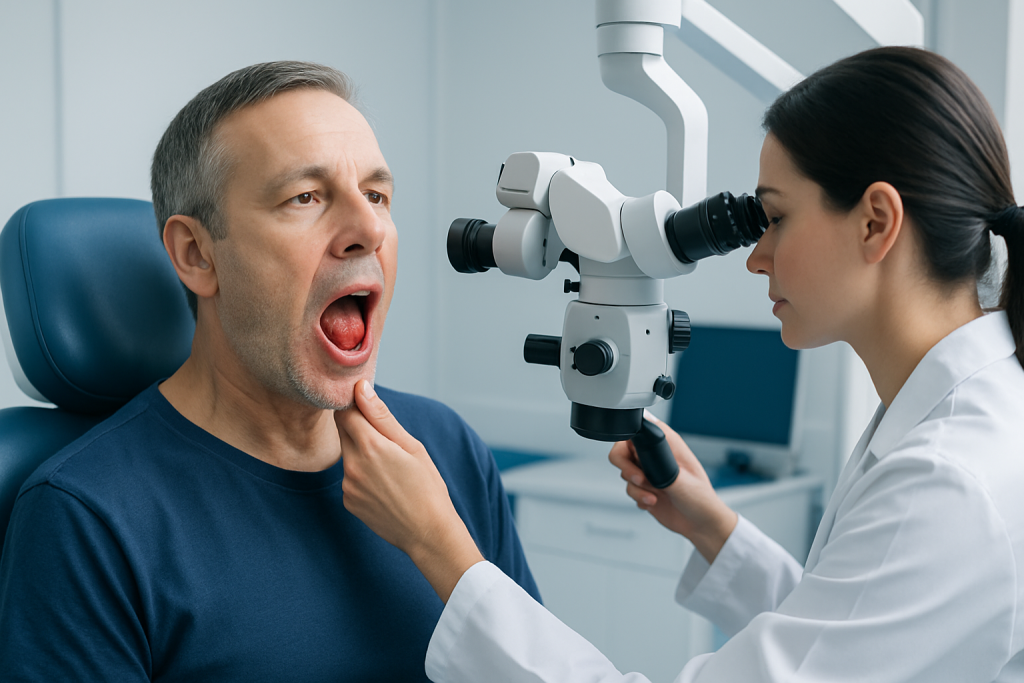
Online images of oral cancer often show a range of appearances rather than one clear pattern. A lesion may look like a red patch, a white patch, a mixed red-and-white area, a non-healing ulcer, a thickened spot, or a lump that is firm to the touch. Some areas may look crusted, ragged, or slightly raised.
It is important to remember that many benign conditions can look similar in photographs. Mouth ulcers from trauma, fungal infections, lichen planus, leukoplakia, and irritation from broken teeth or poorly fitting dentures may all produce visible changes that appear worrying in a picture.
For that reason, an image should raise awareness, not create certainty. A clinician looks at the size, color, texture, location, and duration of the lesion, and then decides whether further testing is needed.
Symptoms and early warning signs

Oral cancer does not always cause pain at the beginning. Some people first notice a sore spot that does not heal, while others see a patch on the tongue or cheek that seems unusual compared with the surrounding tissue. Symptoms can be subtle, which is why persistent changes deserve attention.
Common warning signs include a mouth sore that lasts longer than two weeks, a red or white patch, bleeding without a clear reason, swelling, loosened teeth, numbness, pain when chewing or swallowing, a feeling that something is caught in the throat, or a change in speech. A lump in the neck can also be a clue if cancer has spread to nearby lymph nodes.
- A sore that does not improve with time
- Persistent patches that look red, white, or mixed
- Unexplained bleeding or roughened tissue
- Difficulty chewing, swallowing, or moving the tongue
- Numbness, ear pain, or a persistent throat sensation
These symptoms do not automatically mean cancer, but they should not be ignored if they linger or worsen. A prompt check helps separate temporary irritation from something that needs treatment.
Causes and risk factors
Oral cancer develops when cells in the mouth begin to grow in an abnormal way and lose the normal controls that keep tissue healthy. Over time, these cells may invade nearby structures and, in some cases, spread to lymph nodes or other parts of the body.
Several factors can raise risk. Tobacco use in any form is one of the strongest contributors, including cigarettes, cigars, pipes, chewing tobacco, and similar products. Heavy alcohol use also increases risk, and the combination of tobacco and alcohol is especially concerning. Infection with certain types of human papillomavirus (HPV) can play a role in some head and neck cancers, including cancers that affect the mouth and throat.
Other contributors may include long-term sun exposure to the lips, chronic irritation from sharp teeth or dentures, poor oral hygiene, older age, and a personal history of head and neck cancer. Risk is influenced by many factors, so no single cause explains every case.
How diagnosis is made
When a mouth lesion looks suspicious or has not healed, diagnosis usually starts with a careful exam of the mouth, tongue, jaw, and neck. A dentist, oral surgeon, ENT specialist, or oncologist may ask how long the change has been present, whether it hurts, and whether smoking, alcohol, HPV exposure, or past cancers are part of the history.
The most important test is often a biopsy, which means removing a small sample of the abnormal area and examining it under a microscope. This is the only reliable way to confirm whether cancer is present. Depending on the findings, doctors may order imaging tests such as CT, MRI, or PET scans to understand the extent of the disease and check nearby lymph nodes.
In some cases, additional procedures are used to evaluate how far the cancer may have spread and to guide treatment planning. The aim is not just to name the disease, but to map it accurately so the care team can choose the most appropriate approach.
Treatment options
Treatment depends on the type, location, and stage of the cancer, as well as the person’s overall health. Surgery is often a key treatment for oral cancer, especially when the tumor can be removed completely. If the cancer has affected nearby lymph nodes, they may also need to be treated surgically.
Radiotherapy may be used after surgery, alone in selected situations, or together with chemotherapy. Chemotherapy can help treat cancer cells that have spread beyond the original site or make other treatments work better. For some patients, targeted therapy or immunotherapy may be considered, depending on the biology of the tumor and the treatment plan.
Supportive care is also a major part of treatment. People may need help with pain control, nutrition, swallowing, speech, dental care, and rehabilitation after surgery or radiotherapy. For international patients, this planning is especially important because recovery and follow-up often continue after returning home, so the treatment team should prepare clear instructions before travel.
Prevention and self-care
Not every case of oral cancer can be prevented, but risk can often be reduced. Quitting tobacco is one of the most meaningful steps a person can take, and limiting alcohol can also help. Regular dental checkups are valuable because oral changes are sometimes noticed first during routine exams.
Daily self-awareness matters as well. People can occasionally look inside the mouth with good light and notice whether a sore, patch, or swelling is changing over time. Good oral hygiene, properly fitted dentures, prompt repair of sharp teeth, and protection of the lips from excess sun exposure all support mouth health.
Self-care should never replace medical review when a lesion persists. If someone is comparing a spot with images for oral cancer and the area does not fit a simple irritation pattern, it is better to have it examined than to wait for it to resolve on its own.
When to see a doctor
A medical or dental assessment is advisable if a mouth sore, patch, or lump lasts longer than two weeks, especially if it is enlarging, bleeding, or causing discomfort. A review is also important if there is unexplained weight loss, persistent hoarseness, a neck lump, trouble swallowing, or numbness in the mouth or face.
People with tobacco use, heavy alcohol intake, a history of HPV-related disease, or previous head and neck cancer should be particularly attentive to new symptoms. Even when the cause turns out to be benign, checking early can prevent unnecessary delays and anxiety.
Acibadem Health Point’s multidisciplinary specialists and JCI-accredited hospitals diagnose and treat oral cancer for international patients, with coordinated care that can support evaluation, treatment, and follow-up across borders.
Living with the diagnosis and follow-up
After treatment, follow-up visits are an important part of care because oral cancer can recur and treatment-related side effects may appear gradually. Monitoring may include mouth exams, imaging when needed, and rehabilitation support for speech, swallowing, nutrition, and oral comfort.
Emotional support also matters. Many people feel unsettled after a cancer diagnosis, especially if they are traveling for care or returning to another country soon after treatment. Clear communication about wound care, nutrition, warning signs, and scheduled checks can make the process more manageable.
When a person understands what to watch for and how to stay in touch with the care team, recovery often feels more organized and less overwhelming. The goal is steady progress, not rushed decisions.
Frequently asked questions
01Can images for oral cancer tell if a sore is cancerous?
No. Images can show what a suspicious lesion may look like, but they cannot confirm cancer. A clinician must examine the area and usually perform a biopsy if needed.
02What does early oral cancer look like?
Early oral cancer may appear as a red patch, white patch, mixed patch, persistent sore, or small lump. It may also cause little or no pain at first, which is why ongoing changes should be checked.
03How long should a mouth sore last before it is checked?
If a sore has not healed within about two weeks, it should be evaluated. Sores that bleed, grow, or keep returning deserve earlier attention.
04Is oral cancer always painful?
No. Some lesions are painless in the early stages, which can make them easy to overlook. Pain may appear later as the lesion grows or affects nearby tissues.
05What test confirms oral cancer?
A biopsy is the usual test that confirms oral cancer. Imaging scans may be added to see how far the disease has spread and to help plan treatment.
06Can oral cancer be treated if found early?
Yes, early-stage oral cancer is often more treatable than advanced disease. Treatment plans are individualized and may include surgery, radiotherapy, or other therapies depending on the case.
This article is for general information only and is not a substitute for professional medical advice. Please consult a qualified doctor about your individual situation.
Persistent digestive symptoms? Get evaluated in Turkey
JCI-accredited · board-certified surgeons · reply within 24h
Add us as a Preferred Source to see more of our trusted health content across Google Search, AI Overviews and Discover.


How can we help you today?
Meet an Acibadem specialist by secure video, before you travel.
Book a video visit