Hypotropia: When One Eye Turns Downward
Hypotropia is a type of vertical strabismus in which one eye sits or turns lower than the other. It may be present from childhood or develop later in life, and an eye examination can identify its cause and guide treatment to support comfortable, coordinated vision.
Hypotropia: what it means
Hypotropia is an eye alignment condition in which one eye is positioned lower than the other while a person is looking at an object. It belongs to a group of conditions called strabismus, sometimes known as a squint. The downward-turning eye may be consistently lower, or the difference may be more noticeable only when looking in particular directions.
The term describes the direction of the misalignment, not necessarily which eye has a permanent problem. For example, an eye that appears lower when looking straight ahead may move normally in some gaze positions, while the other eye has limited upward movement. Careful testing is therefore needed to understand the pattern.
Hypotropia differs from hypertropia, in which one eye is higher than the other. Both are forms of vertical strabismus. It also differs from a facial feature or eyelid asymmetry: in true hypotropia, the eyes themselves are not pointing at the same target.
In adults, the brain may receive two mismatched images and produce double vision. In young children, the brain can sometimes suppress or ignore the image from the misaligned eye. This may reduce double vision but can interfere with normal visual development if it is not recognized and managed appropriately.
How hypotropia can affect vision and daily life
The appearance of a lower eye is often the first sign noticed by a family member, friend, or clinician. The degree of misalignment may be subtle, and it can become more apparent when a person is tired, unwell, focusing at near distance, or looking to one side. Photographs may occasionally reveal the difference, although photographs alone cannot diagnose an eye alignment condition.
Adults and older children may describe vertical or diagonal double vision, blurred vision, eye fatigue, difficulty reading, headaches linked with visual effort, or a sense that images are tilted. Some people instinctively tilt or turn their head to reduce double vision and obtain a more comfortable viewing position. Persistent head posture should be assessed, particularly in children.
Infants and younger children may not be able to explain what they see. Possible clues include closing one eye in bright light, frequently tilting the head, poor coordination of eye movements, or appearing to look past objects. However, some children with hypotropia have few outward symptoms, so routine childhood vision and eye checks remain valuable.
Symptoms can vary with the underlying cause. A longstanding, stable deviation may be mainly cosmetic or associated with reduced vision in one eye. A newly developed deviation, especially with sudden double vision, deserves timely clinical evaluation because it may signal a condition affecting the eye muscles, nerves, or brain pathways that control eye movement.
Causes and factors linked with hypotropia

Hypotropia can be congenital, meaning it is present at or soon after birth, or acquired later. In childhood, it may occur as part of a broader eye movement or developmental alignment condition. Reduced vision in one eye from causes such as an uncorrected refractive error, cataract, or other eye disease can also contribute to strabismus because the eyes have more difficulty maintaining coordinated focus.
One possible cause is restricted movement of an eye muscle or the tissues around it. This can occur after injury, surgery around the eye, inflammation, scarring, or certain orbital disorders. Thyroid eye disease, for example, may cause swelling and stiffness of muscles around the eye, making it difficult for an eye to move fully upward and creating a downward deviation.
Hypotropia may also result from weakness of a muscle or a problem in the nerve that activates it. Conditions involving the third cranial nerve, neuromuscular junction, brainstem, or orbit can affect vertical eye movements. In some older adults, age-related changes in the tissues supporting the eye muscles can contribute to acquired eye misalignment.
Not every case has an immediately identifiable cause, and the clinical history matters. The ophthalmologist will consider when the misalignment began, whether it is intermittent, whether double vision is present, past eye procedures or trauma, general health conditions, and medications. This structured approach helps distinguish a stable alignment issue from one needing further medical investigation.
How clinicians diagnose hypotropia
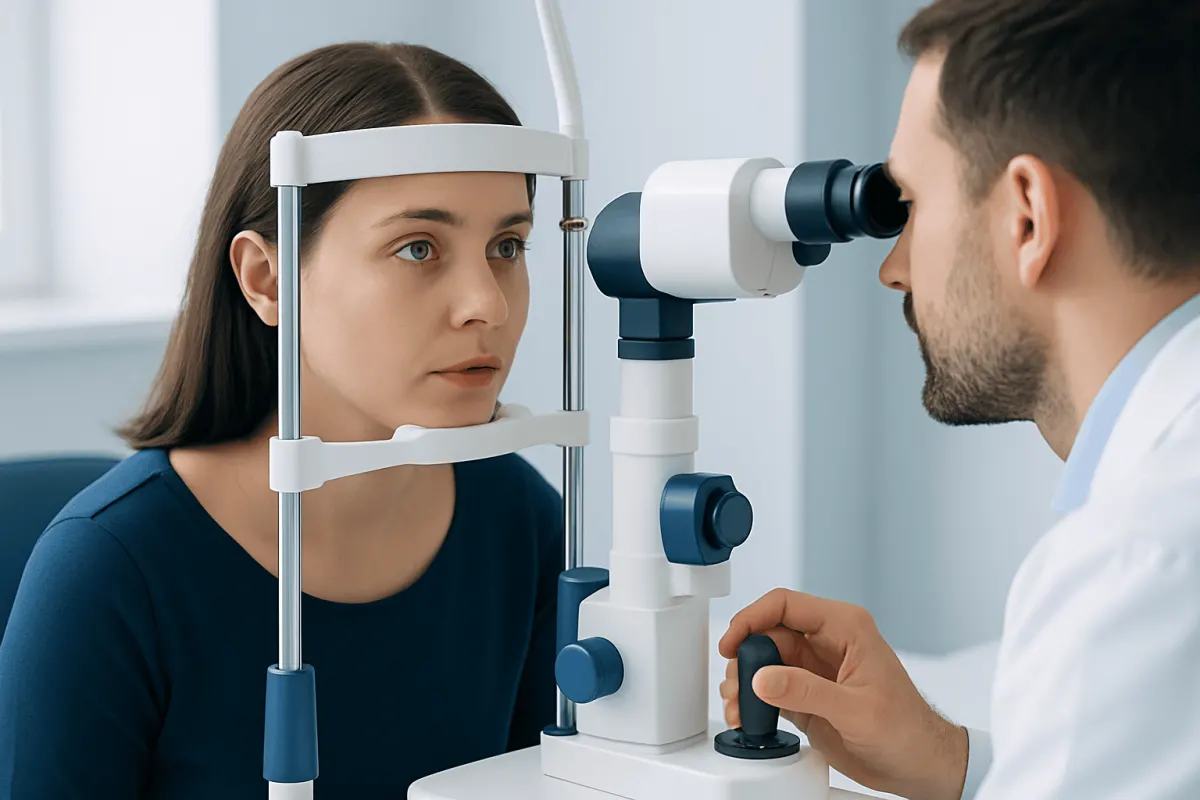
Assessment is usually performed by an ophthalmologist, often a specialist in strabismus or pediatric ophthalmology. The examination begins with a history of symptoms, onset, prior eye problems, injury, surgery, and general health. For children, clinicians also ask about developmental history, family history of strabismus, and whether caregivers have observed head tilting or eye drifting.
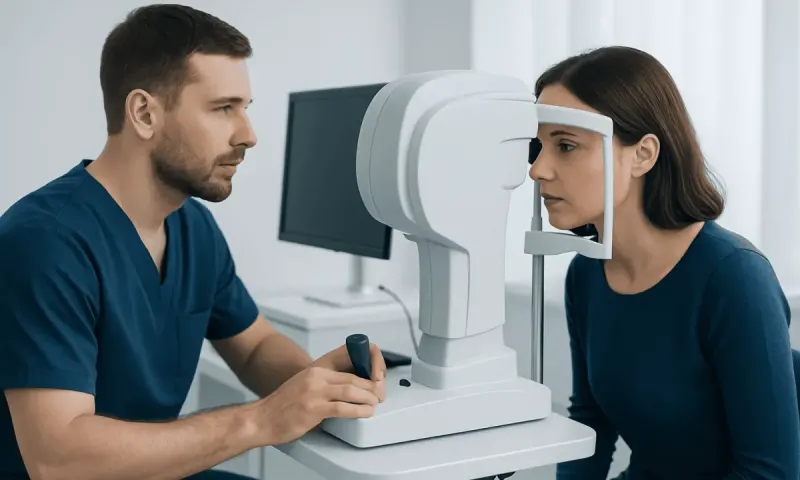
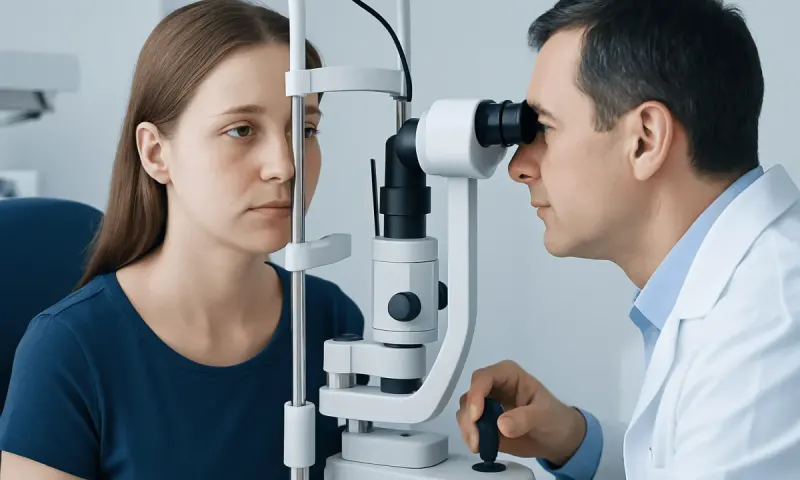
Testing commonly includes measurement of visual acuity in each eye, refraction to check whether glasses are needed, pupil examination, and an evaluation of eye health. Alignment is measured while the person looks at targets at near and far distances. Cover tests and prism measurements help quantify the deviation and determine whether it changes in different directions of gaze.
The clinician will examine eye movements to identify muscle restriction or weakness and assess whether the eyes can work together as a team. In children, this includes evaluating binocular vision and checking for amblyopia, sometimes called a lazy eye. A dilated examination may be used to assess the retina and optic nerve when indicated.
Further tests are not needed in every case. Blood tests, orbital imaging, or brain imaging may be considered when the pattern suggests thyroid eye disease, injury, inflammation, nerve involvement, or another neurological cause. Imaging is particularly relevant when hypotropia is new, rapidly changing, associated with pain, or accompanied by other neurological signs.
Treatment options and visual support
Treatment is individualized and depends on the cause, the size and stability of the deviation, visual symptoms, age, and whether there is a risk to visual development. The aim may be to improve comfortable single vision, support the development of vision in children, correct an abnormal head position, and improve eye alignment. Some small, stable deviations without symptoms may be monitored with regular review.
Glasses can improve focus and may help control certain forms of strabismus. When double vision is present, prisms incorporated into glasses can sometimes shift the image enough to help the eyes work more comfortably together. Prisms are most useful in selected stable deviations; they may be used temporarily while the cause is investigated or while a condition is changing.
For children with amblyopia, treatment may include correcting a refractive error and, when appropriate, temporarily covering or blurring the stronger eye to encourage use of the weaker eye. This treatment addresses reduced vision; it does not by itself always straighten the eyes. Follow-up is important because visual development and alignment can change as a child grows.
When a significant or persistent hypotropia is caused by eye-muscle imbalance or restriction, strabismus surgery may be considered. Surgery adjusts the pull of selected eye muscles and is planned using detailed measurements. In carefully selected situations, botulinum toxin may also be discussed. If an underlying disease such as thyroid eye disease or inflammation is present, treating that condition is an essential part of care.
Living with hypotropia and practical self-care
There is no proven home exercise that can correct all forms of hypotropia. Online exercises may be useful for a small number of specific eye coordination problems, but they should not replace an assessment because vertical misalignment has many possible causes. A clinician can advise whether any visual therapy is appropriate for an individual pattern of eye movement.
People with double vision can reduce day-to-day difficulty by using prescribed glasses or prisms consistently and by avoiding driving, climbing, or operating machinery when vision is not reliably single. Temporarily covering one eye can eliminate double vision, but it also removes depth perception and should be discussed with an eye professional, especially for children.
Keeping a record of when symptoms occur can help at appointments. Useful details include whether double vision is constant or intermittent, which direction of gaze makes it worse, whether a head tilt helps, and whether there has been recent illness, injury, or a change in medicines. Bringing older photographs can occasionally help establish whether an eye deviation has been present for a long time.
For children, caregivers can support care by attending scheduled reviews, ensuring glasses are worn as directed, and reporting changes in eye position or behavior. Reassurance is important: strabismus is common, and appropriate treatment can often improve vision comfort, alignment, or both, even though the best approach differs from person to person.
When to seek medical care
A non-urgent eye appointment is appropriate if one eye seems consistently lower than the other, a child repeatedly tilts the head, or there are ongoing problems with reading, eyestrain, or intermittent double vision. Infants and children with suspected eye misalignment should be examined promptly because early assessment can protect visual development.
New double vision or a newly noticeable vertical eye deviation should be assessed as soon as possible, particularly in an adult. This is especially important after a head or eye injury, after eye surgery, or when there is pain with eye movement, a change in eyelid position, or reduced vision.
Emergency medical care is needed if double vision begins suddenly along with severe headache, facial drooping, weakness or numbness on one side, difficulty speaking, loss of balance, confusion, or a sudden loss of vision. These symptoms can indicate a time-sensitive neurological or vascular problem and should not be attributed to eye strain alone.
Acıbadem Health Point’s multidisciplinary specialists and JCI-accredited hospitals can assess eye alignment concerns and coordinate care for international patients when further ophthalmic, neurological, or endocrine evaluation is needed.
Frequently asked questions
01Is hypotropia the same as a lazy eye?
No. Hypotropia is a misalignment in which one eye turns downward relative to the other. Amblyopia, often called lazy eye, is reduced vision caused by abnormal visual development, and it can occur alongside strabismus but is a separate condition.
02Can hypotropia go away on its own?
This depends on the cause. A temporary deviation may improve when an underlying condition is treated, while congenital or persistent muscle-related hypotropia often needs monitoring or treatment. An eye specialist can determine whether observation is appropriate.
03Does hypotropia always cause double vision?
No. Adults commonly notice double vision when a new vertical misalignment develops. Children may not report double vision because the brain can suppress the image from one eye, which is why a visible eye turn should still be evaluated.
04Can glasses correct hypotropia?
Glasses can improve focusing problems that contribute to some eye misalignments, and prism lenses may reduce double vision in selected cases. However, glasses do not correct every type of hypotropia, particularly when there is significant muscle restriction or weakness.
05Is hypotropia surgery safe?
Eye-muscle surgery is a well-established treatment when clinically indicated, but every procedure has potential risks and benefits. The surgeon discusses the planned muscles, expected goals, possibility of residual or recurrent misalignment, and individual considerations before surgery.
06Why would an adult suddenly develop hypotropia?
Acquired hypotropia can result from a problem affecting an eye muscle, its nerve supply, the tissues around the eye, or neurological pathways controlling eye movement. Sudden onset, especially with double vision or neurological symptoms, needs prompt medical assessment to identify the cause.
This article is for general information only and is not a substitute for professional medical advice. Please consult a qualified doctor about your individual situation.
Explore treatments in Turkey — costs, top hospitals & a free quote
JCI-accredited · board-certified surgeons · reply within 24h
Add us as a Preferred Source to see more of our trusted health content across Google Search, AI Overviews and Discover.