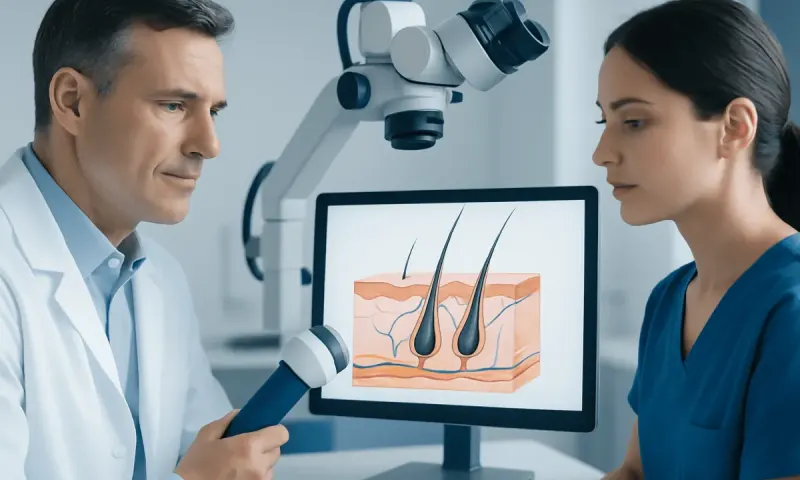
How to Grow Thicker, Fuller-Looking Hair

To grow big hair, the goal is usually to retain more of the hair that naturally grows by reducing breakage, caring for the scalp, and addressing medical causes of shedding or thinning. Hair growth speed is largely genetic, but consistent hair and health habits can help hair look fuller and reach greater length over time.
Overview: What Helps Hair Grow Bigger and Longer?
People searching for how to grow big hair are often looking for two related results: more length and a fuller, more voluminous appearance. Healthy scalp hair grows from follicles in repeating cycles. While the rate of growth is mostly determined by genetics, age, hormones, health, and ethnicity, many people can improve the amount of hair they keep by limiting breakage and identifying causes of shedding.
There is no proven method to dramatically speed up normal hair growth within days or weeks. However, a routine that is gentle on the scalp and hair shaft, combined with balanced nutrition and appropriate medical care when needed, can support healthier-looking, longer hair. For people wondering how to grow long hair naturally, the most useful approach is consistent care rather than quick-fix products.
“Big hair” can also mean volume rather than hair length. Volume depends on the number and thickness of hair fibers, natural curl pattern, styling methods, and whether the roots are weighed down by oil or product buildup. Some causes of reduced density, such as hereditary pattern hair loss, can be medically assessed and managed.
What Determines Hair Growth and Hair Volume?
Each hair follicle follows a growth phase, a transition phase, and a resting phase. During the active growth phase, the follicle makes a hair fiber that gradually lengthens. When the growth phase ends, the strand eventually sheds and a new growth cycle begins. It is normal to lose some hairs every day as part of this process.
Hair may seem as if it is not growing when the ends are breaking as quickly as new hair emerges from the scalp. Frequent heat styling, bleaching, chemical straightening, tight hairstyles, rough towel drying, and repeated friction can weaken the shaft. This is why a person may need to focus on length retention as much as growth.
Hair density and fiber diameter influence how full the hair appears. Genetics commonly affect both. Hormonal changes, iron deficiency, thyroid disorders, significant illness, rapid weight change, certain medicines, stress, and inflammatory scalp conditions can also contribute to diffuse shedding or visible thinning. A clinician can help distinguish normal variation from a treatable concern.
Can Hair Grow 2 Inches in a Month?

For most people, hair does not grow 2 inches in a month. Average scalp hair growth is often around half an inch per month, although the actual pace varies between individuals and across different areas of the scalp. Some people may notice slightly faster or slower growth at different times of life.
Products advertised as rapid-growth solutions cannot reliably override the biology of the hair cycle. A new shampoo, oil, or supplement may make hair feel softer, reduce breakage, or improve shine, but it should not be expected to create an extra 2 inches of true scalp growth in one month.
A helpful way to track progress is to take photos under similar lighting every few months rather than checking daily. This can show whether hair is gaining length and whether the overall hairline, part width, or density is changing. If shedding is persistent or dramatic, medical evaluation is more useful than repeatedly changing products.
How Can I Make My Hair Bigger?
To make hair look bigger, focus on approaches that protect density and create lift without damaging the strands. A haircut with carefully placed layers may improve the appearance of volume for some hair types. Changing the part, using lightweight conditioning products on the mid-lengths and ends, and avoiding heavy oils at the roots can also help prevent hair from looking flat.
Gentle drying methods matter. Hair is more vulnerable when wet, so it should be blotted with a soft towel or T-shirt rather than rubbed vigorously. A wide-tooth comb can be useful for detangling, beginning at the ends. When using a blow dryer or heated tools, lower heat settings and a heat protectant may reduce damage.
People should avoid repeatedly pulling hair tightly into ponytails, braids, buns, extensions, or head coverings that create tension at the hairline. Long-term traction can lead to breakage and, in some cases, traction alopecia. Hair loss caused by pulling should be addressed early; see traction alopecia for more information about this condition.
- Choose styling habits that minimize pulling and high heat.
- Wash often enough to keep the scalp comfortable and free of buildup.
- Use conditioner to reduce friction and ease combing.
- Consider professional advice before chemical coloring, relaxing, or frequent bleaching.
Can Hair Grow 12 Inches in a Year?
Hair may grow several inches over a year, but 12 inches in one year is faster than typical for most people. Since average growth is commonly about half an inch monthly, many people gain closer to several inches in a year if they retain their length. Genetics and the length of the active growth phase make a meaningful difference.
For someone learning how to grow long hair, reducing breakage is often the most practical target. Trimming split or damaged ends does not make hair grow faster from the root, but removing severely split sections may keep splits from traveling farther up the shaft. The right trimming schedule varies with hair texture, damage, and styling habits.
“Natural” hair care does not have to mean avoiding all products. It means choosing evidence-informed, tolerable practices that suit the person’s hair and scalp. Oils may reduce friction for some people but can irritate others or worsen scalp buildup. Essential oils can cause contact dermatitis and should not be treated as a substitute for evaluation of hair loss.
Can Thick Hair Grow Fast?
Thick hair can grow at the same general rate as finer hair, but thickness does not necessarily mean faster growth. Hair thickness describes the diameter of individual strands and sometimes the overall number of hairs on the scalp. Growth speed is mainly related to follicle biology and the hair cycle rather than how thick the hair appears.
Thick, curly, coily, or textured hair may appear to grow more slowly because shrinkage makes length less visible, or because the hair shaft is prone to dryness and breakage. Moisture-focused conditioning, low-tension protective styles, and careful detangling can help preserve length. These approaches may be especially useful for people asking how to grow long hair for women, how to grow long hair for men, or how to grow long hair for boys.
Men who notice gradual recession at the temples, thinning at the crown, or a widening scalp area may have androgenetic alopecia, also called pattern hair loss. Women may notice a widening part or reduced ponytail thickness. Early assessment may expand the available options; see androgenetic alopecia for an overview.
Nutrition, Scalp Care, and Evidence-Based Treatment Options
Hair needs adequate energy, protein, vitamins, and minerals to form normally. A varied diet that includes protein-rich foods, fruits, vegetables, whole grains, and sources of healthy fats supports general health and hair production. Restrictive diets, very low calorie intake, and rapid weight loss can trigger temporary shedding in some people.
Supplements are not automatically helpful. Biotin and other hair supplements are widely marketed, but deficiencies are uncommon in people who eat a balanced diet, and unnecessary supplements may be ineffective or interact with medical tests or medicines. Blood tests and targeted supplements may be appropriate when a clinician suspects a nutritional deficiency.
Dandruff, psoriasis, fungal infections, eczema, and other scalp conditions can cause itching, scaling, inflammation, or breakage. Treating the underlying scalp problem can improve comfort and help create a healthier environment for hair. A dermatologist may recommend medicated shampoos, topical treatments, or further testing depending on the diagnosis.
For some forms of pattern hair loss, clinically supported treatments may be considered after an individual assessment. Options can include topical medicines, prescription treatments, or selected procedures. Hair restoration may be appropriate for certain people with stable hair loss; hair transplant evaluation should be performed by an experienced medical team after discussing expectations, scalp health, and alternatives.
When to Seek Medical Care
Medical care is advisable when hair loss is sudden, patchy, painful, itchy, or associated with redness, scaling, sores, or scarring. It is also important to seek evaluation if shedding continues for several months, hair density is progressively decreasing, or hair changes occur alongside fatigue, weight changes, menstrual changes, acne, excess facial hair, or other symptoms that could suggest a health condition.
Children and teenagers with hair loss should be assessed by a qualified clinician, particularly if there are bald patches, broken hairs, scalp scaling, or behaviors such as hair pulling. Parents seeking advice about how to grow long hair for boys should prioritize scalp health, gentle grooming, sufficient nutrition, and a pediatric evaluation when hair loss is noticeable.
A doctor or dermatologist may review medical history, hair practices, medicines, recent illnesses, diet, family history, and stressors. Examination of the scalp and hair is often central to diagnosis, and blood tests may sometimes be recommended. Acıbadem Health Point’s multidisciplinary specialists and JCI-accredited hospitals can assess hair and scalp concerns for international patients and guide appropriate care.
Prompt assessment can be particularly valuable when a person suspects inflammatory or autoimmune hair loss, as early treatment may help preserve follicles. Dermatology assessment can help identify the cause and create a treatment plan tailored to the individual.
Frequently asked questions
01How to grow big hair quickly?
Hair cannot usually be made to grow dramatically faster in a short period. The most effective steps are reducing breakage, avoiding tight or damaging styles, maintaining a healthy scalp, and addressing any medical cause of shedding. Styling methods can create temporary volume while longer-term care supports hair retention.
02How to grow long hair faster naturally?
A balanced diet, adequate protein intake, gentle grooming, and limiting heat and chemical damage can help hair stay healthy as it grows. Natural oils or masks may improve softness for some people, but they do not reliably speed growth from the follicle. Persistent shedding or thinning should be discussed with a clinician.
03How to grow big hair for men?
Men can support healthier-looking hair by using gentle hair care, avoiding repeated tight styling, managing scalp conditions, and eating a nutritionally adequate diet. Gradual temple or crown thinning may be hereditary pattern hair loss, which can be assessed by a dermatologist. Earlier evaluation may help clarify suitable treatment options.
04How to grow long hair for women?
Women can support length retention by minimizing bleaching and high heat, using conditioner, detangling carefully, and avoiding hairstyles that pull at the scalp. New diffuse shedding after childbirth, illness, rapid weight loss, or a major stressor can occur and is often temporary, but ongoing loss needs assessment. Hormonal, thyroid, iron-related, and scalp causes may be considered.
05Does trimming hair make it grow faster?
Trimming does not change the growth rate at the scalp. However, removing damaged ends can improve the hair’s appearance and may reduce further splitting or breakage. This can help some people retain more length over time.
06Are hair growth vitamins necessary?
Hair vitamins are not necessary for everyone and may not help unless there is a genuine nutritional deficiency. A clinician can assess whether diet, medical history, or blood tests suggest a need for specific supplementation. It is best to avoid high-dose supplements without professional guidance.
This article is for general information only and is not a substitute for professional medical advice. Please consult a qualified doctor about your individual situation.
Hair transplant in Turkey — costs, graft counts & a free assessment
JCI-accredited · board-certified surgeons · reply within 24h
Add us as a Preferred Source to see more of our trusted health content across Google Search, AI Overviews and Discover.