How Often Does Prostate Cancer Return After Surgery?

Prostate cancer may return after surgery, but recurrence risk varies widely according to the cancer’s grade, stage, PSA level, surgical pathology findings, and whether cancer cells were close to or at the edge of removed tissue. Regular PSA monitoring is the most reliable way to identify recurrence early, often before symptoms develop.
Overview: prostate cancer recurrence after surgery
How often does prostate cancer return after surgery? Recurrence is possible after radical prostatectomy, but it does not happen to everyone. The likelihood varies substantially: it is lower for cancer that was confined to the prostate and higher when pathology shows more aggressive cancer, positive surgical margins, lymph node involvement, or spread outside the prostate.
After the prostate is removed, PSA should fall to a very low or undetectable level because normal prostate tissue is no longer present. A confirmed rise in PSA can indicate biochemical recurrence, meaning there is evidence of prostate cancer activity on blood testing even if scans do not yet show where the cancer is located.
Recurrence does not automatically mean that cancer has spread widely or that treatment will not work. Many people with a rising PSA have effective cancer Treatment Options: Surgery, Chemo, Radiation & Beyond" class="ahp-ilk">treatment options, and care is tailored to PSA patterns, pathology results, imaging findings, overall health, and personal priorities. More information about prostate cancer can help patients understand the disease and available care pathways.
How often does prostate cancer come back after surgery?
Published recurrence estimates differ because studies include people with different cancer risks and use different follow-up periods. In general, people with lower-risk, prostate-confined cancers are less likely to have PSA recurrence than those with high-grade disease, cancer extending beyond the prostate, involved lymph nodes, or cancer cells at a surgical margin.
Clinicians do not rely on one average percentage to predict an individual outcome. Instead, the surgical pathology report is reviewed alongside the PSA before surgery, Gleason Grade Group, tumor stage, margin status, lymph node findings, and PSA trend after surgery. These details provide a more meaningful estimate of recurrence risk.
Biochemical recurrence is commonly defined as a PSA level of at least 0.2 ng/mL that is confirmed by a second test after radical prostatectomy. A single small PSA change may need repeat testing, since laboratories, timing, and test sensitivity can affect results. The treating urologist or oncologist interprets PSA results in context rather than drawing conclusions from one value alone.
A PSA recurrence may remain localized to the prostate bed, involve nearby pelvic lymph nodes, or reflect disease elsewhere. Modern imaging, such as PSMA PET imaging in suitable cases, may help locate disease when PSA is rising, although scans can still be negative at very low PSA levels.
Who may be a candidate for prostatectomy?
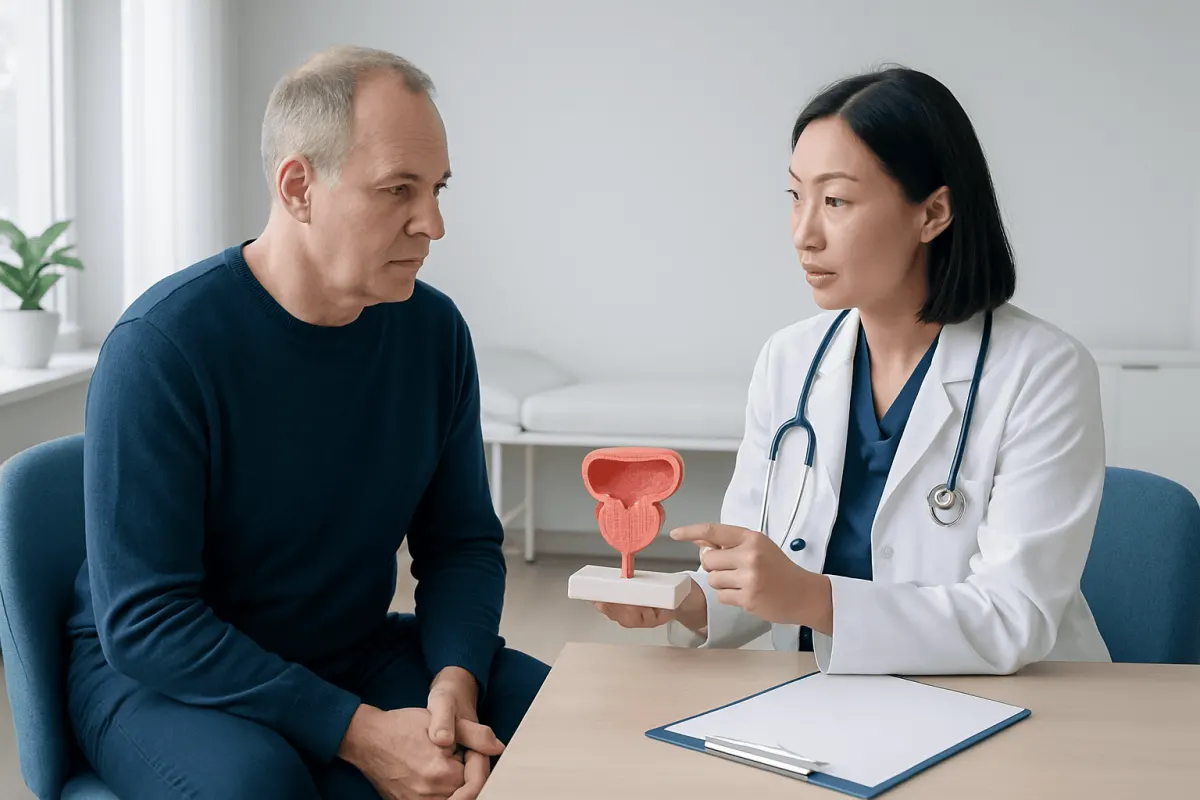
Radical prostatectomy is surgery to remove the prostate gland and usually the seminal vesicles. It may be offered to people with localized prostate cancer and selected people with locally advanced disease when their overall health and expected life expectancy make curative treatment appropriate.
The decision is individualized. A multidisciplinary team considers the cancer’s risk category, MRI and biopsy results, PSA level, possible lymph node involvement, age, other medical conditions, urinary and sexual function, and the person’s treatment preferences. Surgery is not the only approach; active surveillance, radiation therapy, and systemic treatments may be appropriate in different situations.
Patients are usually assessed before surgery with medical history review, physical examination, blood tests, and anesthesia evaluation. In some cases, imaging and discussion of pelvic lymph node dissection are needed. The team also explains possible changes in continence and erectile function, allowing time for informed decision-making.
For people considering an operation, prostatectomy information can explain the goals of surgery and the practical issues to discuss with the surgical team.
How radical prostatectomy works: procedure steps
Radical prostatectomy is performed under general anesthesia. Depending on the clinical setting and surgeon’s approach, it may be done through an open incision or minimally invasive laparoscopic or robotic-assisted techniques. The aim is to remove the prostate while preserving surrounding structures whenever this can be done safely.
During the procedure, the surgeon separates the prostate from the bladder and urethra, removes the gland and seminal vesicles, and reconnects the bladder neck to the urethra. A urinary catheter is left in place temporarily while this connection heals. Pelvic lymph nodes may be removed for examination when the risk of nodal spread is significant.
When appropriate, the surgeon may use nerve-sparing techniques to reduce the impact on erectile function. However, nerve sparing is not always advisable if cancer is close to the nerves, because complete cancer removal remains the priority. Tissue removed during surgery is examined by a pathologist to determine the final stage, grade, margins, and lymph node status.
The final pathology report helps guide follow-up. It may also indicate whether close PSA monitoring alone is suitable or whether additional treatment should be discussed if PSA becomes detectable or other high-risk features are present.
Recovery timeline, benefits, and possible risks
Hospital stay and early recovery vary with the surgical approach, health status, and any complications. Most people begin gentle walking soon after surgery and are encouraged to avoid strenuous activity and heavy lifting until their surgical team confirms it is safe. The catheter commonly remains in place for a short period, with its removal arranged at follow-up.
In the first weeks, fatigue, mild discomfort, bruising, constipation, and temporary urinary leakage can occur. Pain management, hydration, a balanced diet, and gradual activity can support recovery. The care team provides individualized instructions for wound care, catheter care, medicines, bowel management, driving, work, and exercise.
Benefits of surgery include removal of the known prostate tumor, detailed pathologic staging, and the possibility of cure for appropriately selected localized cancer. Important potential risks include bleeding, infection, blood clots, urinary incontinence, erectile dysfunction, narrowing at the bladder-urethra connection, and injury to nearby structures. Serious complications are uncommon but should be discussed before surgery.
Urinary control often improves over the months after catheter removal. Pelvic floor exercises may be recommended. Erectile function recovery can take longer and depends on age, erectile function before treatment, nerve preservation, and other health factors. Treatments for erectile rehabilitation may be discussed with the care team when appropriate.
What is the 2 week rule for prostate cancer?
The phrase “2 week rule” is not a universal medical rule for prostate cancer recurrence or for deciding treatment. It may refer to local healthcare referral targets in some systems, where a person with concerning symptoms or test results is assessed promptly, sometimes within two weeks.
Prostate cancer often develops slowly, and a short wait for an appropriate specialist assessment or for additional testing does not usually change the outcome. However, people should not ignore an abnormal PSA test, an abnormal rectal examination, or a new concerning symptom. Timely evaluation allows clinicians to clarify the cause and make an informed plan.
After surgery, follow-up timing is based on the pathology results and PSA monitoring schedule, not a fixed two-week cancer rule. The first postoperative review commonly includes discussion of recovery and pathology findings, while PSA testing is performed at intervals advised by the treating team.
When is prostate cancer most likely to return?
If prostate cancer is going to recur after surgery, it is often detected in the first several years of PSA follow-up. This is one reason PSA testing is usually more frequent early after prostatectomy. Nonetheless, later recurrence can occur, so long-term follow-up remains valuable even after years of undetectable PSA results.
A shorter time between surgery and a rising PSA may be associated with a higher likelihood of more active disease, but it is only one part of the assessment. Doctors also consider PSA doubling time, which describes how quickly the PSA is increasing. A rapidly rising PSA may require more urgent evaluation than a slow increase.
High-risk pathology features can raise the chance of recurrence. These include a higher Gleason Grade Group, cancer extending through the prostate capsule, seminal vesicle involvement, positive lymph nodes, and positive surgical margins. These features do not guarantee recurrence; they help clinicians decide how closely to monitor and when to consider further treatment.
When biochemical recurrence is confirmed, radiotherapy may be used as salvage treatment for selected patients, particularly when recurrence is thought to be in or near the prostate bed. Some people may also benefit from hormone-based treatment or other systemic therapy, depending on their situation.
What are the signs that prostate cancer is coming back?
In most cases, recurrent prostate cancer causes no symptoms at first. The earliest and most dependable sign is a detectable and rising PSA level on scheduled blood tests. This is why follow-up continues even when a person feels well and has recovered from surgery.
Urinary symptoms such as difficulty passing urine, blood in urine, or worsening pelvic discomfort can have many causes, including infection, scar tissue, bladder conditions, or treatment effects. They should be assessed but do not by themselves confirm cancer recurrence. New bone pain, unexplained weight loss, persistent fatigue, or neurologic symptoms also require medical assessment, although these symptoms are not specific to prostate cancer.
A clinician may repeat PSA testing, review the PSA doubling time, perform an examination, and arrange imaging when indicated. The purpose is to identify whether recurrence is likely local, regional, or more distant and to select treatment that matches the person’s needs.
Acıbadem Health Point’s multidisciplinary specialists and JCI-accredited hospitals support international patients with prostate cancer diagnosis, surgery, follow-up, and treatment planning.
When to seek medical care
People who have had prostate surgery should attend all planned PSA tests and postoperative appointments, even when they have no symptoms. They should contact their urology or oncology team promptly if they are told that PSA is detectable or rising, or if they are uncertain about what a result means.
Urgent medical advice is appropriate for fever, increasing redness or drainage from an incision, inability to pass urine after catheter removal, severe or worsening pain, heavy bleeding, chest pain, shortness of breath, or one-sided leg swelling. These symptoms may indicate a postoperative problem that needs timely assessment.
New persistent bone pain, weakness or numbness, unexplained weight loss, or worsening urinary symptoms should also be discussed with a doctor. Early review does not mean cancer has returned, but it helps identify the cause and ensure appropriate care.
Frequently asked questions
01Can prostate cancer return after the prostate has been removed?
Yes. Prostate cancer can return after radical prostatectomy if cancer cells remained locally, were present in nearby lymph nodes, or had spread beyond the prostate before surgery. It is most often first detected by a rising PSA level rather than symptoms.
02What PSA level means prostate cancer has returned after surgery?
A commonly used definition of biochemical recurrence is a PSA of 0.2 ng/mL or higher that is confirmed by another PSA test. Individual laboratories and clinical circumstances can vary, so results should always be reviewed with the treating specialist.
03Can a PSA rise after prostatectomy without cancer recurrence?
A low detectable PSA result may occasionally need confirmation because of laboratory variation or use of highly sensitive PSA assays. A persistent upward trend is more informative than one isolated result, and the clinical team will decide whether further testing is needed.
04Is recurrent prostate cancer curable?
Some recurrences, particularly those believed to be limited to the prostate bed or nearby tissues, can be treated with curative intent. Salvage radiation therapy is one possible approach, sometimes combined with hormone therapy, depending on the individual situation.
05How long does it take to recover from prostate cancer surgery?
Initial healing generally occurs over several weeks, but recovery is gradual. Energy levels, urinary control, and sexual function may continue improving for months or longer, and the timeline varies between individuals.
06Will surgery affect erections and urinary control?
Erectile dysfunction and urinary leakage are recognized possible effects of radical prostatectomy. Their severity and duration depend on factors such as preoperative function, age, surgical technique, nerve preservation, and rehabilitation, and treatment options are available to help manage both concerns.
This article is for general information only and is not a substitute for professional medical advice. Please consult a qualified doctor about your individual situation.
Oncology care in Turkey — second opinion and treatment plan
JCI-accredited · board-certified surgeons · reply within 24h
Add us as a Preferred Source to see more of our trusted health content across Google Search, AI Overviews and Discover.