How Much Does Facial Laser Hair Removal Cost?

How much is facial laser hair removal depends on the areas treated, the number of sessions required, the laser technology used, the clinician's expertise and the clinic's location. A consultation provides the most reliable individualized estimate, because facial hair patterns, skin tone and treatment goals vary considerably.
Overview: How Much Is Facial Laser Hair Removal?
How much is facial laser hair removal? There is no single fixed amount because clinics create estimates based on the exact facial area, hair density, skin and hair characteristics, number of planned sessions, equipment, provider qualifications and local operating costs. A consultation is the safest way to understand what treatment may involve and whether the quoted plan includes follow-up or maintenance care.
Facial laser hair removal uses concentrated light to heat pigment within the hair shaft and damage the follicle, reducing future growth. It is commonly used for the upper lip, chin, jawline, cheeks, sideburns and, for some men, the beard or neck area. It is a medical-aesthetic procedure rather than a one-time cure for all facial hair.
People searching for how much is face laser hair removal, how much is facial laser hair removal near me, or how much is facial laser hair removal nearby may see widely different offers. Rather than comparing price alone, it is important to ask who performs the procedure, which laser is used, whether it is appropriate for the person’s skin type, and how complications are managed.
What Determines the Cost of Facial Treatment?
The treated area is a major consideration. Treating a small, well-defined area such as the upper lip generally requires less time than treating the full face, dense beard hair, or the face and neck together. Clinics may quote by individual area, by session, by package, or after a personalized treatment plan, so quotations are not always directly comparable.
Hair density, hair color, skin tone and treatment response also affect planning. Coarse, dark hair often responds more readily than fine, light, gray, red or white hair because laser energy targets pigment. However, darker skin can also be treated safely when an appropriate device and conservative settings are selected by an experienced professional.
When considering how much is facial laser hair removal for women or how much is facial laser hair removal for men, sex itself is not the key cost factor. Men may have larger or denser beard-area hair, while women may seek treatment for hormonally influenced chin or upper-lip hair. Both situations require an individualized assessment and may require maintenance over time.
- Ask whether the estimate is for one session or a full course.
- Clarify which facial zones are included and whether the neck is included.
- Ask about consultation, test-patch, aftercare and maintenance-session policies.
- Choose qualified care over unverified low-cost offers.
How Facial Laser Hair Removal Works and Who May Be a Candidate

Laser devices emit a controlled wavelength of light that is absorbed mainly by melanin, the pigment in hair. The resulting heat aims to impair the follicle during its active growth phase. Since hairs do not all grow at the same time, treatment is spaced across several sessions to reach more follicles as they enter that phase.
Suitable candidates include adults with unwanted visible facial hair who have realistic expectations and can follow sun-protection and aftercare advice. A clinician considers skin tone, hair color and thickness, recent tanning or sun exposure, a history of pigment changes or scarring, current medications, and any active skin condition before recommending treatment.
Laser treatment may be less effective for very light, gray, red or white hair. New or rapidly worsening coarse facial hair, irregular periods, acne, scalp hair thinning or other hormonal symptoms should be medically assessed, as they can sometimes be associated with conditions such as polycystic ovary syndrome. Treating the hair can help with appearance, but it does not treat the underlying cause.
Pregnancy, active skin infection, a recent tan, certain photosensitizing medicines, and a tendency toward troublesome pigment changes may lead a clinician to postpone, modify or advise against treatment. A patch test may be useful, particularly for people with darker skin tones, sensitive skin or a history of reactions.
What Happens During the Procedure and Recovery?
Before treatment, the clinician confirms the treatment area, reviews health information and checks for recent tanning, irritation or products that could increase sensitivity. The facial hair is usually trimmed or shaved rather than waxed or plucked, because the laser needs pigment within the follicle. Protective eyewear is worn throughout the session.
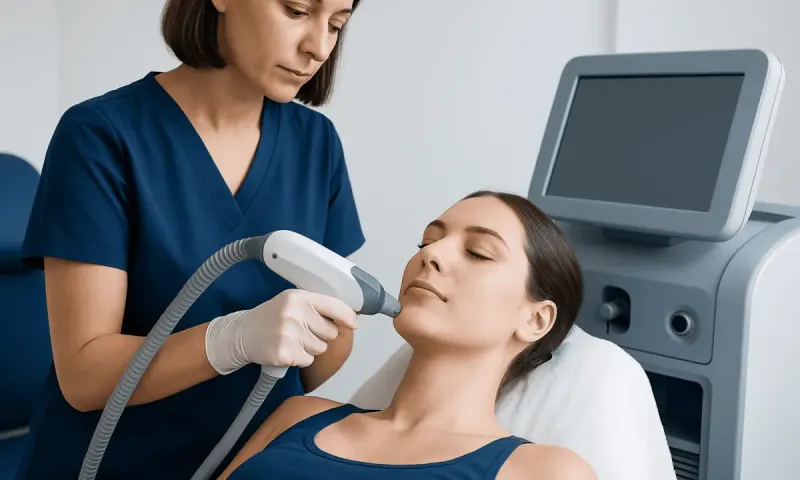
During treatment, the handpiece delivers brief pulses of light to the selected areas. Many people describe a quick warming or snapping sensation. Modern devices may use cooling systems to improve comfort and protect the skin. A small area may take only minutes, while a larger facial area or beard pattern takes longer.
Immediately afterward, mild redness, warmth and swelling around hair follicles are common and usually settle over hours to a few days. Hair does not disappear instantly; treated hairs may shed gradually over the following days or weeks. Sessions are generally spaced several weeks apart, based on the area and the person’s growth cycle.
Recovery is usually straightforward. The person should use broad-spectrum sun protection, avoid tanning, and follow the clinic’s skin-care instructions. Gentle cleansing and fragrance-free moisturizers may be appropriate, while exfoliating products, hot baths, saunas, intense exercise and irritating cosmetics may need to be avoided briefly. A specialist can explain the full process of laser hair removal and suitable aftercare during consultation.
Is Laser Hair Removal on Your Face Worth It?
Whether laser hair removal on the face is worth it is personal. It may be worthwhile for someone who wants to reduce the time and irritation associated with frequent shaving, plucking, threading or waxing, and who has hair and skin features likely to respond well. It can also be helpful for recurrent ingrown hairs related to shaving, although a clinician should assess persistent bumps or inflammation.
The benefits are usually a gradual, long-lasting reduction in hair growth and a lower need for routine hair-removal methods. Many people find that regrowth becomes finer, lighter or less dense. Results differ between individuals, and the face is hormonally responsive, so future growth can occur even after a successful course.
Potential risks include temporary redness, swelling, tenderness, blistering, crusting, pigment changes and, rarely, scarring. Incorrect settings or treatment on recently tanned skin increase risk. In some facial areas, particularly in people with hormonal influences, paradoxical hair stimulation is uncommon but possible; this means new or thicker-looking hair growth may develop nearby.
Value is therefore not defined by a low initial quote. It depends on safety, treatment suitability, likely response, total planned care and confidence in the provider. A consultation with an appropriately trained dermatologist or laser professional helps a person balance these considerations.
How Expensive Is It to Laser Off Facial Hair?
How expensive is it to laser off facial hair depends on the treatment plan, not simply the first appointment. A person may need multiple sessions, and some may later choose occasional maintenance treatment. It is useful to request a written plan that identifies the areas to be treated, expected session intervals, likely number of sessions and what may change the estimate.
Online discussions, including searches such as how much is facial laser hair removal Reddit, can offer personal experiences but cannot determine an appropriate plan or expected outcome. Experiences may differ because participants have different hair colors, skin tones, hormonal factors, treatment areas, devices and provider standards.
When comparing providers, it is reasonable to ask whether care is supervised by a dermatologist or physician, how the clinic selects laser settings for different skin tones, whether a patch test is available and what follow-up support is offered. A lower advertised fee may not represent the total expense if it excludes necessary sessions or treats only a very limited area.
Does Laser Permanently Get Rid of Facial Hair?
Laser hair removal is better described as long-term hair reduction than guaranteed permanent removal of every facial hair. It can significantly reduce the amount, thickness and visibility of hair for many people, especially when there is good contrast between darker hair and lighter skin. Individual results depend on the hair-growth cycle, hormonal factors, device selection and completion of the recommended course.
Maintenance treatment may be needed months or years later. Facial hair is particularly influenced by hormones, aging and some health conditions, so dormant follicles can become active over time. For this reason, questions about how much is permanent facial hair removal should include the possibility of future maintenance in the overall planning.
Electrolysis is another hair-removal method that treats follicles individually and may be considered for light, gray, red or white hairs that respond poorly to laser treatment. It is often slower because each follicle is treated one at a time. A qualified clinician can discuss which approach, or combination of approaches, is most suitable.
When to Seek Medical Care
A person should seek medical advice before cosmetic treatment if facial hair growth is sudden, rapidly progressing or accompanied by symptoms such as menstrual changes, acne, deepening of the voice, unexpected muscle changes or scalp hair loss. These signs do not always indicate a serious problem, but they deserve assessment for a possible hormonal or medication-related cause.
Medical review is also important for an active rash, infection, cold sore outbreak in the planned area, a history of <a href="https://acibademhealthpoint.com/diseases/keloid-scars/”>keloid scars, significant pigment changes after skin injury, or use of medicines that increase sensitivity to light. The clinician may recommend waiting until the skin is healthy or adapting the treatment plan.
After laser treatment, prompt clinical advice is appropriate for severe or worsening pain, extensive blistering, spreading redness, discharge, signs of infection or pigment changes that do not improve. Acıbadem Health Point’s multidisciplinary specialists and JCI-accredited hospitals can assess unwanted facial hair and provide individualized laser treatment planning for international patients.
Frequently asked questions
01How much is laser removal on your face?
The cost of laser removal on the face varies according to the exact areas treated, hair density, skin and hair characteristics, clinic location, equipment and number of planned sessions. A consultation is needed for an individualized estimate. It is helpful to ask whether the quote covers one session, a treatment course, or only specific areas such as the upper lip or chin.
02How many sessions are needed for facial laser hair removal?
Most people need a series of sessions because the laser works best on hairs in an active growth phase, and facial hairs grow in cycles. The exact number and spacing depend on the area, hair pattern, skin type and response to treatment. Some people also benefit from maintenance sessions later.
03Can men have laser hair removal on the face and beard?
Yes, laser treatment can reduce hair on the beard, cheeks, neck and other facial areas for men. Beard hair can be dense and coarse, so treatment planning may differ from smaller facial zones. The clinician will consider the desired beard shape, skin tone and risk of irritation or ingrown hairs.
04Is facial laser hair removal safe for darker skin?
It can be safe for darker skin when the device, settings and treatment approach are chosen carefully by an experienced professional. Not all lasers are equally suitable for every skin tone. A consultation and, where appropriate, a patch test can help reduce the risk of burns or pigment changes.
05Should facial hair be shaved before laser treatment?
Clinics commonly advise trimming or shaving the treatment area before an appointment, but the exact instructions vary. Waxing, threading and plucking are usually avoided beforehand because they remove the hair from the follicle that the laser targets. The treating clinic should provide specific preparation guidance.
06Can laser hair removal make facial hair grow back thicker?
Most people experience a reduction in hair growth, but rare paradoxical hypertrichosis can cause increased or thicker-appearing hair growth in or near a treated area. This is more often discussed in facial treatment and in people with hormonal influences. A qualified clinician can discuss this risk and alternative options before treatment.
This article is for general information only and is not a substitute for professional medical advice. Please consult a qualified doctor about your individual situation.
Hair transplant in Turkey — costs, graft counts & a free assessment
JCI-accredited · board-certified surgeons · reply within 24h
Add us as a Preferred Source to see more of our trusted health content across Google Search, AI Overviews and Discover.