How Much Does Cryolipolysis Cost?
How much is cryolipolysis depends on the body area treated, the number of applicator cycles required, the device used, the clinician’s expertise, and the location of the clinic. Because each plan is individualized, a qualified assessment is the safest way to understand the expected treatment scope and total cost.
How Much Is Cryolipolysis?
How much is cryolipolysis? There is no single medically appropriate price because treatment plans differ substantially between people. The overall amount depends on the area being treated, how many applicator cycles are needed, whether more than one session is advised, the type of cryolipolysis device used, and the clinic’s location and care standards.
Rather than choosing treatment solely by a quoted figure, it is helpful to ask what is included in the plan: clinical assessment, the number of treatment areas or cycles, follow-up appointments, aftercare advice, and management of potential side effects. A consultation should also establish whether a person’s goals are realistic for a non-surgical contouring procedure. For more information about the procedure itself, see cryolipolysis treatment.
Cryolipolysis is designed to reduce small, stubborn pockets of fat beneath the skin. It does not treat obesity, replace healthy eating or physical activity, tighten substantially loose skin, or provide the same degree of change as surgical liposuction.
How Cryolipolysis Works
Cryolipolysis uses controlled cooling to target fat cells in selected areas of the body. Fat cells are more sensitive to cold exposure than many surrounding tissues. During treatment, the device cools the fatty layer while protecting the skin through a gel pad or similar protective barrier.
Following controlled cooling, the affected fat cells are gradually processed and cleared by the body over time. This is not an immediate process. Visible contour changes commonly emerge gradually, and the full effect may take several months to assess.
The technology is often associated with the brand name CoolSculpting, but cryolipolysis is the broader term for controlled fat-freezing treatment. Devices, applicator shapes, safety features, treatment protocols, and the experience of the treating professional can differ. A medical provider should explain which device is being used and why it is suitable for the intended area.
Who May Be a Candidate for Cryolipolysis?

Appropriate candidates are usually adults who are close to a stable body weight and have a localized, pinchable area of fat that remains despite lifestyle measures. Commonly discussed areas include the abdomen, flanks, thighs, upper arms, back, under the buttocks, and beneath the chin. The suitability of each area depends on its anatomy and the available applicator.
Cryolipolysis is not a treatment for significant weight reduction. People seeking broad body-size changes may benefit more from a clinician-guided weight-management plan. It may also be less suitable when loose skin, muscle separation, or another condition is the main cause of a contour concern.
A clinician should review medical history before treatment. Cryolipolysis may not be appropriate for people with cold-related disorders, including cryoglobulinemia, cold agglutinin disease, or paroxysmal cold hemoglobinuria. Pregnancy, active skin infection or injury at the treatment site, hernias near an abdominal treatment area, altered sensation, and certain prior procedures may require postponement, additional assessment, or an alternative approach.
What Happens During a Cryolipolysis Procedure?
The process begins with a consultation and body assessment. The clinician discusses the person’s goals, checks the treatment area, reviews relevant health information, and explains expected changes and limitations. Clinical photographs may be taken to support planning and later comparison.
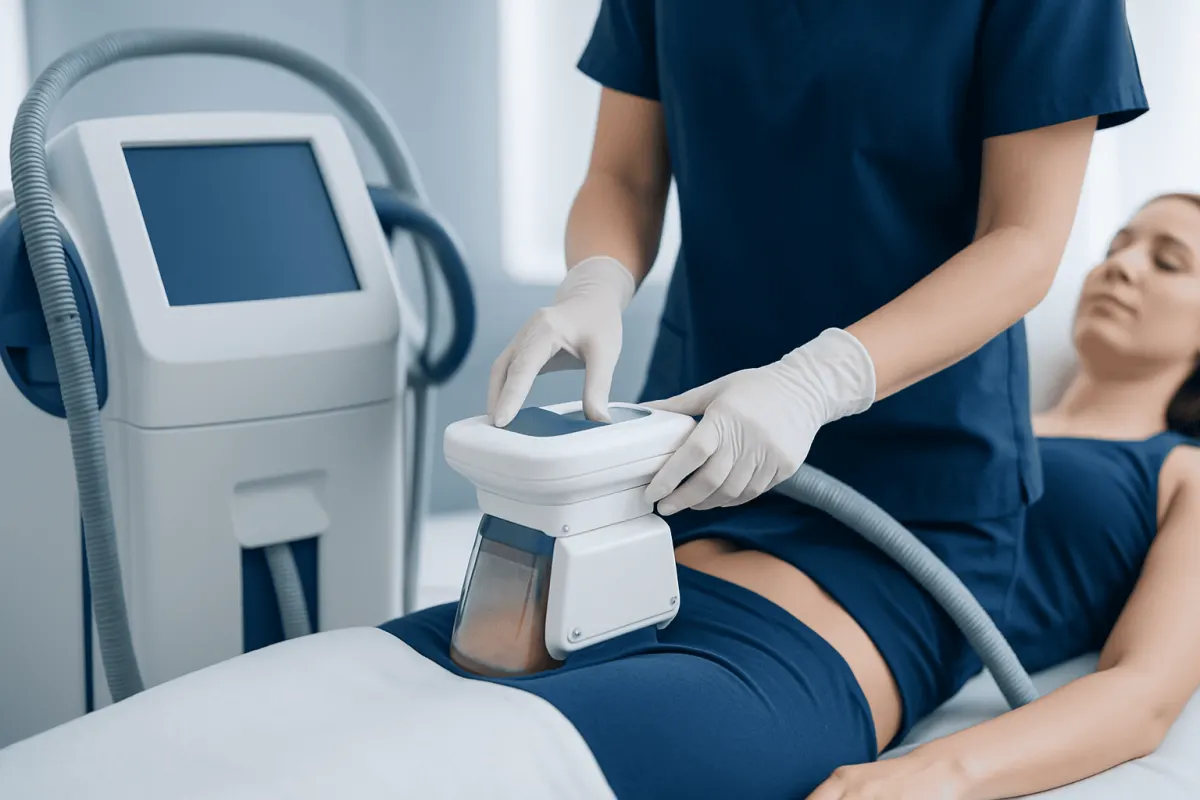
On the day of treatment, the provider marks the planned area and applies a protective gel pad. An applicator is positioned on the skin, where it gently draws or rests against the fatty tissue depending on the applicator type. People commonly feel pulling, pressure, intense cold, tingling, or aching during the first minutes; these sensations usually lessen as the area becomes numb.
The session duration varies according to the device and treatment plan. After the applicator is removed, the area may be firm, red, or temporarily shaped by the applicator. The provider may massage the treated tissue in some protocols. More than one area can sometimes be treated in the same visit, but this should be planned around comfort, safety, and clinical suitability.
How Much Is a Cryolipolysis Session?
How much is a cryolipolysis session is best answered after defining what a “session” includes. Some clinics describe a session as one visit, while others base planning on individual applicator cycles or on separate body areas. Treating the lower abdomen, for example, may require a different number of cycles than treating the under-chin area.
For this reason, asking how much is cryolipolysis per session may not reveal the total expected treatment cost. A clear written plan should identify the number of areas, cycles, appointments, and anticipated follow-up. It should also state whether review visits and any recommended additional treatment are included.
Questions such as how much is CoolSculpting for stomach or how much is CoolSculpting for chin have the same limitation: the appropriate plan depends on the amount and distribution of fat, the applicator required, and the desired degree of contour change. An in-person examination is more reliable than a standard online estimate.
How Many Cryolipolysis Sessions Do You Need?
Some people achieve a satisfactory improvement after one planned treatment of an area, while others choose or are advised to have further treatment after results have fully developed. The number of cryolipolysis sessions needed depends on the size and shape of the fatty deposit, the body area, the person’s response, and their individual goal.
A responsible provider should avoid promising a particular result before examining the area. Follow-up is generally scheduled after enough time has passed to evaluate the body’s response. If another session is considered, it should be based on the observed contour change, safety, and the person’s preferences.
Maintaining a relatively stable weight supports the longevity of the visible result. Treated fat cells are reduced, but remaining fat cells can still enlarge with weight gain. Nutrition, regular movement, sleep, and management of underlying health conditions remain important for overall health and body composition.
Is Cryolipolysis Worth It?
Whether cryolipolysis is worth it depends on what a person hopes to achieve. It may be a reasonable option for someone who wants a non-surgical, gradual reduction in a small, localized fat bulge and accepts that the result is typically subtler than surgical body contouring. It is often valued for having little or no downtime.
It may be less satisfying for people seeking weight loss, rapid change, significant skin tightening, or major reshaping of a large area. A careful consultation can help compare cryolipolysis with lifestyle-based weight management, surgical options, or other procedures according to the person’s anatomy, health status, recovery preferences, and goals.
Is CoolSculpting worth it for belly fat? It can be worthwhile for selected people with a limited, pinchable abdominal fat deposit and realistic expectations. However, an enlarged abdomen can also relate to visceral fat, bloating, muscle separation, hernia, or loose skin, none of which are addressed by cryolipolysis. A clinical examination helps distinguish these possibilities.
Recovery, Benefits, Risks and When to Seek Medical Care
Most people return to work and routine activities on the day of treatment. Temporary redness, swelling, bruising, tenderness, cramping, itching, tingling, or numbness can occur in the treated area. These effects generally improve over time, although altered sensation can persist for several weeks in some people.
Potential benefits include non-surgical treatment, no general anesthesia, and gradual contour improvement with limited interruption to daily life. However, cryolipolysis has risks. Rarely, paradoxical adipose hyperplasia can occur, causing a firm enlargement of the treated fatty tissue rather than a reduction. This may require medical assessment and can sometimes need surgical correction. Uneven contours, prolonged pain, skin changes, and nerve-related symptoms are also reasons to contact the treating team.
Medical advice should be sought promptly for severe or worsening pain, marked swelling, blistering, skin color changes, signs of infection, or any concerning symptom after treatment. A person should also speak with a doctor before treatment if they have a cold-sensitive medical condition, a hernia, a skin problem in the planned area, or uncertainty about the cause of body changes. Acıbadem Health Point’s multidisciplinary specialists and JCI-accredited hospitals can assess and treat eligible international patients considering body-contouring procedures.
Frequently asked questions
01How much is cryolipolysis in the Philippines?
Cryolipolysis pricing in the Philippines can vary between cities, clinics, devices, and treatment plans. The most useful comparison is not only the stated price, but also the number of areas or applicator cycles included, the qualifications of the provider, follow-up care, and the device’s regulatory status. A local medical consultation can provide an individualized estimate.
02How much is cryolipolysis cost in total?
The total cryolipolysis cost depends primarily on how many areas, applicator cycles, and sessions are needed to pursue the planned contour change. It may also reflect the technology used, provider expertise, facility standards, and whether follow-up visits are included. A written treatment plan is the clearest way to understand the anticipated total.
03How much is a cryolipolysis machine?
Cryolipolysis machines vary widely in design, safety features, regulatory clearance, applicators, servicing requirements, and intended clinical use. For patients, the price of a machine should not be the main indicator of treatment quality or safety. It is more important that treatment is performed by appropriately trained professionals using a suitable, properly maintained device.
04How much is CoolSculpting at LaserAway?
Prices at any named provider can change by location, treatment area, promotions, package structure, and the number of applicator cycles recommended. The provider is the appropriate source for current information about its own fees and what is included. Before proceeding, patients should ensure they understand the clinical plan rather than relying only on an advertised starting price.
05Does cryolipolysis permanently remove fat?
Cryolipolysis reduces some fat cells in the treated area, and those cells do not return in the same way after they are cleared. However, remaining fat cells can enlarge with weight gain, and untreated areas can also change over time. Stable lifestyle habits help preserve the visible contour result.
06When will cryolipolysis results be visible?
Changes usually develop gradually rather than immediately because the body needs time to process the treated fat cells. Some people notice early changes within several weeks, while the fuller result is commonly assessed over the following months. The treatment provider can advise when a follow-up review is appropriate.
This article is for general information only and is not a substitute for professional medical advice. Please consult a qualified doctor about your individual situation.
Medical weight-loss options in Turkey — costs & eligibility
JCI-accredited · board-certified surgeons · reply within 24h
Add us as a Preferred Source to see more of our trusted health content across Google Search, AI Overviews and Discover.