How Long Does Frozen Sperm Last?

Key Takeaways
- Frozen sperm does not have a built-in short shelf life when stored properly in liquid nitrogen.
- Collection quality, laboratory technique, and storage conditions matter more than the calendar alone.
- Frozen sperm is commonly used for fertility preservation before cancer treatment, surgery, or planned family-building later in life.
- Thawing can reduce sperm number and movement, so the clinic’s handling process is important.
- A fertility specialist can help decide whether sperm freezing is a good option and how many samples to store.
Frozen sperm can remain usable for many years when it is collected, processed, and stored correctly in liquid nitrogen. The exact length of time depends less on an expiration date and more on the quality of the sample, the freezing method, and the storage conditions.
Overview
How long does frozen sperm last? In practical terms, frozen sperm can last for many years, and in properly maintained cryostorage it may remain viable for decades. There is no simple “use by” date the way there is for food or medicine. Instead, sperm is preserved at very low temperatures in liquid nitrogen, where biological activity essentially pauses.
That is why sperm freezing, also called sperm cryopreservation, is used for people who want to protect future fertility before treatment or life events that might affect reproduction. It can be part of a cancer care plan, a strategy before vasectomy or surgery, or a choice for someone who wants to build a family later. For international patients, this often means freezing sperm at one point in time and arranging future treatment or use in another country, so clear records and lab communication matter as much as the freezing itself.
What matters most is not whether the sperm has been stored for a few months or many years, but whether it was collected well, frozen correctly, and kept in stable cryogenic conditions. A qualified fertility clinic can explain what storage timeline is realistic for a person’s situation and how long the facility is able to maintain the sample safely.
What Happens to Sperm When It Is Frozen?
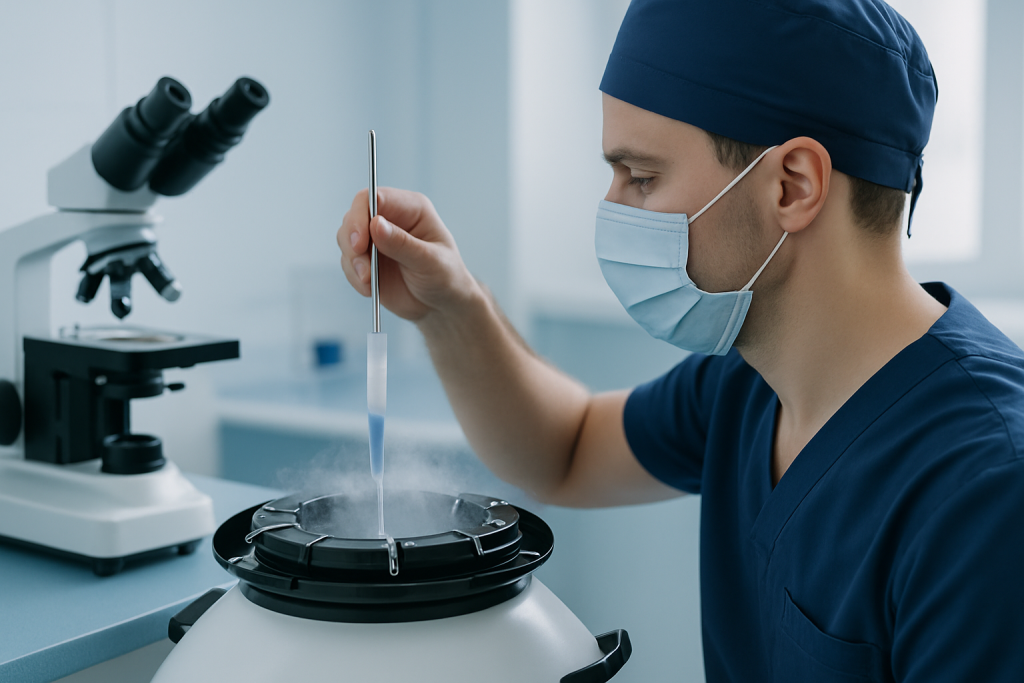
Freezing sperm slows biological processes to a near standstill. Before storage, the laboratory usually prepares the sample to protect the cells during cooling and thawing. The goal is to reduce damage from ice crystal formation and temperature shifts, since sperm cells are delicate even though the storage temperature is extremely low.
Once frozen, sperm is kept in sealed containers and stored in liquid nitrogen tanks. At these temperatures, the cells are not actively aging in the usual sense. That is why many clinics can store sperm for long periods, provided the tanks are monitored and the storage system is reliable.
After thawing, not every sperm cell will survive. Some lose motility, and some may no longer be suitable for use. Even so, frozen-thawed sperm can still be used successfully in fertility procedures such as intrauterine insemination or IVF with ICSI, depending on the sample quality and the treatment plan.
Factors That Affect How Long Frozen Sperm Remains Usable

The phrase “how long” can be misleading, because sperm viability depends on a chain of conditions rather than a single date. The first factor is the original semen quality. A sample with a higher sperm count and better movement usually gives the lab more to work with after thawing.
The second factor is the freezing method. Modern cryopreservation techniques are designed to protect sperm as much as possible during cooling. Laboratory experience, sample preparation, and storage protocols all influence whether the sperm will remain suitable for future use.
Other important factors include:
- stable liquid nitrogen storage
- secure labeling and chain of custody
- the number of vials stored
- the intended fertility treatment after thawing
- the person’s overall reproductive health at the time of freezing
If someone is storing sperm for future use abroad, it is wise to ask whether the receiving clinic can work with the freezing laboratory’s documentation and shipping requirements. A good administrative handoff helps protect both the sample and the treatment plan.
Who May Consider Sperm Freezing?
Sperm freezing is often considered by people who want to preserve fertility before a medical treatment that may affect sperm production. This may include certain chemotherapy medicines, radiation therapy, or surgery involving the reproductive system. It is also an option for people who expect a delay before trying to conceive.
Men with a history of declining sperm quality may choose to freeze samples earlier rather than later. Others may want a backup plan before vasectomy, before military deployment, or before long travel where future access to fertility care could be uncertain. In some cases, fertility preservation is chosen simply for peace of mind.
Before collecting a sample, a specialist may review medical history, medications, previous fertility concerns, and any infections or anatomical issues that could affect sperm production. That conversation helps set realistic expectations and can prevent delays later if the sperm is eventually needed for treatment.
How Sperm Is Tested, Collected, and Stored
Before freezing, the laboratory usually analyzes the semen sample to check factors such as volume, concentration, movement, and shape. This helps the team decide how many vials to prepare and which fertility treatments might later be most appropriate. In some cases, more than one sample is collected on different days to improve future options.
Collection is commonly done by masturbation into a sterile container at the clinic or, in some settings, at home with special instructions and transport timing. If a person cannot provide a sample in this way, a doctor may discuss other collection methods, depending on the clinical situation.
Once processed, the sample is divided into storage containers and labeled carefully. The sample is then cooled in a controlled manner and placed in long-term cryostorage. Good labeling, consent, and documentation are especially important when a patient may later travel to another center or country for treatment.
What to Expect When Frozen Sperm Is Used Later
When a person is ready to use frozen sperm, the sample is thawed in the laboratory and checked again. Some sperm cells may not survive the process, so the post-thaw count may be lower than the original count. For that reason, fertility planning often takes into account how many vials are available and which procedure is being considered.
Frozen-thawed sperm can be used in several ways, depending on the medical picture. In some cases, it may be enough for insemination. In others, especially when sperm numbers are limited, IVF with ICSI may be recommended because it allows a single sperm cell to be injected directly into an egg.
The success of the overall fertility treatment depends on many factors, not just the storage time. Egg quality, the partner’s fertility status, age, and the underlying reason for sperm freezing all influence the result. A fertility specialist can explain the most sensible pathway after reviewing the full reproductive history.
How to Care for a Sperm Freezing Plan
People considering sperm cryopreservation often benefit from a simple plan. It helps to ask the clinic how long samples can be stored, how they are labeled, what happens if storage fees or paperwork change, and how the sample can be transferred if care is later needed elsewhere. These practical details reduce stress later on.
It is also useful to think ahead about family-building goals. Someone who is likely to need only a few vials may have different priorities from someone who wants a larger reserve for future attempts. A fertility specialist can help decide whether one collection is enough or whether repeat banking is sensible.
General health habits also matter. Avoiding tobacco, limiting heavy alcohol use, maintaining a balanced diet, and treating medical problems promptly can support reproductive health overall. While these steps do not guarantee better frozen samples, they can improve the health of sperm at the time of collection.
When to See a Doctor
A doctor or fertility specialist should be consulted before starting sperm freezing if there is a diagnosis such as cancer, a planned vasectomy, Common Causes, Related Conditions, and When to See a Doctor" class="ahp-ilk">testicular pain, fertility concerns, or a known hormone problem. Early advice is especially helpful when medical treatment may need to begin soon, because timing can affect fertility preservation options.
It is also sensible to seek medical guidance if a person has had difficulty conceiving, very low semen volume, previous testicular surgery, or a history of injury or infection affecting the reproductive system. In these situations, the specialist may recommend testing before deciding whether sperm freezing is possible or how many samples should be stored.
For patients arranging care across borders, coordinated planning is particularly important. Acibadem Health Point’s multidisciplinary specialists and JCI-accredited hospitals diagnose and treat male fertility concerns for international patients, with attention to both clinical care and smooth follow-up. A careful consultation can help ensure the freezing plan fits the person’s health needs and future treatment goals.
Frequently asked questions
01How long does frozen sperm last in storage?
When sperm is stored correctly in liquid nitrogen, it can remain usable for many years. There is no fixed short expiration date, and the main concern is whether the laboratory keeps storage conditions stable and properly monitored.
02Does frozen sperm expire after a certain number of years?
Not in the usual sense. Frozen sperm does not age the same way it does at body temperature, so the storage duration is mainly limited by the quality of the sample and the reliability of the storage system.
03Is frozen sperm as good as fresh sperm?
Fresh sperm and frozen-thawed sperm are not identical. Freezing and thawing can reduce the number of living, moving sperm cells, but frozen sperm is still widely used in fertility treatment and can be effective.
04What happens when frozen sperm is thawed?
The laboratory warms the sample and checks how many sperm cells survived. Some cells may lose movement or viability, so the post-thaw result may be lower than the original sample, which is why planning with a specialist matters.
05Who should consider freezing sperm?
People facing cancer treatment, reproductive surgery, or a planned delay in having children often consider sperm freezing. It may also be helpful for anyone who wants to preserve fertility before a situation that could affect sperm production later.
06Can frozen sperm be shipped to another clinic or country?
Yes, in many cases it can be transferred if the proper paperwork, labeling, and transport conditions are in place. The receiving clinic should confirm that it can work with the original storage laboratory and handle the sample safely.
This article is for general information only and is not a substitute for professional medical advice. Please consult a qualified doctor about your individual situation.
Oncology care in Turkey — second opinion and treatment plan
JCI-accredited · board-certified surgeons · reply within 24h
Add us as a Preferred Source to see more of our trusted health content across Google Search, AI Overviews and Discover.