How Long Can I Eat After Tooth Filling?

Key Takeaways
- Eating too soon after a filling can lead to biting injuries if the mouth is still numb.
- Composite fillings may be ready for gentle chewing sooner than some other materials, but the dentist’s instructions should come first.
- Soft foods and chewing on the opposite side can make the first meal easier.
- Sensitivity, mild soreness, or a slight bite adjustment can happen after treatment and often settles.
- Persistent pain, a high bite, or swelling should be checked by a dentist.
Most people can eat after a tooth filling once numbness wears off, but the exact wait depends on the filling material and the type of anesthesia used. A careful first day helps protect the new filling, reduce discomfort, and lower the chance of biting the cheek or tongue.
Overview
The most practical answer to how long can i eat after tooth filling is this: many people can eat as soon as the numbness from local anesthesia fades, but it is usually wise to wait until normal feeling returns before trying to chew. If the filling was placed with a numb mouth, the biggest early risk is not the filling itself—it is accidentally biting the tongue, cheek, or lip.
The exact timing also depends on what kind of filling was used. Some modern tooth-colored fillings can be used relatively soon after treatment, while others may need a longer set time. A dentist’s specific instructions matter more than any general rule, especially if the filling was placed after a deep cavity, a cracked tooth repair, or several teeth were treated in one visit.
For people traveling for dental care, this question is especially important because the first meal may happen away from the clinic or even after returning to a hotel, airport, or home country. A clear aftercare plan helps the patient leave the appointment with confidence and avoid unnecessary discomfort later in the day.
Symptoms After a Filling

After a filling, it is common to notice temporary numbness, mild pressure, or a little sensitivity to hot, cold, or biting. These symptoms do not usually mean something is wrong. In many cases, they improve over several days as the tooth settles.
Some fillings can feel slightly “different” when the person closes the teeth together, especially during the first day. A new filling may need a small bite adjustment if it feels too high. When the bite is balanced, chewing usually feels more natural and the tooth is less likely to ache.
Typical short-term effects may include:
- numb lips, tongue, or cheek from local anesthesia
- mild tenderness when chewing
- temperature sensitivity
- a foreign-body feeling on the treated tooth
These sensations are usually temporary. If pain becomes stronger instead of improving, or if the tooth feels sharply higher than the others, the dentist should be informed.
Causes & Risk Factors
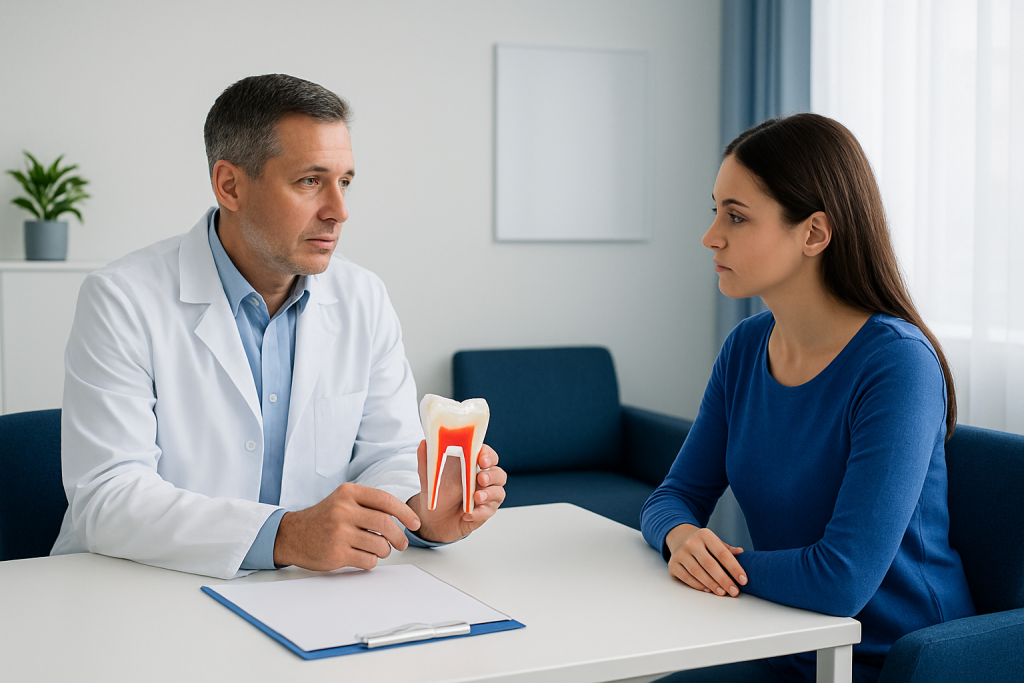
The main reason patients are told to wait before eating is the lingering effect of anesthesia. While numbness protects against pain during treatment, it can also make the mouth less aware of heat, texture, or pressure afterward. That is why many dentists recommend waiting until the numbness has fully worn off before having a meal.
The filling material also influences aftercare. Some materials harden immediately enough for normal function, while others benefit from a short period before heavy chewing. The size and location of the filling matter too: a small filling on a front tooth places less stress on chewing than a larger filling on a molar.
Certain situations make a cautious approach even more important:
- multiple fillings placed in one appointment
- large cavities or deeper restorations
- patients who tend to bite the cheek when numb
- teeth that were already sensitive before treatment
- patients with jaw strain, grinding, or clenching habits
For international patients, the added practical issue is timing. Eating may be delayed by travel, time-zone changes, or long appointments, so a simple meal plan for the same day can prevent discomfort and keep recovery predictable.
Diagnosis and What the Dentist Checks Before You Leave
There is no special test for eating after a filling, but the dentist usually checks whether the restoration sits at the right height and whether the tooth looks stable. A bite that is too high can make chewing uncomfortable and should be corrected before the patient leaves the clinic.
During the appointment, the team may also explain whether the filling material needs any extra time to fully set. This is one reason patients should ask before leaving the chair, rather than guessing later. Clear instructions reduce the chance of confusion about whether they can eat, brush, or use the tooth normally.
Good aftercare instructions often include:
- how long to wait before eating
- whether the first meal should be soft
- which side of the mouth to avoid at first
- when to return if the bite feels uneven
For people planning treatment abroad, this conversation is especially useful because it helps them know exactly what to expect once they leave the clinic and continue recovery outside the hospital setting.
Treatment Options
The main “treatment” after a filling is practical aftercare. If the mouth is still numb, waiting to eat is the safest option. Once normal feeling returns, a soft meal is usually the most comfortable first choice. Examples include yogurt, soup that is not hot, mashed vegetables, eggs, or pasta that does not require heavy chewing.
Chewing on the opposite side of the filling can help protect the treated tooth at first. It is also sensible to avoid very hard, sticky, or crunchy foods until the tooth feels settled. Items such as ice, nuts, hard candy, chewy caramel, and crusty bread can place extra pressure on a new restoration.
If the filling feels rough, high, or painful when biting, the dentist may make a small adjustment. This is a common and straightforward follow-up. In some cases, a patient may need desensitizing advice or further evaluation if symptoms do not improve as expected.
When travel is involved, treatment planning may include a same-day follow-up window or advice on what symptoms should prompt the patient to contact the clinic before flying home. Acibadem Health Point’s multidisciplinary specialists and JCI-accredited hospitals diagnose and treat dental conditions for international patients, which can be helpful when continuity of care matters across borders.
Prevention & Self-care
After a filling, the best self-care is simple and careful. Once it is safe to eat, starting with soft foods allows the tooth to adjust without unnecessary strain. Drinking water and keeping the mouth clean also support comfort during the first day.
Brushing should continue unless the dentist gives different instructions, but the area around the filling should be handled gently. If the mouth is still numb, it helps to avoid chewing gum or very hot drinks, since reduced sensation can make accidental injury more likely.
Helpful first-day habits include:
- wait until numbness fades before chewing
- choose soft, room-temperature foods
- chew slowly and on the other side if possible
- avoid sticky or hard foods for a short period
- watch for a high bite, sharp pain, or persistent sensitivity
These steps are especially useful for patients returning to work, boarding a plane, or managing recovery away from home, where it may be harder to arrange an immediate recheck.
When to See a Doctor
Mild sensitivity after a filling is common, but certain symptoms should be assessed by a dentist. A filling that feels too high, pain that increases rather than eases, or discomfort when biting may mean the restoration needs adjustment.
Patients should also seek advice if the numbness lasts much longer than expected, if they accidentally bite the lip or tongue and the injury is significant, or if swelling develops around the tooth or gums. These issues are usually manageable, but they should not be ignored.
It is sensible to contact the dental team if:
- the bite feels uneven or the tooth hits first
- pain is sharp, throbbing, or persistent
- temperature sensitivity is severe or worsening
- there is swelling, fever, or a bad taste in the mouth
- the filling seems loose, cracked, or missing
For people far from the original clinic, prompt communication with a dental provider is still important. A quick review can often clarify whether the symptom is part of normal healing or a sign that the filling needs attention.
Frequently asked questions
01How long can I eat after a tooth filling?
Many people can eat once the numbness from the anesthetic has worn off. If the dentist gives a different instruction, that advice should be followed because it may depend on the filling material and the tooth treated.
02What should I eat after a filling?
Soft foods are usually the easiest first choice, especially on the day of treatment. Foods that are not too hot and do not need strong chewing are often more comfortable.
03Can I drink right after a filling?
In most cases, drinking water is fine soon after treatment unless the dentist says otherwise. Very hot drinks are best avoided while the mouth is still numb, because reduced feeling can make it harder to judge temperature.
04Is it normal for a filling to hurt when I bite?
A little tenderness can happen at first, especially if the tooth was deep or sensitive before treatment. If the bite feels high or the pain is sharp or persistent, the filling may need a small adjustment.
05How long does sensitivity last after a filling?
Sensitivity often improves within a few days, although some teeth need a little longer to settle. If it becomes worse or does not improve, a dentist should review the tooth.
06Can I brush my teeth after a filling?
Yes, brushing usually continues as normal unless the dentist gives other instructions. It is best to be gentle around the treated tooth, especially on the first day.
This article is for general information only and is not a substitute for professional medical advice. Please consult a qualified doctor about your individual situation.
Explore treatments in Turkey — costs, top hospitals & a free quote
JCI-accredited · board-certified surgeons · reply within 24h
Add us as a Preferred Source to see more of our trusted health content across Google Search, AI Overviews and Discover.