How Can I Stop a Receding Hairline?

A receding hairline can often be slowed, and sometimes partly improved, when the cause is identified early and treatment is started promptly. Effective options depend on whether hair loss is hereditary, related to scalp inflammation, traction, hormonal changes, illness, nutrition, or another medical condition.
Overview: How Can I Stop Receding Hairline?
For people asking, “how can I stop receding hairline?”, the most useful first step is to identify why it is happening. Early assessment by a dermatologist can distinguish hereditary pattern hair loss from temporary shedding, traction from hairstyles, scalp disease, medication effects, nutritional deficiency, or hormonal and medical conditions. Treatment is usually most effective at preserving hairs that are becoming thinner rather than trying to restore follicles that have been inactive for many years.
A receding hairline often begins at the temples and front of the scalp. In many men it is part of androgenetic alopecia, a genetically influenced sensitivity of hair follicles to hormones. Women can also develop frontal thinning, widening of the part, or recession, though the pattern and possible causes may differ. A mature hairline can also develop after puberty without ongoing progressive hair loss.
It is understandable to look for quick answers online, including searches for how to stop receding hairline naturally or how to stop receding hairline Reddit discussions. However, personal experiences do not replace a scalp examination and medical history. Reliable care focuses on confirming the diagnosis, discussing realistic goals, and choosing treatment that fits the person’s age, health, pregnancy plans where relevant, and pattern of hair loss.
What a Receding Hairline May Mean
Hair grows in cycles. In pattern hair loss, susceptible follicles gradually produce shorter, finer, less pigmented hairs during successive growth cycles. This process is called miniaturization. It may first be noticeable as reduced density at the temples, a higher forehead, or difficulty styling the front of the hair.
Not all recession is genetic. Tight braids, ponytails, extensions, headwear or repeated heat and chemical processing can contribute to traction alopecia, especially along the front and sides of the hairline. Inflammation, fungal infection, autoimmune hair loss, thyroid disease, iron deficiency, rapid weight loss, major illness, and some medicines may also affect hair growth. Some causes are reversible when addressed early.
Progressive loss with a family history is often consistent with androgenetic alopecia, but a clinician should not assume this without considering alternatives. Scarring forms of alopecia are particularly important to recognize because they can permanently damage follicles and require timely specialist care.
- Gradual temple recession or crown thinning may suggest pattern hair loss.
- Broken hairs and tenderness near tight hairstyles may suggest traction.
- Round, smooth bald patches can occur with alopecia areata.
- Scaling, redness, pain, pustules, or shiny scar-like skin warrants prompt assessment.
Can Receding Hairline Be Stopped?

Receding hairline can often be slowed, but whether it can be completely stopped depends on the cause and how early treatment begins. With hereditary pattern hair loss, the goal is commonly to reduce the rate of progression, retain existing hair, and improve density where follicles are still active. Treatment usually needs ongoing use to maintain benefit.
For many adults, a dermatologist may discuss topical minoxidil, which can help extend the growth phase of hair follicles. Some men may be candidates for prescription medicines that reduce the hormonal effect contributing to male pattern hair loss. These medicines are not suitable for everyone and may have important side effects, precautions, and pregnancy-related safety considerations, so they require an individualized conversation with a qualified clinician.
For women, care may include topical minoxidil and evaluation for contributing hormonal, nutritional, or medical factors. In selected cases, clinicians may consider other prescription options based on the individual’s diagnosis and health history. No supplement, shampoo, oil, or scalp massage has been shown to reliably stop genetic hair loss on its own.
Photos taken in consistent lighting and from the same angles every few months can help track true change. Hair growth is slow, so visible improvement commonly takes several months. Stopping treatment may allow the underlying hair-loss process to resume.
How Can I Regrow My Receding Hairline?
Regrowth is most possible when follicles remain present but are producing thinner hairs. A clinician may recommend a trial of evidence-based medical treatment, combined with treatment of any underlying scalp or health issue. It is important to set realistic expectations: a hairline may become denser or more stable, but medical therapy does not always restore the original adolescent hairline.
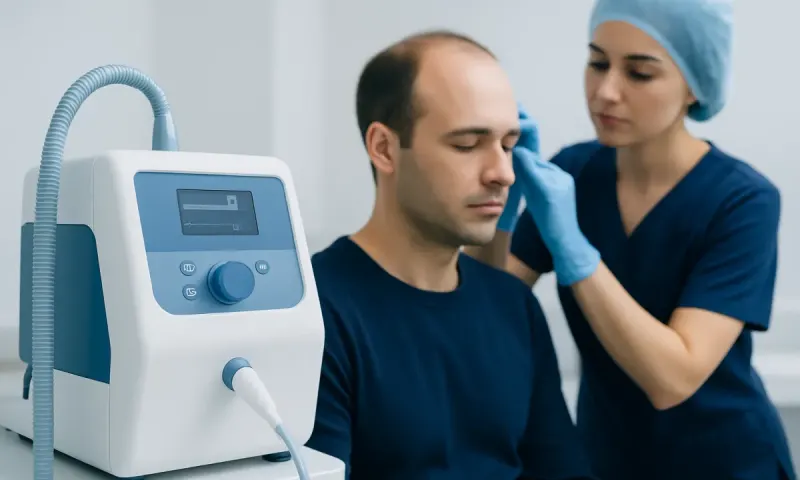
Low-level light devices and platelet-rich plasma are sometimes offered as adjunctive approaches, but evidence, protocols, costs, and expected outcomes vary. They should not be viewed as guaranteed replacements for diagnosis and established medical management. A dermatologist can explain whether these options are appropriate in an individual case.
When the pattern is stable, donor hair is adequate, and expectations are realistic, hair transplant surgery may provide a lasting way to redistribute resistant follicles into a receded area. It does not stop ongoing loss in untreated native hair, so medical treatment may still be recommended to protect surrounding hair.
Hair fibers, strategic styling, a different part, and scalp camouflage products can also improve the appearance of density while medical treatment takes effect. These options do not harm hair when used gently and removed appropriately.
Hair Transplant Procedure: How It Works, Candidacy and Recovery
Hair transplantation moves healthy follicles from a donor area, usually the back or sides of the scalp, to areas of thinning. Because donor follicles are generally less sensitive to the hormonal process driving typical pattern hair loss, they can continue growing after transfer. Techniques include follicular unit extraction, in which individual follicular units are harvested, and strip harvesting, in which a narrow strip of donor scalp is removed and divided into grafts.
Good candidates generally have a confirmed diagnosis, adequate donor density, a hair-loss pattern that can be planned safely, and realistic goals. Adults with rapidly progressing hair loss may be advised to first stabilize loss medically. The surgeon also considers scalp health, hair texture, current medicines, smoking, medical conditions, and whether the person may need future procedures as hair loss changes.
During the procedure, the scalp is numbed, grafts are harvested and then placed into tiny recipient sites designed to create a natural direction and density. The process can take several hours and may be performed in one or more sessions, depending on the treatment plan. Aftercare typically includes protecting the grafts, following washing instructions, avoiding strenuous activity for a short period, and attending follow-up visits.
Temporary shedding of transplanted hairs in the first weeks can be expected. New growth usually begins gradually after several months, with maturation continuing over many months. Potential risks include swelling, bleeding, infection, numbness, scarring, uneven growth, shock loss of existing hair, and a result that does not meet expectations. An experienced medical team discusses these risks before treatment.
How Can I Prevent Receding Hairline Naturally?
Natural measures cannot reliably block the genetic process behind androgenetic alopecia, but they can reduce avoidable hair damage and support general health. A balanced eating pattern with sufficient protein, iron, zinc, vitamin D and other nutrients is preferable to taking high-dose supplements without evidence of a deficiency. Unnecessary supplements can cause side effects or interfere with tests and medicines.
For people wondering how to prevent receding hairline, practical measures include avoiding consistently tight hairstyles, reducing heat and harsh chemical exposure, treating dandruff or scalp irritation, and handling wet hair gently. Stress management, adequate sleep, and avoiding smoking can benefit general health; they may also help reduce shedding associated with physical or emotional stress, although they do not cure hereditary hair loss.
Do not delay evaluation while trying oils, herbal products, or online remedies. Some scalp products can cause contact dermatitis or worsen inflammation. If a person chooses to use cosmetic or complementary products, patch testing and discussing them with a clinician is sensible, particularly if there is itching, redness, pregnancy, or a history of allergies.
Why Is Gen Z Balding So Fast?
There is no single reason why younger adults may feel that hair loss is becoming more common. Greater awareness, social media images, close-up photographs, and earlier attention to appearance can make normal variation or early thinning more noticeable. Genetic pattern hair loss can also begin in the late teens or twenties, particularly when there is a family history.
In some people, temporary shedding follows infection, surgery, major stress, rapid dieting, nutritional deficiency, or changes in hormones or medication. Frequent bleaching, heat styling, extensions, and tight hairstyles may add breakage or traction-related loss. These factors can coexist with hereditary thinning but are not proof that one generation is biologically “balding faster.”
Young adults should avoid self-prescribing medicines based on social media advice. An examination can clarify whether the concern represents a maturing hairline, pattern hair loss, breakage, or a treatable scalp condition. Early, evidence-based guidance can reduce uncertainty and avoid treatments that are unsuitable for the individual.
Why Am I Receding at 14? When to Seek Medical Care
A 14-year-old who notices recession should be evaluated rather than assuming adult pattern hair loss. Puberty can change the hairline shape, and a slight movement upward can be normal development. However, marked progression, diffuse thinning, hair breakage, patchy loss, itching, scaling, pain, or a strong concern about appearance should be discussed with a parent or guardian and a pediatrician or dermatologist.
Similarly, anyone wondering how to stop receding hairline at 17 should seek professional advice before using medicines marketed for adult hair loss. Treatments have age limits and safety considerations, and the correct approach depends on the diagnosis. The clinician may ask about family history, diet, illness, menstrual history where relevant, stress, hairstyles, skin symptoms, medicines, and recent changes in weight or health.
Medical care should also be sought for sudden shedding, bald patches, scalp inflammation, loss of eyebrows or body hair, or hair loss accompanied by fatigue, weight change, menstrual changes, or other symptoms. Prompt assessment is especially important if the scalp looks shiny or scarred, because this may indicate follicle damage that needs early treatment.
Acıbadem Health Point’s multidisciplinary specialists and JCI-accredited hospitals diagnose and treat hair and scalp conditions for international patients, including evaluation of suitable candidates for medical therapy or hair restoration procedures.
Frequently asked questions
01How can I stop receding hairline in men?
For men, a dermatologist first confirms whether the cause is androgenetic alopecia or another condition. Proven options may include topical minoxidil and, for appropriate adults, prescription medicines that target hormonal drivers of hair loss. Starting early often gives the best chance of preserving existing hair.
02How can I stop receding hairline in women?
Women with a receding hairline should have the pattern and possible contributors assessed, including traction, hormonal factors, thyroid disease, nutritional deficiency, and inflammatory scalp disorders. Topical minoxidil may be recommended for some women, while other treatment choices depend on the diagnosis and medical history. Tight hairstyles should be avoided if traction is suspected.
03Can a receding hairline grow back naturally?
Hair may grow back when the cause is temporary shedding, traction caught early, nutritional deficiency, or a treatable scalp condition. Genetic pattern hair loss usually does not fully reverse naturally, although healthy hair practices can reduce breakage and support overall scalp health. Medical treatment may help preserve and thicken hairs that are still active.
04Does minoxidil work for a receding hairline?
Minoxidil can help some people slow hair loss and improve density, particularly when follicles are miniaturized rather than completely inactive. Results vary and take several months of consistent use. A clinician or pharmacist can advise on suitability, safe use, and what to expect.
05Is a receding hairline always male pattern baldness?
No. A receding hairline may result from a mature hairline after puberty, traction from styling, breakage, autoimmune conditions, scalp inflammation, hormonal changes, illness, or nutritional factors. A gradual pattern with family history can suggest androgenetic alopecia, but diagnosis should be made by a healthcare professional.
06At what age should someone see a doctor for hairline recession?
Any child or teenager with clear or progressing hair loss should be assessed by a healthcare professional, especially if there are patches, itching, scaling, pain, or sudden shedding. Adults should also seek advice if hair loss is rapid, distressing, or associated with other symptoms. Early evaluation can identify causes that benefit from timely treatment.
This article is for general information only and is not a substitute for professional medical advice. Please consult a qualified doctor about your individual situation.
Hair transplant in Turkey — costs, graft counts & a free assessment
JCI-accredited · board-certified surgeons · reply within 24h
Add us as a Preferred Source to see more of our trusted health content across Google Search, AI Overviews and Discover.