Home Diabetes Test: Purpose, Procedure and Results

Key Takeaways
- Home diabetes tests are usually used to monitor blood sugar, not to make a final diagnosis on their own.
- Different tests measure different things, so understanding the type of test matters when reading results.
- Preparation, timing, and proper sample collection can affect accuracy.
- Abnormal or repeated results should be reviewed with a qualified clinician.
- People with symptoms of high or low blood sugar should seek medical advice rather than rely only on home testing.
A home diabetes test is a convenient way to check blood glucose or related markers outside the clinic, but it does not replace a full medical evaluation. It can help people notice patterns, monitor treatment, and decide when to speak with a doctor.
Overview
A home diabetes test is a practical first step for people who want to understand their blood sugar patterns or keep track of a known diabetes diagnosis. In most cases, the term refers to a finger-prick glucose test done with a glucometer, though some home kits may also check other markers such as HbA1c through a mailed sample.
For many patients, this kind of testing answers an immediate question: is blood sugar trending too high, too low, or stable? It can be especially useful between clinic visits, during medication adjustments, after changes in diet or activity, or when symptoms suggest that glucose may not be in a healthy range.
At the same time, a home diabetes test has limits. It provides a snapshot, not the full picture. Diagnosis, treatment planning, and interpretation of unusual patterns still belong in the hands of a healthcare professional who can connect the numbers with symptoms, medical history, and other laboratory findings.
Symptoms That May Prompt Testing
People often think about testing when they notice signs that blood sugar may be out of balance. Common symptoms of high blood glucose can include increased thirst, more frequent urination, fatigue, blurred vision, slow-healing cuts, and unexplained weight changes. Some people also report recurrent infections or feeling unusually dry and tired.
Low blood sugar can feel different. Shakiness, sweating, sudden hunger, confusion, dizziness, palpitations, and irritability may appear, especially in people already using diabetes medications. Because low glucose can become serious more quickly, it should be taken seriously even when symptoms seem mild at first.
Some people do not have clear symptoms at all, which is one reason screening matters. A home test may raise suspicion, but if symptoms are ongoing or concerning, a clinician should evaluate them rather than assuming the result alone explains everything.
Causes & Risk Factors
Diabetes develops when the body cannot produce enough insulin, cannot use insulin effectively, or both. In type 1 diabetes, the immune system damages insulin-producing cells. In type 2 diabetes, the body becomes more resistant to insulin over time, and the pancreas may not keep up with demand. Gestational diabetes develops during pregnancy and needs specific medical follow-up.
Risk is influenced by several factors, including family history, excess body weight, low physical activity, age, a history of gestational diabetes, polycystic ovary syndrome, high blood pressure, abnormal cholesterol levels, and certain ethnic or genetic backgrounds. Some medications and medical conditions can also affect glucose levels or make them harder to interpret.
For international patients, this matters because a home diabetes test may be part of a larger journey: deciding whether local results need confirmation, understanding how records from one country compare with those in another, and arranging follow-up care after travel or after a new diagnosis abroad.
How Home Diabetes Tests Work
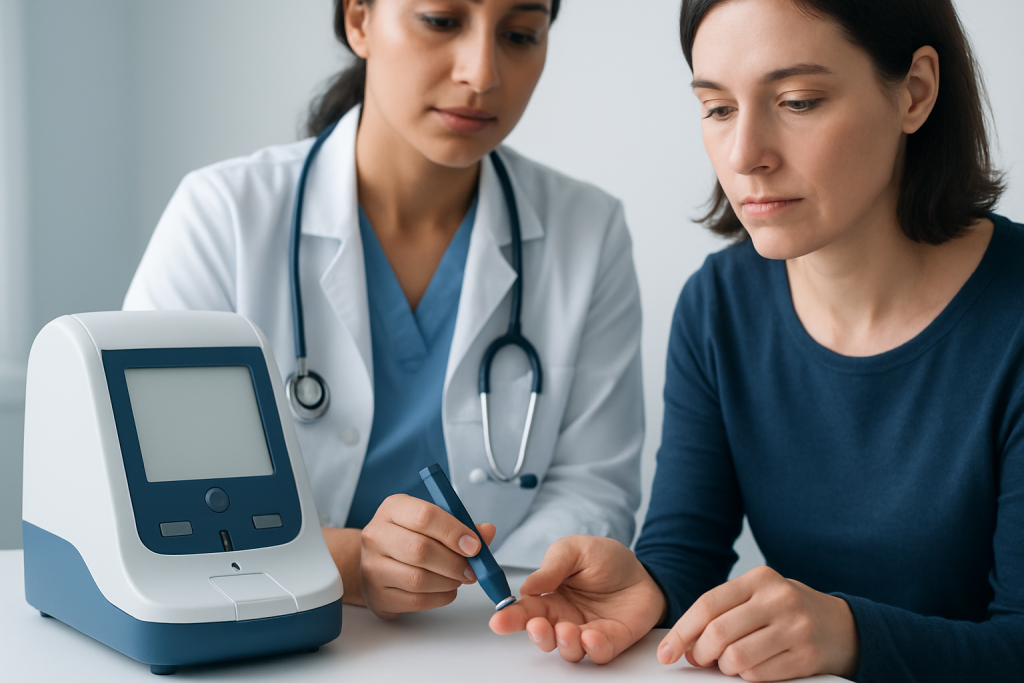
Most home blood glucose tests use a small lancet to prick the fingertip and place a drop of blood on a test strip inserted into a meter. The device estimates the current glucose level in the blood at that moment. Some people also use continuous glucose monitors, which provide frequent readings through a sensor worn on the body, although these are more advanced monitoring tools than a simple home kit.
Home HbA1c tests are different. They aim to show an average blood sugar trend over roughly the previous few months by measuring how much glucose is attached to hemoglobin in red blood cells. These kits may require a small blood sample mailed to a laboratory or processed through a specific device, depending on the system.
Each method serves a different purpose. A glucose meter helps show what is happening now, while HbA1c gives a broader view of longer-term control. Neither one should be used in isolation if results seem unusual or if symptoms do not match the numbers.
Procedure: How to Use a Home Diabetes Test
Before testing, the person should read the instructions that come with the specific device, because details can vary. Hands should be washed and dried well, test strips should be within their expiration date, and the meter should be ready to use. For many finger-prick tests, the side of the fingertip is less uncomfortable than the center pad.
After pricking the skin, a small blood drop is applied to the strip as directed. The meter then displays the reading within seconds or minutes. For mailed HbA1c kits, the process usually involves collecting the sample according to the instructions, sealing it properly, and sending it to the designated laboratory without delay.
Accuracy depends on careful technique. Dirty hands, damaged strips, expired supplies, extreme temperatures, or poor storage can affect results. If a result does not fit the way the person feels, repeating the test or asking a doctor or pharmacist for guidance is a sensible next step.
- Use clean, dry hands before collecting a sample.
- Check strip expiry dates and storage instructions.
- Follow the meter’s calibration or coding steps if required.
- Record the result, time, and any relevant food, medication, or activity notes.
Understanding Results
Interpreting a home diabetes test depends on which test was used. A glucose meter provides a single reading, so the timing of the test matters. A value taken before eating, after meals, before exercise, or during symptoms can each tell a different story. A clinician may look at patterns across multiple readings rather than one number alone.
HbA1c results are usually reported as a percentage or in a laboratory equivalent format. They help show longer-term glucose exposure, but they can be influenced by conditions that affect red blood cells, such as anemia or certain blood disorders. That means a home HbA1c test, like any screening tool, may need confirmation if there is any uncertainty.
What matters most is not only whether the number is above or below a target range, but whether it matches symptoms, medications, and overall health goals. A doctor may recommend further testing, medication review, or lifestyle changes based on the full picture.
What to Do After an Abnormal Result
An unexpected home diabetes test result should not be ignored, but it also should not lead to panic. The next step is usually to repeat the test carefully if the instructions allow it, then review the result in context: what was eaten, whether exercise occurred, whether stress or illness was present, and whether the person is taking diabetes medication.
If readings are repeatedly high, a medical assessment is important to confirm whether diabetes, prediabetes, or another condition is present. If readings are low and symptoms such as confusion, fainting, or severe weakness appear, urgent medical help may be needed. Children, pregnant patients, and people with complex medical problems should be assessed promptly when results are unusual.
Traveling patients sometimes test at home because they are between healthcare systems. In that situation, it helps to keep a written or digital log, including device type, time of day, and any symptoms, so a receiving doctor can interpret the values more reliably across borders.
Prevention & Self-care
Home testing is most useful when it supports everyday habits rather than replacing them. Balanced meals, regular physical activity, adequate sleep, and medication adherence all contribute to steadier glucose control. People already diagnosed with diabetes may use home testing to see how their routine affects their numbers and to discuss patterns with their care team.
Simple steps can improve the quality of the information gathered. Keeping supplies organized, replacing expired strips, storing equipment as instructed, and testing at the times recommended by a clinician all help reduce confusion. Recording symptoms alongside readings can also reveal useful patterns that one isolated number would miss.
Self-care should also include knowing the limits of home testing. It is not a substitute for formal screening when diabetes is suspected, and it does not replace eye exams, kidney checks, foot care, or broader follow-up for people who already live with diabetes.
When to See a Doctor
A doctor should review a home diabetes test result if readings are repeatedly outside the expected range, if symptoms continue despite normal numbers, or if the person is unsure how to interpret the result. This is especially important for anyone with risk factors for diabetes or a family history of the condition.
Medical advice should be sought sooner if there are signs of severe high or low blood sugar, dehydration, vomiting, breathing changes, confusion, chest pain, or fainting. Pregnant patients should not wait to clarify concerning readings, because glucose control during pregnancy needs timely assessment.
For people arranging care across countries, a multidisciplinary team can help confirm results, explain the next steps, and coordinate follow-up testing. Acibadem Health Point’s multidisciplinary specialists and JCI-accredited hospitals diagnose and treat diabetes for international patients, with attention to continuity of care before and after travel.
In short, a home diabetes test is a helpful tool, but it works best as part of a wider medical plan. When results are unclear or symptoms persist, a qualified clinician can determine what the numbers mean and what should happen next.
Frequently asked questions
01Can a home diabetes test diagnose diabetes?
A home test can raise suspicion and help identify patterns, but it usually does not provide a final diagnosis on its own. Diagnosis is best confirmed with clinical evaluation and laboratory testing ordered by a doctor.
02What is the difference between a blood glucose meter and an HbA1c test?
A blood glucose meter shows the blood sugar level at the moment of testing. HbA1c reflects average glucose exposure over a longer period and is usually used to assess overall control rather than immediate changes.
03How often should someone use a home diabetes test?
That depends on the person’s health status, treatment plan, and doctor’s advice. People using insulin or adjusting treatment often test more frequently, while others may only need periodic checks.
04Can home test results be wrong?
Yes. Expired strips, poor technique, contamination, and certain medical conditions can affect accuracy. If a result does not match symptoms or seems unusual, it should be repeated or reviewed with a clinician.
05What should someone do if a reading is high at home?
They should follow their care plan if one has been given, recheck the result if appropriate, and contact a healthcare professional if readings stay high. If there are symptoms such as vomiting, confusion, or trouble breathing, urgent medical help is needed.
06Is a home diabetes test useful for people without symptoms?
Yes, it can help some people monitor risk or follow a doctor’s screening plan. However, routine screening decisions should be guided by a clinician, especially when risk factors are present.
This article is for general information only and is not a substitute for professional medical advice. Please consult a qualified doctor about your individual situation.
Explore treatments in Turkey — costs, top hospitals & a free quote
JCI-accredited · board-certified surgeons · reply within 24h
Add us as a Preferred Source to see more of our trusted health content across Google Search, AI Overviews and Discover.