Hip Stretches: Benefits and How to Do Them

Key Takeaways
- Hip stretches are most useful when they are gentle, regular, and performed with good alignment.
- Tight hips can come from sitting, overuse, muscle imbalance, arthritis, or recovery after injury.
- Pain, pinching, numbness, or swelling are signals to stop and get medical advice.
- Stretching works best when paired with strengthening, walking, posture changes, and recovery time.
- People with ongoing symptoms may need a clinician or physiotherapist to tailor the routine safely.
Hip stretches can help reduce tightness, support everyday movement, and complement recovery from many common hip and lower-back complaints. The best routine is gentle, consistent, and matched to the reason the hips feel stiff in the first place.
Overview
Hip stretches are simple movements that aim to ease tightness in the muscles and soft tissues around the hip joint. They are often used to improve comfort during walking, sitting, climbing stairs, exercising, or recovering from periods of reduced activity.
The hips are built for both strength and mobility, which means they can become stiff when they are held in one position for long periods or asked to do more than they are ready for. A good stretching plan does not force flexibility; it supports it gradually, allowing the body to move with less resistance and better control.
For some people, hip stretching is part of daily self-care. For others, it is one piece of a wider rehabilitation plan after an injury, surgery, back problem, or flare-up of joint irritation. The most helpful routine is usually specific to the person, not copied from a generic list.
Symptoms of Tight Hips
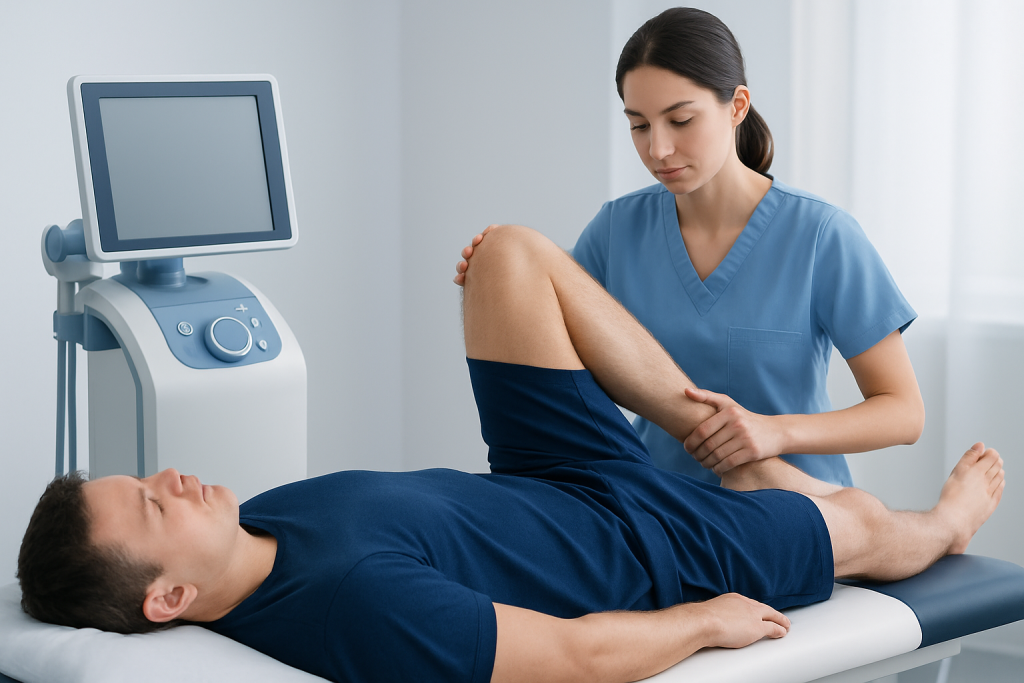
People often notice hip tightness as a pulling sensation in the front of the hip, along the outer thigh, in the buttock area, or deep in the groin. It may show up when standing up from a chair, taking a long stride, getting out of a car, or moving after a long flight or desk day.
Tight hips can also affect nearby areas. Some people feel stiffness in the lower back or knees because the body is compensating for limited hip motion. In active people, reduced hip mobility may make running, squatting, or changing direction feel less smooth than usual.
Not every uncomfortable hip sensation is simple tightness. A sharp pinch, catching feeling, visible swelling, weakness, numbness, or pain that wakes a person at night deserves medical attention rather than more stretching.
Causes & Risk Factors

Hip tightness often develops when certain muscles remain shortened for long periods or when movement patterns become less balanced. Prolonged sitting is a common reason, especially for people who travel frequently, work at a computer, or recover from illness and spend more time resting than usual.
Exercise can also play a role. Repetitive sports, uphill walking, cycling, dance, and heavy training can leave the hip flexors, glutes, or surrounding tissues feeling overworked. On the other hand, lack of regular movement can allow the hips to become stiff and less responsive.
Other possible contributors include:
- Muscle imbalances between the hips, core, and legs
- Previous injury, surgery, or scar tissue
- Osteoarthritis or other joint conditions
- Low back problems that alter movement
- Age-related loss of flexibility
Travel and recovery can matter too. Long-haul flights, unfamiliar beds, disrupted routines, and walking more or less than usual can all change how the hips feel. When someone is considering care abroad, it helps to describe these patterns clearly so the specialist can build a realistic plan around daily life, not just clinic exercises.
Diagnosis
Hip stretches are not a diagnosis on their own; they are a tool. If a person has ongoing discomfort, a clinician will first try to understand what is causing the stiffness and whether the pain is coming from the joint, muscles, tendons, back, or another structure.
Assessment usually begins with a medical history and physical examination. The clinician may ask when the symptoms started, which movements are difficult, whether the pain is constant or activity-related, and whether there has been an injury, fever, or loss of function. Range of motion, strength, gait, and posture may be checked.
Depending on the findings, imaging or other tests may be recommended. X-rays can help assess joint changes, while MRI or ultrasound may be used when soft tissue injury, inflammation, or other internal problems are suspected. A patient traveling for evaluation may benefit from bringing previous scans, medication lists, and any rehabilitation notes to make the consultation more efficient.
Treatment Options
Stretching is usually only one part of treatment. The right approach depends on why the hip is tight and whether there is pain, weakness, inflammation, or a structural problem that needs attention first.
For many people, a physiotherapy-guided program combines gentle stretching with strengthening, balance work, and movement retraining. This helps the hips move better while also giving them the support they need. Common targets include the hip flexors, gluteal muscles, rotators, hamstrings, and surrounding core muscles.
Examples of commonly used hip stretches include:
- Kneeling hip flexor stretch
- Figure-four or piriformis stretch
- Seated or lying glute stretch
- Butterfly stretch
- Gentle side-lying or standing outer-hip stretch
It is important that these movements are done slowly and without bouncing. A mild stretch is acceptable, but sharp pain is not. People with arthritis, labral problems, recent surgery, or a history of hip injury may need modifications or a different rehabilitation strategy altogether. In some cases, anti-inflammatory treatment, activity adjustment, manual therapy, injections, or surgery may be discussed, depending on the diagnosis.
How to Stretch the Hips Safely
Safety matters more than intensity. The hip region contains strong muscles and sensitive joint structures, so the goal is to ease tension rather than push through discomfort. Breathing steadily and keeping the movement controlled helps the body relax into the stretch instead of bracing against it.
A few useful principles can keep stretching productive:
- Warm up first with a short walk or light movement.
- Hold stretches gently rather than forcing deeper range.
- Keep the pelvis and lower back as stable as possible.
- Stop if there is pinching in the groin, numbness, or radiating pain.
- Stretch both sides, even if one side feels tighter.
Consistency usually matters more than duration. A short daily routine may be more useful than an occasional intense session. If a stretch increases pain later in the day, it may need to be simplified or replaced with a different exercise that matches the person’s current stage of recovery.
Prevention & Self-care
Keeping the hips comfortable often depends on how they are used throughout the day. Regular position changes, brief walking breaks, and a balanced mix of stretching and strengthening can prevent stiffness from building up.
People who sit for long periods may benefit from standing up every hour, taking a few steps, and doing a gentle hip-opening movement. Those who exercise frequently should pay attention to recovery, footwear, training load, and warm-up routines. A healthy hip routine is less about chasing flexibility and more about keeping movement varied and sustainable.
Helpful self-care habits include:
- Alternate sitting, standing, and walking when possible
- Use a warm compress before stretching if the area feels stiff
- Build glute and core strength alongside flexibility
- Increase activity gradually after illness, travel, or time off
- Seek individualized guidance if symptoms keep returning
For international patients, it can be especially useful to plan follow-up before traveling home. A clear home program, written exercise instructions, and contact with the care team can make recovery more manageable once daily routines change again.
When to See a Doctor
Medical advice is appropriate when hip stiffness lasts more than a short period, keeps returning, or limits walking, sleeping, or daily tasks. A clinician should also assess the problem if stretching does not help, if symptoms worsen, or if the person is unsure whether the issue is muscle-related or joint-related.
Urgent evaluation is important if the hip pain follows a fall or injury, if there is inability to bear weight, if the joint looks swollen or red, or if there is fever, numbness, leg weakness, or pain spreading from the back with neurological symptoms. These signs may point to something beyond simple tightness.
For people who are considering treatment while traveling, a specialist assessment can help avoid guesswork. Acibadem Health Point’s multidisciplinary specialists and JCI-accredited hospitals diagnose and treat hip-related conditions for international patients with coordinated care and follow-up planning. That kind of structure can be particularly helpful when recovery continues after returning home.
Frequently asked questions
01Are hip stretches good for everyone?
Hip stretches can help many people, but not every hip problem should be stretched in the same way. If pain is sharp, the joint is swollen, or movement feels blocked, a clinician should assess the cause first. The safest routine depends on the underlying issue.
02How often should hip stretches be done?
A short, gentle routine done regularly is often more helpful than occasional intense stretching. The ideal frequency depends on the person’s symptoms, activity level, and rehabilitation plan. A physiotherapist can suggest a schedule that fits the situation.
03Should hip stretches hurt?
A mild stretch sensation is normal, but pain is not the goal. Sharp pain, pinching, or symptoms that linger afterward suggest the stretch may be too aggressive or not suitable. The movement should be adjusted or replaced.
04Can tight hips cause back pain?
Yes, limited hip mobility can change how the lower back works during sitting, standing, and walking. This compensation may contribute to back discomfort in some people. It is still important to check whether the back itself is part of the problem.
05What is the best stretch for tight hips?
There is no single best stretch for every person. The right choice depends on which structures are tight, what movements are difficult, and whether there is pain or injury. A clinician or physiotherapist can select the most appropriate option.
06Can a person stretch after hip surgery?
That depends on the surgery and the stage of healing. After surgery, some movements are limited for safety, and others may be introduced gradually as recovery progresses. The operating team or rehabilitation specialist should guide the plan.
This article is for general information only and is not a substitute for professional medical advice. Please consult a qualified doctor about your individual situation.
Joint and spine care in Turkey — expert assessment & treatment
JCI-accredited · board-certified surgeons · reply within 24h
Add us as a Preferred Source to see more of our trusted health content across Google Search, AI Overviews and Discover.