Hip Mobility Exercises: Safe Techniques That Actually Help

Key Takeaways
- Hip mobility exercises are meant to improve movement quality, not force a joint beyond its comfortable range.
- Gentle, controlled exercises are usually safer and more effective than aggressive stretching.
- Hip stiffness can come from muscle tightness, sitting patterns, arthritis, overuse, injury, or problems in the low back.
- Persistent pain, catching, locking, or weakness deserves medical evaluation before starting or progressing exercises.
- A personalized plan may combine mobility work with strengthening, posture changes, and activity modification.
- If care is being coordinated from another country, a specialist review can help match exercises to the right diagnosis and recovery plan.
Hip mobility exercises can help reduce stiffness, improve movement quality, and support daily activities when they are chosen and performed safely. The most useful approach is usually gentle, consistent work that matches the person’s symptoms, body mechanics, and any underlying hip or spine condition.
Overview
Hip mobility exercises are designed to help the hip joint and the muscles around it move more comfortably through daily ranges such as walking, bending, getting in and out of a car, or rising from a chair. When people ask whether these exercises actually help, the answer is usually yes — but only when they are matched to the reason the hips feel stiff and performed with good control.
The hip is a deep ball-and-socket joint that depends on both joint structure and muscle balance. Tightness in the hip flexors, glutes, adductors, or surrounding tissues can make movement feel restricted. At the same time, pain, arthritis, prior injury, or lumbar spine problems may create a protective pattern that limits motion. In those cases, the goal is not to “push through” stiffness, but to restore smoother movement in a safe way.
For many people, the best starting point is not an intense stretch. It is a short, consistent routine of gentle range-of-motion work, light strengthening, and movement habits that avoid long periods of sitting. A clinician, physiotherapist, or orthopaedic specialist can help identify whether the hip itself is the issue or whether the discomfort is being referred from elsewhere.
Symptoms That Suggest Limited Hip Mobility
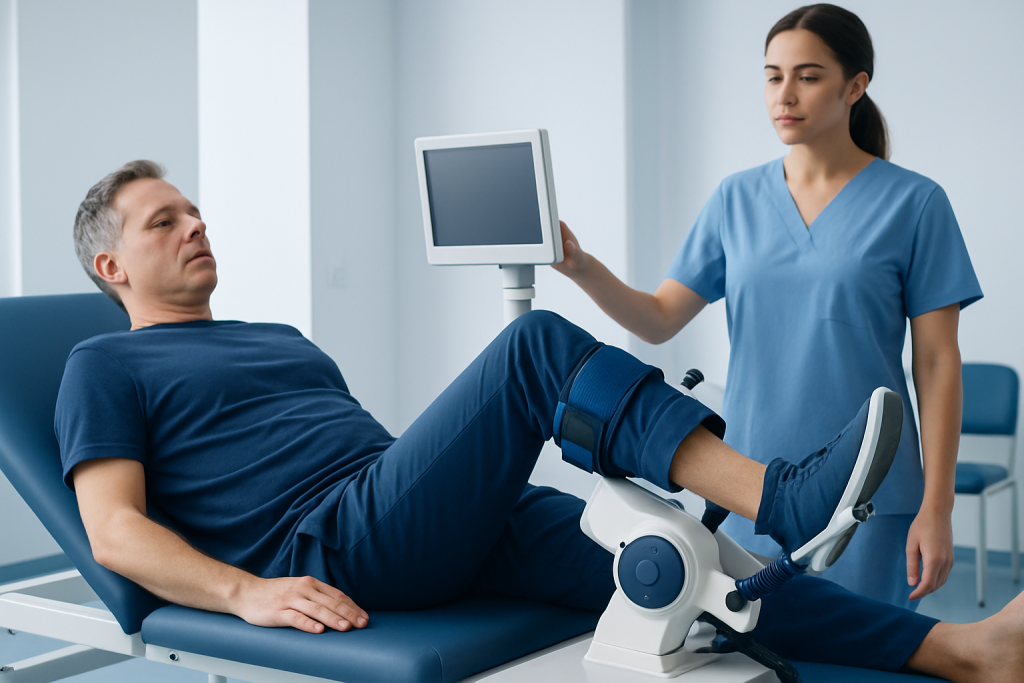
Limited hip mobility often shows up in small, practical ways before it becomes a clear medical complaint. A person may notice that they cannot squat as deeply as before, feel stiff after sitting, or need to turn the whole body instead of simply rotating at the hip. Some people describe a pulling sensation in the groin, front of the hip, outer hip, or buttock.
Other signs can include an uneven gait, difficulty putting on socks or shoes, a sense that one leg is “tighter” than the other, or pain when stepping up stairs. In athletic people, hip restriction may appear as reduced stride length, trouble changing direction, or discomfort during runs, lunges, or cycling.
Not every limitation is caused by the same problem. Stiffness without pain may reflect inactivity or mild soft-tissue tightness. Stiffness with pain, clicking, catching, locking, or weakness can point to a joint issue that deserves a proper assessment before any exercise routine is intensified.
Causes and Risk Factors
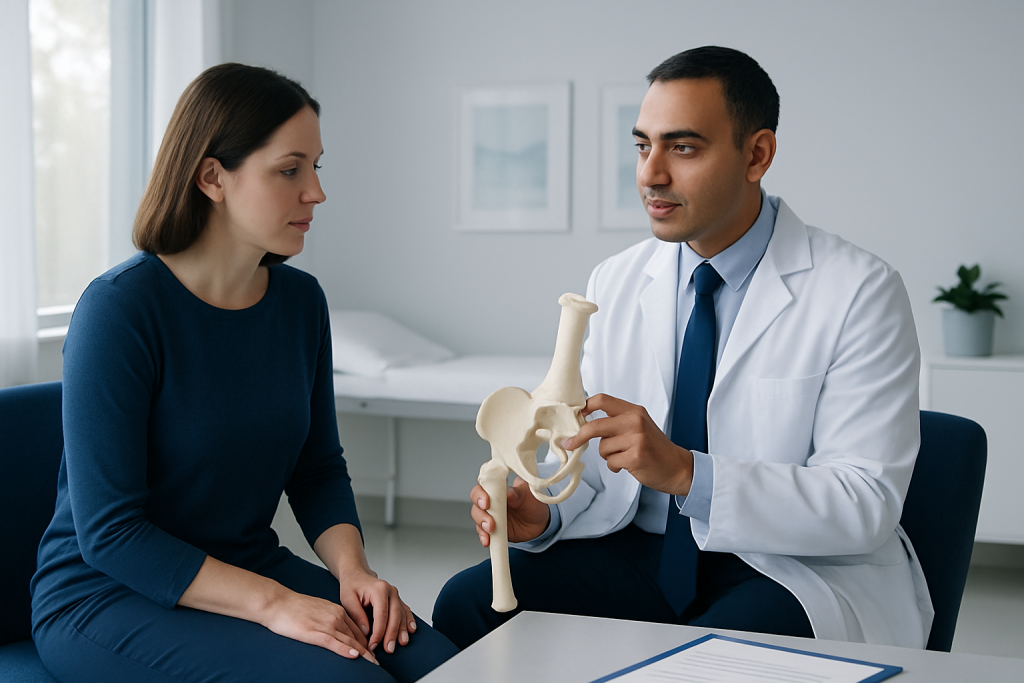
Hip mobility can decrease for many reasons, and the most useful exercise plan depends on the cause. Prolonged sitting is one of the most common contributors, since it keeps the hip flexors shortened and reduces opportunities for full extension. Repetitive activities, such as running or cycling without balanced strength work, may also leave some muscles overworked and others underused.
Age-related changes, osteoarthritis, prior injury, muscle imbalance, and post-surgical stiffness can all reduce hip motion. Sometimes the hip is not the only source of the problem. Low back conditions, sacroiliac joint irritation, and even ankle or knee limitations can change how the hip moves and make it feel tight.
People who try to improve mobility by forcing deep stretches may increase irritation rather than help the joint. Risk is higher when there is an inflammatory condition, a labral injury, severe arthritis, a recent fracture, or unexplained pain. In those situations, exercises should be selected carefully and progressed gradually.
Diagnosis: Why the Right Exercise Starts With the Right Problem
A proper assessment often begins with questions about where the discomfort is felt, when it appears, what movements make it better or worse, and whether there has been a recent injury. The clinician may look at walking pattern, squat mechanics, leg length, pelvic position, and the range of motion at both hips. These details help separate true joint stiffness from muscle guarding or compensation from another area.
Depending on the findings, the evaluation may include hands-on examination tests and, when needed, imaging such as X-rays or MRI. Imaging is not always necessary, but it can be useful when arthritis, structural impingement, labral problems, or an injury is suspected. The point of diagnosis is not simply to label a condition; it is to choose movements that are safe and likely to help.
For people travelling from abroad, this step is especially important. A clear diagnosis can prevent wasted effort on exercises that are too aggressive, too generic, or aimed at the wrong tissue. A focused review also helps coordinate rehabilitation before the person returns home.
Treatment Options and Safe Hip Mobility Exercises
Hip mobility work is usually most effective when it is gentle, controlled, and repeated often enough to create change. The aim is to improve motion without provoking a sharp pain response. If a movement causes pinching, catching, or lingering soreness, it should be modified or stopped and reviewed by a professional.
Common safe techniques include:
- Hip circles: Small, controlled circles while standing or on hands and knees to encourage smoother joint movement.
- Cat-cow with hip focus: Gentle spinal motion combined with awareness of pelvic and hip positioning.
- Kneeling hip flexor stretch: A mild stretch in a half-kneeling position, keeping the pelvis steady and avoiding over-arching the back.
- Figure-four stretch: A comfortable glute and outer-hip stretch done seated or lying down, without forcing the knee downward.
- 90/90 hip switches: Slow side-to-side transitions that can help with rotation when performed within a pain-free range.
- Supported deep squat holds: Only if comfortable and appropriate, using support to reduce strain and avoid collapsing inward.
Stretching alone is often not enough. Many people improve more when mobility work is paired with strengthening exercises for the glutes, deep hip rotators, and core muscles. Stronger support around the joint can make new range of motion more usable in daily life, not just in a stretching session.
In some cases, treatment may also include physical therapy, anti-inflammatory measures recommended by a clinician, activity modification, or management of an underlying condition such as osteoarthritis or impingement. If an exercise plan is being built after surgery or in the presence of a structural problem, the timing and sequence should be individualized.
How to Practice Hip Mobility Exercises Safely
Safety matters more than intensity. A useful rule is to work in a range that feels like mild stretch or controlled effort, not pain. Breathing steadily can help reduce muscle guarding, and slow repetition is usually better than bouncing or holding a strained position.
It also helps to warm up first. A short walk, easy stationary cycling, or gentle marching in place can make the tissues more responsive. After that, the person can choose a few exercises that address the specific limitation, rather than trying to do every stretch available.
Good technique usually includes these habits: keep movements smooth, avoid jerking, stop if symptoms travel down the leg or become sharp, and do not compare one side to the other too aggressively. Small differences are normal. The goal is not perfect symmetry; it is better comfort and better function.
Prevention and Self-care for Stiff Hips
Daily habits can make a large difference in hip comfort. Breaking up long sitting periods, standing and walking regularly, and varying work positions may help reduce stiffness that builds during the day. For people who exercise often, balancing flexibility work with strength and recovery days is usually more helpful than adding more intensity.
Sleep and recovery matter as well. Side sleeping with a supportive pillow between the knees may reduce strain for some people, while others feel better with small changes in chair height or desk setup. Footwear, training volume, and workload changes can also influence how the hips feel.
Self-care should remain practical. Heat may help some stiff muscles relax before movement, while gentle activity often works better than long rest for non-acute stiffness. If a person is recovering from a procedure or planning care across borders, a rehabilitation plan should be clear enough to continue safely after travel, with follow-up arranged in advance when possible.
When to See a Doctor
Medical evaluation is recommended if hip stiffness is persistent, worsening, or paired with pain that limits walking, sleep, or daily tasks. The same applies if there is swelling, fever, numbness, weakness, a limp that is not improving, or pain after a fall or sports injury. Mechanical symptoms such as locking, catching, or a sense that the joint is giving way should also be assessed.
It is wise to check with a clinician before starting a new exercise program if there is known arthritis, prior hip surgery, suspected impingement, or a history of significant back problems. A professional can decide whether mobility work, strengthening, imaging, or further treatment is the best next step.
For international patients, this can be especially reassuring: a specialist team can confirm the diagnosis, explain which movements are appropriate, and organize rehabilitation in a way that is realistic after returning home. Acibadem Health Point’s multidisciplinary specialists and JCI-accredited hospitals diagnose and treat hip conditions for international patients as part of coordinated care.
Frequently asked questions
01Do hip mobility exercises really work?
They can help when stiffness is related to muscle tightness, inactivity, or mild movement restriction. They are most effective when the exercises are gentle, consistent, and matched to the underlying cause of symptoms.
02Should hip mobility exercises hurt?
They should not cause sharp pain, catching, or pain that lingers afterward. A mild stretch or working sensation may be normal, but discomfort is a sign to reduce the range or choose a different exercise.
03What is the best time of day to do hip mobility exercises?
There is no single best time, but many people find them easier after a short warm-up or after light activity. The most important factor is doing them regularly enough to build a habit.
04Can hip mobility exercises help with lower back pain?
Sometimes they can, especially when limited hip motion contributes to extra strain on the lower back. However, back pain has many causes, so a clinician should assess whether the hips are part of the problem.
05How long does it take to notice improvement?
That varies depending on the cause of stiffness, how often the exercises are done, and whether strengthening and daily habits are also addressed. Some people notice a change fairly quickly, while others need a longer, guided rehabilitation plan.
06Are deep squats good for hip mobility?
They can be useful for some people, but they are not appropriate for everyone. If deep squats cause pinching, pain, or instability, a safer variation should be used instead.
This article is for general information only and is not a substitute for professional medical advice. Please consult a qualified doctor about your individual situation.
Joint and spine care in Turkey — expert assessment & treatment
JCI-accredited · board-certified surgeons · reply within 24h
Add us as a Preferred Source to see more of our trusted health content across Google Search, AI Overviews and Discover.