HIFU for Prostate Cancer: Results, Recovery and Outlook
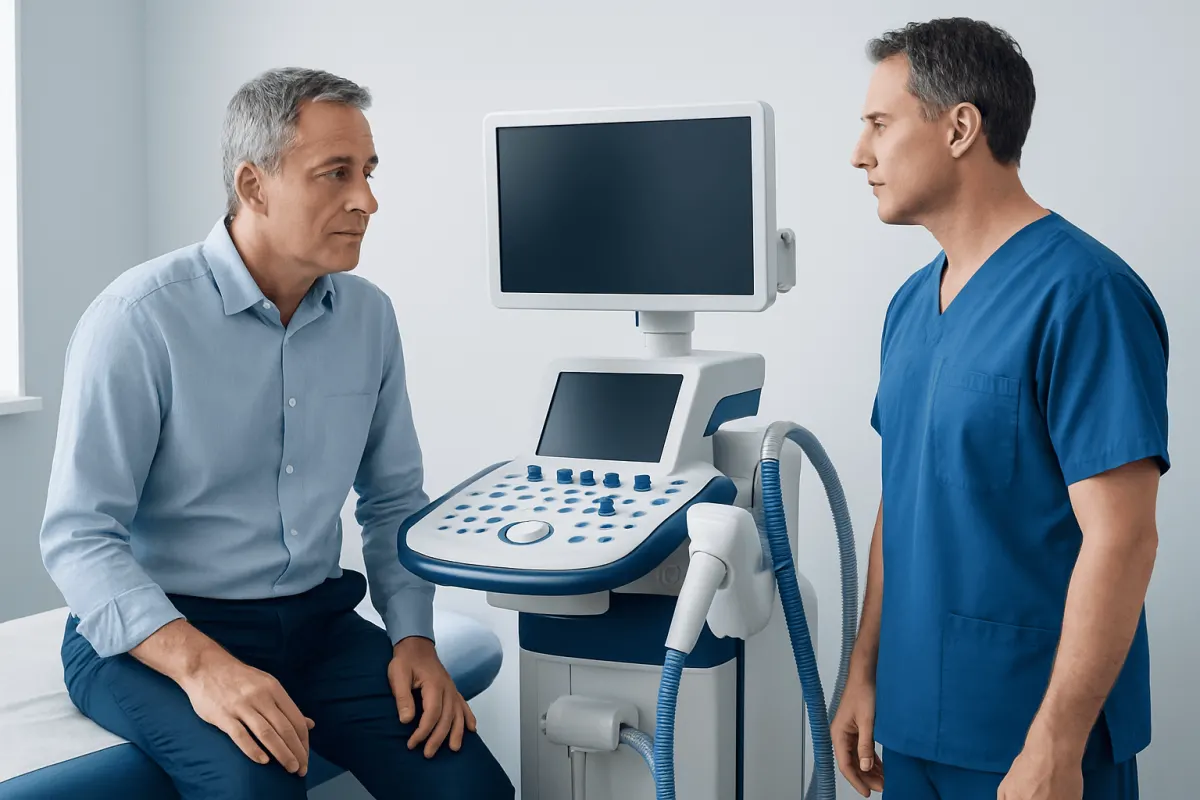
HIFU Cancer Treatment: Options for Every Stage" class="ahp-ilk">prostate cancer treatment uses concentrated ultrasound energy to heat and destroy cancerous prostate tissue without a surgical incision. It can be an option for selected people with localised disease, but its suitability, benefits and long-term outlook depend on the cancer’s features and the treatment area.
How HIFU is used for prostate cancer
HIFU, short for high-intensity focused ultrasound, is a treatment that uses focused sound waves to generate heat inside the prostate. The heat is directed at a planned area of tissue and destroys cells within that target while aiming to limit effects on surrounding structures. For prostate cancer, HIFU is usually delivered through a probe placed in the rectum while the person is under anaesthesia.
HIFU is most often considered for cancer that appears confined to the prostate, particularly when imaging and biopsy identify a limited area of clinically significant cancer. It may be used as focal therapy, meaning only the cancer-containing part of the prostate is treated. In some settings, it may be used to treat a larger portion or all of the gland. It is not usually a first choice for prostate cancer that has spread beyond the prostate.
Choosing treatment for prostate cancer is individual. A urologist and multidisciplinary cancer team consider PSA results, MRI findings, biopsy grade, the size and location of the tumour, prostate anatomy, general health and personal priorities such as preserving urinary and sexual function.
Who may be suitable for HIFU
HIFU may be discussed for people with localised, low- or intermediate-risk prostate cancer when the cancer can be accurately mapped. Multiparametric MRI and targeted biopsies are particularly important because focal treatment depends on identifying the location and extent of disease as reliably as possible.
It may be less suitable when cancer is extensive throughout the prostate, involves areas that cannot be safely targeted, has grown outside the gland or has spread to lymph nodes, bone or other organs. A very large prostate, prior prostate procedures, certain bowel conditions or calcifications within the prostate can also affect whether the procedure is technically appropriate.
Some people with low-risk disease may be better served by active surveillance rather than immediate treatment. This approach involves regular PSA testing, imaging and repeat biopsy when appropriate. Others may benefit more from surgery or radiotherapy. There is no single treatment that is best for every person, and a balanced discussion of all appropriate options is essential.
What happens before, during and after HIFU

Before HIFU, the treatment team reviews biopsy slides, PSA trends and prostate imaging. Further MRI, targeted biopsy or staging scans may be recommended to confirm that cancer is localised and to plan the treatment zone. The team also discusses possible benefits, uncertainties and complications, including how HIFU may affect future treatment choices.
During the procedure, ultrasound imaging helps guide the treatment plan. Focused ultrasound pulses are delivered to the selected prostate tissue. The procedure is commonly performed under general or spinal anaesthesia. It does not require an external incision, although a urinary catheter is usually placed temporarily because swelling can make urination difficult in the early recovery period.
After treatment, temporary urinary frequency, urgency, burning or blood in the urine may occur. Some people have difficulty passing urine after catheter removal and may need the catheter replaced for a short period. Recovery times vary, but many people return to lighter daily activities relatively quickly. The treating team provides personalised advice about catheter care, activity, sexual activity and when to contact the hospital.
- Follow-up commonly includes regular PSA blood tests.
- MRI may be used to assess the treated area and the rest of the prostate.
- A follow-up biopsy may be advised because PSA alone cannot reliably confirm that all cancer has been controlled after focal treatment.
What is the success rate of HIFU treatment for prostate cancer?
There is no single success rate for HIFU treatment for prostate cancer. Results depend on whether focal or whole-gland HIFU is used, the cancer’s risk category, how completely the cancer was mapped before treatment, the length of follow-up and the outcome being measured. Studies may report absence of significant cancer in the treated area, freedom from additional treatment, PSA changes, cancer control or preservation of function; these outcomes are not interchangeable.
In selected people with localised disease, focal HIFU can provide good short- and medium-term local cancer control while reducing treatment to the part of the prostate known to contain cancer. However, prostate cancer can be multifocal, meaning small cancer areas may exist elsewhere in the gland. This is why continued surveillance is central to the treatment plan rather than an optional extra.
Long-term comparative evidence for HIFU is less established than for radical prostatectomy and radiotherapy. A specialist can explain how evidence applies to an individual cancer and discuss the likelihood of needing additional treatment over time. Treatment decisions should not be based on a single percentage or PSA result.
Is HIFU worth it for prostate cancer?
Whether HIFU is worth it depends on the individual’s cancer characteristics, treatment goals and tolerance for uncertainty. For a suitable person with a clearly defined localised tumour, focal HIFU may offer the possibility of treating the known cancer while preserving more healthy prostate tissue. This can be appealing to people who wish to reduce the risk of some urinary or sexual side effects associated with whole-gland treatments.
However, HIFU is not automatically the least disruptive or the most effective option for every cancer. It may require close monitoring, repeat biopsy and, in some cases, further treatment. Radical prostatectomy and radiotherapy have longer-term outcome data for many risk groups. Active surveillance may avoid or defer treatment safely for some lower-risk cancers.
A useful consultation includes discussion of expected cancer control, urinary and erectile function, bowel effects, recovery, follow-up commitments and options if cancer remains or returns. People are encouraged to ask whether their cancer is appropriate for focal therapy and what alternatives would be recommended if HIFU were not chosen.
Can prostate cancer come back after HIFU treatment?
Yes. Prostate cancer can remain, recur in the treated area or be found elsewhere in the prostate after HIFU. This does not necessarily mean the procedure was performed incorrectly. Small areas of cancer may not have been detectable before treatment, or cancer cells may survive within or near the treatment zone.
PSA is monitored after HIFU, but interpreting it can be more complex than after complete prostate removal because untreated prostate tissue continues to make PSA. A rising PSA, suspicious MRI finding or concerning clinical change may lead to targeted or systematic biopsy. The goal is to identify clinically significant cancer early and decide whether treatment is needed.
Options after persistent or recurrent cancer can include repeat focal treatment, whole-gland HIFU in selected cases, surgery, radiotherapy, active surveillance or systemic treatment if disease has spread. The best approach depends on the site and extent of cancer, previous treatment and overall health. Follow-up with an experienced urology and oncology team is important.
Can I get a Blue Badge if I have prostate cancer?
A diagnosis of prostate cancer alone does not automatically qualify someone for a Blue Badge. In the United Kingdom, Blue Badge eligibility is based mainly on how a condition affects mobility, such as substantial difficulty walking, a severe disability affecting movement, or a need to travel with certain medical equipment. Rules and assessment processes can vary across England, Scotland, Wales and Northern Ireland.
Some people with prostate cancer may qualify if treatment effects, advanced disease, pain, fatigue or another health condition cause significant and lasting mobility difficulties. Eligibility is assessed by the relevant local authority, and supporting information from a clinician may be helpful.
For accurate guidance, applicants should check the current criteria through their local council or the relevant government service. A cancer nurse, GP, social worker or hospital support team may also help explain available practical and financial support during treatment.
When to seek medical care
Anyone with a raised PSA, an abnormal prostate examination, blood in the urine or semen, persistent bone pain, unexplained weight loss, or new urinary symptoms should speak with a doctor. These symptoms often have causes other than prostate cancer, but assessment can clarify what is happening and whether tests are needed.
After HIFU, urgent medical advice is needed for fever, chills, worsening pelvic pain, inability to pass urine, heavy bleeding or blood clots in the urine, severe weakness, or symptoms of a urinary infection. People should follow the discharge instructions from their own treatment team, as the expected recovery plan differs between individuals.
Acıbadem Health Point’s multidisciplinary specialists and JCI-accredited hospitals support international patients with assessment and treatment planning for prostate cancer, including discussion of appropriate local treatment options. A qualified clinician should always review personal symptoms, test results and treatment suitability.
Frequently asked questions
01Is HIFU a cure for prostate cancer?
HIFU may control or eliminate targeted localised prostate cancer in selected people, but it cannot be described as a guaranteed cure. Cancer may remain in the treated area or be present elsewhere in the prostate. Regular PSA testing, imaging and sometimes biopsy are needed to assess treatment results.
02How long does it take to recover from prostate HIFU?
Recovery varies, but many people resume light activities within days to a few weeks. A urinary catheter is commonly needed for a short time after treatment, and urinary irritation can continue while the prostate heals. The treating team gives individual guidance based on the treatment extent and recovery progress.
03Does HIFU affect erections?
HIFU can affect erectile function, although the risk may be lower with focal treatment than with treatments that remove or irradiate the whole prostate. Risk depends on age, erectile function before treatment, tumour location and whether nerves close to the prostate need treatment. Erectile difficulties may be temporary or persistent, and support is available.
04Is HIFU better than surgery for prostate cancer?
Neither HIFU nor surgery is universally better. HIFU may be appropriate for selected localised cancers and can preserve more prostate tissue, while surgery has extensive long-term evidence and removes the prostate gland. The most suitable choice depends on cancer risk, anatomy, health, priorities and willingness to undergo close follow-up.
05What follow-up is needed after HIFU for prostate cancer?
Follow-up generally includes PSA blood tests at planned intervals, clinical review and prostate MRI when indicated. Many specialists also recommend a follow-up biopsy to check the treated zone and, where appropriate, untreated prostate tissue. The exact schedule is personalised by the urology team.
06Can HIFU be repeated if cancer is found again?
In some situations, HIFU can be repeated when cancer is localised and technically suitable for further treatment. Other options may include surgery, radiotherapy, surveillance or systemic therapy, depending on where the cancer is found and how it behaves. A multidisciplinary review helps identify the safest and most effective next step.
This article is for general information only and is not a substitute for professional medical advice. Please consult a qualified doctor about your individual situation.
Persistent digestive symptoms? Get evaluated in Turkey
JCI-accredited · board-certified surgeons · reply within 24h
Add us as a Preferred Source to see more of our trusted health content across Google Search, AI Overviews and Discover.