Herpes Photos in Different Stages: Progression, Outlook and Care

Key Takeaways
- Herpes often changes shape over several days, moving from tingling or redness to blisters, open sores, and crusting.
- Photos can support understanding, but they cannot confirm herpes on their own.
- Oral herpes and genital herpes are caused by herpes simplex virus, but the location and triggers may differ.
- Testing may include a swab from a fresh lesion or blood tests in selected cases.
- Early care can reduce discomfort and lower the chance of passing the virus to others.
- People with frequent outbreaks, severe pain, or eye symptoms should seek medical advice promptly.
Herpes photos in different stages can show how lesions often begin as tingling or red bumps, then become blisters, sores, and finally crust or heal. Images may help with recognition, but a qualified clinician should confirm the diagnosis because several skin conditions can look similar.
Overview
When people search for herpes photos in different stages, they are often trying to understand whether a new sore, blister, or crusted spot could be herpes and what usually happens next. In real life, herpes lesions do not always look identical from person to person, but they often follow a familiar pattern: a warning phase, small blisters, open sores, and then healing.
Herpes is caused by the herpes simplex virus, most commonly HSV-1 or HSV-2. HSV-1 is often associated with oral cold sores, while HSV-2 more often affects the genital area, although either type can appear in either location. Because several skin problems can resemble herpes, photos are helpful for education but not for diagnosis.
For someone deciding whether to seek care, the most useful question is not only “What does it look like?” but also “How does it feel, where is it located, and how quickly is it changing?” A clinician considers the full picture, including symptoms, exposure history, and whether the person has had similar episodes before.
How Herpes Usually Progresses
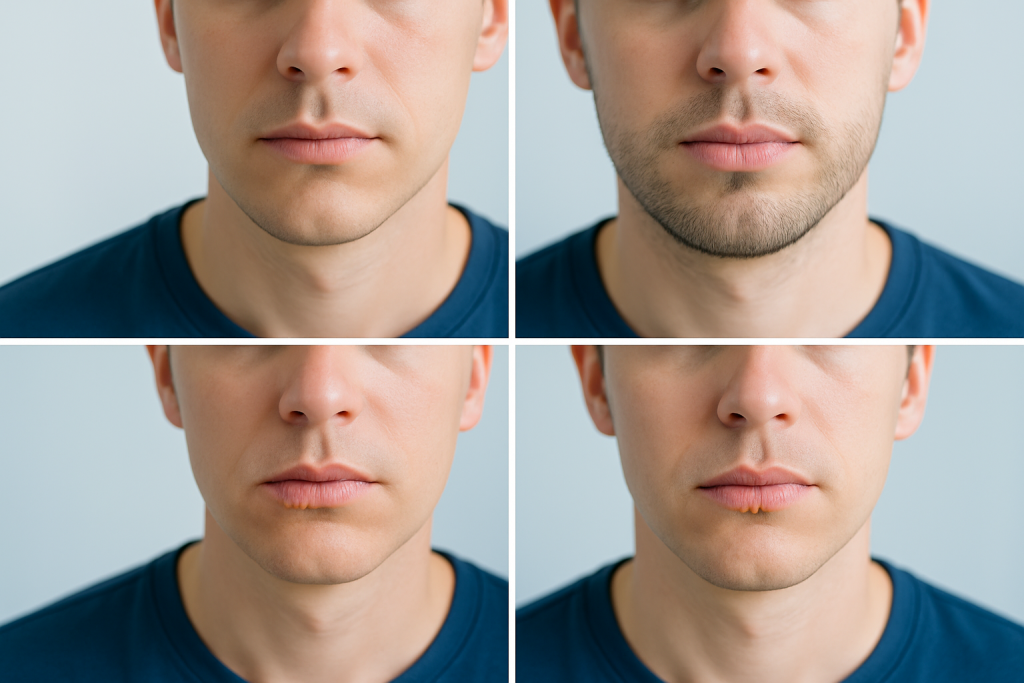
Herpes outbreaks often begin before the skin breaks open. Many people notice tingling, itching, burning, tenderness, or a patch of redness. This early stage can be subtle, which is why patients sometimes miss it until blisters appear.
In the next phase, tiny fluid-filled blisters may cluster together. These blisters can be painful or sensitive, and they may rupture easily. Once they open, shallow ulcers or sores can form. Over time, the area may dry, crust, or scab and then gradually heal. A first episode can last longer and feel more widespread than later recurrences.
Not everyone experiences each stage in a clear sequence. Some outbreaks are mild, some are more extensive, and some are confused with chafing, folliculitis, yeast infections, canker sores, impetigo, or eczema. This is one reason why visual comparison should be paired with medical evaluation when the diagnosis is uncertain.
What Herpes Can Look Like in Different Stages
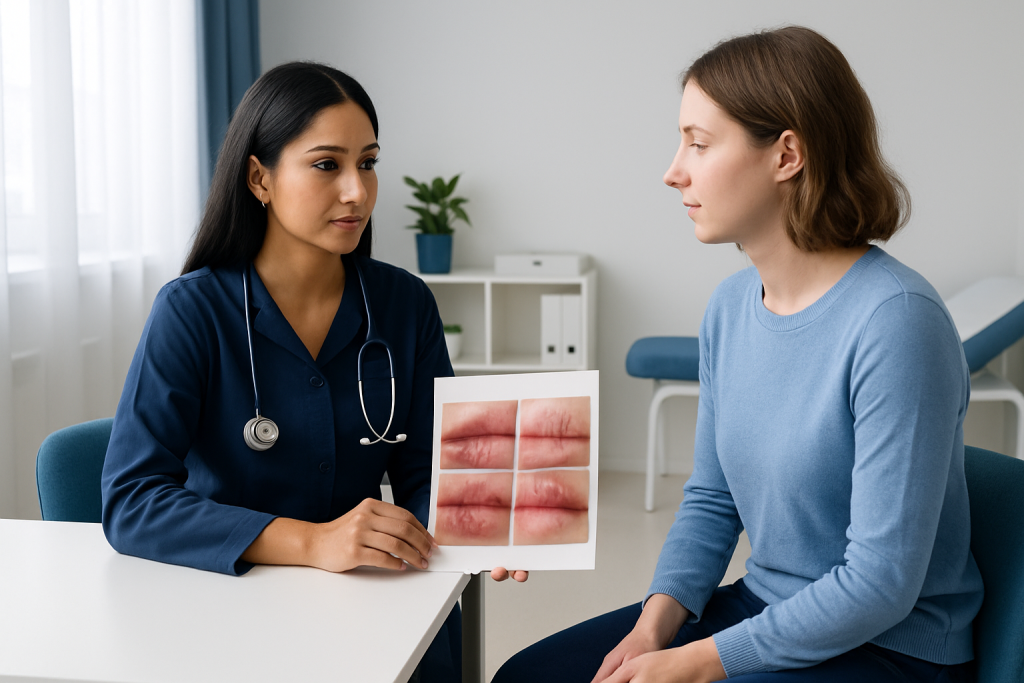
In the earliest stage, photos may show only faint redness or a small irritated patch. At this point, the skin can look nonspecific, especially on lighter or darker skin tones where color changes may appear differently. Some people have no obvious visible change yet still feel burning or tingling.
As the outbreak evolves, clusters of small blisters may appear. On the lips or around the mouth, these can look like grouped bumps that become fragile and then ooze or crust. In the genital area, lesions may be more difficult to see clearly because of moisture, friction, or hair, and they may look like small sores rather than classic blisters.
Later-stage images often show scabbing, crusting, or healing skin. The area may look dry, pink, or slightly discolored after the active sores close. Healing does not always mean the virus has gone away; it means the skin surface is repairing while the virus remains dormant in the body and may reactivate later.
- Early: tingling, redness, or tenderness
- Active: grouped blisters or fluid-filled bumps
- Open sores: shallow ulcers after blisters break
- Healing: crusting, scabbing, and fading color changes
Causes & Risk Factors
Herpes simplex virus spreads through direct contact with infected skin, saliva, or genital secretions. It is often transmitted during close personal contact, including kissing, oral sex, vaginal sex, or skin-to-skin contact with an active lesion or a site that is shedding virus. Importantly, transmission can happen even when sores are not visible.
Outbreaks may recur because the virus stays in the body after the first infection. Common triggers can include stress, illness, fever, sun exposure, friction, hormonal changes, lack of sleep, or a weakened immune system. Not everyone has obvious triggers, and the pattern can vary over time.
Risk is also influenced by the type of contact a person has had and whether they have a history of prior infection. People with suppressed immunity, pregnant people, and those with eye or widespread skin involvement need more careful assessment because the implications can be different.
Diagnosis
A diagnosis usually starts with a history and a close skin examination. A clinician may ask when the sore began, whether there was tingling or pain beforehand, whether similar episodes have occurred, and whether there was recent sexual or close contact that could have exposed the person to herpes.
If a fresh lesion is present, a swab test from the sore is often the most direct way to check for herpes simplex virus. Timing matters: testing is usually more informative early in the outbreak, before the lesion has fully healed. Blood tests may sometimes be used to look for past exposure, but they do not always explain whether a current sore is the cause of symptoms.
Because other conditions can look similar, clinicians may also consider yeast infection, bacterial skin infection, aphthous ulcers, contact dermatitis, shingles, or trauma. For international patients arranging care from abroad, bringing dated photos of the lesion’s progression and noting when symptoms started can make the consultation more efficient and precise.
Treatment Options
Treatment depends on whether the outbreak is a first episode, a recurrent episode, or a more complicated case. Antiviral medicines are commonly used to shorten symptoms, reduce viral activity, and ease discomfort when started early. A clinician decides whether episodic treatment, suppressive therapy, or no antiviral treatment is the best fit based on the person’s pattern of outbreaks and overall health.
Supportive care also matters. Gentle cleansing, keeping the area dry, avoiding picking or rubbing, and using pain-relief measures recommended by a clinician can help. For oral herpes, cool compresses and soft foods may reduce irritation. For genital herpes, loose clothing and minimizing friction can be helpful while the skin heals.
People should not apply random creams, home remedies, or shared topical products to open lesions without medical advice. If symptoms are severe, widespread, or affecting the eyes, or if someone is pregnant or immunocompromised, treatment should be guided promptly by a healthcare professional.
Prevention & Self-care
Herpes cannot always be prevented, but risk can often be reduced. Avoiding contact with active sores, not sharing lip products or utensils during an oral outbreak, and using barrier protection during sexual activity can lower transmission risk. Because the virus may shed without visible sores, prevention is about reducing exposure, not relying on appearance alone.
Self-care during an outbreak focuses on comfort and skin protection. Handwashing after touching the area, keeping the site clean and dry, and avoiding tight clothing or repeated friction can help. Rest, hydration, and stress management may also support recovery, although they are not cures.
For people who have repeated outbreaks, a clinician may discuss longer-term management strategies. Patients traveling for treatment should plan for follow-up instructions before departure so they know how to handle a new outbreak at home and when to seek reassessment after returning.
When to See a Doctor
Medical evaluation is wise when a person has a first-time blistering sore, uncertain symptoms, or lesions that do not improve as expected. A clinician can clarify whether the problem is herpes or another condition and can offer appropriate treatment and counseling.
Urgent assessment is especially important if sores involve the eyes, if pain is severe, if the person has a weakened immune system, if there is trouble urinating, or if lesions are spreading quickly. Pregnant people should seek timely advice because management decisions can differ.
For anyone comparing herpes photos in different stages and still feeling unsure, an in-person or telehealth consultation is the safest next step. Acibadem Health Point’s multidisciplinary specialists and JCI-accredited hospitals diagnose and treat herpes for international patients, with care plans that can be coordinated across travel and follow-up needs.
Frequently asked questions
01Can herpes be diagnosed from photos alone?
Photos can help a person notice patterns, but they cannot confirm herpes on their own. Several skin conditions can look similar, so a clinician may need to examine the lesion and sometimes run a swab test.
02What do herpes lesions look like at the beginning?
Early herpes often starts as tingling, burning, itching, or a red, tender patch. Small blisters may appear later, but the earliest stage can be easy to miss.
03How long do herpes stages usually last?
The timeline varies by person and by whether it is a first episode or a recurrence. Many outbreaks move from blistering to crusting and healing over several days to a couple of weeks, but a clinician can explain what is typical for the individual case.
04Is cold sore herpes the same as genital herpes?
They are both caused by herpes simplex virus, but they may involve different locations and different patterns. HSV-1 is more commonly linked to cold sores, while HSV-2 is more often linked to genital herpes, though either type can affect either site.
05What should someone do during an active outbreak?
The area should be kept clean, dry, and protected from friction, and the person should avoid touching or sharing items that contact the sore. A healthcare professional can advise whether antiviral treatment is appropriate.
06When is herpes more likely to spread to others?
Herpes is often more contagious when sores are present, but transmission can also happen without visible lesions because the virus may be shed from the skin. Barrier protection and avoiding direct contact with active sores can reduce risk.
This article is for general information only and is not a substitute for professional medical advice. Please consult a qualified doctor about your individual situation.
Persistent digestive symptoms? Get evaluated in Turkey
JCI-accredited · board-certified surgeons · reply within 24h
Add us as a Preferred Source to see more of our trusted health content across Google Search, AI Overviews and Discover.