Hearing Loss in One Ear: Causes and Urgent Signs
Hearing loss in one ear, also called unilateral hearing loss, may be temporary and caused by a blocked ear canal, but it can also signal an inner-ear or nerve-related problem. The timing of symptoms matters: sudden loss of hearing in one ear should be assessed urgently, as early treatment may improve the chance of recovery in some cases.
Overview: what hearing loss in one ear can mean
Hearing loss in one ear means that sound is noticeably quieter, muffled or unclear on one side compared with the other. It may develop gradually over months or years, occur during an illness, or begin abruptly. Some people first notice it when using a phone, trying to follow conversation in a busy room, or having difficulty identifying where a sound is coming from.
The ear has three main parts: the outer ear canal, the middle ear behind the eardrum, and the inner ear, which contains the cochlea and hearing nerve connections. A problem in any of these areas can affect hearing on one side. Clinicians often classify hearing loss as conductive, sensorineural, or mixed, because these categories help identify likely causes and the most appropriate treatment.
Conductive hearing loss occurs when sound cannot travel efficiently through the ear canal or middle ear. Sensorineural hearing loss involves the inner ear or auditory nerve and may be more persistent. Although many causes are manageable, one-sided hearing loss should be evaluated rather than assumed to be a normal part of aging, particularly when it is new, worsening, or accompanied by other symptoms.
Symptoms and patterns to notice
One-sided hearing loss does not always feel like complete deafness in one ear. It may present as muffled sound, reduced clarity of speech, a feeling of fullness or pressure, or the need to turn one ear toward a speaker. People may also find that background noise becomes more difficult to manage because the brain receives less balanced sound information from both ears.
Associated symptoms can offer useful clues. Ear pain, discharge, itching, fever, or a blocked sensation may suggest an ear canal or middle-ear condition. Ringing, buzzing, hissing, or other sounds without an external source are known as tinnitus and can occur with several types of hearing loss. Dizziness, spinning sensations, imbalance, nausea, facial weakness, severe headache, or new neurological symptoms need prompt clinical attention.
The speed of onset is especially important. Sudden sensorineural hearing loss is generally described as a rapid hearing change developing over hours to a few days. It may be noticed on waking and can be mistaken for wax or congestion. Because it can require time-sensitive treatment, sudden loss in one ear should be treated as an urgent medical concern, even if there is no pain.
Causes and risk factors

Common outer-ear causes include earwax buildup, inflammation of the ear canal, trapped water, or a foreign object. These can obstruct sound and often cause a feeling of blockage. Middle-ear causes include fluid behind the eardrum, pressure changes after a cold or flight, a perforated eardrum, and middle-ear infection. These conditions more often cause conductive hearing loss and may be temporary, depending on the cause.
Inner-ear causes include exposure to very loud noise, age-related changes that affect one ear more than the other, viral illness, certain medicines that can affect hearing, Ménière’s disease, and sudden sensorineural hearing loss. Less commonly, persistent asymmetric hearing loss can be related to a benign growth affecting the hearing and balance nerve, such as a vestibular schwannoma. This is one reason clinicians may recommend imaging when test results show an unexplained difference between the ears.
Risk can be influenced by repeated loud-noise exposure, a history of ear infections or ear surgery, head injury, family history of hearing conditions, smoking, and health conditions that affect circulation. However, unilateral hearing loss can also occur without an obvious risk factor. A clinician will consider the full pattern of symptoms, medical history, medication use, and examination findings rather than relying on one possible explanation.
How doctors diagnose the cause
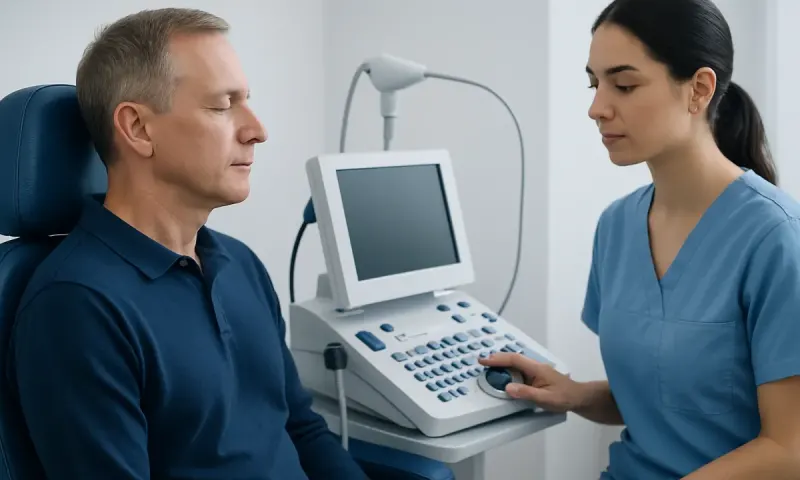
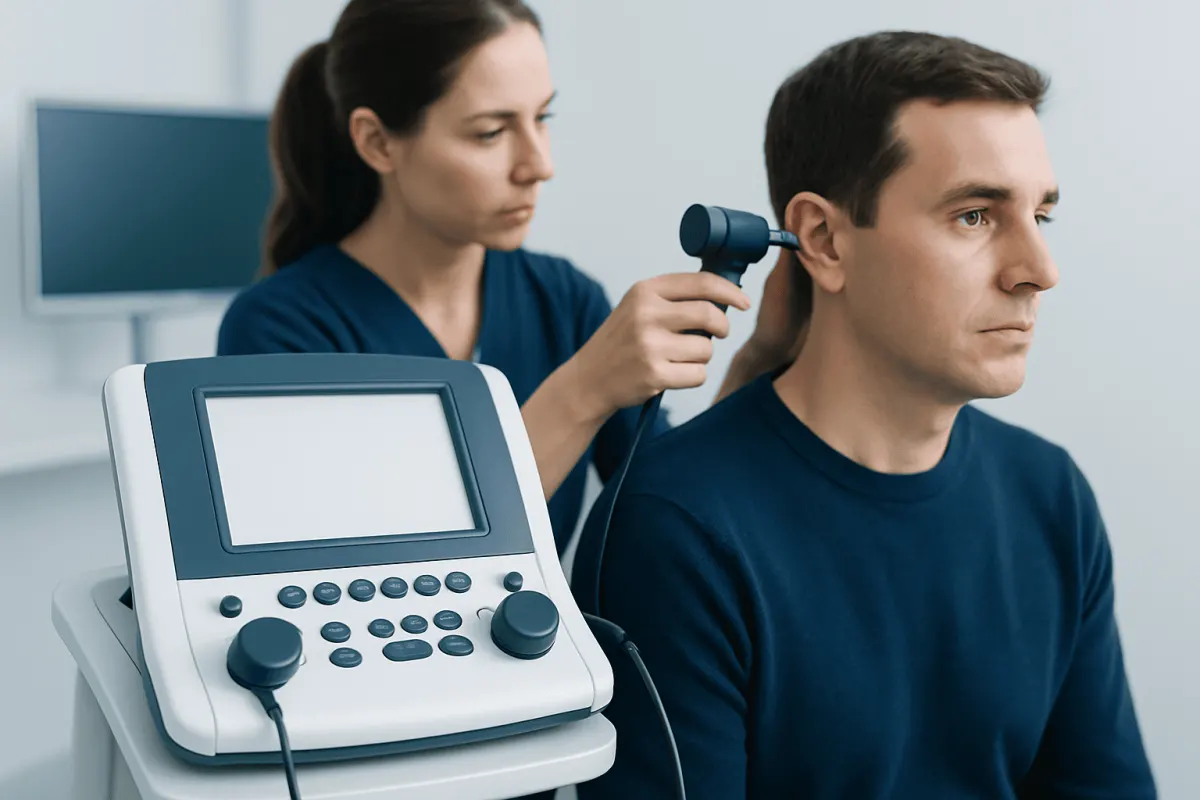
An assessment usually begins with questions about when the hearing change started, whether it was sudden or gradual, and whether there is pain, tinnitus, dizziness, discharge, recent infection, noise exposure, trauma, or medication changes. The clinician examines the ear canal and eardrum with an otoscope. This may reveal wax, inflammation, fluid, a perforation, or other visible findings.
A formal hearing assessment, called audiometry, measures hearing thresholds across different sound frequencies and compares both ears. Tests may also assess how the middle ear is functioning, such as tympanometry, and how clearly speech is understood. These evaluations help distinguish conductive hearing loss from sensorineural hearing loss and show whether the loss is mild, moderate, severe, or profound.
If testing indicates unexplained asymmetric sensorineural hearing loss, an ear, nose, and throat specialist may recommend further assessment. This can include blood tests in selected situations, balance testing, or magnetic resonance imaging of the hearing nerve and brain. Imaging is not needed for every person, but it can help rule out less common structural causes. The goal is to identify treatable problems while avoiding unnecessary investigations.
Treatment options and hearing support
Treatment is directed at the underlying cause. Earwax should be removed by an appropriately trained clinician when it is causing symptoms; cotton buds, hairpins, and other objects can push wax deeper or injure the ear. Infection, inflammation, or fluid may be treated with medicines or observation, depending on the diagnosis. A perforated eardrum often heals by itself, though some cases need specialist follow-up.
Sudden sensorineural hearing loss is managed urgently by an ear specialist. Corticosteroid treatment is commonly considered, with the approach tailored to the person’s health, the severity of hearing loss, and how quickly symptoms began. It is important not to delay assessment while waiting to see whether the hearing returns on its own. The specialist may arrange repeat hearing tests to monitor recovery.
When hearing loss is permanent, rehabilitation can improve communication and quality of life. Options may include a conventional hearing aid, a device that routes sound from the poorer ear to the better-hearing ear, bone-conduction technology, or, in carefully selected cases, cochlear implantation. Communication strategies, tinnitus support, and hearing rehabilitation can also be valuable. Acıbadem Health Point’s multidisciplinary specialists and JCI-accredited hospitals can assess and treat ear and hearing conditions for international patients.
Everyday protection and self-care
Hearing cannot always be protected from every cause of unilateral loss, but practical measures can reduce avoidable damage. Limiting exposure to loud sound, taking listening breaks, and using well-fitted hearing protection at concerts, work sites, or when using loud equipment can help protect the inner ear. Personal audio devices should be used at a comfortable volume rather than at a level that blocks surrounding sounds.
It is safest to avoid inserting objects or ear candles into the ear canal. These approaches do not safely remove wax and may cause burns, blockage, bleeding, or eardrum injury. People who frequently develop wax should ask a clinician about safe ear care. Anyone with ear tubes, a known eardrum perforation, previous ear surgery, or diabetes should seek professional advice before using ear drops.
For day-to-day communication, sitting with the better-hearing ear toward a speaker, reducing background noise, asking people to face the listener, and confirming key information can be helpful. Keeping a brief record of when symptoms began, whether they fluctuate, and any associated tinnitus or dizziness can also help make a medical appointment more productive.
When to seek medical care
Same-day urgent medical care is appropriate for sudden hearing loss in one ear, especially if it develops within hours or a few days. Urgent assessment is also needed when hearing loss occurs with severe dizziness, weakness or drooping of the face, difficulty speaking, severe headache, trouble walking, or symptoms after a head injury. These symptoms may require immediate evaluation beyond the ear itself.
A prompt appointment with a doctor or ear specialist is advisable for persistent one-sided hearing changes, new tinnitus in one ear, repeated episodes of ear fullness, ear pain, discharge, or gradually worsening hearing. Children with suspected hearing difficulty should also be assessed without delay, since hearing affects speech, language, learning, and social development.
It is reasonable to seek care even if symptoms seem mild or wax appears likely. Only an ear examination and hearing test can reliably establish the cause. Early assessment provides reassurance when the cause is straightforward and enables timely treatment or hearing support when it is needed.
Frequently asked questions
01Can earwax cause hearing loss in one ear?
Yes. Earwax can block the ear canal and cause muffled hearing, fullness, or reduced hearing in one ear. However, a sudden hearing change should not automatically be assumed to be wax, so an ear examination is important.
02Is sudden hearing loss in one ear an emergency?
Sudden hearing loss in one ear should be assessed urgently, ideally on the same day. Rapid evaluation is important because some inner-ear causes may respond better when treatment begins early.
03Can a cold cause one-sided hearing loss?
A cold, allergy, or sinus illness can affect the tube that helps equalize middle-ear pressure and may lead to fluid or a blocked sensation on one side. If the hearing change persists after the illness improves, or begins suddenly, medical assessment is recommended.
04Will hearing loss in one ear go away by itself?
It depends on the cause. Hearing may improve after wax removal, recovery from an infection, or resolution of middle-ear fluid, while inner-ear and nerve-related hearing loss may be longer lasting. A hearing test helps clarify the outlook.
05Why is it harder to hear in noisy places with one-sided hearing loss?
Both ears help the brain separate speech from background sound and identify where sounds are coming from. When one ear hears less well, listening in restaurants, meetings, or crowded places can require more effort.
06Should a person use ear drops for blocked hearing?
Ear drops may be appropriate for some people with suspected wax, but they are not suitable for everyone. They should not be used without professional advice if there is ear pain, discharge, a perforated eardrum, ear tubes, previous ear surgery, or uncertainty about the cause of hearing loss.
This article is for general information only and is not a substitute for professional medical advice. Please consult a qualified doctor about your individual situation.
Explore treatments in Turkey — costs, top hospitals & a free quote
JCI-accredited · board-certified surgeons · reply within 24h
Add us as a Preferred Source to see more of our trusted health content across Google Search, AI Overviews and Discover.