Head Pain At Top: Causes and Treatment

Key Takeaways
- Pain at the top of the head may come from tension headaches, migraine, scalp irritation, nerve pain, or neck-related strain.
- The location of the pain matters, but so do associated symptoms such as nausea, light sensitivity, fever, weakness, or vision changes.
- A doctor may use history, physical examination, and sometimes imaging or blood tests to find the cause.
- Treatment depends on the source and may include rest, hydration, stress management, medicine, or treatment of an underlying condition.
- Sudden, severe, or unusual head pain should be assessed promptly, especially if it comes with neurologic symptoms or after an injury.
Head pain at the top of the head can feel like pressure, tightness, tenderness, or a sharp ache, and it does not always mean the same thing. Many causes are common and manageable, but the pattern of pain, related symptoms, and how it changes over time help guide the right evaluation.
Overview
Head pain at the top of the head is a symptom, not a diagnosis. Some people describe it as a band of pressure across the crown, while others notice a stabbing point of pain, a tender scalp, or a heaviness that worsens with activity. Because many different conditions can create pain in this area, the best next step is to look at the whole picture rather than the location alone.
For some patients, the discomfort is linked to everyday factors such as stress, poor sleep, dehydration, eye strain, or sustained posture during long workdays and travel. For others, especially international patients planning care from another country, the more helpful question is whether the pain is new, recurring, or part of a broader neurologic pattern that deserves medical evaluation before a long trip or after arrival.
Most causes are not dangerous, but persistent or changing head pain should not be brushed aside. A careful medical assessment can separate common headache syndromes from scalp, neck, sinus, vascular, or nerve-related problems and guide treatment in a safe, practical way.
Symptoms
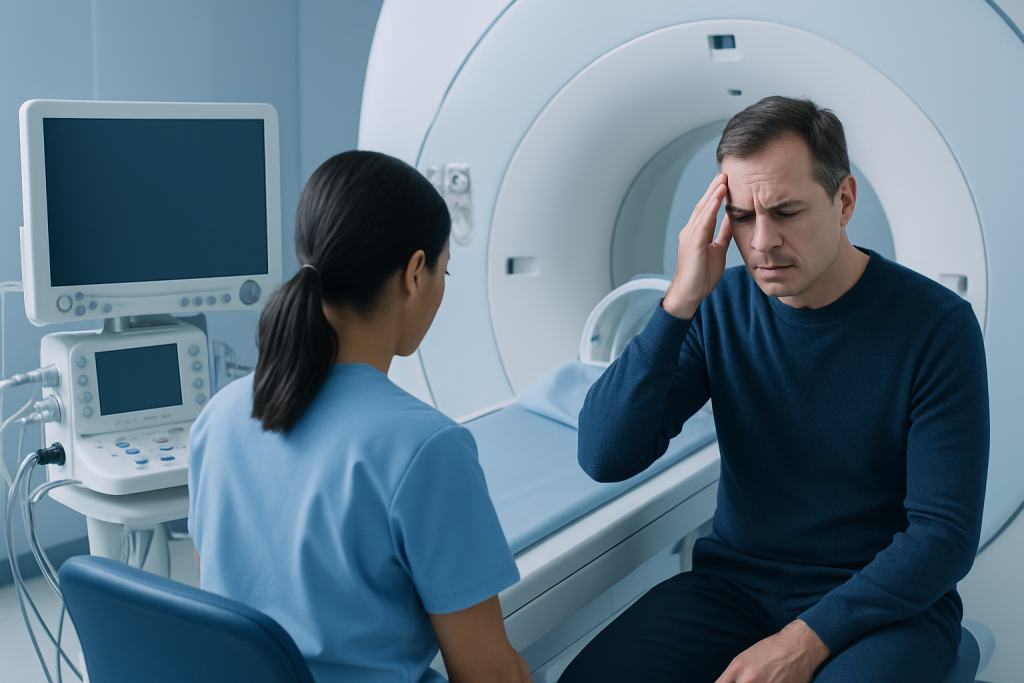
Head pain at the top of the head can feel different from person to person. Some describe a tight, squeezing sensation over the crown, while others feel soreness when touching the scalp, a pulsing ache, or brief electric-like pains. The location may stay fixed or spread to the temples, forehead, neck, or behind the eyes.
Associated symptoms often give important clues. Tension-type headaches may bring a dull, steady ache and neck tightness. Migraine can add nausea, light sensitivity, sound sensitivity, or visual changes. Scalp tenderness, itching, or rash may point toward a skin condition. Pain that starts in the neck and rises toward the top of the head may reflect muscle strain or posture-related issues.
Features that deserve closer attention include sudden onset, repeated vomiting, fever, confusion, fainting, weakness, numbness, difficulty speaking, new balance problems, or a headache that is clearly different from previous episodes. In those situations, the pain should be medically assessed rather than self-treated alone.
- Pressure or tightness over the crown
- Tender scalp or pain when brushing hair
- Throbbing or pulsating pain
- Neck stiffness or upper-back tension
- Nausea, light sensitivity, or visual symptoms
Causes & Risk Factors

One of the most common explanations for pain at the top of the head is a tension-type headache. This often develops when the scalp, jaw, neck, and shoulder muscles stay contracted for too long, whether from stress, prolonged screen use, travel fatigue, or sleeping in an awkward position. The pain is usually mild to moderate and may feel like a steady band or pressure.
Migraine is another frequent cause and may be felt in different parts of the head, including the crown. Although migraines are often one-sided, they can also be centered at the top. Migraines are more likely when there is a personal or family history of headache disorders, sleep disruption, skipped meals, dehydration, hormonal changes, or exposure to strong light or smell triggers.
Other possible causes include occipital neuralgia, which involves irritation of nerves that can send pain upward; cervicogenic headache, which begins in the neck; scalp inflammation or infection; and temporal arteritis in older adults, which needs prompt medical attention. Less commonly, head pain can be related to blood pressure problems, sinus disease, medication overuse, or an underlying neurologic condition.
Risk factors often overlap with daily life. These may include long periods of poor posture, stress, lack of rest, heavy caffeine use or withdrawal, bruxism (teeth grinding), recent illness, dehydration, and carrying luggage or working long hours in an unfamiliar travel schedule. Knowing these patterns can help a doctor identify whether the pain is likely primary, secondary, or mixed.
Diagnosis
Diagnosis usually begins with a detailed history. A doctor will want to know exactly where the pain is, when it started, how long it lasts, what it feels like, and whether anything makes it better or worse. They may also ask about recent infections, injuries, sleep patterns, vision changes, stress, medication use, and any neurologic symptoms.
A physical examination often focuses on the head, neck, scalp, eyes, jaw, and nervous system. The doctor may check for scalp tenderness, neck stiffness, sinus tenderness, muscle tightness, blood pressure changes, or signs of infection or rash. In many patients, this information is enough to identify a common headache type.
If the headache pattern is unusual, severe, new after age 50, linked to neurologic symptoms, or accompanied by other concerning signs, additional tests may be recommended. These may include blood tests, brain imaging, or sometimes cervical spine evaluation. For international patients, it is often helpful to bring prior medical records, medication lists, and any previous imaging so the specialist can compare patterns and avoid unnecessary repeat testing.
The goal of diagnosis is not simply to name the pain, but to decide whether it is a primary headache disorder or a sign of another condition that should be treated directly.
Treatment Options
Treatment depends on the cause, and the best plan is often tailored to the person’s headache pattern. For tension-type pain, rest, hydration, improved sleep, stretching, heat to the neck, and reduction of stressors may help. A doctor may also suggest over-the-counter pain relief when appropriate, but frequent use should be avoided without medical guidance because it can lead to medication-overuse headache.
If migraine is the cause, treatment may include medicines used during an attack and, in some patients, preventive therapy. The choice depends on how often the headaches occur, how disabling they are, and whether there are other health conditions to consider. Non-medicine strategies such as regular meals, sleep consistency, trigger tracking, and a calm, low-stimulation environment can also be useful.
When the pain comes from the neck, scalp, jaw, or nerves, treatment focuses on the source. This may include posture correction, physical therapy, treatment for sinus or skin conditions, or specific therapy for nerve irritation. If an underlying illness is found, treating that condition is the priority.
Patients traveling for care should ask about a practical plan before returning home: what warning signs to watch for, how to take medications safely across time zones, and when a follow-up visit or remote review is needed. In some cases, Acibadem Health Point’s multidisciplinary specialists and JCI-accredited hospitals help international patients diagnose and treat head pain-related conditions in a coordinated way.
Prevention & Self-care
Not every episode can be prevented, but many people notice fewer headaches when daily habits become more regular. Simple steps such as drinking enough water, avoiding skipped meals, protecting sleep, and taking breaks from screens can reduce strain that builds at the top of the head.
Posture and muscle tension matter as well. Gentle neck stretches, ergonomic workstation adjustments, and keeping shoulders relaxed during long sitting periods may help if pain seems to rise from the neck. For patients who clench their jaw or grind their teeth, dental evaluation or a night guard may be part of the solution.
It can also help to keep a headache diary. Recording the time, duration, location, intensity, triggers, sleep quality, menstrual pattern when relevant, and any medicines taken can reveal patterns that are hard to notice day by day. For someone arranging care from abroad, this diary can make the first specialist visit much more productive.
- Stay hydrated and eat at regular intervals
- Keep a consistent sleep schedule
- Limit excessive screen time and take eye breaks
- Address neck tension with stretching and posture changes
- Track triggers, medicines, and symptom patterns
When to See a Doctor
Medical evaluation is advisable when head pain at the top of the head is new, recurring, or interfering with work, sleep, or daily activities. A doctor can help determine whether it is a common headache pattern or a sign of a condition that needs specific treatment.
Prompt assessment is especially important if the pain is sudden and severe, follows a head injury, appears with fever or a stiff neck, or comes with weakness, numbness, confusion, vision changes, fainting, or trouble speaking. Headache that worsens over time, wakes a person from sleep repeatedly, or changes in character also deserves attention.
Older adults, pregnant patients, people with cancer or immune suppression, and anyone with a history of neurologic disease should be evaluated with extra care if a new headache develops. When in doubt, it is safer to ask a qualified doctor than to assume the cause is minor.
A timely consultation can provide reassurance, clarify next steps, and reduce the uncertainty that often surrounds persistent head pain. For international patients, this can also help plan treatment and follow-up in a way that fits travel schedules and recovery needs.
Frequently asked questions
01What does pain at the top of the head usually mean?
It most often relates to a common headache type such as tension headache or migraine, but neck strain, scalp problems, or nerve irritation can also cause it. The exact meaning depends on the pattern, associated symptoms, and how long it has been present.
02Is top-of-head pain a sign of migraine?
It can be. Migraine pain is not always on one side and may be felt at the crown or across the head, especially when nausea, light sensitivity, or visual symptoms are present. A clinician can help distinguish migraine from other headache types.
03Can stress cause pain at the top of the head?
Yes. Stress often leads to muscle tension in the neck, jaw, and scalp, which can create a tight or pressure-like headache at the crown. Sleep problems and poor posture can make this more noticeable.
04When should a person worry about head pain at the top?
A person should seek medical care if the headache is sudden and severe, follows an injury, or comes with weakness, confusion, fever, stiff neck, fainting, or vision changes. A new headache in later life also deserves evaluation.
05What helps at home if the pain seems mild?
Rest, hydration, regular meals, reduced screen strain, and gentle neck stretching may help if the cause is a common headache or muscle tension. If the pain keeps returning, a doctor should look for the underlying cause rather than relying only on home care.
06Do I need scans for pain at the top of the head?
Not always. Many headache cases are diagnosed through history and examination alone. Imaging is usually considered when the pattern is unusual, the symptoms are concerning, or the doctor needs to rule out another condition.
This article is for general information only and is not a substitute for professional medical advice. Please consult a qualified doctor about your individual situation.
Hair transplant in Turkey — costs, graft counts & a free assessment
JCI-accredited · board-certified surgeons · reply within 24h
Add us as a Preferred Source to see more of our trusted health content across Google Search, AI Overviews and Discover.