Hair Transplant Robot Price: What Affects Cost

Hair transplant robot price is not a single fixed amount because the final plan depends on the extent of hair loss, donor hair availability, the number of grafts required and what follow-up care is included. A consultation with an experienced hair-restoration team helps patients understand whether robotic follicular unit extraction (FUE) is suitable and obtain a personalised, itemised estimate.
Hair Transplant Robot Price: Understanding the Real Cost
Hair transplant robot price varies because robotic treatment is not a standard, one-size-fits-all procedure. The overall cost is usually shaped by the planned number of grafts, the size and location of the area being restored, the quality of the donor area, the clinical team involved and the services included before and after surgery. A responsible clinic provides an individual estimate after examining the scalp rather than offering a meaningful final price without an assessment.
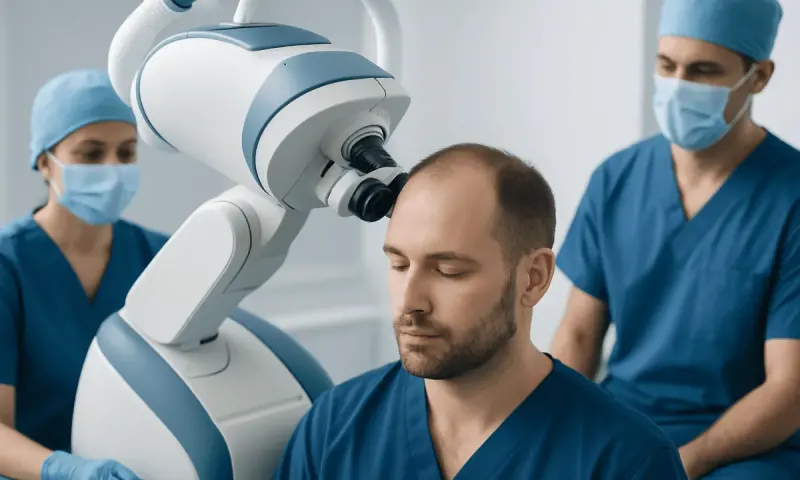
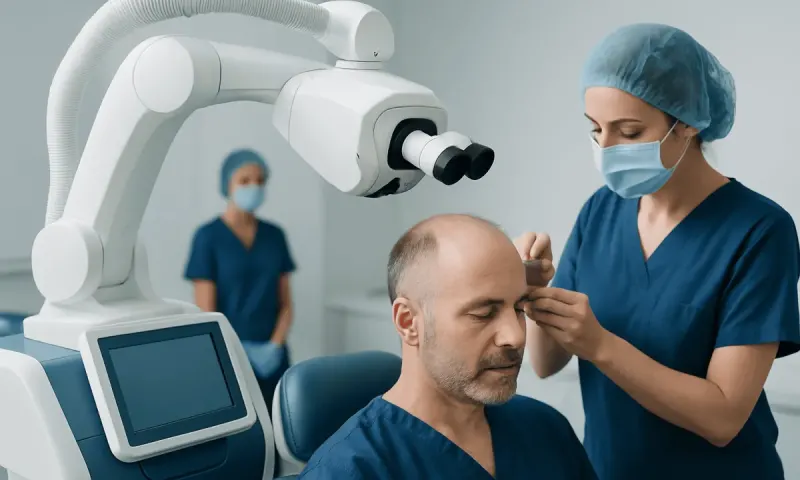
In most cases, a “robotic hair transplant” means robotic or computer-assisted follicular unit extraction (FUE). The technology may help identify and extract suitable follicular units from the donor area, commonly the back and sides of the scalp. It does not replace medical judgement: the clinician determines candidacy, designs the hairline, plans graft distribution and oversees safe treatment.
When comparing quotes, patients benefit from asking whether the estimate includes consultation, blood tests if needed, anaesthesia, the procedure, medications, aftercare products, reviews and management of any unexpected concerns. It is also important to clarify whether the plan is based on an estimated graft range and what happens if the appropriate graft number changes on the day.
How Robotic FUE Hair Transplantation Works
Hair follicles grow in naturally occurring groups called follicular units. During FUE, these units are removed individually from a donor area where hair is relatively resistant to thinning. They are then placed into tiny recipient-site openings in areas affected by hair loss, such as the frontal hairline, temples or crown.
A robotic system uses imaging and software to map the donor area and may assist with selecting and extracting follicular units according to programmed parameters. This can support consistency during a lengthy procedure. However, every scalp is different, and the treating clinician must adjust the approach for hair angle, curl, density, scalp condition and the long-term preservation of donor hair.
After extraction, grafts are examined, protected and prepared for placement. The recipient sites must be created at a natural angle, direction and density. This artistic and medical planning is central to a natural-looking result and cannot be reduced to the use of a device alone. Patients considering hair restoration can learn more about hair transplant treatment options during a specialist consultation.
Who May Be a Candidate for Robotic Hair Transplantation?

Suitable candidates generally have a pattern of hair loss that has been assessed by a qualified clinician, adequate donor hair and realistic expectations about density and coverage. Many people seeking treatment have androgenetic alopecia, often called male- or female-pattern hair loss. The timing of surgery matters, particularly for younger adults or people whose hair loss is continuing quickly, because future thinning can alter the overall appearance.
A detailed evaluation should consider the scalp, medical history, medications, family history and previous hair procedures. The clinician also examines donor density, hair thickness, colour contrast between hair and scalp, curl pattern and the likely future progression of hair loss. These details affect both candidacy and the number of grafts that can be safely harvested.
Not all hair loss is appropriate for transplantation. Sudden shedding, patchy loss, scalp inflammation, infection and some scarring conditions need diagnosis and treatment first. For example, alopecia areata is an autoimmune cause of patchy hair loss and is managed differently from pattern hair loss. A transplant may also be postponed where a person has uncontrolled medical conditions, active scalp disease or insufficient donor reserves.
- People with stable or reasonably predictable hair loss may be suitable after assessment.
- People with enough healthy donor follicles may be considered for FUE.
- People seeking an unrealistically low or dense hairline may need further counselling about achievable results.
- People with active shedding or unclear hair loss should have the cause investigated before surgery.
What Happens During the Procedure?
Before treatment, the clinician discusses the desired outcome, photographs the scalp and develops a conservative plan that protects future options. The donor and recipient areas may be trimmed, and local anaesthesia is commonly used. The exact schedule differs between clinics and depends on the size and complexity of the procedure.
During robotic-assisted FUE, the donor area is mapped and follicular units are selected for extraction. The team then carefully removes grafts and keeps them in appropriate conditions until implantation. The clinician creates recipient sites that follow the patient’s natural hair direction and facial proportions, then the grafts are placed into those sites.
The procedure may take several hours and, for more extensive restoration, may be completed over a longer session or more than one session. Patients are typically awake and can take scheduled breaks. They should arrange transport after treatment, as the scalp may be tender and sedating medicines, if used, can affect safe driving.
The best plan prioritises graft survival, donor-area preservation and an age-appropriate design over attempting to cover every thin area in one procedure. A clinician can also discuss non-surgical measures that may help slow ongoing hair loss and support the long-term appearance of the transplant.
Recovery Timeline and Expected Results
In the first days after robotic FUE, small scabs, redness, mild swelling and tenderness can occur in the donor and recipient areas. The care team provides instructions on washing, sleeping position, exercise, headwear and medicines. Protecting the newly placed grafts from rubbing, scratching and direct trauma is particularly important early in recovery.
Scabs usually loosen and clear as healing progresses, provided patients follow the advised cleansing routine and avoid picking. Many people return to desk-based activities relatively soon, but visible redness or scabbing can remain for a period of time. Strenuous activity, swimming, strong sun exposure and activities that may cause friction are usually restricted temporarily according to the clinician’s guidance.
It is common for transplanted hairs to shed in the weeks after surgery. This does not necessarily mean the follicles have failed; the follicles can enter a resting phase before producing new hair. New growth typically develops gradually over subsequent months, and the final visual outcome may take many months to mature.
Existing, non-transplanted hair may continue to thin because a transplant does not stop the underlying hair-loss process. Follow-up appointments allow the team to monitor healing, discuss maintenance options and help patients set realistic expectations during the gradual growth phase.
Benefits, Limitations and Possible Risks
Robotic assistance may offer a systematic method for mapping the donor area and supporting FUE extraction. For appropriately selected patients, a hair transplant can redistribute permanent donor follicles to thinning areas and create a fuller appearance. Individual results depend on graft quality, surgical planning, healing, ongoing hair loss and adherence to aftercare instructions.
The technology itself does not guarantee a better outcome, higher density or suitability for every person. Hair characteristics, the skill of the clinical team and thoughtful long-term planning remain essential. Some patients may be better served by conventional FUE, another surgical technique, medical treatment or observation, depending on their diagnosis and goals.
As with any surgical procedure, risks include bleeding, infection, pain, swelling, numbness, folliculitis, scarring, delayed healing and changes in sensation. There can also be temporary shock loss of existing hair, poor graft growth, an uneven appearance or an unnatural-looking hairline if planning or healing is not optimal. These risks should be discussed before consent.
Patients should seek urgent medical advice after a procedure if they develop worsening pain, spreading redness, fever, pus-like drainage, significant bleeding or other concerning symptoms. Attending planned reviews and following the care team’s instructions can help identify issues early.
Planning a Safe, Informed Treatment Decision
A useful consultation is more than a conversation about price. Patients should ask who will perform each part of the procedure, whether the clinic is led by appropriately qualified physicians, how graft numbers are estimated and how the donor area will be protected for the future. They should also request an explanation of likely outcomes in their specific pattern of hair loss rather than relying on photographs alone.
It can be helpful to ask for a written plan that distinguishes the core procedure from optional services and explains follow-up care. Patients should be cautious about pressure to book immediately, claims of guaranteed density or promises that a robot can overcome limited donor hair. An informed decision includes time to consider benefits, limitations, recovery and alternatives.
Acıbadem Health Point’s multidisciplinary specialists and JCI-accredited hospitals diagnose and treat hair-loss concerns for international patients, with treatment planning based on individual clinical assessment. A consultation can clarify whether robotic-assisted FUE is appropriate, whether another approach is preferable and what a transparent treatment plan includes.
Seeking medical advice is especially important if hair loss is sudden, patchy, associated with scalp pain, scaling or inflammation, or begins after a new medicine, illness or major physical stress. These features may point to a cause that needs medical treatment before any cosmetic procedure is considered.
Frequently asked questions
01What is included in hair transplant robot price?
The included services vary between providers. A detailed estimate may cover assessment, the procedure, local anaesthesia, graft handling, medicines, aftercare supplies and follow-up appointments, but patients should ask for each item to be confirmed in writing. The number of grafts and the extent of restoration are major factors in the final plan.
02Is a robotic hair transplant more effective than standard FUE?
Robotic systems can assist with donor-area mapping and follicular-unit extraction, but they do not replace clinical judgement or surgical skill. The suitability and outcome depend on donor hair quality, diagnosis, hairline design, graft handling and implantation technique. A qualified clinician can explain which approach fits the individual patient.
03How many grafts will be needed for robotic FUE?
Graft needs depend on the size of the thinning area, desired coverage, hair thickness, donor density and future hair-loss pattern. A clinician estimates a safe graft range after examining the scalp. It is usually better to preserve donor hair for possible future needs than to pursue maximum density in a single session.
04Is robotic hair transplantation permanent?
Transplanted follicles from a suitable donor area often retain their resistance to pattern hair loss after relocation. However, no procedure can prevent thinning of the patient’s existing, non-transplanted hair. Ongoing monitoring and, where appropriate, medical management may help maintain the overall result.
05How long does recovery take after a robotic hair transplant?
Early healing, including scabbing and tenderness, commonly occurs over the first days to weeks. Transplanted hairs often shed before new growth begins, and visible improvement develops gradually over several months. The full cosmetic result may take many months, so patience and follow-up are important.
06Who should avoid or delay a robotic hair transplant?
People with active scalp infection or inflammation, unexplained sudden hair loss, inadequate donor hair or uncontrolled health conditions may need treatment or further evaluation first. A transplant may also be inappropriate when expectations are not achievable with the available donor supply. A specialist assessment helps identify the safest next step.
This article is for general information only and is not a substitute for professional medical advice. Please consult a qualified doctor about your individual situation.
Hair transplant in Turkey — costs, graft counts & a free assessment
JCI-accredited · board-certified surgeons · reply within 24h
Add us as a Preferred Source to see more of our trusted health content across Google Search, AI Overviews and Discover.