Hair Transplant Grafts Needed for Full Restoration: Procedure, Benefits, Risks and Recovery

Key Takeaways
- There is no single graft number that fits every full restoration case; the plan depends on the size of the balding area and the donor supply.
- A graft is a small unit of hair follicles that can contain one to several hairs, and the final look depends on both graft count and placement.
- FUE and FUT are the two most common transplant methods, each with different recovery patterns and donor-area considerations.
- Recovery is gradual, with early shedding often followed by new growth over several months.
- A qualified specialist can help match expectations with what the donor area can safely provide.
- People traveling for treatment should also plan for follow-up care before leaving home and after returning.
The number of hair transplant grafts needed for full restoration varies with hair loss pattern, donor hair quality, hair characteristics, and the degree of coverage a person hopes to achieve. A careful consultation helps estimate graft needs, explain realistic results, and plan treatment in a way that protects both appearance and donor supply.
Overview
For people asking how many hair transplant grafts are needed for full restoration, the most honest answer is that the number depends on the person, not on a fixed formula. Some patients may need only a few hundred grafts to refine a hairline or fill a small crown area, while others with more advanced thinning may need several thousand grafts spread across multiple sessions.
A graft is a follicular unit, meaning a natural group of one to four hairs taken from a donor area, usually the back or sides of the scalp. Surgeons plan graft counts around the pattern of hair loss, the density already present, and the amount of coverage that can be achieved safely without overusing the donor area. Full restoration therefore means a balanced result, not simply the largest possible number of grafts.
For international patients, the planning stage matters even more because the consultation, procedure, and follow-up may happen across different locations or over several visits. A good treatment plan should explain what can be completed in one session, what may need staging, and how healing will be monitored after travel.
What Determines the Number of Grafts Needed
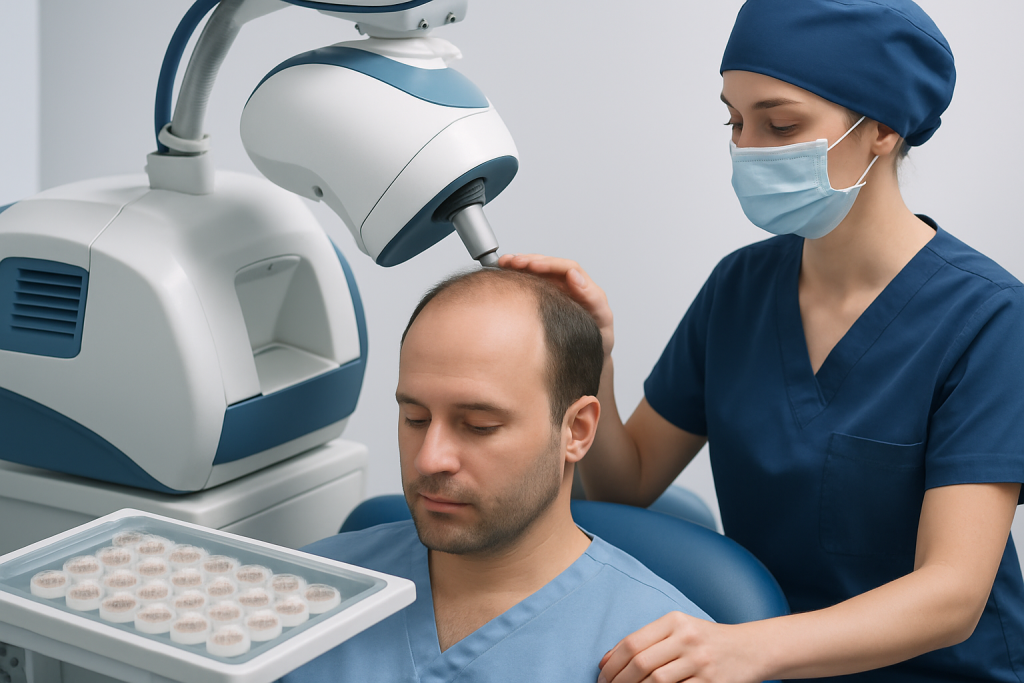
The main factor is the extent of hair loss. A receding hairline usually requires fewer grafts than diffuse thinning across the top of the scalp, and a crown area may need a different density strategy than the frontal hairline. Doctors often assess both the current pattern of loss and the likely future pattern so the result remains natural over time.
Hair characteristics also influence graft planning. Thicker hair, curlier hair, and hair with strong contrast between strands and scalp may create better visual coverage with fewer grafts than very fine, straight hair. Hair color, texture, and wave all affect how density appears once the hair grows out.
The donor area sets the upper limit. Even when someone wants complete visual restoration, the surgeon must preserve enough donor hair for long-term balance and avoid leaving the back or sides visibly thinned. That is why the safest approach is usually strategic coverage rather than trying to transplant every lost follicle.
- Size of the bald or thinning area
- Hairline design and style goals
- Existing hair density in the recipient area
- Donor hair quality and available supply
- Hair shaft thickness, curl, and color contrast
- Whether the loss is stable or still progressing
How Specialists Estimate Full Restoration

Estimation begins with a detailed scalp examination. The specialist measures the areas of loss, reviews the pattern of thinning, and checks the donor region for density and hair caliber. In many clinics, photos are taken from several angles to help map the scalp and design a realistic plan.
The surgeon then decides how to allocate grafts. The front hairline usually receives priority because it frames the face and creates the strongest cosmetic impact. The mid-scalp and crown are planned after that, often with slightly different density targets, because the goal is to create the look of fullness rather than uniform density everywhere.
Patients sometimes expect a simple conversion from area size to graft count, but the process is more nuanced. Two people with the same amount of thinning can need different numbers depending on how much native hair remains, how visible the scalp is, and how much density is needed to achieve an acceptable cosmetic result. This is why an in-person or high-quality virtual consultation is so important before travel is arranged.
Procedure Options: FUE and FUT
Two common approaches are used to harvest grafts: follicular unit extraction, often called FUE, and follicular unit transplantation, often called FUT or strip surgery. In FUE, individual follicular units are removed one by one from the donor area. In FUT, a narrow strip of scalp is removed and then dissected into grafts under magnification.
Both methods can produce natural results when performed well. FUE is often chosen by patients who prefer small dot-like donor scars and shorter restrictions on certain hairstyles, though it may require shaving the donor area in many cases. FUT may be useful when a larger number of grafts is needed in a single session, and it can preserve donor hair in selected patients when planning is done carefully.
The best method depends on hair characteristics, the number of grafts required, the donor scalp’s laxity or density, and the patient’s future hairstyle preferences. A surgeon may even recommend a staged approach if the total restoration goal is large or if donor conservation is especially important.
Benefits of Hair Transplantation
The main benefit of a hair transplant is that it moves a person’s own hair to areas of thinning, which can create a natural-looking result when the grafts are placed with attention to angle, direction, and density. Because the transplanted follicles come from the person’s own scalp, the growth often blends better than many external cosmetic solutions.
Another advantage is permanence in the transplanted area. While transplanted hair can still thin with time if the donor area later changes or if hair loss continues around it, the grafts themselves are generally intended to keep growing in their new location. This can make the result feel more stable than temporary camouflage methods.
For many people, the emotional benefit is just as important as the physical change. Regaining a fuller hairline or reducing visible scalp show-through can improve comfort in daily routines, photographs, work settings, and social situations. The key is setting expectations around gradual improvement rather than instant transformation.
Risks and Possible Side Effects
Hair transplant surgery is generally considered safe when performed by qualified professionals, but it is still a medical procedure and carries risks. Common short-term effects include swelling, redness, scabbing, itching, and temporary soreness in the donor or recipient areas. These usually improve as the scalp heals.
Other possible concerns include infection, poor graft growth, shock loss in surrounding native hair, widened donor scarring, or an unnatural appearance if the hairline is designed too aggressively. Careful surgical planning helps reduce these risks, but no procedure can eliminate them entirely.
Patients should also understand that not every graft survives at the same rate, and final density may be lower than the number of grafts placed suggests. This is one reason experienced surgeons focus on placement strategy, scalp health, and realistic donor management rather than promising a specific look based only on graft count.
Recovery and Aftercare
Recovery usually begins with the first few days, when the scalp may feel tender and look red or crusted. Patients are often advised to follow specific cleaning instructions, sleep with the head elevated at first, and avoid rubbing or scratching the transplanted area. Gentle handling helps protect the grafts while they settle.
Many people notice that transplanted hairs shed in the weeks after surgery. This can be unsettling if it is unexpected, but it is commonly part of the normal growth cycle. New growth typically appears gradually over the following months, with the cosmetic result becoming more visible as the hair lengthens and matures.
Travel plans should be made with recovery in mind. International patients may need several days before flying comfortably and should confirm when they can safely wash the scalp, exercise, wear hats, or return to work. Follow-up care is especially important if the procedure is done abroad, since the patient may need a local clinician or remote check-in after returning home.
Prevention, Planning, and Choosing the Right Candidate
Hair transplantation is not the right answer for every type of hair loss, so diagnosis comes first. Men and women with pattern hair loss, stable donor hair, and realistic expectations are often the best candidates. People with active scalp disease, unstable hair loss, or insufficient donor density may need medical treatment, observation, or a different strategy before surgery is considered.
Supporting scalp and hair health before and after surgery can also improve the experience. This may include managing dandruff or dermatitis, avoiding smoking if possible, following the surgeon’s instructions about medications, and keeping expectations aligned with what the donor area can support. In some cases, medical therapy is recommended alongside surgery to help preserve existing hair.
At Acibadem Health Point, multidisciplinary specialists and JCI-accredited hospitals diagnose and treat hair loss for international patients, with planning that includes consultation, procedure coordination, and follow-up. That kind of organized pathway can be especially helpful when treatment is part of a larger travel itinerary.
When to See a Doctor
A doctor should be consulted when hair loss is rapid, patchy, painful, associated with scalp redness or scaling, or affecting eyebrows, beard, or other body hair. These patterns may suggest a condition other than typical pattern hair loss and should be assessed before any transplant is considered.
Medical advice is also important when a person is thinking about surgery but is unsure whether their donor area is strong enough, whether the loss is still changing, or whether the goal is realistic. A consultation can clarify whether the best first step is transplant surgery, medication, or a combination of approaches.
After surgery, patients should contact their care team if they develop fever, increasing pain, pus, unusual swelling, or any sudden change that seems out of proportion to expected healing. Prompt review helps protect both the scalp and the final cosmetic outcome.
Frequently asked questions
01How many hair transplant grafts are needed for full restoration?
There is no universal number because full restoration depends on the extent of hair loss, the size of the donor area, and the look the patient hopes to achieve. Some people may need a modest number of grafts for a hairline, while others need a larger staged plan to cover the front, mid-scalp, and crown. A specialist estimate is the safest way to determine what is realistic.
02What is the difference between a graft and a hair?
A graft is a follicular unit, which may contain one, two, three, or sometimes four hairs. Because of this, the number of grafts is not the same as the number of hairs transplanted. Planning focuses on grafts because they are the units surgeons move and place.
03Which technique is better, FUE or FUT?
Neither technique is universally better. FUE and FUT each have advantages, and the right choice depends on donor supply, desired hairstyle, the total graft count needed, and personal preferences about scarring and recovery. A surgeon should explain which method fits the individual case best.
04Is hair transplant recovery painful?
Most people describe recovery as manageable rather than severe, with some soreness, tightness, or itching in the first days. Discomfort usually improves with time and proper aftercare. If pain becomes stronger instead of easing, the care team should be informed.
05Will transplanted hair fall out later?
It is common for the transplanted hairs to shed temporarily in the weeks after surgery before new growth begins. After that, the follicles usually continue producing hair in the new area. However, non-transplanted native hair can keep thinning over time, which is why long-term planning matters.
06Can hair transplant surgery be done in one session?
Sometimes yes, but not always. The number of grafts needed, the donor hair available, and the patient’s healing capacity all affect whether one session is enough or whether staged treatment is more appropriate. A consultation should define that plan before surgery is scheduled.
This article is for general information only and is not a substitute for professional medical advice. Please consult a qualified doctor about your individual situation.
Hair transplant in Turkey — costs, graft counts & a free assessment
JCI-accredited · board-certified surgeons · reply within 24h
Add us as a Preferred Source to see more of our trusted health content across Google Search, AI Overviews and Discover.