After Blood Test Bruise: Purpose, Procedure and Results

Key Takeaways
- A bruise after a blood test is common and usually harmless.
- It happens when a small amount of blood leaks from the vein into nearby tissue.
- Cold packs, gentle pressure, and avoiding heavy use of the arm can support healing.
- Large, painful, or expanding bruises should be reviewed by a doctor, especially if there is swelling or numbness.
- Some medicines and medical conditions can make bruising more likely.
- Blood test results are usually not affected by a bruise at the puncture site, but a clinician may repeat the test if the sample was difficult to obtain.
An after blood test bruise is usually a minor, temporary reaction caused by a small amount of bleeding under the skin after the needle is removed. Most bruises fade on their own, and simple aftercare can help the area heal comfortably.
Overview
An after blood test bruise is a small collection of blood under the skin that appears when a vein has been punctured for sampling. It is one of the most common minor side effects of venipuncture, and in most cases it settles without treatment within several days to two weeks.
For many people, a bruise is more noticeable than the blood test itself. The skin may look blue, purple, green, or yellow as it heals, and the area can feel mildly tender. That appearance can be unsettling, but it does not usually mean anything serious has happened.
Understanding why bruising occurs can make the experience less worrying, especially for people who need repeated blood work, are traveling for treatment, or are arranging tests in a new clinic or country. Good technique, proper pressure after the needle is removed, and simple self-care all help reduce the chance of bruising.
Why a bruise forms after blood draw
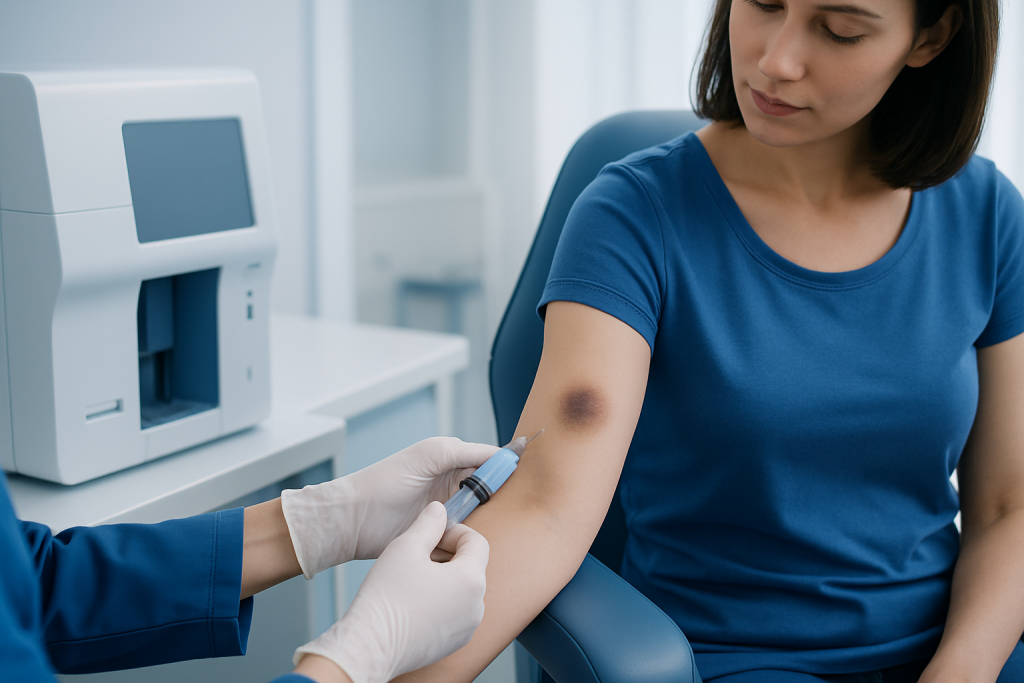
Blood tests are usually taken from a vein in the arm. If a small amount of blood escapes the vein during or after the needle is withdrawn, it can collect under the skin and create a bruise. This is similar to any other minor bruise caused by a small vessel injury.
Bruising can happen even when the blood draw is performed correctly. Veins vary in size and depth, and some are more delicate than others. A bruise may also appear if pressure is released too soon, if the arm is moved too actively right after the test, or if the vein rolls during the procedure.
The size of the bruise often reflects how much blood leaked into the tissue, not how dangerous the situation is. A small bruise may remain local, while a larger patch can spread slightly over the next day before gradually changing color and fading.
Common symptoms and how long they last
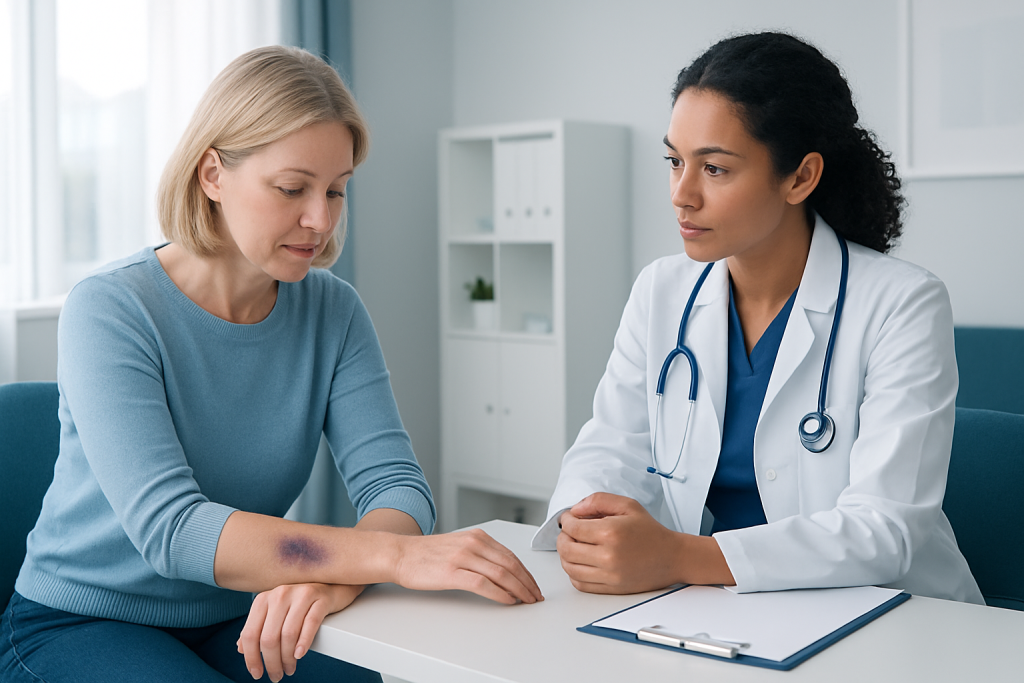
The most typical sign is a flat or slightly raised patch of discolored skin near the puncture site. Some people also notice mild soreness, warmth, or a pulling feeling when bending the arm. These symptoms are usually mild and improve on their own.
Bruises often look darker during the first 24 to 48 hours, then begin to change color as the body breaks down the trapped blood. The healing timeline varies, but most blood test bruises improve within a week or two. People with thinner skin, fragile veins, or clotting issues may notice that bruises last longer.
It is helpful to watch for changes rather than only the initial appearance. A bruise that stays stable or gradually fades is expected. A bruise that keeps expanding, becomes very painful, or is accompanied by hand swelling may need medical assessment.
What increases the chance of bruising
Certain factors make bruising more likely after a blood test. These include taking anticoagulant or antiplatelet medicines, using supplements that affect clotting, having fragile veins, and being older or very lean, which can make veins more visible but also more delicate.
Dehydration can make veins harder to access, and that may lead to more probing or a longer needle time, which can increase the chance of bruising. Repeated blood tests from the same arm, a history of easy bruising, or a past vein injury may also play a role.
- Blood-thinning medicines, when prescribed for a medical reason
- Inadequate pressure after the needle is removed
- Movement or lifting with the arm soon after the test
- Veins that are small, fragile, or difficult to access
- Underlying bleeding disorders or liver disease
For international patients, it is reasonable to mention medications, supplements, and any bleeding tendency before the test, even if the visit is brief. Clear communication helps the team choose the safest approach and prepare for any follow-up.
How clinicians diagnose a bruise and when it matters
Most post-blood-draw bruises do not need a formal diagnosis. A clinician can usually identify them by examining the skin and asking about the blood draw, recent injury, and any medicines that affect clotting. If the bruise is typical, no further testing is usually needed.
Occasionally, a bruise may be confused with a hematoma, which is a larger pocket of blood under the skin. A hematoma can cause more swelling, firmness, and discomfort. If the area is unusually large or painful, a clinician may check whether the vein was irritated or whether there is another reason for bleeding.
When bruising happens repeatedly or very easily, the care team may look more closely at platelet function, clotting tests, liver health, or medication effects. That evaluation is especially important if the person also notices nosebleeds, bleeding gums, or prolonged bleeding from small cuts.
Treatment options and home care
Most after blood test bruises improve with simple home care. A cold pack wrapped in cloth can be applied for short periods during the first day to limit swelling and ease discomfort. Light pressure with the opposite hand, if advised by the clinician, can also help immediately after the needle is removed.
After the first day, gentle warmth may feel soothing for some people, although it is not required. The arm can usually be used normally, but heavy lifting, strenuous exercise, or repeated pressure on the puncture site is best avoided for a short time if the area is tender.
Helpful self-care steps include:
- Keep the area clean and watch for increasing redness or drainage.
- Avoid rubbing or massaging the bruise aggressively.
- Use the arm normally, but be gentle if it is sore.
- Protect the area from knocks, especially in the first day or two.
If a bruise is very painful, expanding, or associated with a firm lump, a clinician should assess it rather than relying only on home treatment. People who take blood thinners should not stop them on their own; they should ask the prescribing doctor for guidance.
Can a bruise affect blood test results?
In most cases, the bruise itself does not change the laboratory results. The blood sample is taken directly from the vein, and the bruise develops afterward in the surrounding tissue. A typical puncture-site bruise does not alter what was already collected in the tube.
What can affect results is a difficult draw. If the vein collapses, the sample is hemolyzed, or the collection is delayed, the clinician may need to repeat the test. Some tests are also more sensitive to collection technique than others, so accurate handling matters.
For this reason, it is helpful to tell the staff if a previous blood draw caused a large bruise, if veins are hard to find, or if fainting has happened during testing before. That information can lead to a calmer, more efficient experience and reduce the chance of needing another needle stick.
Prevention and practical tips before the next test
Not every bruise can be prevented, but several measures can lower the likelihood. Being well hydrated unless a doctor has said otherwise can make veins easier to access. Keeping the arm relaxed during the draw also helps the clinician work smoothly.
After the needle is removed, it is important to hold pressure for as long as instructed and avoid checking the site too soon. People who know they bruise easily can ask the team to use a smaller needle when appropriate, choose a different site, or spend a little extra time on aftercare.
Before a test, it is sensible to mention:
- Prescription blood thinners or aspirin-like medicines
- Herbal products or supplements that may affect clotting
- A history of easy bruising or prolonged bleeding
- Previous difficult blood draws or fainting episodes
These small details can make the appointment safer and more comfortable, whether the testing is happening close to home or as part of an international care plan.
When to see a doctor
A bruise after a blood test is usually not urgent, but it should be reviewed if it grows rapidly, becomes very painful, or is accompanied by significant swelling, numbness, or trouble moving the hand or arm. These features can suggest a larger hematoma or pressure on nearby tissues.
Medical advice is also appropriate if there is persistent bleeding from the puncture site, signs of infection such as worsening redness or fever, or frequent unexplained bruises elsewhere on the body. People taking anticoagulant medicines should seek guidance sooner if the bruise looks larger than expected.
For patients arranging laboratory work away from home, it can be reassuring to know that experienced teams can assess the bruise, decide whether any follow-up is needed, and explain next steps clearly. Acibadem Health Point’s multidisciplinary specialists and JCI-accredited hospitals diagnose and treat this condition for international patients in a coordinated, patient-friendly way.
Frequently asked questions
01Is an after blood test bruise normal?
Yes. A small bruise after blood draw is common and usually not a sign of a problem. It forms when a little blood leaks under the skin after the needle is removed.
02How long does a blood test bruise take to fade?
Most bruises improve within several days and fade over one to two weeks. Bigger bruises or bruises in people who bruise easily may take longer.
03Should ice or heat be used on a blood draw bruise?
Cold packs are most helpful during the first day to reduce swelling and soreness. After that, some people find gentle warmth soothing, but it is not essential.
04Can I exercise after getting a bruise from a blood test?
Light activity is usually fine, but it is sensible to avoid heavy lifting or strenuous use of the arm for a short time if the area is sore. If pain increases with movement, the arm should be rested and checked if needed.
05Does a bruise mean the blood test was done incorrectly?
Not necessarily. Bruising can happen even with proper technique because veins are delicate and blood vessels can leak slightly after the draw. A bruise alone does not mean the test was performed badly.
06When should a blood test bruise be checked by a doctor?
It should be checked if it is rapidly enlarging, very painful, associated with swelling or numbness, or if bleeding does not stop. Frequent unexplained bruising elsewhere on the body also deserves medical review.
This article is for general information only and is not a substitute for professional medical advice. Please consult a qualified doctor about your individual situation.
Explore treatments in Turkey — costs, top hospitals & a free quote
JCI-accredited · board-certified surgeons · reply within 24h
Add us as a Preferred Source to see more of our trusted health content across Google Search, AI Overviews and Discover.