Hair Transplant Clinics in Turkey: What to Check Before You Book

Key Takeaways
- Verify who will actually perform the procedure — the operating physician's name, specialty training and hospital privileges — not just the clinic's marketing materials.
- Accreditation matters: internationally recognized standards such as JCI accreditation indicate that a hospital is audited against defined patient-safety and infection-control requirements.
- Ask for a written breakdown of what a package includes and excludes: consultation, procedure, medications, hotel nights, transfers, interpreter support and follow-up.
- Costs should be discussed as planning bands that depend on the number of grafts, technique and length of stay — never as a fixed quote before a proper assessment.
- Most travelers plan several days in the destination country for the procedure, the first dressing or wash, and a review visit before flying home.
- Hair growth is gradual and results are assessed over many months, so a clear remote follow-up plan with the treating team is essential before booking.
Turkey is one of the most common destinations for people traveling abroad for hair restoration, but the quality of the experience depends heavily on how carefully the clinic and the trip are vetted in advance. This guide explains what to verify before booking, what packages usually include, how to plan realistically for cost and recovery, and how aftercare continues once a patient flies home.
Start Here: What to Confirm Before You Book
Anyone comparing a clinic hair transplant Turkey option should confirm four things before paying a deposit: who the operating physician is and what their credentials are, whether the facility is accredited to an internationally recognized standard, exactly what the quoted package does and does not include, and how follow-up will work after the patient returns home. These four checks separate a well-coordinated medical trip from a booking made on price alone.
Hair restoration surgery is a genuine surgical procedure performed under local anesthesia, not a cosmetic appointment. It involves sterile technique, anesthesia, wound care and a recovery period. That is why the same standards a patient would apply to any operation in the United States — credentialed surgeon, accredited facility, informed consent, documented aftercare — should apply just as firmly when the procedure takes place overseas.
It is also worth remembering that not everyone is a suitable candidate. Hair loss has several possible causes, and the underlying pattern, donor-area density, age and general health all influence whether surgery is appropriate and what can realistically be achieved. A physician should assess these factors individually; no online quote or photograph review can replace that evaluation.
Clinic Hair Transplant Turkey Checklist: Accreditation and Credentials
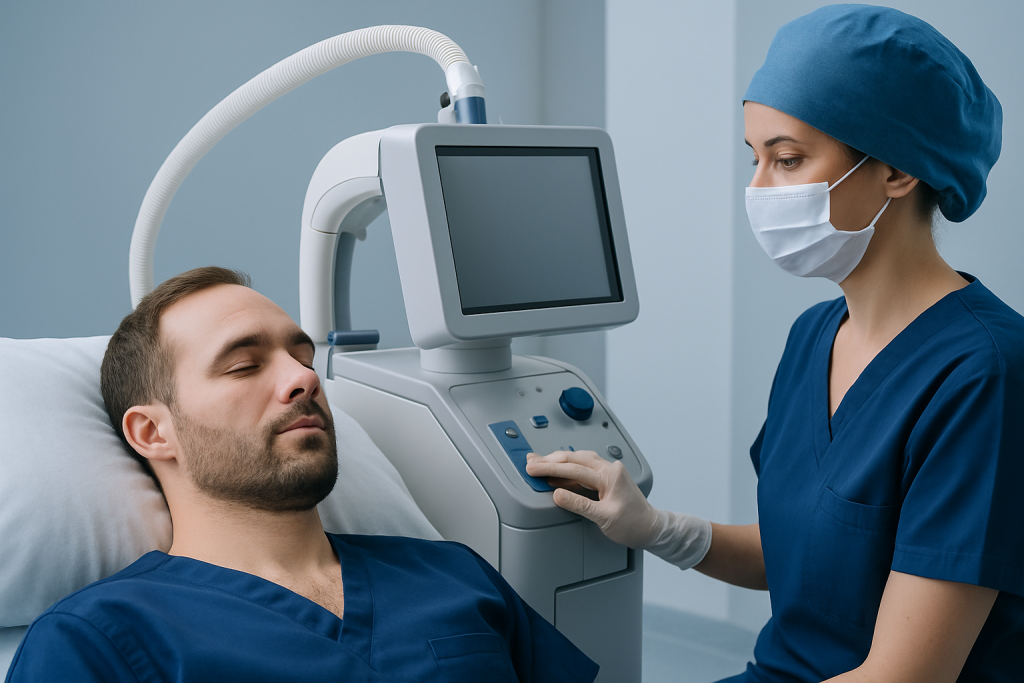
Accreditation is the most objective signal available to an international patient. Joint Commission International (JCI) accreditation, for example, means a hospital has been independently surveyed against published standards covering infection prevention, medication safety, surgical safety checklists, patient rights and emergency preparedness. It does not predict an individual outcome, but it does show that systems are in place and periodically re-audited by an outside body.
Surgeon credentials deserve equal scrutiny. Patients should be able to learn, in writing and before travel, the full name of the physician who will perform the procedure, their medical license and specialty background, and their experience with the specific technique proposed. It is reasonable to ask how tasks are divided between the physician and the technical team, since graft harvesting and placement are often team-based; what matters is that a qualified physician plans the design, performs or directly supervises the surgical steps, and remains accountable for the case.
- Is the procedure performed in a licensed hospital or accredited surgical facility rather than an unregistered office?
- Which physician will design the hairline and perform the surgery, and can that be named in the treatment plan?
- What anesthesia is used, and who monitors the patient during the procedure?
- How are emergencies or complications managed, and is there inpatient backup on site?
- Will the patient receive an operative report and medication list in English to share with a doctor at home?
Be cautious with any provider that will not name the operating physician, that quotes a firm price before any medical assessment, or that promises a specific number of new hairs, a guaranteed appearance or a fixed timeline. Responsible teams describe likely ranges and explain uncertainty rather than making promises.
What Treatment Packages Typically Include

Most international hair restoration packages are built around the surgical day plus a short structured stay. Typical inclusions are the pre-operative consultation and blood tests, the procedure itself, take-home medications and dressings, the first hair wash performed or supervised by the clinical team, a follow-up review before departure, airport and clinic transfers, hotel nights, and interpreter or coordinator support throughout.
What is excluded matters just as much. Flights are usually the patient’s responsibility, and many packages do not cover additional nights if a patient chooses to extend the trip, treatment of unrelated medical issues, supportive therapies recommended later, or a second session if further coverage is desired in the future. Some plans list optional add-ons such as platelet-rich plasma applications or specific post-operative products; these should appear as separate line items, not vague extras.
Before confirming, patients should request a written treatment plan that states the proposed technique, the estimated graft range, the planned stay length, the named facility, the physician, all inclusions and exclusions, and the cancellation or rescheduling policy. A clear document reduces misunderstandings far more effectively than a messaging-app conversation.
Planning for Cost: Think in Bands, Not Fixed Prices
Costs for hair restoration abroad vary widely and should be treated as planning bands rather than quotes. The main drivers are the estimated number of grafts required, the technique and instrumentation used, the seniority and involvement of the operating physician, the type of facility, the number of hotel nights included, and whether any supportive treatments are added. Two patients with similar goals can receive different plans simply because their donor areas and loss patterns differ.
A realistic way to budget is to ask a coordinator for a range that reflects a lower and an upper scenario, then add travel costs the package does not cover: airfare, meals, travel insurance, time away from work and any local transport. Patients should also set aside a contingency amount in case an extra night is needed or a second stage is discussed in the future. Very low headline prices sometimes reflect packages where the physician’s involvement, facility standard or follow-up is limited, so it is worth asking what accounts for the difference.
Finally, patients should confirm payment terms in writing: what deposit is required, when the balance is due, which currency is used, and what happens if the medical team concludes on the day of assessment that surgery is not advisable. A team willing to decline or postpone surgery when it is not appropriate is a reassuring sign, not an inconvenient one.
Trip Timing, Consultation and Length of Stay
Most planning begins remotely. Patients typically send clear photographs of the scalp from several angles along with a brief medical history, current medications, and details of any previous hair treatments or surgery. Many programs then offer a video consultation so the patient can meet the physician or a senior clinician, discuss expectations, and receive an outline plan before committing to travel. This step is also the right moment to raise questions about candidacy, alternatives and the limits of what surgery can achieve.
The in-country schedule is usually structured across several days: arrival and rest, an in-person assessment with blood tests and hairline planning, the procedure day, a supervised first wash and wound check, and a final review before departure. Building in a buffer day is sensible in case of flight delays, and travelers should avoid scheduling important commitments immediately after returning.
Practical logistics deserve attention too. U.S. travelers should confirm passport validity and any entry requirements well ahead of time, arrange travel and medical insurance that addresses care abroad, and check whether their itinerary allows a comfortable flight home with a sensitive scalp. Hotels close to the hospital reduce transfer stress, and interpreter support makes consent conversations clearer.
Recovery, Flying Home and Aftercare in the U.S.
Recovery after hair restoration is generally gradual rather than dramatic. Patients can expect some swelling, redness, tenderness and small crusts in the recipient area during the early days, and specific instructions about washing, sleeping position, sun exposure, exercise and headwear. The treating team should provide these instructions in writing, in English, along with a medication list and contact details for questions after departure.
Flying home is usually possible once the team confirms the scalp is stable, but comfort matters: patients should avoid pressing the recipient area against a seat, follow the washing schedule during travel, and protect the head from direct sun. It is also important to understand that transplanted hairs commonly shed in the weeks after the procedure before new growth begins, and that visible change develops over many months. This is a normal part of the process, and patience is part of the plan.
Aftercare does not end at the airport. Before booking, patients should establish how remote follow-up will work — scheduled photo reviews, video check-ins, a named contact for concerns — and how the overseas team communicates with a physician or dermatologist at home if something needs local assessment. Anyone who develops spreading redness, increasing pain, fever, pus or any other worrying symptom should seek in-person medical care promptly rather than waiting for a scheduled review.
- Keep the written operative report, medication list and wound-care instructions accessible.
- Identify a local dermatologist or primary care physician who can examine the scalp if needed.
- Ask which supportive medical treatments, if any, are recommended long term and who should supervise them.
- Agree on the follow-up schedule and the format for progress photographs.
When to Talk to a Patient Coordinator
A patient coordinator is most useful early — before any deposit is paid. The right time to make contact is when a person has decided they are seriously considering treatment abroad and needs help translating a general interest into a concrete, medically reviewed plan: candidacy questions, document requirements, a realistic stay length, cost planning bands, and how follow-up will be handled after returning to the United States.
Good coordination also covers the non-clinical layer of the journey: guidance on visa and entry documentation, appointment sequencing so tests and consultations fit into the available days, accommodation and transfer arrangements, interpreter support during consent discussions, and a second-opinion or video consultation when a patient wants to compare recommendations before traveling. Coordinators do not give medical advice themselves; their role is to connect the patient with the appropriate clinicians and keep the logistics coherent.
Acibadem Health Point coordinates care for international patients across Acıbadem’s multidisciplinary specialists and JCI-accredited hospitals, arranging consultations, travel and follow-up planning for people considering treatment in Turkey. Whichever provider a patient chooses, the decision should follow an individual medical assessment, a clear written plan, and an honest conversation with a qualified physician about what is and is not achievable.
Frequently asked questions
01How do I verify that a hospital in Turkey is properly accredited?
Accrediting bodies such as Joint Commission International publish directories of the organizations they have surveyed, so the facility name can be checked independently rather than taken from a brochure. Patients can also ask the clinic to state, in writing, the licensed hospital or surgical facility where the procedure will take place. If a provider is vague about the location of surgery, treat that as a reason to ask more questions.
02How long should I plan to stay in Turkey for a hair transplant?
Most programs are built around a short structured stay that covers assessment, the procedure, the first supervised wash and a review before departure, and many travelers add a buffer day for flight flexibility. The exact length depends on the plan the physician recommends after evaluating the patient. Your coordinator can confirm the schedule once the medical team has reviewed your case.
03Can I get an exact price before I travel?
Responsible providers give planning ranges rather than firm quotes before a medical assessment, because the estimated graft number, technique and length of stay all influence cost. A written outline of inclusions and exclusions helps you compare options fairly. Be cautious of any offer that fixes a price without reviewing your medical information.
04When will I see results after the procedure?
Hair restoration results develop gradually over many months, and it is normal for transplanted hairs to shed in the early weeks before new growth begins. Because the timeline varies from person to person, the treating physician should explain what to expect in your specific case. No clinic can guarantee a particular density, appearance or date of final result.
05What happens if I have a problem after flying home?
Before you travel, agree on a named contact at the clinic, a schedule for remote follow-up and a way to share progress photographs. It is also wise to identify a local dermatologist or primary care physician who can examine your scalp in person if needed. Seek prompt local medical care for signs such as spreading redness, increasing pain, fever or discharge rather than waiting for a scheduled review.
06Is a hair transplant suitable for everyone with hair loss?
No. Suitability depends on the cause and pattern of hair loss, donor-area characteristics, age and overall health, and some people are better served by medical treatment or by waiting until the pattern stabilizes. Only a physician who assesses you individually can advise on candidacy. A team that is willing to say surgery is not appropriate is applying good clinical judgment.
07What should a written treatment plan include?
At minimum it should name the facility and the operating physician, describe the proposed technique and estimated graft range, state the planned length of stay, and list exactly what the package includes and excludes. It should also set out payment terms, cancellation policy and the follow-up arrangements after you return home. Keep a copy of this document along with your operative report and medication list.
This article is for general information only and is not a substitute for professional medical advice. Please consult a qualified doctor about your individual situation.
Hair transplant in Turkey — costs, graft counts & a free assessment
JCI-accredited · board-certified surgeons · reply within 24h
Add us as a Preferred Source to see more of our trusted health content across Google Search, AI Overviews and Discover.